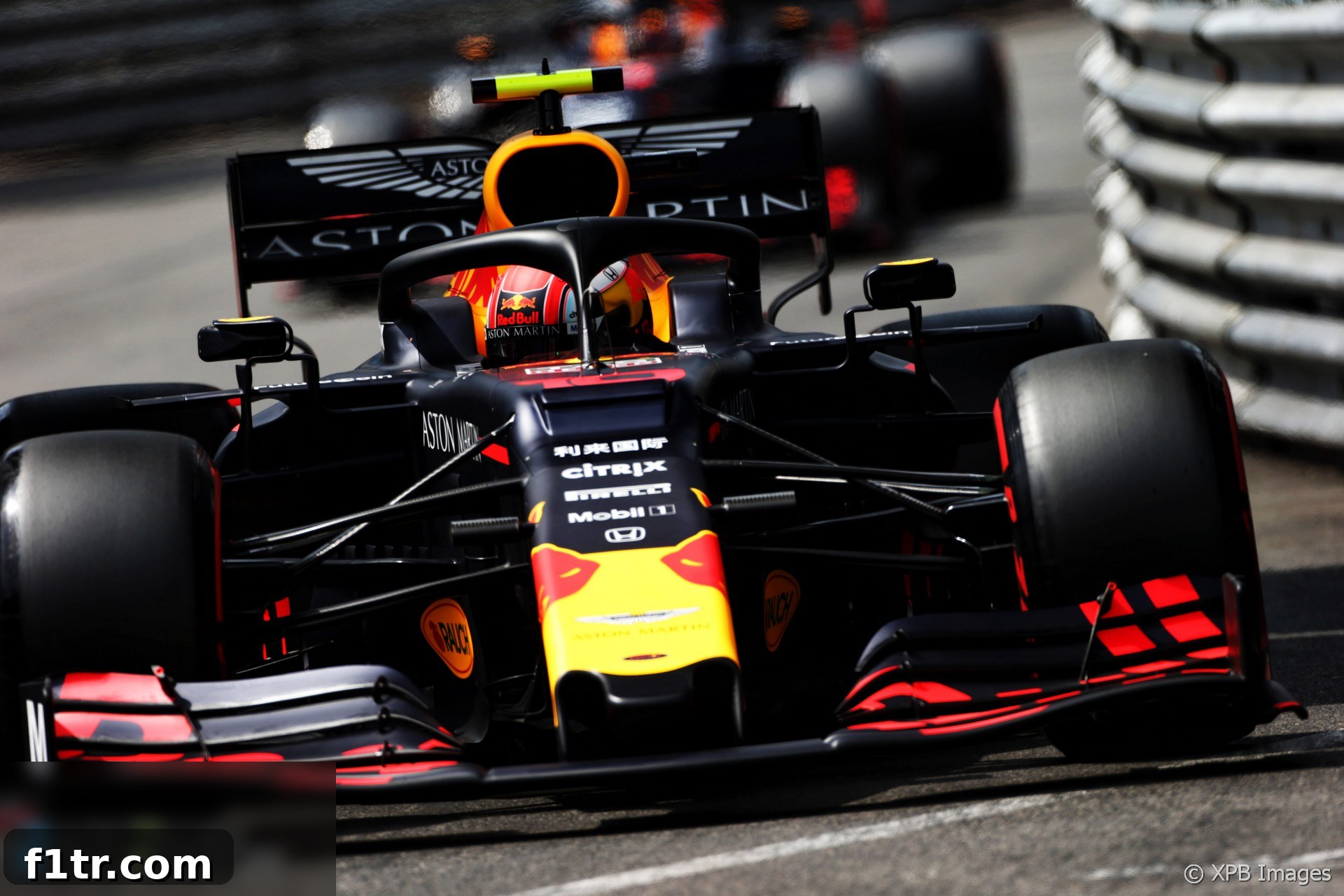
Pierre Gasly Hit with Grid Penalty for Impeding Romain Grosjean at the 2019 Monaco Grand Prix
Formula 1 driver Pierre Gasly, then racing for Red Bull Racing, faced a significant setback ahead of the prestigious 2019 Monaco Grand Prix. Following a detailed investigation by the race stewards, Gasly was handed a three-place grid penalty for impeding Romain Grosjean during the crucial qualifying session. This decision, which also included the assessment of one penalty point on his Super Licence, significantly impacted Gasly’s starting position for one of the most challenging races on the Formula 1 calendar.
The incident occurred during Q1 (the first qualifying segment), a session vital for all drivers to secure a spot in the subsequent stages. Monaco’s circuit, known for its tight, winding streets and minimal run-off areas, places an exceptional premium on track position and clear laps during qualifying. Any obstruction, even a minor one, can have disproportionate consequences, making clear communication between teams and drivers paramount.
The Incident: A Crucial Moment in Monaco Qualifying
The specifics of the incident involved Pierre Gasly driving slowly on a preparation lap, positioning his car on the racing line, when Romain Grosjean, driving for Haas F1 Team, was on a fast lap. The stewards’ report highlighted that Grosjean, clearly the only car on a hot lap in that particular section of the track, was forced to take evasive action, including braking hard, to prevent a collision with Gasly’s Red Bull car. This kind of interaction, where one driver’s actions (or lack thereof) disrupt another’s competitive lap, is precisely what the “impeding” rule is designed to address.
Qualifying in Monaco is often a ballet of speed and precision, but also of careful track management. With 20 cars vying for space on a narrow 3.337 km circuit, traffic management becomes a strategic masterpiece. Drivers frequently slow down on their out-laps or cool-down laps to create space for their next flying attempt, but doing so on the racing line without proper awareness of approaching fast cars is a serious breach of etiquette and safety. For Grosjean, a ruined qualifying lap could mean missing out on Q2 or Q3, potentially costing his team valuable grid positions and, ultimately, championship points.
Stewards’ Ruling and Red Bull’s Acknowledged Failure
The stewards’ investigation provided clear insights into their decision-making process. They acknowledged that, given the sequence of turns and the rapid nature of the circuit, it was “unlikely that the driver of car 10 [Gasly] had any opportunity in that sequence of turns to see car eight [Grosjean].” This detail is crucial, as it suggests that Gasly’s impediment was not a deliberate act of malice or dangerous driving. However, culpability was firmly placed on his team, Red Bull Racing.
The report explicitly stated that “the team admitted that they had failed to give any warning.” This admission was a critical factor in the stewards’ verdict. In modern Formula 1, team radio plays an indispensable role in a driver’s awareness of track conditions and traffic. With engineers constantly monitoring GPS data, timing screens, and competitor positions, they are expected to provide real-time updates to their drivers, especially in congested qualifying sessions. Red Bull’s failure to alert Gasly to Grosjean’s fast-approaching car was a clear operational oversight, directly contributing to the impeding incident.
Consequently, the stewards determined that “car 10 unnecessarily impeded car 8 and imposed a three grid place penalty and consistent with past practice imposed one penalty point.” The consistency with past practice indicates that the stewards applied established precedents, ensuring fairness across similar incidents throughout the season and previous years. For Gasly, this meant dropping three positions from his qualifying result, a particularly punitive measure at a track where starting position is often considered half the battle.
The Significance of a Grid Penalty in Monaco
Monaco’s unique street circuit configuration makes overtaking notoriously difficult. Therefore, a driver’s starting position on the grid takes on amplified importance. A three-place penalty at circuits like Spa or Monza might be recoverable with strong race pace and strategic overtakes, but at Monaco, it can significantly hinder a driver’s prospects for scoring points or even making it into the top ten. Every position lost makes the climb through the field exponentially harder, forcing drivers to take greater risks or rely on external factors like safety cars or retirements to improve their standing.
For Pierre Gasly, this penalty added another layer of pressure to an already challenging 2019 season. His move to Red Bull Racing as teammate to Max Verstappen had been difficult, marked by struggles to adapt to the car and match Verstappen’s pace. Incidents like the one in Monaco, even if partly attributed to team error, contributed to the narrative of a driver underperforming at a top team. The incident served as a stark reminder of the fine margins in Formula 1, where a momentary lapse in communication can have immediate and tangible consequences for a driver’s race weekend.
F1 Penalty System: Ensuring Fair Play and Safety
The FIA’s penalty system, overseen by the race stewards, is designed to ensure fair play, maintain safety, and uphold the integrity of the sport. Grid penalties, time penalties, and penalty points are among the tools available to address various infringements, from track limit violations to unsafe releases in the pit lane, and, as seen in Gasly’s case, impeding during qualifying. The accumulation of penalty points can eventually lead to a race ban, adding another layer of accountability for drivers.
Impeding penalties are particularly common in qualifying sessions, especially at circuits with complex layouts or high traffic density. The responsibility for avoiding such incidents is shared: drivers must be aware of their surroundings, and teams must provide accurate, timely information. This incident at Monaco underscored the critical interdependence between driver and team in navigating the intense environment of an F1 qualifying session.
Lessons Learned and Broader Implications
The incident involving Pierre Gasly and Romain Grosjean in Monaco served as a crucial reminder for all teams and drivers about the absolute necessity of flawless communication and heightened awareness during qualifying. For Red Bull, it highlighted the consequences of internal operational failures. For Gasly, while the team admitted fault, such incidents inevitably add to the pressure, especially when a driver is already under scrutiny.
Ultimately, the stewards’ decision at the 2019 Monaco Grand Prix reiterated the FIA’s commitment to maintaining a level playing field and ensuring driver safety. While F1 is a sport of high speeds and aggressive competition, it is also governed by a strict set of rules designed to prevent avoidable incidents. The grid penalty for Pierre Gasly was a clear demonstration that even unintended actions, especially those stemming from team communication breakdowns, carry significant repercussions in the high-stakes world of Formula 1.
The 2019 Monaco Grand Prix weekend continued to unfold with Gasly starting further back than anticipated, forcing him to strategize differently and push harder to make up for the lost positions. This event, while specific to a single race, became a talking point about driver responsibility, team support, and the unforgiving nature of a sport where every fraction of a second and every decision, on and off track, can determine success or failure.
- Crying in the Melbourne car park at 2019 grand prix was my career low – Ocon
- McLaren Racing reports reduced £71 million loss in 2019
- Kvyat: Hockenheim podium last year was “my biggest achievement” so far
- How the FIA’s new encrypted fuel flow meter targets Ferrari’s suspected ‘aliasing’ trick
- “He smashed my office door”: 23 must-see moments from ‘Drive to Survive’ season two
Browse all 2019 F1 season articles