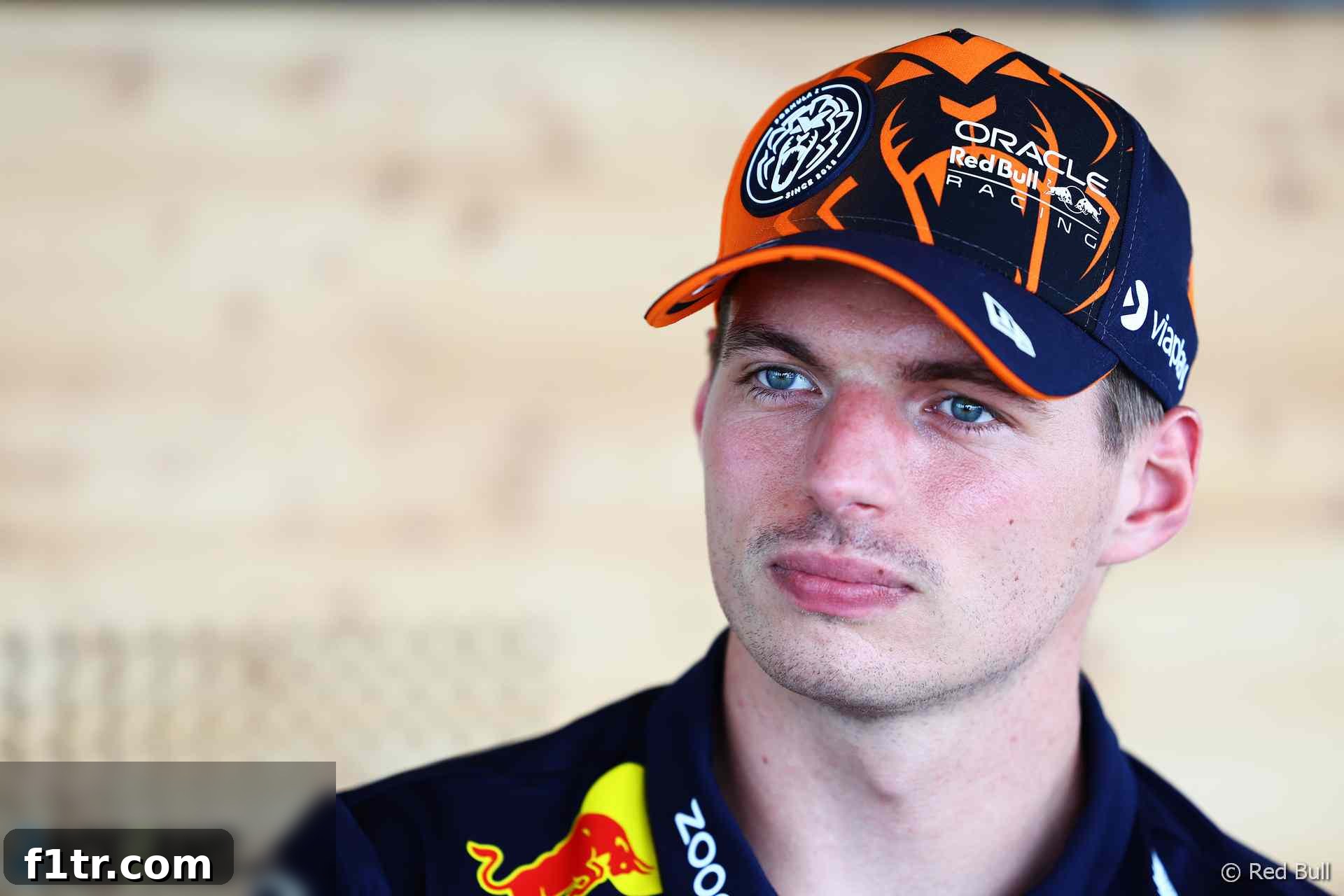
Max Verstappen Demands “Pure Pace” from Red Bull’s Hungarian GP Upgrade Amidst Mounting F1 Pressure
The Formula 1 2024 season has seen an undeniable shift in the competitive landscape, challenging Red Bull Racing’s once-unassailable dominance. As the championship battle intensifies, reigning world champion Max Verstappen has voiced a clear demand for his team: a crucial upgrade package for the upcoming Hungarian Grand Prix must deliver a significant boost in “pure pace” to the Red Bull RB20. This urgent call comes as McLaren and Mercedes demonstrate formidable form, turning the second half of the season into a high-stakes engineering and driving challenge.
Once considered the benchmark, the RB20 has faced mounting pressure from rejuvenated rivals. Red Bull has only secured the fastest lap time once in the last five race weekends, a stark contrast to their previous streak of commanding performances. Verstappen’s candid assessment highlights a fundamental issue: a deficit in outright car speed. This deficiency not only impacts qualifying and race performance directly but also creates a cascade of other challenges, notably increased tire degradation, as drivers are forced to extract more from a less-optimized package.
The Quest for “Pure Pace”: Verstappen’s Analysis of the RB20
Speaking to Sky Sports, Max Verstappen articulated the core problem succinctly: “I think we’re just lacking pure pace.” This phrase encapsulates a complex set of aerodynamic, mechanical, and power unit characteristics that define a car’s fundamental speed. When a car lacks this inherent “pure pace,” drivers often find themselves in a difficult dilemma. To maintain competitive lap times, they must push harder, demanding more from the tires. This aggressive driving style inevitably leads to accelerated wear and overheating, making it incredibly challenging to find the “sweet spot” with the car and manage strategy effectively over a race distance.
The RB20, initially hailed as another masterpiece from Adrian Newey’s design team, seems to have lost some of its edge. While still a front-runner, its ability to consistently extract optimal performance from various tire compounds and adapt to different circuit characteristics appears to be waning compared to its closest competitors. Verstappen’s insistence on needing “just overall pace” underscores the comprehensive nature of the required improvements – not merely incremental gains in one area, but a holistic enhancement that allows the car to perform effortlessly and efficiently throughout a race weekend.
Strategic Upgrades for the Hungaroring: A Pivotal Moment for Red Bull
The RB20’s upgrades for the Hungarian Grand Prix are therefore more than just incremental developments; they represent a critical juncture for Red Bull’s championship aspirations. The team had already tested a new specification floor with Verstappen at Silverstone, indicating their proactive approach to addressing performance gaps. The expectation is that further significant parts will be introduced at the Hungaroring, a circuit renowned for its tight, twisty layout and emphasis on high downforce and mechanical grip. This specific track profile makes it an ideal proving ground for aerodynamic efficiency and low-speed performance, precisely where Red Bull needs to regain an advantage.
The Hungarian Grand Prix is strategically vital. A successful upgrade package here could not only rejuvenate Red Bull’s confidence but also send a strong message to their burgeoning rivals. Conversely, a failure to deliver clear improvements could signal a deeper struggle, potentially shifting the momentum definitively towards McLaren and Mercedes as the season progresses. The nature of F1 development means that gains are never guaranteed, but the urgency in Verstappen’s tone reflects the high stakes involved.
The Fierce Competition: McLaren and Mercedes Close In
The pressure on Red Bull is palpable, fueled by the remarkable performance surges of both McLaren and Mercedes. These teams have transformed into genuine threats, demonstrating not just flashes of brilliance but sustained competitive pace.
McLaren’s Resurgence and Piastri’s Optimism
McLaren’s trajectory has been nothing short of sensational. The Woking-based squad has out-scored Red Bull in an impressive five of the last six races, showcasing a development curve that has exceeded all expectations. Their driver lineup, featuring the highly talented Lando Norris and the rapidly improving Oscar Piastri, has consistently maximized the car’s potential. Currently 78 points behind Red Bull in the Constructors’ Championship, with 573 points still available over the remainder of the season, McLaren harbors serious ambitions.
Oscar Piastri, buoyed by the team’s strong progress, articulated McLaren’s renewed confidence. “I think we’re confident in our whole team, drivers, car, everyone around us,” he stated. Piastri highlighted McLaren’s impressive points haul in recent races, underscoring their momentum. While acknowledging that Max Verstappen is currently shouldering the majority of Red Bull’s points tally – a situation that might not always persist – Piastri remains optimistic about McLaren’s chances. He emphasized the importance of both cars scoring points consistently to maximize their championship challenge, viewing it as “incredibly pessimistic” not to be hopeful for the latter half of the year. McLaren’s proactive development and cohesive team effort make them a formidable contender.
Mercedes’ Renewed Threat
Meanwhile, Mercedes has also emerged as a significant threat, demonstrating formidable pace, particularly at Silverstone where they locked out the front row of the grid and secured strong podium finishes. While not claiming outright victories in the immediate preceding races, their performance trajectory indicates a team that has found a clear direction with their car development. The question of whether Mercedes now possesses the “best car” on the grid is a topic of intense debate, especially given their consistent qualifying speed and improved race pace. This renewed competitiveness from the Brackley team, combined with McLaren’s ascent, effectively creates a three-way battle at the front, denying Red Bull the comfortable buffer they enjoyed earlier in the season.
Impact of Aerodynamic Testing Rules on the 2024 Season
A key factor contributing to this convergence of performance is Formula 1’s Aerodynamic Testing Rules (ATR). These regulations are designed to level the playing field by allocating fewer wind tunnel and CFD hours to teams higher up in the Constructors’ Championship, and more to those lower down. In essence, the less successful a team has been, the more development time it is granted. Red Bull, as the dominant team in recent years, has operated with significantly less development allowance than their rivals. While Max Verstappen himself stated that if they knew the precise impact of ATR, they would have acted differently, the rule undoubtedly plays a role in enabling competitors like McLaren and Mercedes to close the performance gap rapidly. More development time translates directly into more opportunities to understand and improve the car, an advantage that has clearly paid dividends for the chasing pack.
The Championship Battle Heats Up: Implications for Red Bull
The tightening competition has profound implications for both the Drivers’ and Constructors’ Championships. For Max Verstappen, while still leading, the reduction in the RB20’s “pure pace” means he can no longer afford to cruise to victory. He must extract every ounce of performance, often at the limit, to maintain his advantage. This also places immense pressure on Red Bull’s strategic calls and operational efficiency during race weekends. In the Constructors’ battle, the consistent strong finishes from McLaren’s and Mercedes’ drivers, contrasted with Red Bull’s reliance largely on Verstappen for top points, means the gap can shrink rapidly.
Red Bull’s technical team, led by figures like Adrian Newey and Pierre Waché, faces the monumental task of not only understanding the shifting dynamics but also implementing solutions under immense pressure and constrained development allowances. The Hungarian Grand Prix will be a crucial litmus test for their ability to respond effectively to this challenge and reaffirm their position at the pinnacle of Formula 1.
Looking Ahead: The Hungarian Grand Prix and Beyond
As Formula 1 heads to the Hungaroring, all eyes will be on Red Bull’s performance. The outcome of this race, and the effectiveness of their upgrade package, could set the tone for the remainder of the 2024 season. Will Max Verstappen find the “pure pace” he demands, allowing the RB20 to stretch its legs once more? Or will McLaren and Mercedes continue their relentless charge, turning this season into one of the most unpredictable and thrilling championship battles in recent memory? The answers will begin to unfold in Hungary, promising an exhilarating second half to the Formula 1 calendar.
Further Reading: 2024 Hungarian Grand Prix
- Verstappen names Hungarian GP the most stressful moment of his title-winning year
- McLaren team orders “a new situation we’re inexperienced at handling” – Piastri
- Verstappen dismisses critics of “vocal” radio messages and late-night simracing
- Norris’ former McLaren team mates say he was right to give up win
- Mercedes surprised Hamilton’s car was “completely unscathed” in Verstappen clash
Browse all 2024 Hungarian Grand Prix articles