The highly anticipated Spanish Grand Prix often marks a pivotal moment in the Formula 1 season. As the sport returns to its traditional European heartland, teams seize the opportunity to unleash significant car upgrades, hoping to gain a crucial competitive edge. This weekend in Barcelona, the paddock buzzes with innovation, as every team except the dominant McLaren has arrived with a suite of updates designed to boost performance and address weaknesses. This widespread development push underscores the relentless pursuit of speed in F1, a characteristic that defines the pinnacle of motorsport engineering.
Advert | Become a Supporter & go ad-free
A key factor influencing this round of upgrades is the FIA’s introduction of tougher tests for front wing flexibility. Designed to ensure fair play and prevent teams from exploiting aero elastic loopholes, these new regulations have prompted a substantial response across the grid. Seven teams have specifically updated their front wings to comply with these stricter standards, demonstrating the immediate impact of technical directives on car development. Indeed, every team apart from McLaren, Mercedes, and Alpine has brought a revised front wing, highlighting the focus on this critical aerodynamic component.
FIA’s Stricter Front Wing Tests Prompt Widespread Revisions
The governing body’s move to tighten front wing flexibility tests comes amidst concerns that some designs might have been bending more than permitted under aerodynamic load, creating an unfair performance advantage. For teams, this means a careful re-evaluation of their front wing structures and materials. A flexible front wing can offer benefits by reducing drag on straights and increasing downforce in corners, but these gains must now be achieved within a more rigid regulatory framework. The modifications introduced this weekend are not merely about performance enhancement but also about ensuring compliance and maintaining legality, a constant balancing act in Formula 1’s highly regulated environment.
Red Bull’s Targeted Approach
Reigning world champions Red Bull, known for their meticulous engineering and efficient development, have brought a singular, yet significant, update to Barcelona: a revised front wing. The team explicitly stated that this modification is a direct response to the new FIA technical regulation regarding front wing flexibility. For a team that has set the benchmark for aerodynamic excellence, adapting to regulatory changes swiftly and effectively is paramount. This targeted update suggests that while Red Bull’s core package remains incredibly strong, they are not complacent and are keen to ensure their car fully conforms to the updated rules, thereby avoiding any potential penalties or disputes later in the season. Their ability to deliver a compliant and optimized front wing will be key to maintaining their competitive edge.
Ferrari’s Aggressive Pursuit of Performance
Ferrari, ever-present challengers, have also cited the stiffer front wing flexibility test as a primary reason for their new front wing introduction this weekend. The Scuderia is pushing hard to close the gap to the front-runners and cannot afford to leave any stone unturned in their quest for performance. Beyond the front wing, Ferrari has also brought a revised high-downforce rear wing for its SF-25. The Circuit de Catalunya, with its mix of high-speed corners and a demanding final sector, places a significant premium on aerodynamic efficiency and downforce. This dual approach to aero upgrades — addressing compliance at the front and increasing downforce at the rear — signifies Ferrari’s aggressive development strategy aimed at maximizing their car’s potential on a circuit known for exposing aerodynamic strengths and weaknesses.
McLaren’s Unwavering Confidence
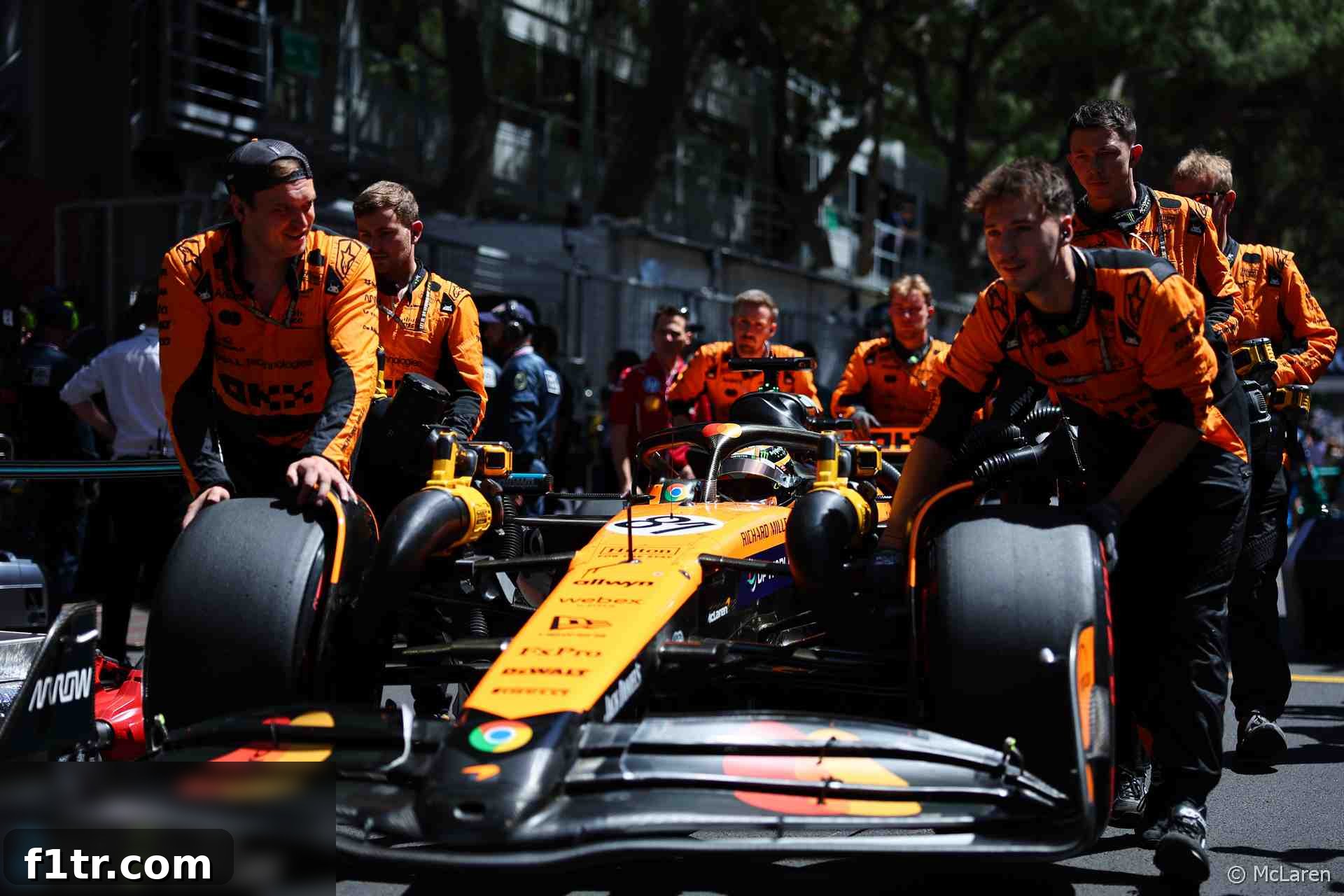
In a notable contrast to their rivals, McLaren, the current world championship leaders, have opted not to change the design of their front wing since the season began. This decision speaks volumes about the confidence they have in their current aerodynamic package and its inherent compliance. Lando Norris, a key figure in McLaren’s resurgence, echoed this sentiment yesterday, stating he was “not at all” concerned that the rules change might compromise his car’s performance. “There are little tweaks here and there but nothing that will change how we have to do anything,” he affirmed. McLaren’s impressive run, having won six of the eight Grands Prix so far this year, provides a strong foundation for this confidence. Their ability to deliver exceptional performance with a stable design suggests a deep understanding of their car’s characteristics and a highly efficient aerodynamic platform that appears to be well within the bounds of the new flexibility tests.
Mercedes’ Quest for Overall Load
Mercedes, a team that has faced its share of struggles in recent seasons, is bringing a series of crucial updates to Barcelona, primarily focused on its floor. The team is explicitly seeking an increase in overall load, a fundamental metric for aerodynamic performance. The floor is arguably the most critical aerodynamic component on modern F1 cars, generating a significant portion of total downforce through ground effect. Any gains here can translate into substantial lap time improvements. Additionally, Mercedes has developed a new rear wing designed to provide the optimum trade-off between drag and downforce for the demanding Circuit de Catalunya. Barcelona’s long main straight and subsequent high-speed corners require a delicate balance: sufficient downforce for cornering grip without incurring excessive drag that compromises straight-line speed. These updates represent Mercedes’ continued efforts to unlock the full potential of their package and climb back up the competitive order, with the floor upgrades being particularly vital for their aspirations.
Aston Martin and Haas: Focused Front Wing Enhancements
For Aston Martin and Haas, their update packages for the Spanish Grand Prix are more singularly focused, with both teams introducing only a new front wing. While seemingly modest compared to some larger packages, a front wing update can have a profound impact on a car’s overall aerodynamic balance and performance. The front wing is the first element to interact with the oncoming airflow, dictating how air is channeled over, under, and around the rest of the car. For mid-field teams like Aston Martin and Haas, even marginal gains from a revised front wing, especially one designed to be more compliant yet efficient under the new FIA regulations, can be critical in their battle for precious championship points. These focused updates reflect a pragmatic approach, targeting a known area of potential improvement and compliance requirement.
Racing Bulls’ Detailed Aerodynamic Adjustments
Racing Bulls, demonstrating a keen eye for detail in their development strategy, have also taken the opportunity to revise their front wing. However, their updates extend further, specifically targeting the front wing endplates and the nose on their 02 chassis. Front wing endplates play a crucial role in managing the vortex generated at the tip of the wing, controlling airflow and reducing drag. Changes to the nose section are equally significant, influencing how air flows beneath the car and interacts with the floor and diffuser. These precise aerodynamic adjustments indicate Racing Bulls’ commitment to optimizing every aspect of their car’s airflow, aiming for incremental gains that collectively contribute to improved stability, downforce, and overall lap time performance in the highly competitive midfield.
Sauber’s Comprehensive Aerodynamic Overhaul
Sauber has arrived in Barcelona with a more substantial package of updates, indicating a significant development push. Their revisions include changes to the floor fence, floor edge, and diffuser – all critical components of the car’s underbody aerodynamics. The floor fence and edge are vital for sealing the underfloor, maximizing the ground effect, and creating a powerful vacuum that sucks the car to the track. The diffuser then expands this airflow, generating further downforce. To complement these floor revisions, Sauber has also revised its engine cover, likely to optimize airflow interaction with the new underbody components and the rear wing. This holistic approach to aerodynamic development suggests Sauber is aiming for a complete overhaul of their car’s airflow characteristics, seeking a significant step forward in performance and a climb up the Constructors’ Championship standings.
Alpine’s Performance Pursuit Through the Floor
Similarly to Sauber, Alpine has focused its pursuit of performance gains primarily on the floor of its A525 chassis. This emphasis on the floor highlights the prevailing understanding across the paddock that the underbody is the most potent area for generating downforce in the current regulatory era. Improvements to the floor can enhance stability in high-speed corners, increase grip, and allow drivers to carry more speed through turns. For Alpine, a team striving to recover from a challenging start to the season, these floor updates are crucial. They represent a concerted effort to unlock untapped potential in their car, address underlying performance deficiencies, and move closer to the midfield front-runners. The success of these floor developments will be key to their recovery throughout the remainder of the season.
Williams Addresses Reliability and Cooling
Williams encountered a developing reliability problem on Alexander Albon’s car at the last race, specifically related to overheating. In the high-stakes environment of Formula 1, reliability is just as critical as raw pace. For the Spanish Grand Prix, Williams has responded by bringing new cooling louvres and revisions to its brake ducts. Cooling louvres are strategically placed openings on the car’s bodywork that help dissipate heat from internal components, such as the engine and gearbox. Improved brake ducts are essential for managing the extreme temperatures generated during braking, preventing fade and maintaining consistent performance. These updates are vital not only for preventing a recurrence of reliability issues but also for allowing the team to run the power unit and brakes at their optimal operating temperatures, which can indirectly contribute to performance by enabling more aggressive driving and consistent lap times.
The Implications for the Spanish Grand Prix and Beyond
The sheer volume and variety of upgrades seen in Barcelona underscore the intense developmental battle that defines Formula 1. While McLaren’s confidence in their existing package is a strong statement, the widespread updates from their rivals signal a determined effort to close the gap. The FIA’s stricter front wing flexibility tests have added another layer of complexity, forcing teams to innovate within tighter constraints. The Circuit de Catalunya, with its demanding layout, will serve as an excellent proving ground for these new components, providing crucial data for future development. The Spanish Grand Prix is more than just a race; it’s a critical benchmark for car performance, offering tantalizing glimpses into how the pecking order might evolve in the coming weeks and months. Fans can anticipate a thrilling weekend as teams vie for supremacy, armed with their latest technological advancements, all hoping to find that elusive extra tenth of a second.
Advert | Become a RaceFans supporter andgo ad-free
Miss nothing from RaceFans
Get a daily email with all our latest stories – and nothing else. No marketing, no ads. Sign up here:
2025 Spanish Grand Prix
- Verstappen: Don’t blame Spanish GP penalty for hitting Russell if I narrowly lose title
- Russell’s radio comments influenced Red Bull’s decision to let him past Verstappen
- Verstappen says he won’t make any changes to his driving to avoid a ban
- ‘No issues’ with Verstappen but ‘it’d be different if he’d taken me out’ – Russell
- Ferrari “don’t want us to talk much” about “massive” Spanish GP problems – Hamilton
Browse all 2025 Spanish Grand Prix articles