The F1 Test Dilemma: Hamilton’s Ferrari Wait Versus Sainz’s Williams Opportunity Unveiled
In the high-octane world of Formula 1, driver transfers are often met with fervent speculation and strategic maneuvering. The upcoming season promises one of the sport’s most significant moves in recent history, with Lewis Hamilton set to join Scuderia Ferrari in 2025. This seismic shift, however, has naturally raised questions about the possibility of an early test debut for the seven-time world champion. Ferrari team principal Frederic Vasseur has unequivocally stated that any chance of Hamilton testing for the Maranello squad before the end of the current year is non-existent, citing unassailable contractual obligations.
Hamilton’s Delayed Ferrari Debut: A Contractual Impasse
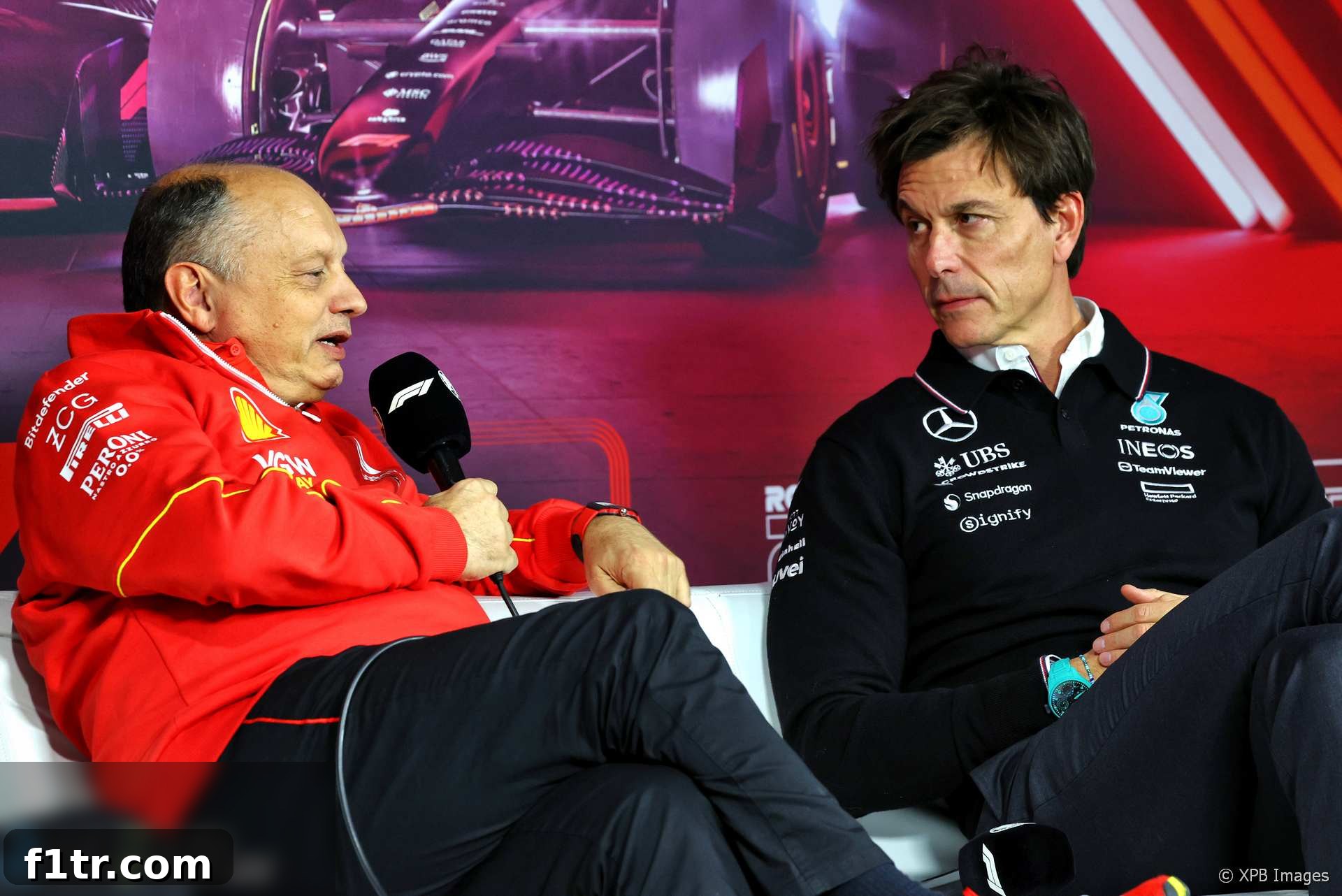
The anticipation surrounding Lewis Hamilton’s move to Ferrari is palpable, but fans eager to see him in the iconic red sooner rather than later will have to wait. Vasseur’s stance is firm and rooted in the fundamental principles of professional sports contracts. When questioned about the hypothetical scenario of approaching Mercedes team principal Toto Wolff, a personal friend, to facilitate an early release for Hamilton for the post-season Abu Dhabi test, Vasseur’s reply was direct and resolute: “No, they have a contract. I’ve not even asked Toto.” This statement underscores the respect for existing agreements, a cornerstone of fair play and competitive integrity within Formula 1.
Vasseur further elaborated on the immutable nature of these agreements, emphasizing, “There’s a contract. You have to respect this. And it’s not because we are doing something for Carlos that everybody has to do the same.” This differentiation highlights the unique circumstances surrounding each driver’s situation and the contractual intricacies that govern their movements between teams. The competitive landscape of F1 dictates that such agreements are not merely formalities but legally binding documents that protect the interests of all parties involved.
Toto Wolff, Hamilton’s long-standing team principal at Mercedes, corroborated this position, explaining the impossibility of an early release. Mercedes has meticulously planned a series of events following the conclusion of the season to commemorate their record-breaking partnership with Hamilton. This comprehensive farewell program, coupled with existing contractual agreements with sponsors and partners, simply leaves no room for an early test with Ferrari. Wolff stated: “Fred didn’t ask. I think it’s different if you’re maybe going to Williams, but we have contractual agreements with sponsors. We’re having a farewell for Lewis, we have lots of activities that are planned. He and I, we spoke about it shortly and he said ‘I guess that’s not going to work’. I said ‘yeah, I don’t think it’s going to work and that was the whole thing. So I don’t think Fred is particularly sad.” This mutual understanding between Hamilton and Wolff regarding the practicalities of the situation further solidifies the notion that an early Ferrari test was never a realistic prospect.
The significance of an early test cannot be overstated for a driver transitioning to a new team. It provides an invaluable opportunity to familiarize oneself with the new car’s ergonomics, handling characteristics, and engineering philosophy. Moreover, it allows for initial interactions with the new team’s engineers and mechanics, fostering crucial communication channels and building rapport. For a driver of Hamilton’s caliber, even minor advantages gained through early acclimatization could prove pivotal in hitting the ground running for the 2025 season. However, the strict adherence to contractual terms and the logistical complexities surrounding a high-profile departure from a team like Mercedes ultimately override this potential competitive benefit.
Sainz’s Early Williams Test: A Gesture of Professional Appreciation
In stark contrast to Lewis Hamilton’s situation, Ferrari has extended a unique courtesy to outgoing driver Carlos Sainz Jnr. Sainz, who is concluding his fourth season with the Scuderia and will move to Williams for 2025, has been granted permission to participate in the post-Abu Dhabi test day with his new team, driving the FW46. This exceptional allowance, given that Sainz remains under contract with Ferrari until the end of the year, is a testament to the respect and appreciation the team holds for the Spanish driver.
Frederic Vasseur elaborated on his decision to permit Sainz’s early release, framing it as a heartfelt gesture of gratitude. “I wanted to thank Carlos for the collaboration and I don’t want to block him or whatever,” Vasseur explained. This sentiment underscores a team principal’s role in not just managing drivers, but also fostering positive relationships, particularly during transitions. Vasseur praised Sainz’s unwavering professionalism throughout the season, even in the knowledge that his future lay elsewhere. “I think he did a very good job with us this season and a very professional one, because it would have been easy [for him] to, not give up, but not have such a professional attitude. And for me, the best way to thank Carlos was also to give him the opportunity to do the test with Williams.”
Sainz’s conduct has been exemplary, maintaining peak performance and commitment despite the significant news of Hamilton’s arrival replacing him for 2025. This level of dedication, often challenging to uphold when one’s future with a team is known to be ending, earned him immense respect from Vasseur and the entire Ferrari organization. By allowing him to test early with Williams, Ferrari is not only acknowledging his contributions but also facilitating a smoother transition for him into his next chapter in Formula 1. This gesture speaks volumes about the culture within Ferrari and Vasseur’s leadership style, prioritizing human elements and professional courtesy alongside competitive aspirations.
For Williams, having Carlos Sainz Jnr test early with the FW46 offers significant advantages. It provides them with an invaluable opportunity to integrate their new experienced driver into the team dynamic ahead of the official start of the 2025 season. Sainz’s feedback on the car, even a preliminary assessment, can be crucial for the engineering team in identifying areas for development and understanding his driving style preferences. This early insight can significantly accelerate his acclimatization process, allowing him to be more competitive from the outset of the new campaign. Such an early test can set a positive tone for the entire team, boosting morale and confidence as they prepare for the challenges of the upcoming season.
Contractual Realities and Strategic F1 Team Management
The contrasting situations of Lewis Hamilton and Carlos Sainz Jnr vividly illustrate the intricate balance between contractual obligations, driver welfare, and strategic team management in Formula 1. F1 contracts are meticulously drafted legal documents that govern every aspect of a driver’s relationship with their team, including the duration of their employment, competitive clauses, and the terms of departure. Adherence to these contracts is paramount, not only for legal compliance but also for maintaining stability and trust within the sport.
Frederic Vasseur’s decision to respect Mercedes’ contract with Hamilton, despite the potential competitive advantage an early test might offer Ferrari, demonstrates a broader commitment to ethical conduct and professional integrity. In a sport where every fraction of a second counts, the temptation to push boundaries can be immense. However, respecting existing agreements is vital for the sport’s ecosystem, preventing a chaotic free-for-all where contracts could be easily disregarded. This stance also reinforces the idea that while relationships between team principals might be friendly, professional boundaries and competitive interests ultimately dictate strategic decisions.
Conversely, Vasseur’s decision to release Sainz early is a strategic move rooted in human resource management and long-term reputation. By acting with generosity and appreciation towards an outgoing driver, Ferrari reinforces its image as a team that values its personnel, even during transitions. This can have positive repercussions, making Ferrari an attractive prospect for future talent and fostering good will within the F1 paddock. It also acknowledges the exceptional professionalism shown by Sainz, which undoubtedly contributed positively to the team’s atmosphere and performance throughout his final season.
The F1 driver market is a dynamic and high-stakes environment where contractual complexities are routine. Team principals like Vasseur and Wolff are constantly navigating these waters, balancing the immediate competitive needs of their teams with longer-term strategic objectives and the personal welfare of their drivers. The decisions regarding early test releases are not trivial; they reflect a team’s values, its competitive philosophy, and its approach to managing transitions, all of which contribute to its overall standing in the fiercely competitive world of Formula 1.
Looking Ahead: Impact on 2025 Season Preparations
The resolutions regarding Lewis Hamilton’s delayed Ferrari test and Carlos Sainz Jnr’s early Williams outing will undoubtedly shape the narrative and preparations for the 2025 Formula 1 season. While Hamilton will have to wait until pre-season testing in 2025 for his official debut in red, the anticipation will only build, creating an unprecedented level of excitement around his first laps for the Scuderia. Ferrari will be keenly focused on ensuring a seamless transition for the seven-time champion, meticulously planning every aspect of his integration into the team and car development process once his Mercedes contract officially concludes.
For Carlos Sainz and Williams, the early test offers a critical head start. This opportunity allows Sainz to begin building a foundational relationship with his new engineers and mechanics, and crucially, to provide early feedback on the FW46. This feedback can influence early development directions for the 2025 challenger, potentially giving Williams a valuable edge as they aim to climb the constructors’ standings. Sainz’s experience and analytical approach will be a significant asset to the Grove-based team, and an early test maximizes the time they have to harness his input.
Ultimately, these developments highlight the nuanced human element within the highly technical and performance-driven world of Formula 1. Contractual obligations, professional courtesy, and strategic foresight all play pivotal roles in how teams manage their most valuable assets—their drivers—during periods of transition. The differing approaches to Hamilton’s and Sainz’s situations underscore the complexity and strategic depth that underlies every major decision in the sport. As the F1 world gears up for the 2025 season, all eyes will be on how these strategic decisions ultimately play out on track, with fans eagerly awaiting the sight of Hamilton in Ferrari red and Sainz embarking on a new chapter with Williams.