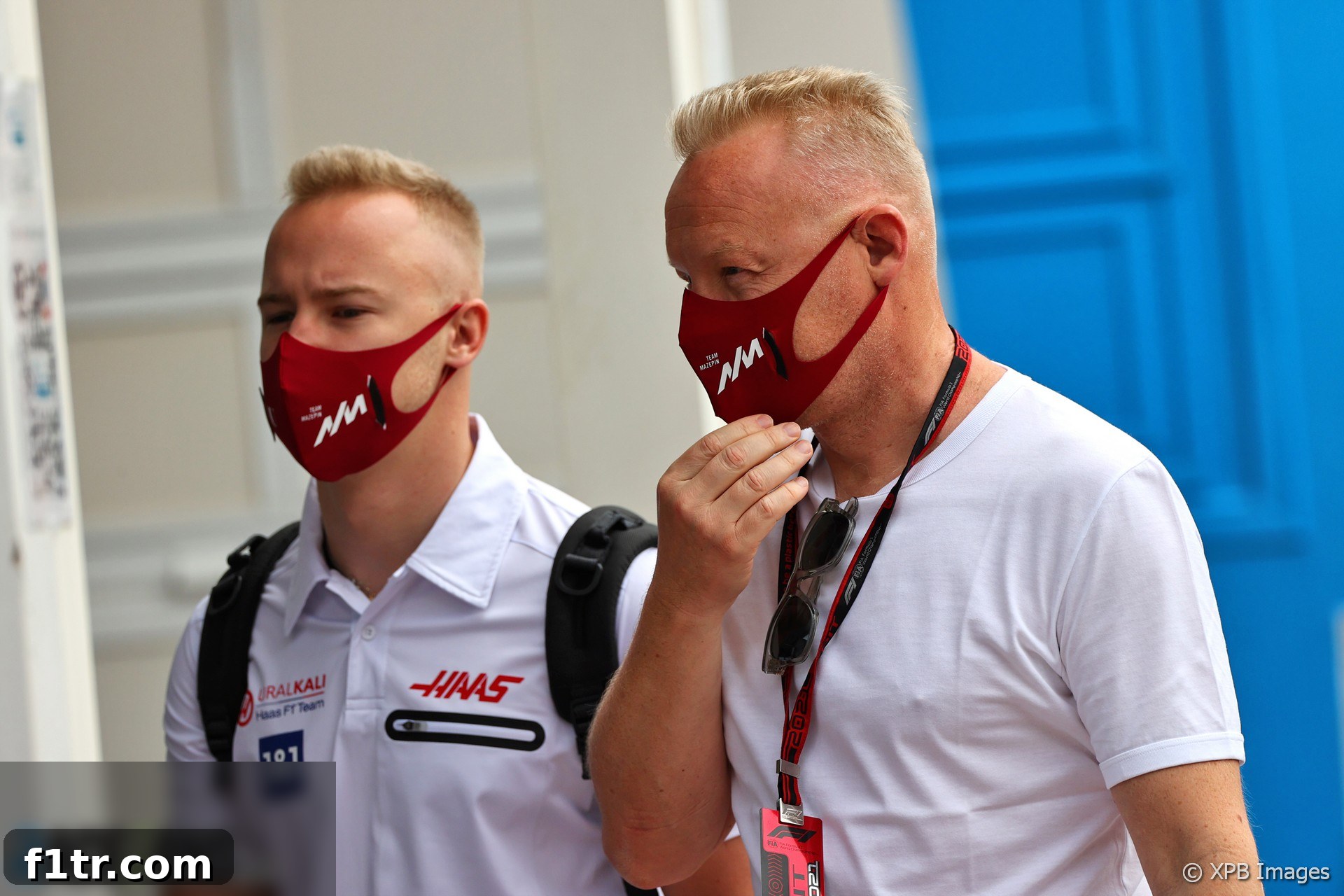
The intense pressure cooker environment of Formula 1 often brings internal team disputes to the forefront, and few sagas from the 2021 Formula 1 season captured this better than the strained relationship between Haas F1 Team and its then-title sponsor, Uralkali. A dramatic internal row, which centered around the perceived performance parity of Nikita Mazepin’s car, saw Uralkali threaten to withdraw its substantial financial backing, plunging the American outfit into a precarious situation. This high-stakes conflict, a microcosm of the intense commercial and competitive pressures in elite motorsport, was laid bare for the world in a revealing episode of Netflix’s acclaimed ‘Drive To Survive’ series, showcasing the delicate balance of power and finance within the pinnacle of motor racing.
The controversy began to simmer during the opening races of the 2021 season, a particularly challenging year for the Haas F1 Team. The American squad had deliberately made the strategic decision to run an underdeveloped car, opting to funnel their limited resources into the significant regulation changes anticipated for the 2022 season. Compounding this challenge, Haas fielded two rookie drivers, Nikita Mazepin and Mick Schumacher, both navigating the steep learning curve of Formula 1. Mazepin, whose seat was significantly supported by Uralkali’s multi-million dollar sponsorship, consistently found himself trailing his more celebrated teammate, Mick Schumacher, in both qualifying sessions and race performances. This notable performance disparity quickly became a point of contention within the Mazepin camp, leading to growing doubts and frustrations about the equality of the equipment provided to the two drivers.
Advert | Become a Supporter & go ad-free
These internal doubts escalated into a full-blown crisis, dramatically documented in the latest series of Netflix’s ‘Drive To Survive,’ a series renowned for its behind-the-scenes access and candid portrayals of F1 drama. The show vividly captured the intense moments leading up to a stark ultimatum issued by Dmitry Mazepin, Nikita’s highly influential father and the owner of the industrial giant Uralkali. His message to the Haas team principal, Guenther Steiner, was unequivocal: if the team did not switch the chassis between his son and teammate Mick Schumacher, Uralkali would immediately cease its crucial financial support. Such a direct threat from a title sponsor, especially one providing the lifeblood to a smaller, independent team like Haas, represented an existential crisis, placing immense pressure on Steiner and the team’s management.
The core of Nikita Mazepin’s frustration, vehemently echoed by his father, stemmed from his deep-seated belief that his car was inherently disadvantaged compared to Schumacher’s. Despite Guenther Steiner’s characteristically candid and often exasperated assurances, the Mazepin camp remained steadfastly unconvinced. “It’s the same car,” Steiner was heard telling his driver at one particularly tense moment, his voice carrying a mix of frustration and unwavering certainty. “As much as you believe it’s not, it’s the same car.” This candid exchange underscored a deeper issue within the team: the struggle for internal harmony and trust when a driver, or their powerful sponsor, loses faith in the perceived impartiality and quality of the equipment provided. The team’s inability to alleviate these concerns highlighted a fundamental breakdown in confidence that threatened their operational stability.
The ‘chassis parity’ argument is a perennial and often contentious topic in competitive motorsport, particularly when a driver consistently struggles against a teammate. While Formula 1 teams strive for absolute equality in their cars, minor variations in weight distribution, structural rigidity, or the tolerances of individual components can sometimes lead to perceived, or even actual, performance differences. For a rookie driver already grappling with the immense challenges and relentless demands of Formula 1 – adapting to new tracks, complex machinery, and the highest level of competition – any perceived disadvantage can be greatly magnified, eroding confidence and further hindering performance. The unfolding situation at Haas vividly illustrated the delicate balance teams must maintain between supporting their drivers, upholding principles of fairness, and managing the high-stakes expectations of powerful, financially critical sponsors.
Uralkali’s Ultimatum: A Team on the Brink
The escalating tension within the Haas F1 Team reached a critical zenith during the Spanish Grand Prix weekend. In a particularly revealing and dramatic exchange captured by ‘Drive To Survive,’ Dmitry Mazepin reiterated his grave warning to team adviser Jesper Carlsen, making his intentions unequivocally clear. “If it doesn’t change, I will send an official letter that we stop financing and stop racing,” he declared, leaving absolutely no room for misinterpretation. His tone was firm, indicating an absolute lack of patience for what he perceived as a systemic and unaddressed issue with his son’s equipment. He then underscored the severe financial ramifications for the Haas team: “It will be a huge problem with the money. And they will decide what to do because we will not keep this ‘let’s do, let’s do, let’s try, let’s try.’ We already tried [for] three races and if we remove the Uralkali, we stop racing. Switch the cars. Everybody knows that someone has an advantage.”
Carlsen, visibly concerned by the magnitude of the threat, promptly relayed this existential warning to Guenther Steiner. He explained Mazepin’s explicit intention to “pop a formal letter” about “withdrawing” from Formula 1 due to his unwavering and deeply held belief that there was a “difference between the cars.” For Haas, a team that has consistently operated on one of the smallest budgets in Formula 1 and relies heavily on commercial partnerships, losing a primary sponsor like Uralkali would have been nothing short of catastrophic. The implications extended far beyond mere financial inconvenience; it threatened the very existence of the team, potentially forcing them to drastically scale back operations, initiate widespread staff layoffs, or even withdraw from the sport entirely. This candid episode vividly illustrated the precarious balance of power that exists between team principals and the influential figures behind the sport’s lucrative, yet often demanding, sponsorship deals.
Advert | Become a RaceFans supporter andgo ad-free
The Chassis Controversy: Public Statements and Eventual Resolution
Throughout the tumultuous 2021 season, Nikita Mazepin made several notable public statements regarding his belief that he was consistently driving with a heavier chassis than his teammate, Mick Schumacher. These concerns became particularly vocal during the two consecutive races held in Austria that year. He explicitly voiced his frustration, stating he was “pretty certain” the marginal difference in weight was costing him crucial fractions of a second per lap – a significant disadvantage in a sport where milliseconds can dictate success or failure. These public declarations not only intensified the scrutiny on the Haas team but also further complicated the internal dynamics, potentially fostering an unhealthy atmosphere within the garage where absolute unity and focus are paramount for competitive success.
Finally, approximately three months after the intense confrontation at the Spanish Grand Prix, Mazepin received a new chassis. This eagerly anticipated change was implemented for the second half of the season, commencing from the Belgian Grand Prix. While the timing of this chassis swap certainly suggested a direct response to the earlier pressures and public complaints, Guenther Steiner maintained a carefully nuanced position on the matter. He had previously confirmed earlier in the year that Haas indeed possessed one chassis that was marginally heavier than the other, but he consistently insisted that this specific chassis had been rotated between the two drivers at various points. This claim aimed to defuse any accusations of intentional disadvantage or favoritism, though it did little to entirely quell the Mazepin camp’s initial and deeply felt frustration. The episode highlighted the complexities of managing team resources, driver expectations, and sponsor demands in the high-pressure world of F1.
When pressed by the programme makers of ‘Drive To Survive’ about whether he was genuinely concerned that Uralkali would ultimately withdraw its critical financial backing, Steiner’s response was characteristically evasive yet profoundly telling. “I don’t want to go there on an interview,” he stated, a clear and unambiguous indication of the extreme sensitivity and gravity of the situation. His reluctance to elaborate further underscored the perilous tightrope walk that team principals often undertake when dealing with powerful, financially indispensable sponsors whose contributions are vital for the team’s very survival. The unsaid implications within Steiner’s brief comment spoke volumes about the very real and immediate threat Haas faced, demonstrating the immense commercial pressures that underpin participation in Formula 1.
Geopolitical Turmoil and Sponsorship Fallout: An Unforeseen End
The saga of Uralkali’s title sponsorship with the Haas F1 Team took a dramatically unforeseen and geopolitical turn in early 2022, entirely unrelated to the internal chassis disputes or performance concerns of the previous season. Haas had initially launched their car for the 2022 season, the VF-22, proudly displaying the familiar Uralkali branding and distinctive logos. This initial presentation showcased a presumed continuation of their lucrative partnership despite the internal tensions of the prior year. The team arrived at the pre-season testing at the Circuit de Catalunya in Barcelona with their livery fully adorned in the blue, white, and red colors that represented the Russian chemical giant and Mazepin’s family ties.
However, following Russia’s large-scale invasion of Ukraine, the geopolitical landscape shifted instantaneously and profoundly. The international community swiftly responded with widespread sanctions, condemnations, and boycotts against Russian entities across various sectors, including sports. In a rapid and decisive move reflecting the overwhelming global sentiment and mounting pressure, Haas F1 Team immediately removed all Uralkali branding from their car for the final day of testing. The distinctive blue, white, and red livery, clearly inspired by the Russian flag and Uralkali’s corporate identity, was hastily replaced with a stark, plain white design. Simultaneously, the branding was also stripped from their motorhome and all team assets at the circuit, signifying an immediate and comprehensive disassociation from their main sponsor.
This dramatic and sudden turn of events left Uralkali’s status with the team in severe and unequivocal doubt for the remainder of the 2022 season. Haas F1 Team, facing immense public and commercial pressure, was compelled to make an swift and significant decision regarding its primary sponsor, which was effectively controlled by Dmitry Mazepin, who himself faced sanctions. The contractual implications were undoubtedly complex and costly, but the overwhelming ethical and public relations pressures were undeniable. Subsequently, Haas officially confirmed the termination of its partnership with Uralkali and, as a direct consequence, the contract of Nikita Mazepin, who was replaced by the experienced Kevin Magnussen. This decisive action, while financially painful for the independent team, aligned Haas with the broader global sentiments against the conflict and demonstrated the sport’s stance on such international issues.
The profound impact of this geopolitical shift extended well beyond the Haas F1 Team, rippling through other motorsport categories. The junior series team Hitech GP, which had also previously benefited from significant Uralkali sponsorship, swiftly followed Haas’s lead, choosing not to carry any of its logos for the remainder of the year. This broader trend across motorsport illustrated the far-reaching and complex ripple effects of international conflicts on sports sponsorship and global business partnerships, forcing teams and organizations to rapidly re-evaluate their affiliations in a rapidly changing and politically charged world. The Uralkali-Haas partnership, born out of financial necessity and ending amid a global crisis, serves as a poignant and powerful reminder of the intricate and often precarious web connecting elite sport, global commerce, and geopolitics.
Become a RaceFans Supporter: Empowering Independent Motorsport Journalism
RaceFans thrives as a leading independent source for Formula 1 news, insightful analysis, and comprehensive coverage, powered significantly by the invaluable support of its dedicated readers. By contributing a modest amount – just £1 per month or £12 per year (or the equivalent in your local currency) – you play a crucial role in enabling the continued creation, secure hosting, and innovative development of RaceFans, both today and into the future. Your generous contribution directly helps cover operational costs, ensuring that high-quality, ad-free content remains accessible and freely available to motorsport enthusiasts worldwide, fostering a vibrant community around the sport.
Join our growing community of RaceFans Supporters today and elevate your browsing experience with uninterrupted, ad-free access across the entire site. Take the next step to support independent journalism, ensure unbiased reporting, and deepen your engagement with Formula 1 by signing up or learning more through the links provided below. Your support makes a tangible difference in sustaining passionate, in-depth motorsport coverage.
- Become a RaceFans Supporter
- RaceFans Supporter FAQ
Further Insights into the 2021 F1 Season
The 2021 Formula 1 season was an unforgettable championship battle, etched into the annals of history by its thrilling conclusion and numerous controversies. Dive deeper into the defining moments, pivotal decisions, and lasting debates that shaped one of F1’s most dramatic years with our comprehensive coverage. Explore how key figures, complex regulations, and unforeseen circumstances intertwined to create a season that continues to be discussed and analyzed by fans and experts years later, offering endless points of discussion and re-evaluation.
- Masi ‘basically gifted the championship’ to Verstappen says 2021 FIA steward Sullivan
- Las Vegas race backers looking to extend F1 deal beyond 2025
- Why Mercedes put ‘a reminder of joy and pain’ on display in their factory lobby
- Verdict on error in GT race suggests Mercedes would have lost 2021 Abu Dhabi GP appeal
- Title ‘stolen’ from Mercedes made us ‘underdogs people cheer for’ – Wolff
Browse all 2021 F1 season articles