Formula 1 Drivers Demand Clarity on Stewarding Decisions After Alonso and Norris Controversies
Formula 1 drivers are poised to confront race director Michael Masi regarding two recent, highly contentious stewarding decisions that saw Fernando Alonso and Lando Norris avoid penalties. These incidents, occurring in the Turkish and Russian Grands Prix respectively, have sparked widespread debate among the paddock and raised significant questions about the consistent application of F1 regulations.
Alonso’s Turkish GP Yellow Flag Incident: A Case for Debate
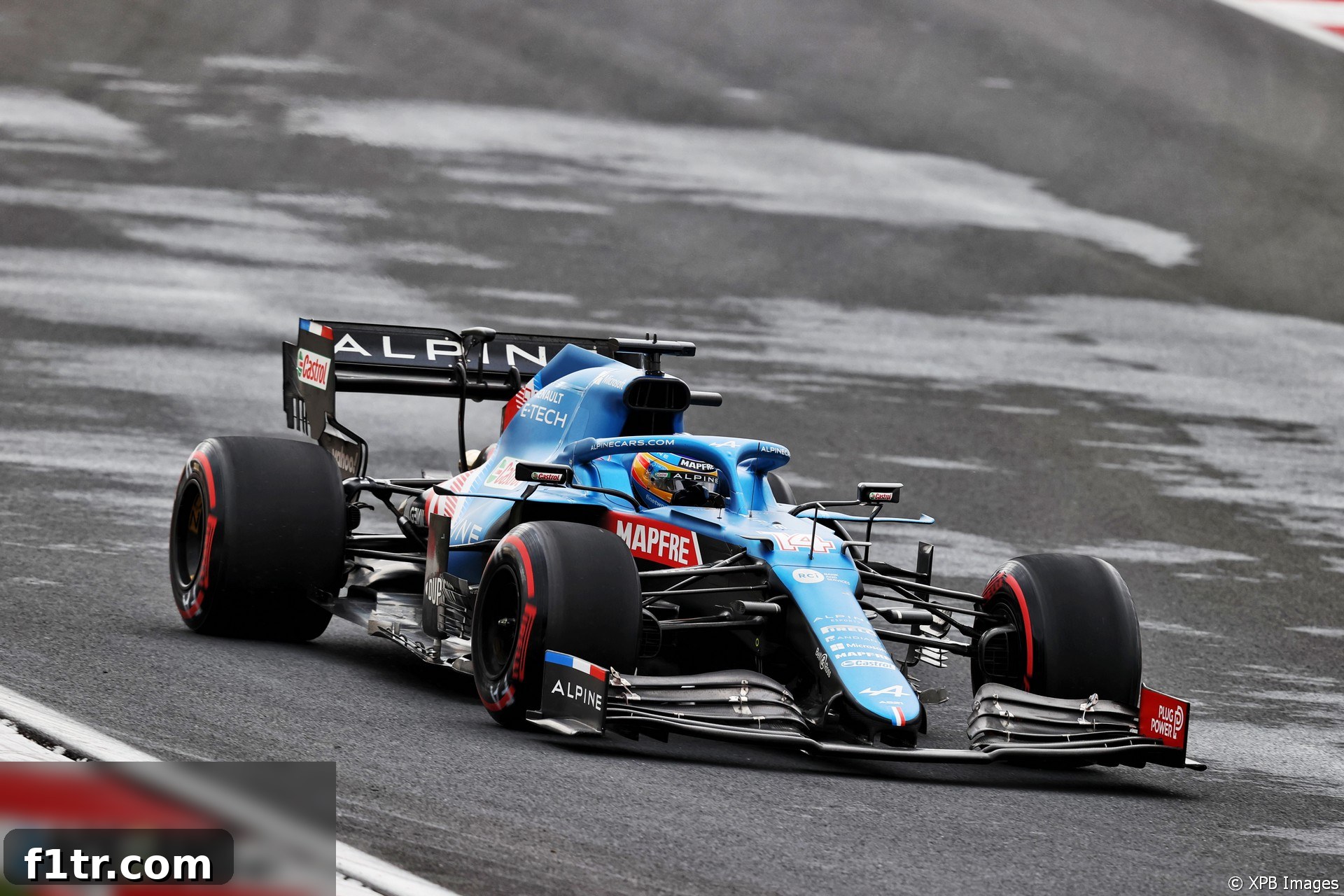
The first flashpoint involved Fernando Alonso during the qualifying session for the Turkish Grand Prix. The Alpine driver was investigated for allegedly failing to respond appropriately to double waved yellow flags displayed at the start of Q1. Under Formula 1 regulations, double waved yellow flags signify a significant hazard on track, requiring drivers to reduce speed substantially and be prepared to stop. Crucially, no meaningful lap time is permitted to be set in a sector under double yellow flags.
The Double Yellow Flag Rule and Driver Reactions
Alonso’s situation became a subject of intense scrutiny due to the differing reactions among drivers who encountered the same incident. During his first lap in Q1, Alonso passed through Turn 1, where double yellow flags were being waved due to an incident involving another car. He registered a lap time of 1’29.589, then completed a subsequent lap over six seconds slower, before finally improving to a 1’26.147. His response stood in stark contrast to that of Lance Stroll, who was immediately ahead of Alonso on track and also encountered the same double yellow flags. Stroll backed off considerably, recording a 1’44.856 – a staggering 15 seconds slower than Alonso’s initial lap time – before improving on his next attempt to 1’25.284. This discrepancy in driver response, particularly in a safety-critical situation, immediately drew attention.
Alonso himself offered his perspective on the incident. “I heard the engineer saying ‘double yellow’,” he explained. “I saw the double yellow as well on Turn 1 and on the dash on the steering and the dash becomes yellow as well. So it was very clear to me and I aborted the lap. But because it’s the first lap of qualifying, you still set the time. And then the following lap I was three seconds faster without aborting the lap. And that was probably the confusion.” Alonso believed he had complied with the spirit of the rules by aborting his attacking lap.
The Stewards’ Verdict: “No Meaningful Lap Time”
Despite the initial investigation, the stewards ultimately decided not to penalise Alonso. Their reasoning centred on the determination that “he did not set a meaningful lap time” after passing the yellow flags on his first lap of Q1. This ruling, however, introduced an element of ambiguity. How is “meaningful” defined? Does a driver gain an unfair advantage if they back off less than others, especially if track conditions subsequently worsen, preventing later improvements? By not backing off as much as Stroll, Alonso inadvertently put himself in a potentially advantageous position if the track deteriorated. The lack of a penalty for Alonso, while technically justifiable under the stewards’ interpretation of “meaningful,” fueled frustration among his fellow competitors.
Drivers Call for Consistency: Gasly and Stroll’s Frustration
Pierre Gasly, who himself received a penalty for a collision with Alonso during Sunday’s race, voiced his confusion and frustration over the stewards’ decisions. “These last two events I don’t really understand the regulations because to me it’s either black and white, and these two situations for me were very clear,” said the AlphaTauri driver. Gasly highlighted the perceived inconsistency, arguing that such rules should be straightforward and unambiguous, particularly when safety is involved. “I think it has to be discussed what we are allowed to do because there is, of course, one incident which is a white line, not safety related, and another incident with double yellow flag where safety was related. I’m sure we’re going to discuss that with Michael. But I think all of us in the team were surprised with that.”
Lance Stroll echoed Gasly’s sentiments, emphasizing the critical importance of consistency. “I think the rules need to be consistent, especially in a double yellow, which it was,” he stated. Stroll firmly believes that in a double yellow flag situation, a driver must abandon their lap time completely. “You can’t keep pushing. You can’t set a lap time. You should have to, on a double yellow, abandon the lap time. Which it was, it was a double yellow. On a single yellow you can lift and if conditions are improving with the lift, if you can demonstrate that with the data and you set a fast lap time, fine, if there’s a clear lift. But in a double yellow, for me it’s clear, you have to abandon the lap and that wasn’t the case. So I just think that there’s different decisions being made, which is funny.”
Despite his dissatisfaction with the ruling, Stroll confirmed he would not alter his approach to yellow flags. “I’m going to stick to doing what I always do,” he affirmed. “Just for safety, if it’s a double yellow I abort the lap, if it’s a single yellow, I lift and then I get back on the gas when it’s green again. I just hope the stewards really keep that consistency, though, because I think it’s very important for everyone that the rule is clear.” The Aston Martin driver is confident that this issue will be a central topic at the upcoming drivers’ briefing with Michael Masi.
The Russian Grand Prix: Norris’s Pit Lane Infraction
The second incident fueling driver discontent occurred at the preceding race in Russia, involving McLaren’s Lando Norris. Towards the end of the race, Norris was struggling significantly on slick tyres on a rapidly wetting track. As he approached the pit lane entry, he crossed the white line delineating the pit entry, an action that typically incurs a penalty. However, similar to Alonso, Norris avoided a time penalty, receiving only a reprimand from the stewards.
The Incident and Its Mitigating Circumstances
The circumstances surrounding Norris’s pit lane infraction were unique. Fighting for position and navigating treacherous conditions, Norris approached the pit lane entrance at less than half his usual speed. Despite his reduced pace, the extremely slippery surface meant he was unable to keep his car within the white lines, resulting in the infringement. The stewards considered these “mitigating circumstances” when deciding on the penalty. They acknowledged the severe grip reduction due to the weather and Norris’s efforts to control the car under extreme conditions, concluding that a reprimand was sufficient rather than a more stringent time penalty.
Questions of Fairness and Precedent
While the mitigating factors were clear, the decision nevertheless raised eyebrows among other drivers and teams. In the past, similar infringements of pit lane entry or exit lines, even under less dramatic circumstances, have often resulted in time penalties. The perceived leniency towards Norris, especially when contrasted with other drivers who have been penalised more severely for what appeared to be less egregious infractions, contributed to the overall sense of inconsistency. For drivers like Gasly, who observed the situation as “very clear,” such rulings blur the lines of what is permissible and what is not, making it difficult to anticipate stewarding outcomes.
Michael Masi Responds: Explaining the Rulings and Future Adjustments
Race director Michael Masi addressed both incidents, offering explanations for the stewards’ decisions and indicating a willingness to review regulations where necessary. His role involves overseeing race operations and ensuring the consistent application of the sporting regulations, a task made challenging by the dynamic nature of Formula 1 racing and the often-subjective interpretations required in specific incidents.
Unpacking the Alonso Decision
Regarding Fernando Alonso’s yellow flag incident, Masi reiterated the stewards’ finding that Alonso “did not set a meaningful lap time.” However, he also acknowledged the potential for a different outcome under changed circumstances. “Having spoken to the stewards later on, and also to the team, it was actually explained quite clearly that let’s call it if a dump of rain had come straight after, and it was a meaningful lap time, then the outcome would have been very, very different,” said the race director. “But the facts are that in the circumstances, it wasn’t a meaningful lap time.” This suggests that while the current ruling was based on the precise facts of the situation, the interpretation of “meaningful lap time” leaves room for future debate and potentially different verdicts depending on evolving track conditions.
Addressing the Norris Reprimand
Masi also defended the stewards’ decision regarding Lando Norris’s pit lane infringement in Russia. He stressed that the stewards made their judgment based on all available information and the specific conditions at the time. “The stewards made the decision at that point based on what they had,” Masi explained, effectively stating that the case was closed from the FIA’s perspective. The race director emphasized the unique circumstances, including the unexpected onset of heavy rain and Norris’s extreme struggle for grip, which were deemed significant mitigating factors. While the ruling may have seemed lenient to some, it was a judgment call based on the stewards’ assessment of the full context rather than a strict, decontextualized application of the rule.
Looking Ahead: Potential Rule Revisions
Crucially, Masi indicated that the controversies surrounding these incidents, particularly the yellow flag protocols, might lead to revisions in future regulations. He acknowledged the need for clearer wording to prevent similar ambiguities and ensure a more universally understood interpretation. “We’ll have a discussion about that and might come up with some adjusted wording for future to remove any incentive whatsoever in that scenario,” Masi confirmed. He recognized the unique nature of the Alonso situation, stating, “But it’s one of those unique situations that you could argue that everyone that set a lap time that first lap out, that went through double yellows, was a meaningful lap time because at that point in time it was the only lap that they had set, which was the case with Fernando.” This openness to refine the rules suggests the FIA is receptive to driver feedback and aims to enhance clarity and consistency in F1 stewarding moving forward.
The Broader Implications for Formula 1
These two incidents, and the discussions they have triggered, highlight the ongoing challenge of stewarding in Formula 1. The sport is a high-speed, high-stakes environment where split-second decisions by drivers and race officials can have significant consequences. Maintaining fairness, ensuring driver safety, and upholding the integrity of the competition are paramount.
The Essence of Fair Competition
For drivers, the concept of “black and white” rules is fundamental to fair competition. If the interpretation of regulations varies from race to race, or even from incident to incident, it undermines confidence in the system. Drivers need clear guidelines to know how to react under specific conditions and to trust that their competitors will be judged by the same standards. The perceived lack of consistency can lead to frustration, and in extreme cases, may even influence how drivers choose to approach future safety-critical situations, potentially compromising safety or competitive balance.
The Driver’s Perspective on Safety and Strategy
The double yellow flag rule is fundamentally about safety. Drivers are trained to react instantly and significantly reduce speed to avoid potential hazards. When a driver’s diligent adherence to this safety protocol (like Stroll’s significant lift) appears to put them at a disadvantage compared to a competitor who perhaps pushed more aggressively yet received no penalty, it creates a problematic precedent. While F1 is a sport of strategy and pushing limits, safety regulations are non-negotiable. The upcoming discussions with Michael Masi are therefore not just about specific penalties, but about reaffirming the commitment to driver safety and ensuring that the rules support, rather than complicate, safe racing practices.
Conclusion: A Critical Juncture for F1 Stewarding
The upcoming drivers’ briefing with Michael Masi will be a crucial forum for addressing these concerns. The collective voice of the drivers, expressing their need for greater consistency and clarity in stewarding decisions, is a powerful force. While the complexities of Formula 1 will always present unique situations, the goal remains to minimize ambiguity and ensure that the rules are applied equitably to all competitors. The willingness of the FIA and Michael Masi to engage in these discussions and potentially adapt the regulations demonstrates a commitment to evolving the sport in a way that prioritizes fairness, safety, and clear communication, ultimately benefiting everyone involved in Formula 1.
Relevant Discussions and Future Races
- Fifth place was possible from back row without slow pit stop – Sainz
- Giovinazzi ignoring position swap order was “not ideal”, admit team
- Bottas becomes 35th Formula 1 driver to reach 10 race wins
- Medical Car driver van der Merwe likely to miss further races due to Covid-19 rules
- Drivers to ask Masi why Alonso and Norris went unpunished for “very clear” incidents
Browse all 2021 Turkish Grand Prix articles