Ferrari team principal Frederic Vasseur has expressed his reservations regarding the potential revisiting of the 2008 Formula 1 season’s outcome. His comments come in response to a significant legal bid initiated by the team’s former driver, Felipe Massa, who is challenging the legitimacy of the championship results from that year. Vasseur described the prospect of altering historical standings as “strange,” highlighting the complexities and potential implications of such a move for the sport.
Advert | Become a Supporter & go ad-free
Despite his personal view, Vasseur, who was not at the helm of Ferrari or any other F1 team during the controversial events of the 2008 Singapore Grand Prix, was quick to state, “I don’t want to make any comment on this matter,” reflecting the sensitive nature of the ongoing dispute and the high stakes involved for all parties within Formula 1.
The saga re-ignited last week with reports confirming that Massa’s legal representatives had dispatched a formal Letter Before Claim to both the FIA (Fédération Internationale de l’Automobile) and Formula 1. This legal maneuver signals Massa’s intent to pursue a claim, which could potentially escalate into a full-blown legal battle. Intriguingly, Stefano Domenicali, the current CEO of Formula 1, held the position of team principal at Ferrari in 2008 when Massa agonisingly lost the championship to Lewis Hamilton by the slimmest margin of a single point in the final race of the season.
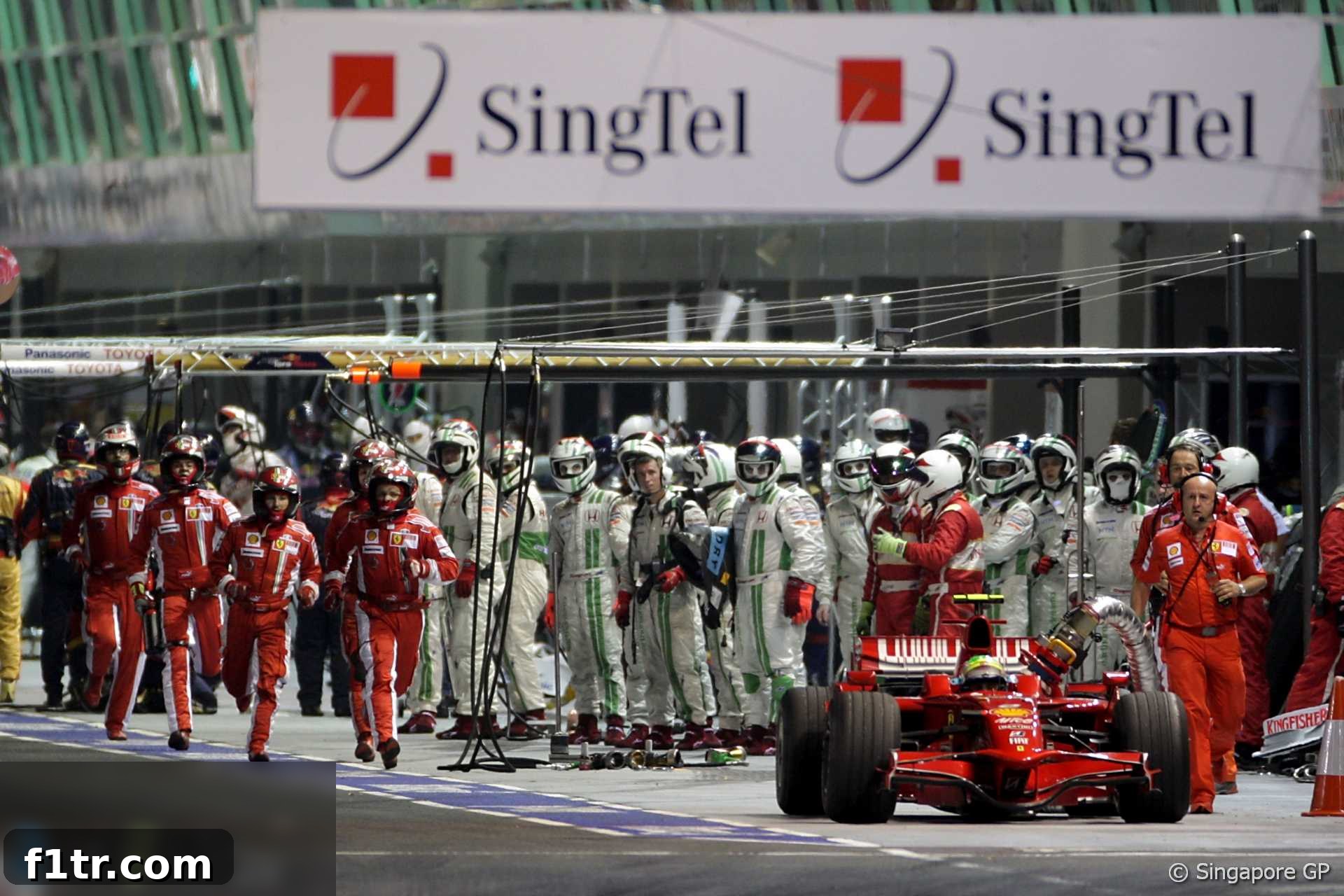
Massa’s heartbreaking title defeat, which occurred at the season-ending Brazilian Grand Prix, came just five weeks after a pivotal incident at the Singapore Grand Prix. During that race, Massa, then leading comfortably, suffered a catastrophic pit stop error under an early Safety Car period, which cost him precious time and a potential victory. This single event had a profound impact on the championship standings, tilting the scales further in Hamilton’s favour.
The true extent of the scandal surrounding the 2008 Singapore Grand Prix only fully emerged much later, revealing that the Safety Car period was not a mere stroke of bad luck for Massa but a result of a deliberate act. Nelson Piquet Jnr, then driving for Renault, intentionally crashed his car to trigger the Safety Car, a strategy orchestrated by his team to benefit his teammate, Fernando Alonso, who subsequently won the race. This incident, famously dubbed “Crashgate,” allowed Alonso to gain an unfair advantage. While Massa’s race was ruined, earning him no points, Hamilton capitalised on the chaos, securing a valuable six points for a third-place finish. This critical points swing further widened the gap between Hamilton and Massa at the top of the championship table, making Massa’s eventual one-point deficit feel all the more galling.
The Weight of Retrospective Justice: Ecclestone’s Revelation and Its Aftermath
The urgency behind Massa’s current legal challenge stems partly from recent explosive claims made by former F1 CEO Bernie Ecclestone. Ecclestone recently stated that the FIA could have acted significantly sooner in response to the allegations of Renault’s cheating. He revealed that top officials, including himself and then-FIA president Max Mosley, were aware of the deliberate crash long before it became public knowledge. However, by the time the FIA finally took action – nearly a year after the infamous race – its regulations prevented any alteration of the results. This regulatory limitation meant that despite the proven wrongdoing, the official outcome stood, thereby denying Massa the opportunity to potentially be crowned champion instead of Hamilton, a situation that has haunted him for over a decade.
Frederic Vasseur, who briefly led Renault’s F1 team in 2016 before taking the reins at Ferrari at the start of the current season, acknowledged the extraordinary nature of the events that transpired 15 years ago. However, he remained cautious about Ferrari’s official stance on the highly contentious controversy. His position is understandable, given the sensitive relationships within the F1 paddock and the complex legal landscape that Massa’s claim now presents.
“I have a good relationship with all the stakeholders on this topic, and it’s quite tricky,” Vasseur commented, underscoring the delicate balance he must maintain. “For sure the circumstances were completely exceptional.” This admission highlights the unique and unprecedented nature of Crashgate, a scandal that undoubtedly cast a long shadow over the sport’s integrity. Yet, Vasseur’s reluctance to offer outright support for a retrospective change speaks volumes about the established principles of Formula 1.
He further elaborated on a broader philosophical point, not specifically tied to Felipe Massa’s case but relevant to the wider debate. “But more generally, and not about Felipe, I think we are also trying to push the FIA to know the result of the event at the chequered flag. And perhaps this, I don’t know. I don’t want to make any comment, but for sure it would be strange [to revise the result].” This statement reveals a fundamental principle within motorsport: the finality of results once the chequered flag falls. Changing outcomes years later could set a dangerous precedent, potentially opening a Pandora’s Box of historical challenges and undermining the very fabric of sporting competition.
Vasseur’s stance is clear: he prefers that race results, once declared, remain immutable. “I’m not a big fan to change the result of the race 15 minutes after the chequered flag,” he asserted, emphasizing his commitment to the principle of finality. This perspective, while perhaps frustrating for Massa, reflects a common sentiment within the racing community that for the integrity of the sport, decisions made on race day, even if controversial, generally stand unless there is an immediate and clear procedural error or a very specific appeals process followed within a short timeframe. The implications of reopening a 15-year-old championship would extend far beyond Massa and Hamilton, potentially destabilising the historical record of Formula 1 and inviting countless other challenges.
The Unprecedented Challenge: Legal Precedent and Sporting Integrity
Felipe Massa’s legal challenge represents an unprecedented move in modern Formula 1 history. While there have been numerous controversies and appeals, the idea of overturning a championship title more than a decade after it was awarded, based on information that emerged years post-event, is a venture into uncharted territory. The Letter Before Claim is a preliminary step, indicating Massa’s intention to initiate legal proceedings unless a satisfactory resolution is reached. This could involve seeking substantial damages or, more ambitiously, lobbying for a change in the 2008 championship classification. The legal basis for such a claim would likely hinge on the argument that the 2008 Singapore Grand Prix was fundamentally tainted by fraud, directly impacting the integrity of the championship outcome. If successful, it would not only be a historic victory for Massa but also a seismic shockwave through the world of international sport, questioning the finality of countless past results across various disciplines.
The FIA and Formula 1 face a monumental challenge. Upholding the original result, despite the admission of wrongdoing by key figures, could be seen by some as an injustice to Massa. Conversely, altering the championship outcome would throw into question the established rule of ‘finality of results’ and could lead to an endless stream of retrospective challenges, thereby destabilising the sport’s entire historical narrative. Lewis Hamilton’s status as a seven-time world champion, a record he shares with Michael Schumacher, would also be directly impacted. The sporting implications are immense, potentially eroding trust in the historical records and creating an environment where past triumphs are perpetually vulnerable to re-evaluation. As the legal battle unfolds, the entire world of Formula 1 will be watching closely, understanding that the outcome could redefine the very principles upon which the sport’s history is built.
Advert | Become a RaceFans supporter andgo ad-free
2023 F1 season
- FIA president cleared of alleged interference in two 2023 races
- First week viewing figures for new Drive to Survive season fall again
- Max who? Drive to Survive season six prefers its favourite faces
- RaceFans’ complete 2023 season review
- The F1 drivers who pulled off the 10 biggest charges through the field in 2023
Browse all 2023 F1 season articles