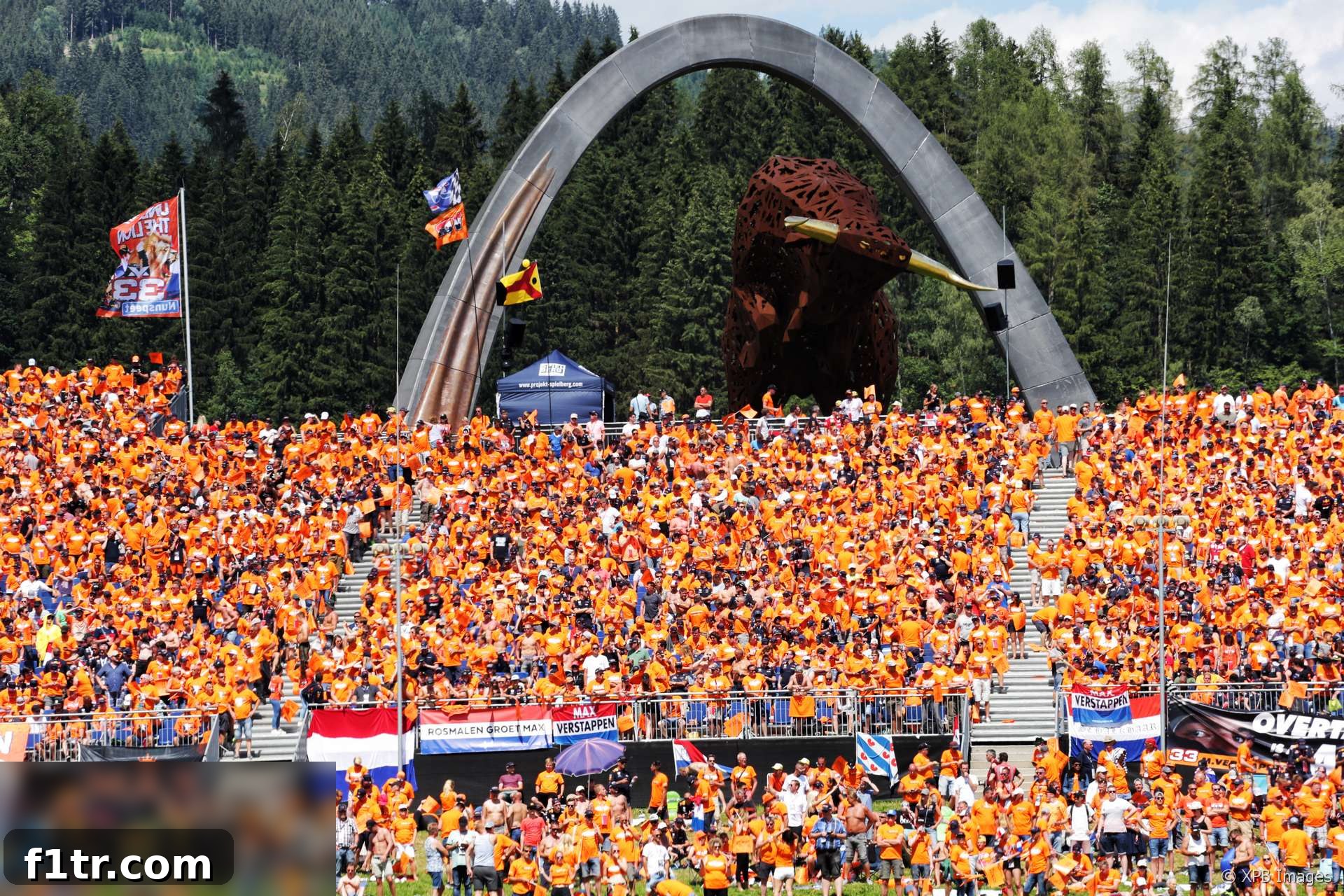
The crisp, invigorating Alpine air of the Red Bull Ring offered a refreshing change for @DieterRencken, particularly after navigating the utterly chaotic traffic and organizational hurdles that plagued Paul Ricard just one week prior. This stark contrast wasn’t merely a matter of scenery; it was a profound testament to the varying standards of event management within Formula 1, a topic that would underpin the entire weekend’s experience. The Spielberg circuit, nestled amidst the picturesque Styrian mountains, presented an exemplary model of how a major international sporting event should be orchestrated, from the seamless flow of attendees to the meticulous attention paid to every detail of paddock life. It was a weekend that served as a masterclass in logistics, hospitality, and creating an unforgettable atmosphere for both media and fans, standing in sharp relief against the recent French Grand Prix debacle.
9am Sunday: A Glimpse into Red Bull’s Paddock Empire
Arriving at the Red Bull Ring, the day began with a customary Continental breakfast, a brief moment of calm before the immersion into the bustling F1 paddock. A surprise call from the media centre quickly altered the day’s initial plans: I had been granted exclusive access to the pit building roof, promising an unparalleled and unimpeded vantage point to fully appreciate the sheer scale and architectural marvel of Red Bull’s famous ‘Holzhaus’ Energy Station. This iconic wooden structure, often described as rustic yet undeniably grand, is so vast and intricately designed that capturing its entirety from the ground level of the paddock proves an impossible task for any lens. Its imposing presence dominates a significant portion of the pit lane area, a clear statement of Red Bull’s commitment to creating a distinctive and memorable presence at every Grand Prix. From this elevated position, the true artistry and engineering behind the Holzhaus became evident, showcasing a level of ambition that goes far beyond a typical hospitality suite.
The ‘Holzhaus’ serves as a central hub, not only providing world-class hospitality for Red Bull’s Formula 1 operations but also extending its services to the company’s Moto GP teams – KTM and Honda – when they are on circuit. Furthermore, it acts as a vibrant marketing base for the fiercely competitive Red Bull Rookies Cup championship, fostering the next generation of motorsport talent. For the junior series, a separate, equally well-appointed ex-F1 hospitality unit ensures that no detail is overlooked. It had been whispered in the paddock that the Holzhaus had, on occasion, “ruffled a few feathers” within the more traditional Moto GP community, and standing on the rooftop, observing its colossal footprint, it was immediately clear why. Its immense dimensions and elaborate design truly set it apart, making an unequivocal statement about Red Bull’s brand identity and their unparalleled investment in creating a unique, immersive experience.
From my elevated perspective, it was clear this facility wasn’t just large; it was simply enormous. It majestically dwarfed even the already spacious and state-of-the-art Mercedes unit positioned directly beside it, an impressive feat given Mercedes’ own significant paddock presence. Yet, astonishingly, the Holzhaus is merely Red Bull’s third-largest hospitality structure globally. It ranks behind the truly unique special Monaco floating motorhome, a testament to innovation, and the even larger, overarching F1 units that cater to both Red Bull Racing and its sister team, Toro Rosso, simultaneously. This insight underscored a broader observation visible from the rooftop: Red Bull genuinely spares no expense when it comes to track-side facilities. Their track-side F1 technical centre, another permanent fixture in the paddock, is by far the most expansive unit, a clear indicator of their relentless pursuit of performance and operational excellence. Every aspect of their paddock setup is designed to project an image of power, precision, and unparalleled commitment to the sport, making the Red Bull Ring a fitting backdrop for such a display.
12:15pm: A Culinary Interlude at Pirelli
Advert | Become a Supporter & go ad-free
As midday approached, it was time to head for lunch, with a pre-booked table for four awaiting at the Pirelli hospitality suite. The description “restaurant style” barely scratches the surface of the experience; the culinary standards and attentive service would easily make a superior five-star restaurant proud. Today was no exception to this consistently high benchmark. Beyond a lavish and extensive buffet spread, the kitchen offered a comprehensive à la carte menu, brimming with tempting options designed to satisfy diverse palates. An Australian colleague and I opted for the exquisitely prepared swordfish, accompanied by a vibrant array of Mediterranean vegetables, a light yet flavourful choice perfectly suited for a busy Grand Prix weekend. Our other two companions indulged in equally satisfying main courses, with one enjoying a perfectly cooked steak and the other savouring delicate ravioli. Each dish was crafted with precision and presented beautifully, turning a simple paddock lunch into a memorable gastronomic experience.
The superb dining experience was elegantly rounded off by a selection of tasty and artfully presented desserts, providing the perfect sweet conclusion to a truly outstanding meal. The attention to detail, from the freshness of the ingredients to the impeccable presentation, underscored Pirelli’s commitment not only to performance on track but also to providing exceptional hospitality off it. A sincere thank you to the entire Pirelli team for such a delightful and rejuvenating break in the middle of a demanding Sunday. Such moments of refinement and quality are cherished amidst the relentless pace of a Formula 1 Grand Prix, reminding us of the dedicated efforts that go into every facet of the sport’s operation.
1:30pm: The Lingering Wait and Tactical Maneuvers
The period following lunch often brings a sense of anticipation, but today, the hours leading up to the pit lane opening at 2:30 pm seemed to drag perceptibly. While Formula 1 is always punctuated by moments of high drama and breaking news, the prolonged wait before the race added a unique tension. There were, of course, sporadic frissons of excitement that rippled through the paddock. News broke that the seasoned veteran Fernando Alonso would be forced to start his race from the pit lane, an unexpected setback that always injects an element of unpredictability. Simultaneously, the announcement of Brendon Hartley incurring a tactical engine change further fuelled discussions and strategic analyses among the media and teams. These developments, while significant for the competitive narrative, couldn’t entirely dispel the underlying sentiment that the extended build-up to the race was becoming somewhat taxing. Frankly, for many F1 personnel, the sooner Liberty Media opts to return to more traditional start times for European races, the better for overall workflow and energy levels. When experiments, no matter how well-intentioned, demonstrably fail to enhance the experience or indeed complicate it, the sensible course of action is often to scrap them and revert to proven methods. The energy and focus of everyone involved, from mechanics to media, are finite, and unnecessary lulls can dilute the intensity of the race day experience.
2:30pm: Grid Walk Insights – Silverstone’s Future and F1’s Horizon
Stepping onto the grid before the race is always an electrifying experience, a sensory overload of roaring engines, buzzing energy, and last-minute preparations. Amidst this vibrant chaos, I had the opportunity to chat with Derek Warwick, a revered ex-F1 driver, current BRDC president, and, for this particular race, a driver steward. Our conversation inevitably turned to a crucial discussion I’d had on Saturday with Stuart Pringle, the CEO of Silverstone circuit. The core of that discussion revolved around my suggestion that the British Racing Drivers’ Club (BRDC), as the proud owners of the iconic circuit, should actively seek a one-year extension to their present contract with Formula 1. This contract, to the concern of many, is set to expire somewhat prematurely in 2019, leaving the future of the British Grand Prix potentially hanging in the balance.
The rationale behind this proposed extension is multifaceted and deeply intertwined with the broader uncertainties currently facing Formula 1. The landscape of F1 beyond 2020 remains in a state of limbo, with new regulations, commercial agreements, and team structures all subject to ongoing negotiations and significant changes. Furthermore, the future of the sport’s biggest star, Lewis Hamilton, adds another layer of complexity; he has publicly spoken of signing a potential two-year deal with Mercedes before contemplating retirement at the end of 2020. Both these pivotal factors – the uncertain regulatory framework post-2020 and the potential departure of F1’s most marketable driver – are absolutely crucial to the sustained success and crowd appeal of any race, not least the prestigious British Grand Prix. Extending the current deal by a single year thus makes eminent sense, offering a much-needed buffer. It would provide both Liberty Media, F1’s commercial rights holder, and the BRDC with a clearer understanding of the evolving F1 landscape and, crucially, Lewis Hamilton’s definitive future plans, both of which profoundly impact fan attendance and commercial viability.
Beyond clarity, a one-year extension would also generously broaden the negotiating window. This is particularly vital at a time when Liberty Media is engaged in a complex and challenging battle to maintain a robust 20-race calendar, a target that requires stable, long-term commitments from circuits. Given Silverstone’s historical significance, its immense popularity, and its status as a home race for many teams, securing its future is paramount. A short-term extension provides breathing room, allowing both parties to negotiate a more comprehensive, long-term agreement from a position of greater certainty and mutual understanding, ensuring that the British Grand Prix, a jewel in the F1 crown, continues to thrive for years to come. The stakes are incredibly high, and strategic foresight is essential to navigate these turbulent waters successfully.
Advert | Become a RaceFans supporter andgo ad-free
5:30pm: Nürburgring Record Dreams and Mercedes’ Calculations
After the race, the atmosphere in the paddock shifts from pre-race tension to post-race analysis and, often, a healthy dose of speculation. Following a particularly downcast post-race session with Toto Wolff, Mercedes team principal, a compelling piece of conversation emerged. I brought up Christian Horner’s intriguing suggestion that the Red Bull-developed Aston Martin Valkyrie AMR Pro possesses the raw capability to shatter Porsche’s newly established Nürburgring Nordschleife lap record. This topic was particularly salient given Horner’s earlier comments on Friday, where he had stated that Mercedes would likely be unwilling to fund such a high-profile, record-breaking project with one of their own cars. To my surprise, and perhaps against his initial public stance, Toto Wolff’s demeanour visibly brightened at the mention of the Nürburgring. He then divulged a fascinating piece of information: Mercedes, despite Horner’s assertions, was actively looking into conducting a detailed lap simulation of the iconic Nordschleife. This revelation was a clear indication that the competitive spirit runs deep, and the lure of breaking records, even outside the strict confines of F1 racing, holds significant appeal for top motorsport manufacturers.
The implications of this potential simulation were profound. What if, hypothetically, the extensive data and advanced algorithms used by Mercedes were to unequivocally show that a suitably adapted Mercedes F1 car, freed from the restrictive technical regulations of Grand Prix racing and equipped with bespoke components for a single-lap assault, could not only challenge but comprehensively smash the current Nordschleife record? The thought alone was electrifying. Such a feat would not just be a demonstration of engineering prowess; it would be a colossal public relations coup, a definitive statement of Mercedes’ unrivalled technical capabilities and an astonishing testament to the ultimate performance potential of modern Formula 1 machinery. It would ignite the imaginations of fans worldwide, rekindle the age-old debate about F1 cars on the ‘Green Hell,’ and add another glorious chapter to the storied rivalry between these giants of motorsport. The sheer audacity of the idea, coupled with Mercedes’ known precision and ambition, made it a concept well worth contemplating – a tantalizing ‘what if’ in the relentless pursuit of speed and ultimate performance.
7:30pm: A Weekend of Contrasts – Red Bull Ring vs. Paul Ricard
As the sun began to dip below the Styrian mountains, painting the sky in hues of orange and purple, I departed the Red Bull Ring. The drive out was a welcome opportunity for reflection, allowing the experiences of the weekend to coalesce into a clear, comparative narrative. Staying within a mere ten minutes of the track was an absolute pleasure, a logistical dream that allowed for stress-free commuting on unclogged roads, expertly managed by incredibly friendly and efficient wardens. This seamless flow, this effortless ease, stood in stark contrast to the previous week’s nightmare at Paul Ricard. In Spielberg, quite simply, everything just *worked* – a testament to superior planning, meticulous execution, and a deep understanding of event management logistics.
The attendance figures, always a point of contention and often viewed with a healthy dose of skepticism by industry veterans such as myself (having been in the business too long to glibly swallow numbers put out by promoters keen to justify their events), further underscored the divergent experiences. If the reported figures are to be believed, Spielberg welcomed an impressive 185,000 walk-ins over the four-day event, whereas the French circuit managed to attract 165,000 punters. Both circuits share a rural setting, with their closest major city – Graz for Spielberg, Marseille for Paul Ricard – being approximately 45 miles away. This geographical similarity makes the logistical disparities even more glaring.
My personal experience on the road painted an even more vivid picture. From Paul Ricard, it took me a staggering two-and-a-half hours to cover the relatively short 45-mile journey to Marseilles. In stark contrast, from the Red Bull Ring this weekend, I was able to cover the far greater distance of 140 miles to Vienna airport in precisely the same amount of time. Furthermore, in France, I was compelled to delay my departure from the track by an hour and a half *after* the race had concluded, simply to allow the initial wave of traffic to dissipate, hoping to avoid even worse gridlock. No such caution was required at Spielberg; the post-race exodus was managed with remarkable efficiency, allowing for a swift and smooth departure.
There can be little doubt that my experience of contrasting efficiency and organizational competence was shared by countless fans who attended these back-to-back races. Given these profound differences, is there any wonder that the French circuit reportedly received scathing reviews and stern criticisms from Liberty Media, while Spielberg will, undoubtedly and deservedly, receive high scores and commendation? The Red Bull Ring provided a masterclass in how to run a Grand Prix, setting a benchmark for visitor experience and logistical excellence that other circuits, particularly those returning to the calendar, would do well to emulate. It proved that a well-organized event can significantly enhance the overall enjoyment of Formula 1, leaving a lasting positive impression long after the chequered flag has fallen.
Advert | Become a RaceFans supporter andgo ad-free
2018 Austrian Grand Prix: Further Insights and Analysis
- 2018 Austrian Grand Prix Star Performers: Identifying the standout drivers and teams from a dramatic weekend
- Four wins, no poles: Verstappen equals an unusual record in a fascinating statistical breakdown
- Top ten pictures from the 2018 Austrian Grand Prix: A visual recap of the most memorable moments
- Error-free Verstappen hands Red Bull a dominant and popular home win
- Why the Red Bull Ring showed Paul Ricard how to run a race: A deep dive into event management success
Browse all 2018 Austrian Grand Prix articles for comprehensive coverage and analysis