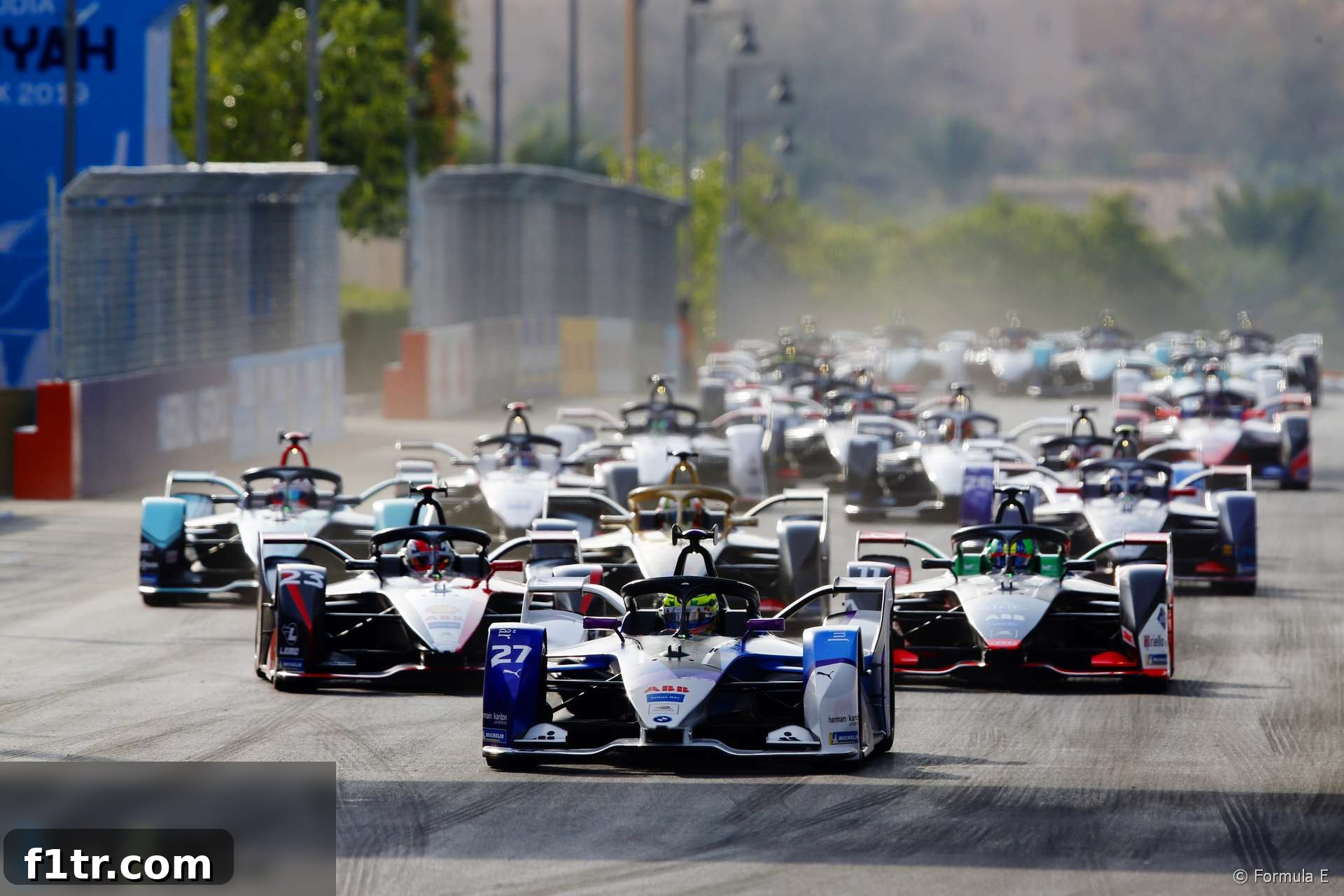
The exhilarating world of motorsport is constantly evolving, driven by technological advancements and a growing global focus on sustainability. At the forefront of this evolution, the idea of a convergence between two titans of racing – Formula 1, the pinnacle of combustion engine speed, and Formula E, the frontier of all-electric single-seater competition – has sparked significant discussion. This intriguing prospect, championed by Formula E CEO Alejandro Agag, suggests a future where these distinct series might align, or even merge, creating a unified electric racing spectacle.
Speaking at a recent FIA EConference, Agag articulated a vision for motorsport’s future that challenges conventional thinking. A long-time admirer of Formula 1, he firmly believes that electric powertrains are destined to become the standard for vehicular movement. This conviction forms the bedrock of his perspective on potential future collaborations between the two championships.
Agag highlighted a crucial strategic asset of Formula E: its unique, 25-year exclusive license for all-electric single-seater racing. This long-term mandate positions Formula E as the established leader in this rapidly developing niche. “So that for me puts the condition to some kind of understanding in the future. How that will happen, I don’t know,” Agag stated, underscoring the inherent leverage and strategic importance of this exclusivity in any prospective discussions with Formula 1.
The linchpin for any such unification, according to Agag, lies in achieving performance parity. For Formula E cars to truly combine with Formula 1, they would need to match the speed, acceleration, and overall spectacle of their combustion-engined counterparts. This is not a minor hurdle; it represents a monumental engineering challenge. “Once electric formula cars are as fast as combustion formula cars, I don’t really see the reason to race separately,” he remarked, eloquently summarizing the logical endpoint of this technological race.
Currently, a significant performance gap exists. Formula 1 cars are renowned for their blistering speed, raw power, and distinctive engine sounds, reaching speeds far exceeding current Formula E capabilities. Formula E, while incredibly agile and exciting on street circuits, operates with different power delivery mechanisms and energy management strategies. Bridging this gap will require immense advancements in battery technology, motor efficiency, and aerodynamic innovation, pushing the boundaries of what is currently possible in electric vehicle performance. This technological convergence is not a matter of if, but when, and at what pace. Agag himself acknowledges the considerable timeline involved: “But I’m guessing that’s going to take a while. I may not be around or may be around but not have the responsibility I have now. Not imminent, but I think the conditions are there in the future for some kind of approach.” His realistic assessment highlights that while the vision is compelling, its realization demands patience and sustained technological progress.
Beyond the technical challenges, the strategic alignment between the two championships is already surprisingly intricate, thanks to shared high-level ownership interests. John Malone, a prominent figure in global media, chairs the board of both Formula 1 owner Liberty Media and Formula E owner Liberty Global. This unique relationship creates an undeniable link, fostering an environment where such discussions, though complex, are not entirely unforeseen. “We have different shareholders which happen to be slightly related by the same top shareholder so they will probably have to make some decisions at that level, at operating level,” Agag acknowledged. This implies that while the operational structures and immediate commercial objectives of Formula 1 and Formula E are distinct, strategic directives from the top could certainly pave the way for closer collaboration or even eventual integration. Decisions at the highest echelons of corporate leadership, where Malone’s influence resides, could be pivotal in orchestrating any future joint ventures or mergers, navigating the intricate web of existing team agreements, manufacturer commitments, and broadcasting contracts.
The potential benefits of a future merger are multifaceted and compelling. From a global motorsport perspective, a unified electric single-seater championship could present a more coherent and powerful brand message. It would combine Formula 1’s rich heritage, global reach, and established fan base with Formula E’s pioneering spirit, urban appeal, and strong environmental credentials. This amalgamation could attract a broader and more diverse audience, catering to traditional racing enthusiasts while simultaneously engaging younger, environmentally conscious, and tech-savvy fans. Such a consolidated entity would also offer immense commercial opportunities, appealing to a wider array of sponsors eager to associate with a forward-thinking, sustainable, yet high-performance sport. Media rights could be streamlined, offering a more attractive package to broadcasters worldwide.
Technologically, a merger could accelerate research and development in electric vehicle performance. By pooling resources and expertise, the combined entity could drive innovation in battery longevity, charging infrastructure, motor efficiency, and sustainable materials at an unprecedented pace. This would not only benefit the racing series but also have significant trickle-down effects for the broader automotive industry, accelerating the transition to electric mobility for road vehicles. The environmental narrative would also be significantly strengthened, positioning motorsport as a leader in sustainable innovation rather than a perceived contributor to carbon emissions.
However, the path to a merger is fraught with challenges. Aside from the performance gap, integrating the distinct identities and brand values of Formula 1 and Formula E would be a delicate act. Formula 1’s identity is deeply intertwined with its history, iconic circuits, and the visceral sound of high-revving engines. Formula E, by contrast, has carved out a niche with its street circuits, fan interaction, and silent, futuristic racing. How would a combined series retain the essence of both without alienating existing fan bases? Furthermore, the regulatory frameworks, governance structures, and existing commercial agreements with teams and manufacturers are vastly different. Reconciling these divergent elements would require extensive negotiation and careful planning, under the ultimate oversight of the FIA. The economic models, including revenue distribution and team budgets, would also need to be harmonized, a process that could prove contentious given the differing financial scales of the two championships.
Looking ahead, the future landscape of motorsport might not necessarily involve a full, immediate merger but could unfold through various stages of integration. Shared race weekends, where both series race at the same venue, could be an intermediate step, allowing fans to experience both forms of racing and foster a sense of shared community. Alternatively, Formula 1 might eventually transition into a fully electric format, perhaps after another generation of hybrid powertrains, effectively becoming the ultimate expression of electric single-seater racing and naturally absorbing the pioneering spirit of Formula E. The growing emphasis on sustainability across all global industries, including sport, strongly suggests that electric propulsion will play an increasingly dominant role, making Agag’s vision not just aspirational but perhaps inevitable in the long run.
Alejandro Agag’s foresight offers a compelling glimpse into what the pinnacle of motorsport could eventually become: a unified, all-electric, high-performance spectacle. While the immediate future holds separate racing calendars and distinct competitive narratives, the strategic and technological seeds for a future convergence have clearly been sown. The journey towards performance parity, coupled with existing corporate ties and a shared commitment to innovation, points towards a horizon where the roaring engines of yesterday might give way to the silent, electrifying future of unified single-seater racing. The vision remains ambitious, yet in a world rapidly embracing electric mobility, it is a future that feels increasingly within reach, promising a new era for global motorsport.
Related Reading & Insights
- The Evolution of Electric Motorsport: A Deep Dive
- Formula 1’s Path to Net-Zero: Sustainability Initiatives
- Revolutionizing Racing: Advances in Battery Technology
- Navigating Mergers: Regulatory Challenges in Motorsport
- Alejandro Agag: The Visionary Driving Electric Racing
Explore More on the Future of Motorsport