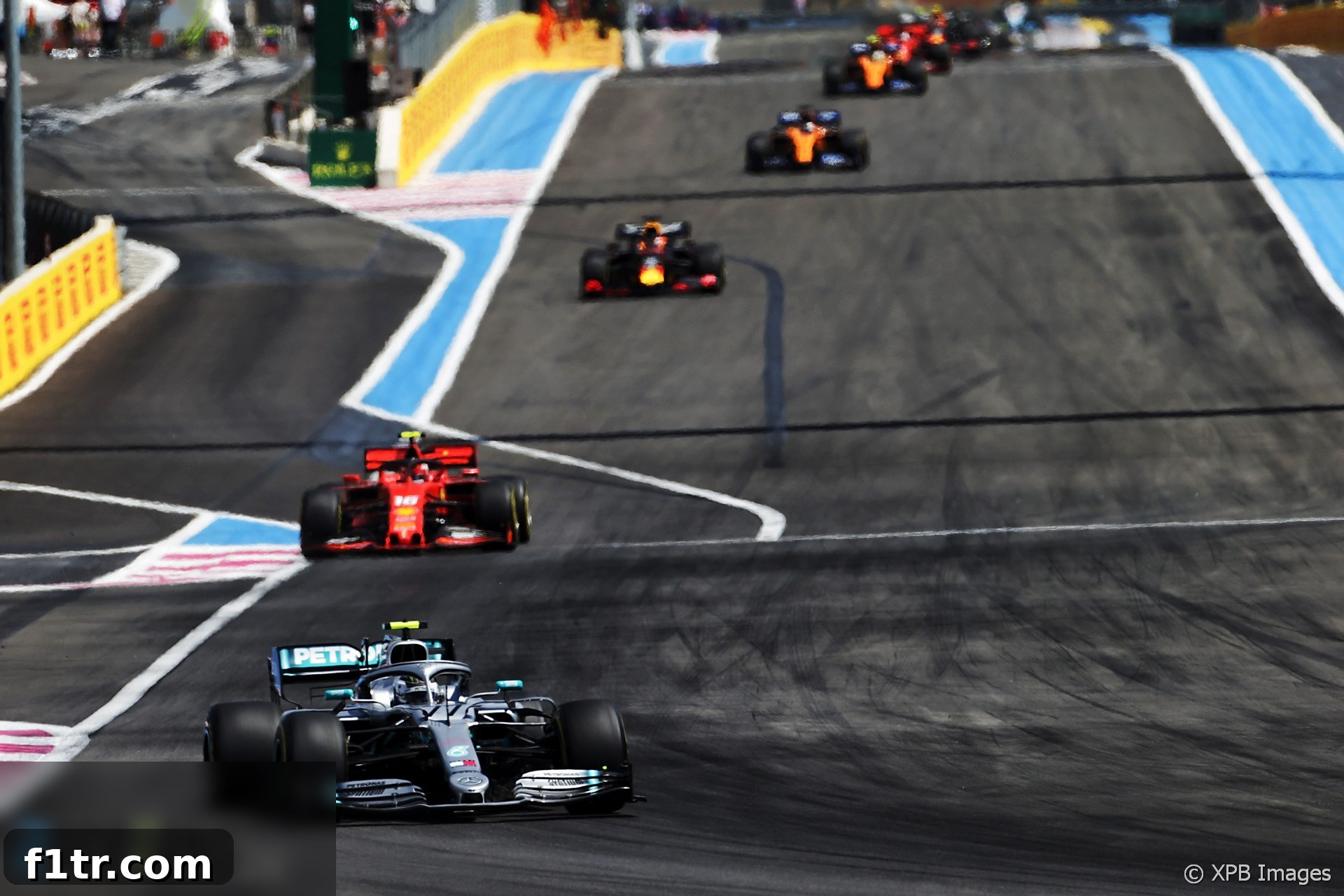
The Paul Ricard circuit, known historically for its challenging layout rather than thrilling overtaking spectacles, has undergone significant track surface modifications. These changes are designed to breathe new life into the French Grand Prix, aiming to foster more on-track action and potentially revolutionize the racing dynamics in a bid to overcome its past reputation for processional events. This much-anticipated transformation comes at a crucial time for Formula 1, especially as the sport navigates a demanding calendar and seeks to enhance the fan experience at every venue.
Advert | Become a Supporter & go ad-free
However, the lead-up to this year’s French Grand Prix has not been without its own drama. An eleventh-hour date change for the event has unfortunately led to the cancellation of one of the show’s highly anticipated moments: Romain Grosjean’s public demonstration run in a Mercedes Formula 1 car. Grosjean, a popular figure and former F1 driver, will be competing in the USA during the rescheduled Grand Prix weekend. While fans will miss out on seeing him on track publicly, a private run in the Mercedes F1 car is still planned for him later in the year at the Paul Ricard circuit, offering some solace to those eager to witness his return to an F1 machine.
Can New Asphalt Deliver a Racing Renaissance at Paul Ricard?
Since its reintroduction to the Formula 1 calendar in 2018, Paul Ricard has struggled to shake off a growing reputation for producing somewhat uninspired Grand Prix racing. With a total of only 73 overtakes across 106 racing laps in the 2018 and 2019 events, the statistics, while not abysmal, certainly did not reflect the vibrant, wheel-to-wheel battles fans crave. Recognizing the urgent need for a change of pace, the circuit management embarked on an ambitious renovation project for the 2021 season, aiming to inject dynamism into its core layout.
During the hiatus from racing last year, Paul Ricard enlisted the expertise of Studio Dromo, a renowned track design and renovation firm credited with successful overhauls at iconic venues such as Silverstone and Zandvoort. Their mandate was clear: transform the Paul Ricard experience. The renovation focused on an extensive 70% of the 5.8-kilometre track, targeting specific sections for “maximum” impact. This meticulous work involved altering cambers and crests across numerous corners. These changes were not merely cosmetic; they were engineered to serve multiple critical functions. Firstly, they aimed to significantly improve drainage, a perennial challenge at many circuits. More importantly, from a racing perspective, these modifications were designed to increase the challenge for drivers. By introducing more complex geometries and varying grip levels, the hope is that drivers will be pushed harder, encouraging more diverse lines, inducing more mistakes, and ultimately fostering closer, more aggressive on-track battling. The aspiration is for these subtle yet impactful alterations to lead to a tangible increase in overtaking opportunities and overall race excitement.
However, the comprehensive resurfacing of the track introduces a fascinating paradox. While the new cambers and crests aim to challenge drivers, a smoother, more consistent asphalt typically translates to fewer bumps and irregularities. This uniformity, paradoxically, can lead to fewer driver errors, as cars are less likely to be unsettled by unpredictable surface changes. In theory, fewer errors might mean fewer spontaneous overtaking opportunities born out of a rival’s mistake. Furthermore, if the teams that demonstrate superior pace in qualifying continue to dominate race pace, as was observed in the previous two F1 outings at Paul Ricard, then the primary source of excitement might once again boil down to strategic pit stop timings rather than direct on-track duels. The interplay between the new physical demands of the re-profiled corners and the uniform grip of the fresh asphalt will be a key determinant in how racing unfolds at this revitalized French venue.
Mercedes: Back on a Familiar Track, Back in Command?
The recent performances of Mercedes in Monaco and Baku have been notably uncharacteristic, marked by challenges that have seen their usual dominance waver. These two street circuits, renowned for their idiosyncratic layouts and unique demands, are often considered anomalous events on the Formula 1 calendar. As the paddock now shifts its focus to the more conventional and purpose-built Paul Ricard circuit, there is a strong expectation that Mercedes will find their stride once again and return to their accustomed championship-leading form.
Historically, Paul Ricard has been a happy hunting ground for the Silver Arrows. Lewis Hamilton clinched victory at the French Grand Prix in both 2018 and 2019, demonstrating the team’s potent package at this venue. In the 2019 race, Mercedes’ qualifying pace was virtually unmatchable, and Hamilton secured his second win at the circuit with a commanding 18-second lead. In fact, Ferrari was the only team that managed to keep both of its drivers on the lead lap, underscoring Mercedes’ overwhelming superiority on that occasion. This strong past performance provides a significant psychological boost and a historical benchmark for the team as they approach the upcoming race weekend.
One potential challenge for low-rake cars like the Mercedes W12 could be the high winds that often sweep down the lengthy Mistral straight. Such conditions can compromise stability during direction changes, potentially penalizing cars designed with a lower rake angle. However, nearly three months of intensive development since the start of the season have significantly improved the W12’s stability, even if outright pace gains haven’t always been evident. Paul Ricard, with its diverse mix of high-speed and low-speed corners, represents a quintessential proving ground for Formula 1 cars – the very type of layout they are designed and optimized for. Mercedes’ impressive form in the early races of the season on other conventional circuits strongly indicates that they still possess the benchmark car for such layouts, capable of delivering consistent performance across various corner types and speeds.
Nevertheless, Mercedes’ recent struggles haven’t been solely confined to lap times. The team has also been hampered by a series of uncharacteristic operational missteps, including repeated pit stop bungles and strategic decisions, both in qualifying and during races, that have ultimately worked to their disadvantage. These human and tactical errors highlight that a change of scenery to a more favorable track might not be a panacea. The team will need to ensure flawless execution across all operational aspects if they are to fully capitalize on their car’s potential and reclaim their dominant position at Paul Ricard, proving that their issues were indeed track-specific rather than indicative of deeper operational problems.
Alonso’s “New Championship”: A Fresh Start at Paul Ricard
Fernando Alonso’s highly anticipated return to Formula 1 has seen him embroiled in a fascinating internal battle with his Alpine teammate, Esteban Ocon. While Alonso currently holds a slight advantage over Ocon in the championship standings, it is Ocon who has demonstrated more consistent scoring finishes and has outqualified the two-time world champion on four occasions already. This dynamic underscores the challenge Alonso faces in reacclimatizing to the cut-throat world of modern F1.
For Alonso, Paul Ricard signifies the commencement of what he terms “a new championship.” This perspective stems from the unique and largely unfamiliar nature of the initial six rounds of the season, which have presented significant adaptation hurdles for the returning veteran. Alonso candidly articulated his reasons for this outlook, explaining, “In a way, the start of the season is not the best possible calendar for a new-coming driver.”
Advert | Become a RaceFans supporter andgo ad-free
He elaborated on the challenges posed by the early fixtures: “I had Imola, I had Portimao, two circuits that I was not racing for years, or never like in Portimao. And the guys, they were racing four months ago in last year’s championship. And then two street circuits: Baku and Monaco.” This sequence of circuits—two unfamiliar or long-absent tracks followed by two highly specialized street circuits—demanded a steep learning curve. Street circuits, in particular, with their unforgiving barriers and limited run-off, require a completely different approach and level of precision compared to conventional tracks, making rapid adaptation even more critical.
Alonso summarized his experience, stating, “So the first six races of the championship, four they were extremely challenging to get used to. So from France, a new championship hopefully, just for me. On the experience side, I hope we can get something that I feel a little bit better the balance of the car, and more feedback than what I feel now.” This sentiment highlights his anticipation that Paul Ricard, a more traditional Grand Prix circuit, will allow him to better understand the nuances of the Alpine A521, extract more performance, and regain the intuitive connection with the car that characterizes his driving style. It marks a hopeful turning point in his F1 comeback, where familiarity with the circuit type can finally allow his immense talent to shine unhindered by the learning curve of new or tricky layouts.
F1’s First 2021 Triple-Header: A Test of Endurance
The Paul Ricard circuit holds the dubious distinction of kicking off Formula 1’s inaugural attempt at hosting three consecutive race weekends back in 2018. That ambitious undertaking proved to be a significant logistical nightmare, not just for the teams and personnel but dramatically for the fans themselves. The inaugural triple-header at Paul Ricard was marred by queues that stretched for hours, leading to widespread frustration. Many fans, disheartened by the interminable waits, abandoned their hopes of witnessing the F1 cars live, while others were forced to abandon their vehicles and undertake long, arduous treks to reach the circuit. This logistical chaos cast a long shadow over the event, highlighting the immense challenges of such an intensive schedule.
For the teams and F1 personnel, the 2018 triple-header was an equally grueling ordeal. Many found themselves returning to their hotels from the circuit well past midnight on both qualifying and race days, underscoring the relentless nature of the schedule. This demanding start to what was destined to be a physically and mentally exhausting few weeks was met with widespread discontent. Following their final escape from Paul Ricard on Sunday night, the majority of the paddock faced a monumental journey, trekking over 1,100 kilometers north-east to the Red Bull Ring, nestled deep within the Styrian Alps. That weekend was then followed by another colossal road trip of approximately 1,650 kilometers for those heading directly to Silverstone. Italian teams faced an even longer journey, as they often made a detour to their factories for critical car development and parts replenishment, adding further strain to an already stretched schedule.
This unprecedented succession of races was infamously dubbed a “race between races,” its grueling details meticulously documented. It was an experiment that was wisely not repeated for the 2019 season, a testament to the unsustainable demands it placed on everyone involved. However, the unique circumstances of the pandemic-hit 2020 season forced Formula 1 to compress its schedule, making extensive use of back-to-back-to-back runs for the first nine rounds of the year. Crucially, the 2020 schedule involved far less travel between events compared to a conventionally spaced F1 calendar, mitigating some of the logistical strains of the 2018 attempt.
Despite the lessons learned, Liberty Media’s strategic decision to expand the Formula 1 calendar to a record number of Grands Prix this year means that triple-headers are once again an unavoidable feature, with Paul Ricard ironically serving as the starting point for another demanding sequence. This intensified schedule will undoubtedly take a significant toll on F1 personnel, from mechanics and engineers to logistics teams and support staff. Harder worked individuals are inherently more susceptible to making mistakes, which can have profound implications in a sport where precision is paramount. The critical question arises: can anyone afford to take it easy, or drive more cautiously, purely to preserve energy and critical components for the arduous weeks ahead? In the high-stakes, hyper-competitive environment of Formula 1, where every tenth of a second and every championship point is fiercely contested, such concessions are virtually unthinkable. The inherent pressure means every race must be attacked with maximum effort, irrespective of the accumulating fatigue.
Advert | Become a RaceFans supporter andgo ad-free
The Persistent Challenge of Track Limits at Paul Ricard
Track limits, a perennial source of debate and frustration within Formula 1, heavily dominated the discourse in press conferences and team radio conversations throughout the opening races of the season. This contentious issue rivaled even the intense Mercedes versus Red Bull battle at the front of the grid and the struggles of drivers adapting to new teams further down the order for media attention. However, once the F1 paddock moved to the confines of street circuits like Monaco and Baku, track limits largely receded as a concern, with unforgiving barriers naturally enforcing the boundaries. Now, as the sport returns to Paul Ricard, a circuit arguably more renowned for track limits violations than any other, the issue is set to surge back into the spotlight.
The vast, painted run-off areas that characterize Paul Ricard have historically been a magnet for drivers pushing the boundaries, sometimes quite literally. In the 2019 French Grand Prix, Daniel Ricciardo notably fell from a strong seventh-place finish to 11th in the final standings after receiving two post-race penalties directly related to track limits violations. The extensive run-off areas, while designed for safety, have been sardonically joked by some observers as being more visually appealing or enticing than the actual racing itself, as they invite drivers to take wider, faster lines with seemingly little consequence. This optical illusion and the perceived lack of immediate penalty often encourage drivers to exploit every millimeter, frequently leading to infringements.
This year, the newly laid, smoother, and potentially grippier surface of the circuit should theoretically result in fewer wild moments where drivers unexpectedly lose grip, even with the downforce-sapping 2021 rule changes. This reduction in unpredictable handling could lead to more consistent car behavior. However, if the increased grip and smoother surface translate into significantly higher cornering speeds compared to two years ago, teams will inevitably push the limits of the track even further, seeking to maximize performance by encroaching beyond the defined white lines. This scenario, where drivers consistently exceed track boundaries, is one that Pirelli, the official tyre supplier, is keen to avoid. Their concerns were amplified following the events in Baku, highlighting the delicate balance between track design, driver aggression, and the physical limits of the equipment, particularly the tyres.
F1’s Tyre Troubles: A Continuing Saga
The two high-speed tyre failures that dramatically occurred during the last race in Azerbaijan raised a multitude of uncomfortable and critical questions for Formula 1. The primary concern resonating throughout the paddock was this: given the extensive modifications made to both the cars and the tyres during the off-season, specifically aimed at preventing a recurrence of the failures witnessed in the previous year, why are such incidents still happening? This deeply unsettling question points to a potential systemic issue that needs urgent resolution to safeguard driver safety and the integrity of the sport.
Pirelli, Formula 1’s official tyre supplier, is scheduled to present its detailed findings regarding the Baku tyre failures ahead of this weekend’s race. The racing community anxiously awaits their analysis, hoping for clarity on the root causes and assurances that preventive measures can be swiftly implemented. A particularly curious aspect of these recent failures is that they transpired at the Baku City Circuit, a track not traditionally considered to be overly punishing on tyres. This observation makes the incidents even more perplexing and raises concerns about tyre integrity under conditions that were not, on paper, exceptionally challenging. In stark contrast, Paul Ricard is known for its more demanding layout, featuring a mix of long straights and challenging, high-load corners that can place considerable stress on the tyres.
For the French Grand Prix, Pirelli has opted to bring three compounds from the middle of its range: the C2 (hard), C3 (medium), and C4 (soft). This selection indicates Pirelli’s expectation of the track’s abrasive nature and the thermal demands placed on the tyres. The C2 compound is designed for durability and high temperature resistance, while the C4 offers maximum grip but with a shorter lifespan. The C3 acts as a versatile middle ground. The choice of these compounds suggests a strategic approach by Pirelli to manage the varied stresses of Paul Ricard, aiming to provide both performance and reliability. However, with the recent failures fresh in everyone’s minds, all eyes will be on how these tyres perform under the demanding conditions of Paul Ricard, and whether Pirelli’s findings can adequately address the lingering concerns about their robustness.
Engage with the French Grand Prix
Are you fortunate enough to be attending the French Grand Prix at Paul Ricard this weekend? If so, we are eager to hear about your experience! Share your insights, excitement, and any challenges you encounter with the RaceFans community:
- Forum: Going to the French Grand Prix at Paul Ricard
Who do you believe will emerge as the dominant force in the French Grand Prix this year? Cast your vote and share your predictions in the comments section below. Your opinion contributes to the vibrant discussion among F1 enthusiasts.
And don’t forget to participate in our RaceFans Predictions Championship for this weekend’s thrilling race! You have the flexibility to adjust your predictions right up until the start of qualifying:
- RaceFans Predictions Championship
2021 French Grand Prix Insights and Analysis
- The potentially crucial differences in how Bottas and Perez help their team mates
- How much-maligned Paul Ricard produced “one of the most exciting races for five years”
- Todt would “prefer less controversy” in Formula 1
- Wolff encouraged by ‘real progress’ from Bottas in French GP
- Red Bull’s French GP win disproves accusations over tyres and wings – Horner
Browse all 2021 French Grand Prix articles