Lando Norris’s Suzuka Struggle: Battling Tyre Overheating and Max Verstappen at the Japanese Grand Prix
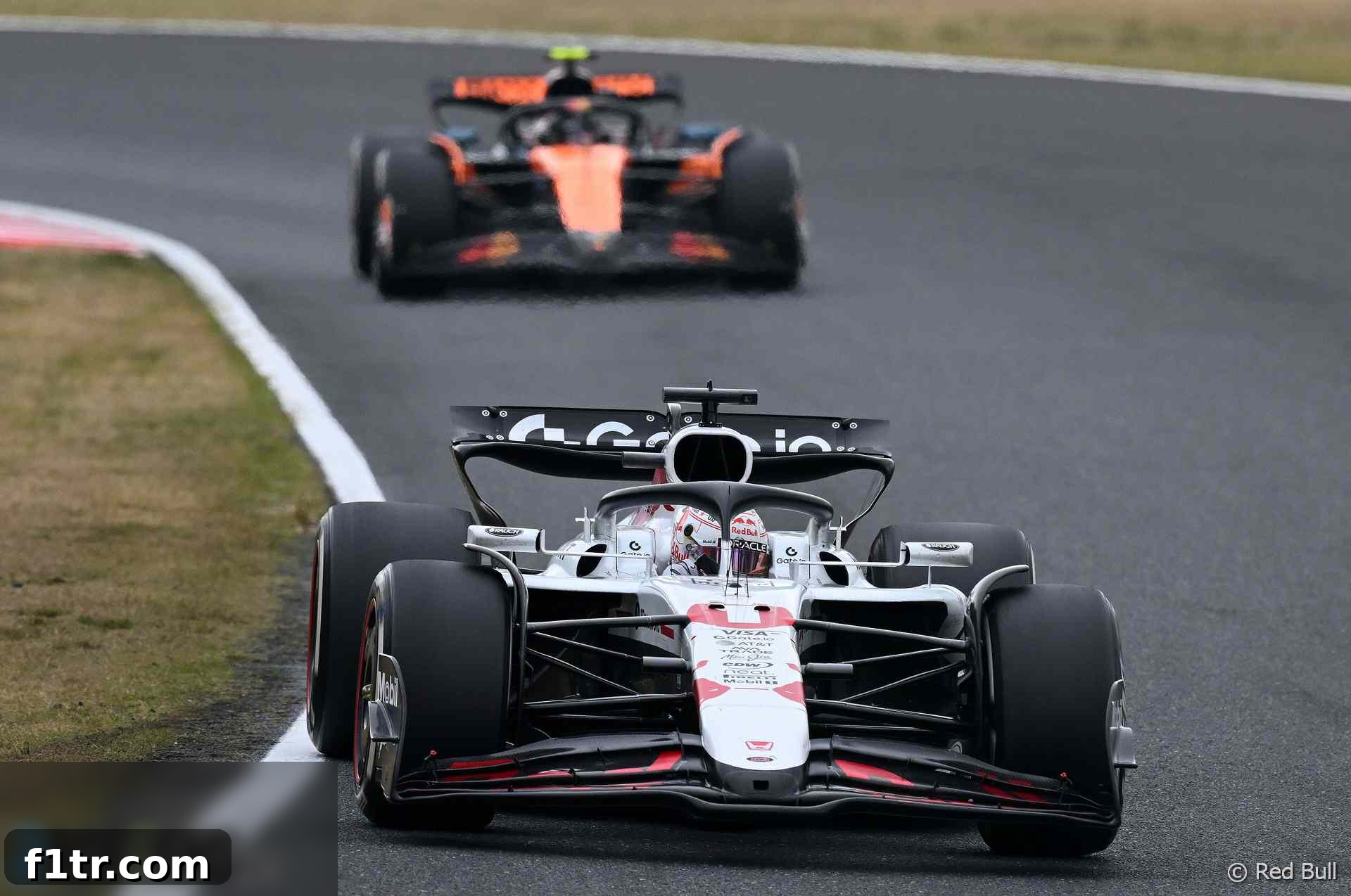
The iconic Suzuka Circuit, a revered test of Formula 1 machinery and driver skill, hosted another thrilling Japanese Grand Prix. For McLaren’s star driver, Lando Norris, the race was a relentless pursuit of perfection, a demanding 53-lap challenge against the formidable pace of reigning world champion Max Verstappen. Despite his best efforts, Norris revealed that his hopes of mounting a sustained challenge for the lead were ultimately thwarted by a critical and persistent issue: tyre overheating.
Norris, who has consistently demonstrated exceptional race craft throughout the season, found himself locked in a high-stakes chess match with Verstappen from the moment the lights went out. He maintained a strong second position for much of the race, showcasing McLaren’s impressive development. However, the pursuit was not without its internal battles, as Norris had to contend with the delicate balance of pushing the car to its absolute limit while simultaneously managing the thermal demands of his Pirelli tyres. This continuous dance between aggression and preservation was the underlying narrative of his race in Japan.
The Relentless Pursuit: Managing Tyres in Dirty Air
Throughout the intense 53-lap event, Norris was never far from Verstappen’s rear wing. Yet, a crucial distinction emerged: he rarely managed to get closer than 1.2 seconds, a gap that proved insurmountable under race conditions. Norris elaborated on this dynamic, explaining, “I would get closer and then drop back and closer and drop back. And every time I got close, the tyres would just get too hot and I would lose too much grip.” This candid admission highlights the profound impact of tyre degradation and overheating, a common adversary for drivers attempting to follow closely on high-energy circuits like Suzuka.
The phenomenon of “dirty air” plays a significant role in this challenge. When a car follows another closely, the turbulent air created by the leading car disrupts the airflow over the trailing car’s aerodynamic surfaces. This not only reduces downforce and grip but also negatively affects brake and tyre cooling. For Norris, this meant that while he could close the gap through certain sectors, the increased thermal load on his tyres, coupled with the reduced aerodynamic efficiency, quickly led to a drop in performance, making a direct attack impossible.
This intricate tyre management strategy also created an interesting dynamic with his teammate, Oscar Piastri, who was often visible in Norris’s mirrors. Norris clarified the perception of Piastri’s pace, stating, “Even when Oscar was behind me, it looked like he was quicker, but it was when I’m trying to drop back a little bit to cool the tyres and then attempt at catching up to Max.” This tactical dropping back was a calculated move, sacrificing momentary track position to prevent a more significant performance decline from excessively hot tyres. While giving the impression of Piastri having superior pace, it was, in fact, Norris executing a controlled strategy to keep his tyres within their optimal operating window, allowing him to maintain a challenging, albeit distant, second place.
Ultimately, despite his persistent efforts, Norris conceded, “I gave it a good try but I just didn’t have the speed today.” This acknowledged the fundamental speed difference between the McLaren and the dominant Red Bull, especially when confronted with the compounding factor of tyre management.
McLaren’s Performance Profile: Strengths and Struggles at Suzuka
Norris provided valuable insights into the performance characteristics of the McLaren MCL38 at the Suzuka Circuit. He noted that while the team had clear strengths, there were also areas where the car demonstrably struggled, particularly when compared to the benchmark set by Max Verstappen’s Red Bull.
Speaking to Viaplay, Norris explained, “The pace was too similar. We didn’t really have any advantage to Max.” He elaborated on the specific strengths and weaknesses: “Maybe we were a bit better in sector one, in the high-speed corners, but he was much quicker in slow-speed corners. So we were struggling a lot there with the car, just not quick enough in the slow-speed.” Sector One of Suzuka is famous for its exhilarating sequence of high-speed ‘S’ curves, a section where the McLaren clearly demonstrated its aerodynamic prowess and cornering speed. However, this advantage was nullified in the tighter, slower sections of the track, such as the Hairpin and the final Chicane before the main straight. These low-speed corners demand excellent mechanical grip and traction, areas where the Red Bull appeared to have a significant edge.
The disparity in performance across different types of corners proved to be a critical factor. Even if Norris could gain a tenth or two in the high-speed sections, he would lose it, or more, in the slow-speed areas. This made it exceedingly difficult to build enough of a gap or get close enough to Verstappen to attempt an overtake. “It was just difficult with him in the clean air and me in the dirty air, so close, we didn’t have enough of an advantage to do anything else,” Norris concluded, underscoring the combined effect of performance deficits and aerodynamic turbulence.
The Crucial Role of Qualifying and Strategic Gambles
Norris astutely pointed out that the Japanese Grand Prix was, in many respects, won by Max Verstappen in Saturday’s qualifying session. Suzuka is renowned for being a ‘track position’ circuit, where overtaking is notoriously difficult, especially among top-tier cars with similar performance levels. Securing pole position offers a distinct advantage, allowing the leading driver to control the race pace, manage their tyres in clean air, and dictate strategy without the constant pressure of defending. Verstappen’s dominant qualifying performance set the stage for his race victory, making Norris’s task significantly harder from the outset.
Furthermore, Norris indicated that McLaren’s setup strategy might have been influenced by an unpredictable weather forecast. There had been strong predictions for wet conditions during the race, prompting teams to consider a compromise in their car setup to be better prepared for rain. “We thought there would be maybe some more rain today,” Norris revealed. This foresight, however, did not fully materialize into heavy rain during the race. While light showers did pass over the track well before the start, the circuit remained largely dry throughout the Grand Prix. Norris admitted that this gamble might have impacted their performance in qualifying: “Maybe we were not in the optimal range yesterday for qualifying, thinking that it was going to rain a little bit today, but we did our best still, so that’s all I can ask.” This strategic dilemma highlights the fine margins in Formula 1, where anticipating weather conditions can be a double-edged sword, potentially optimizing for one scenario at the cost of another.
Reflections and Future Improvements for McLaren
Despite the challenges and the ultimate inability to challenge Verstappen for the win, Lando Norris maintained a pragmatic and forward-looking perspective. He acknowledged the team’s efforts and the performance they extracted, while also identifying clear areas for improvement. “So nothing to complain about, [just] things to work on because we were struggling a bit today with the slow-speed corners,” he stated, reinforcing the need to address the car’s performance in these specific sections of the track.
The Japanese Grand Prix served as a valuable learning experience for McLaren. It underscored the relentless pursuit of perfection required to consistently challenge at the front of the grid in Formula 1. The team will undoubtedly delve deep into the data collected from Suzuka, analyzing tyre degradation, aerodynamic efficiency in dirty air, and the car’s balance through various corner types. Improving the MCL38’s low-speed corner performance will be a key focus for future developments, aiming to provide Norris and Piastri with a more versatile package that can compete effectively across a broader range of circuits and conditions.
Norris’s consistent podium finishes and strong performances are a testament to McLaren’s significant progress. While Suzuka presented its unique set of challenges, the team’s ability to identify and openly discuss these areas for improvement bodes well for their continued trajectory. The pursuit of closing the gap to the front-running Red Bulls remains an ongoing mission, with each race offering critical insights and opportunities for growth.
Looking Ahead: Lessons from Suzuka
The 2025 Japanese Grand Prix will be remembered as another chapter in the intense rivalry between McLaren and Red Bull, and specifically, Lando Norris and Max Verstappen. While Norris couldn’t clinch the victory, his performance in battling the limitations of his machinery and the relentless pace of his rival was commendable. The focus now shifts to how McLaren will integrate the lessons learned from Suzuka into their development programme, particularly concerning tyre management, low-speed corner performance, and strategic adaptability. As the Formula 1 season progresses, these insights will be crucial in their ongoing quest to become consistent race winners and championship contenders. The competitive landscape of F1 demands constant evolution, and McLaren, under Norris’s leadership, is clearly committed to rising to that challenge.
2025 Japanese Grand Prix Articles
- McLaren has to accept upsetting either of its drivers sometimes – Stella
- Verstappen ‘can test our car, I look forward to seeing his disappointment’ – Norris
- Verstappen insists McLaren domination claim was ‘no joke’ after Piastri’s doubt
- Extra mandatory pit stop won’t create more passing at tracks like Suzuka – Sainz
- Mercedes took note of Verstappen’s out-lap tactics after stunning Suzuka pole position
Browse all 2025 Japanese Grand Prix articles