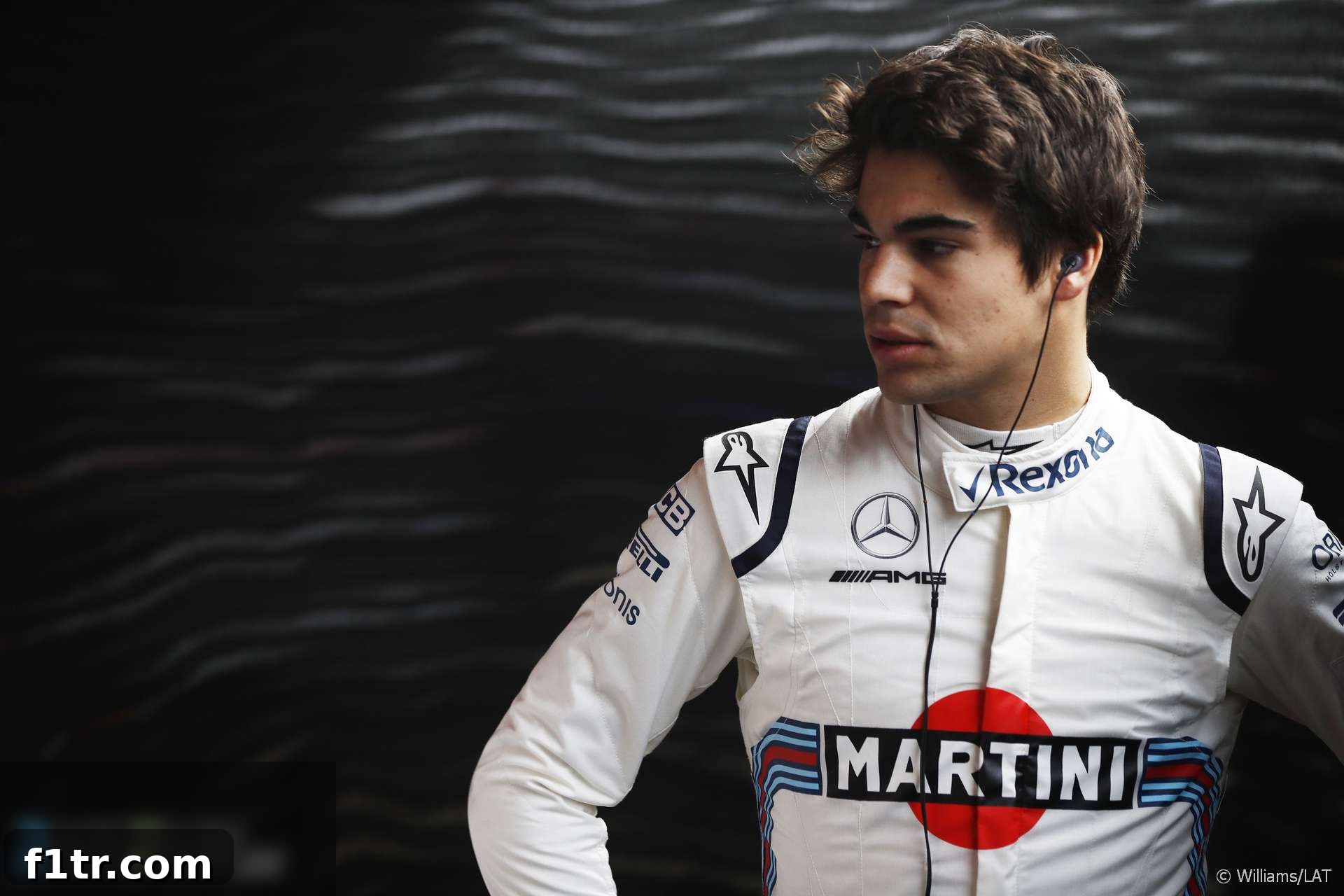
Lance Stroll Targets Qualifying Improvement for 2018 F1 Season
Lance Stroll, the young Canadian sensation in Formula 1, has openly identified enhancing his qualifying performance as a primary objective for the 2018 F1 season. Following a debut year that saw moments of brilliance alongside a steep learning curve, Stroll is determined to address the areas where he felt he was weakest, particularly on Saturdays.
Reflecting on a Transformative Rookie Year
The Williams driver looks back at his maiden season in 2017 as a period of intense and rapid development. “I was a different driver at the end of the year to where I started at the beginning of the year in so many ways,” Stroll explained, highlighting the significant strides he made over the course of the championship. His rookie year, marked by a podium finish in Baku and consistent points scoring in the latter half, proved his potential and resilience. However, despite these impressive achievements, he believes there’s a clear need to elevate his game when it comes to the crucial Saturday sessions that determine grid positions.
For any young driver stepping into the ultra-competitive world of Formula 1, the transition is monumental. Stroll’s journey began with early challenges, including limited pre-season testing due to an incident, which immediately put him on the back foot. Yet, his ability to adapt and learn at an incredible pace became evident. From struggling to consistently make it out of Q1 in the initial races, he evolved into a more confident and capable racer, often battling experienced competitors in the midfield. This rapid progression underscores his fundamental talent and dedication, making his focus on qualifying for the upcoming season all the more significant.
Unpacking the Qualifying Conundrum: Identifying Weaknesses
Stroll didn’t shy away from self-critique when discussing his 2017 performance. “Some of my weaknesses last year was I believe probably qualifying,” he stated candidly. This candid assessment reveals a deep understanding of the intricacies of Formula 1 and the critical role qualifying plays. He pinpointed several factors contributing to his struggles on a single-lap pace:
Limited Track Time and Preparation
“With very little running that we had in practice sessions on the quali tyre and quali mode, it sometimes makes it challenging to then go into qualifying.” This is a common challenge for all F1 drivers, but it’s particularly amplified for a rookie. The difference between race pace and qualifying pace is immense; qualifying demands absolute precision, peak tire performance for a single lap, and the maximum output from the engine’s ‘quali mode.’ With limited opportunities to practice these extreme conditions, especially in the context of a developing car and a new driver, extracting every millisecond becomes an art form that takes time to master.
Car Competitiveness and the Q1 Trap
“Also the car wasn’t always competitive in qualifying. Both of us were often getting knocked out of Q1. It never gave me a lot of time to actually improve because you do two runs in Q1, that’d be our qualifying.” This insight is crucial. Williams’s FW40, while capable of decent race pace on occasion, often lacked the outright speed required to challenge consistently at the sharp end of the grid, especially on Saturdays. Being regularly eliminated in Q1 severely restricts a driver’s opportunity to develop their qualifying craft. Q2 and Q3 offer more track time, fresher tires, and the chance to experiment with different lines and car behaviors under pressure – invaluable experience that Stroll frequently missed out on. This creates a vicious cycle: poor qualifying performance leads to less qualifying experience, which in turn hinders future improvements.
The Challenge of Car Balance
“Also the balance of the car wasn’t really suiting me and I had a tough time driving around some of those problems. That was a bit of an issue last year but this year I believe we’ve made some steps in the right direction.” Finding a car setup that perfectly suits a driver’s style is fundamental to unlocking performance, particularly over a single qualifying lap. If the car’s balance is inherently difficult or unpredictable, a driver might be forced to compromise their natural driving style, leading to lost lap time. Stroll’s admission highlights the deep technical feedback loop between driver and engineers, and the constant pursuit of optimal synergy between man and machine. A driver’s ability to “drive around” problems is a testament to their skill, but it’s never as efficient as a car that is inherently well-balanced for their preferences.
2017 Qualifying Statistics: A Clear Picture
Stroll was eliminated in the first round of qualifying 12 times last year, a stark contrast to his seasoned team mate Felipe Massa’s three Q1 eliminations. Across the 20-race calendar, Stroll managed to qualify ahead of Massa on just three occasions. This included one instance where Paul di Resta substituted for Massa at short notice, underscoring the challenge of consistently outpacing an experienced teammate. These statistics provide tangible evidence of the qualifying disparity and clearly illustrate why Stroll has prioritized this area for improvement.
Starting further down the grid inevitably made life more difficult for Stroll throughout his rookie year. The mid-pack of Formula 1 is a brutal place, fraught with potential for incidents on the opening lap and requiring aggressive overtakes to make progress. A strong qualifying position not only reduces the risk of early race contact but also places a driver in cleaner air, allowing them to better manage tires and execute their race strategy. Stroll’s statistics reveal that despite his impressive race craft, his starting positions often meant he had to fight from the back, adding another layer of complexity to an already demanding sport.
The Philosophy of a Perfect Lap: Beyond the Clock
“Qualifying is not where the points are, points are on Sunday. But if you’re not starting in a good position it’s pretty intense on Sunday.” Stroll’s astute observation perfectly encapsulates the symbiotic relationship between qualifying and race day. While the ultimate reward comes on Sunday, a poor Saturday can severely compromise a driver’s Sunday prospects, turning an intense race into an uphill battle from the very start. The grid position dictates so much – from tire strategy flexibility to the likelihood of getting caught in midfield melees.
The process of achieving a strong qualifying result, as Stroll articulates, is a comprehensive one: “You’ve got to gather your information together before qualifying, through the practice sessions, absorb all the information. Get the car suited to you and then when your head’s in the right place and the car’s working, everything pinpointed, the result is just the outcome of all that information.” This statement provides a glimpse into the mental and technical preparation required. It involves:
- Data Absorption: Meticulously analyzing telemetry, tire data, and competitor performance from practice sessions.
- Car Adaptation: Working closely with engineers to fine-tune the car’s setup to the driver’s preferences and the track’s characteristics for optimal single-lap pace.
- Mental Fortitude: Ensuring a clear, focused mindset, free from distractions, to execute a perfect, high-stakes lap.
- Precision Execution: Hitting every apex, maximizing every gear shift, and braking optimally – a ballet of extreme control and aggression.
For Stroll, mastering this multifaceted approach is key to unlocking consistent qualifying performance in the future.
Building on Strengths and Looking Ahead to 2018
“But at the same time last year I look at some of my strengths, scoring the points we scored, some of the results we had were incredible highlights. I want to build on that this year.” Stroll’s balanced perspective acknowledges his triumphs while addressing areas for growth. His 2017 season was indeed punctuated by remarkable performances, including becoming the youngest rookie to achieve an F1 podium in Baku, and a strong run of points finishes later in the season. These moments showcased his race craft, his ability to manage pressure, and his underlying speed. The goal for 2018 is to combine these demonstrated race-day strengths with a significantly improved qualifying showing.
The “good winter of reflection and work” mentioned by Stroll suggests a period of intense self-assessment, simulator work, and physical training designed to refine his skills. For a team like Williams, “making some steps in the right direction” in terms of car development is equally critical. The synergy between a confident, improving driver and a more competitive, driver-friendly car is the recipe for success. With a renewed focus on single-lap performance and a year of invaluable experience under his belt, Lance Stroll’s determination to conquer his qualifying “weakness” makes him a compelling driver to watch in the 2018 F1 season.
Go ad-free for just £1 per month>> Find out more and sign up
More on the 2018 F1 season
- F1 feared “death knell” for Drive to Survive after Ferrari and Mercedes snub
- McLaren staff told us we were “totally crazy” to take Honda engines in 2018 – Tost
- ‘It doesn’t matter if we start last’: How Red Bull’s junior team aided Honda’s leap forward
- Honda’s jet division helped F1 engineers solve power unit problem
- McLaren Racing losses rise after Honda split
Browse all 2018 F1 season articles