Rosberg Firm on Vettel’s Canadian GP Penalty: “Absolutely Fully Deserved” and “Disrespectful” Conduct
The 2019 Canadian Grand Prix remains a defining moment in recent Formula 1 history, marked by a contentious five-second time penalty issued to Sebastian Vettel. The incident, involving an unsafe rejoin onto the track and forcing Lewis Hamilton to take evasive action, stripped Vettel of a hard-fought victory. While many former F1 drivers rallied against the stewards’ decision, 2016 World Champion Nico Rosberg has consistently maintained a different viewpoint, asserting that the penalty was not only justified but “absolutely fully deserved.”
Advert | Become a RaceFans Supporter & go ad-free
The Controversial Incident: A Deep Dive into the 2019 Canadian Grand Prix Penalty
The pivotal moment occurred on lap 48 of the race when Sebastian Vettel, leading Lewis Hamilton, ran wide at Turn 3 and went off track, kicking up dust and grass. Upon rejoining the circuit, his Ferrari drifted across the racing line, seemingly impeding Hamilton, who was closing in. The stewards swiftly investigated the incident, concluding that Vettel had rejoined unsafely and handed down a five-second time penalty. This crucial decision meant that despite crossing the finish line first, Vettel was demoted to second place, ceding the victory to Hamilton.
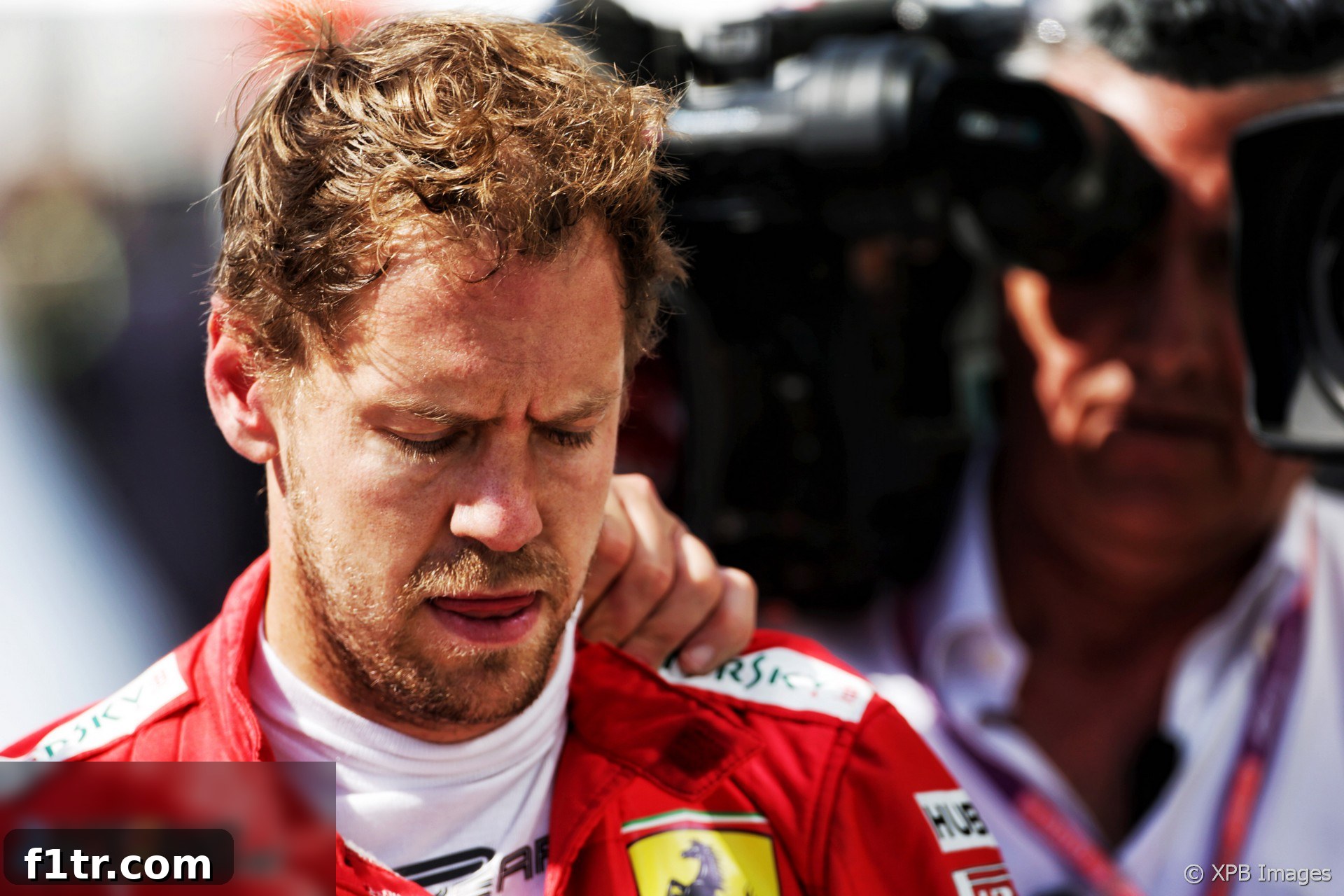
The aftermath saw a visibly frustrated Vettel expressing his disdain for the decision, even moving the P2 marker in parc fermé and exchanging the P1 and P2 boards. His animated gestures and strong words sparked a widespread debate across the F1 community, with opinions sharply divided on the fairness and necessity of the penalty. For many, it epitomized what they perceived as excessive regulation hindering pure racing. However, for others, including Nico Rosberg, the rules were clear, and Vettel’s actions warranted the sanction.
Nico Rosberg’s Unwavering Stance: “Absolutely Fully Deserved”
Nico Rosberg, known for his analytical approach and candid commentary, offered no ambiguity in his assessment of the Canadian Grand Prix incident. He firmly believed that the penalty handed to Vettel was entirely appropriate. “I wish nothing more than for Vettel to do a great job and to win and have a great fight with Lewis in the championship because that’s what we all want,” Rosberg stated, emphasizing his personal desire for competitive racing. “I was rooting for Vettel out there and I would love him to do well. But again, we saw this typical thing that when the pressure is on and it’s a battle between Lewis and Vettel, Vettel just makes those mistakes. And he made that mistake again.”
This sentiment highlights Rosberg’s long-standing observation about Vettel’s occasional tendency to falter under the immense pressure of a direct championship battle with Hamilton. He views the Canadian Grand Prix incident as another instance where the German driver, in a high-stakes scenario, committed an error that ultimately cost him dearly. Rosberg’s perspective is rooted in the adherence to safety regulations and the consistent application of rules designed to prevent dangerous situations on track.
Deconstructing Vettel’s Defense: The “Dirt on Tyres” Argument
Following the race, Vettel presented his defense, attributing his inability to control the car upon rejoining to “dirt on my tyres” and claiming he was “out of control” and couldn’t see Hamilton. He questioned, “Where do you want me to go? I was struggling to control the car.” However, Rosberg adamantly rejected this explanation, suggesting that Vettel could have, and should have, exercised greater caution.
“OK, great, but Lewis is there,” Rosberg countered. “The rule says when you go off the track, you need to rejoin safely. Vettel went all the way across and I think he could have easily left a little bit more space, especially in the latter phase like after Lewis started braking. He could easily have left more space, but he didn’t.” Rosberg’s analysis points to a conscious or subconscious decision by Vettel not to yield sufficient space, rather than a complete lack of control. He argues that even with dirty tires, a driver of Vettel’s caliber should be capable of rejoining in a manner that does not compromise a competitor’s safety.
The Perilous Rejoin: Why Hamilton Had to Take Evasive Action
The crux of Rosberg’s argument lies in the immediate danger posed to Lewis Hamilton. He meticulously reviewed the replays, concluding that Hamilton’s evasive action was not merely precautionary but absolutely necessary to avoid a serious collision. “He went right, right, all the way there and left hardly any space to Lewis. And so Lewis saw it as a dangerous situation because Vettel was coming more and more, so he had to back out of it,” Rosberg explained.
“I looked at the replay many, many times,” he reiterated. “Lewis would have been in the wall had he stayed there because right afterwards Vettel continued to move over more and more and it was so tight that Lewis would have touched either Vettel or the wall. And so it is very, very clear that unfortunately it was an unsafe returning to the track. So that’s the rule. You have to return safely and that is the way it is. A penalty is deserved in that case.” This detailed breakdown underscores the severe consequences Hamilton faced, had he not reacted decisively. For Rosberg, the potential for a crash was undeniable, making the penalty a regrettable but essential enforcement of safety protocols.
Advert | Become a RaceFans supporter andgo ad-free
Beyond the Track: Vettel’s “Disrespectful” Post-Race Reaction
Beyond the incident itself, Rosberg also expressed strong disapproval of Sebastian Vettel’s behavior and comments directed at the race stewards after the Grand Prix. Vettel’s frustration boiled over, leading him to label the stewards—Gerd Ennser, Mathieu Remmerie, Mike Kaerne, and five-time Le Mans 24 Hours winner Emanuele Pirro—as “blind men.” Rosberg found these remarks to be entirely “disrespectful” and counterproductive.
“He has such strong self belief and always thinks that he is in the right, and then always wants to blame other people,” Rosberg observed, reflecting on Vettel’s character under pressure. “And then he just loses focus in those moments, and doesn’t make the most of it. That was not great to see from him. And then after the race, all those gestures and disrespectful comments calling the stewards ‘blind men’ and all that, it’s just unnecessary, it’s not very good.” This critique extends beyond a mere racing incident; it touches on the professionalism and respect expected from elite athletes towards officials responsible for maintaining fair play and safety.
Upholding Integrity: The Role of Stewards in Formula 1
Rosberg’s strong reaction to Vettel’s post-race comments also underscores the crucial, often thankless, role of Formula 1 stewards. These individuals, frequently former drivers or highly experienced motorsport officials, are tasked with making split-second decisions that can heavily influence race outcomes and championships. Their role requires impartiality, a deep understanding of the regulations, and the courage to apply them consistently, regardless of the driver or team involved.
While their decisions are frequently debated and sometimes criticized, maintaining a level of respect for their authority is paramount for the integrity of the sport. As Rosberg implies, public accusations of incompetence, such as calling them “blind,” undermine their credibility and can foster an environment of mistrust, which is detrimental to the overall health of Formula 1. Professional conduct, even in defeat, is a hallmark of true sportsmanship.
Advert | Become a RaceFans supporter andgo ad-free
The Broader Debate: Consistency in F1 Stewarding
The controversy surrounding the 2019 Canadian Grand Prix penalty, and indeed many other F1 incidents, often feeds into a broader discussion about the consistency of stewarding in Formula 1. While Rosberg stands firm on this specific decision, the F1 paddock frequently voices concerns about varying interpretations of rules across different races or even within the same event. This inherent challenge in a fast-paced, highly technical sport means that decisions, no matter how carefully made, will always be scrutinized.
However, Rosberg’s focus here is less on the systemic issues of stewarding and more on the clear-cut nature of the “unsafe rejoin” rule and Vettel’s reaction to its application. For him, the rule is unambiguous when a driver compromises another’s safety, and the consequences must follow. His commentary serves as a reminder that while racing is about pushing limits, it must always be done within the confines of rules designed to ensure safety and fair competition.
Ultimately, Nico Rosberg’s robust defense of the penalty imposed on Sebastian Vettel at the 2019 Canadian Grand Prix, coupled with his criticism of Vettel’s subsequent comments, provides a strong counter-narrative to the widespread dissent. His perspective highlights the importance of driver responsibility in maintaining safety, the critical role of stewards in upholding the sport’s integrity, and the enduring challenge of performing flawlessly under intense championship pressure. The incident, and Rosberg’s analysis, continue to resonate as a significant chapter in the rivalry between two of Formula 1’s modern greats.
2019 F1 Season Insights
For more detailed coverage and discussions from the 2019 Formula 1 season, explore these related articles:
- Crying in the Melbourne car park at 2019 grand prix was my career low – Ocon
- McLaren Racing reports reduced £71 million loss in 2019
- Kvyat: Hockenheim podium last year was “my biggest achievement” so far
- How the FIA’s new encrypted fuel flow meter targets Ferrari’s suspected ‘aliasing’ trick
- “He smashed my office door”: 23 must-see moments from ‘Drive to Survive’ season two
Browse all 2019 F1 season articles