Valtteri Bottas Voices Concerns Over Red Bull’s Growing Straight-Line Pace Threat to Mercedes
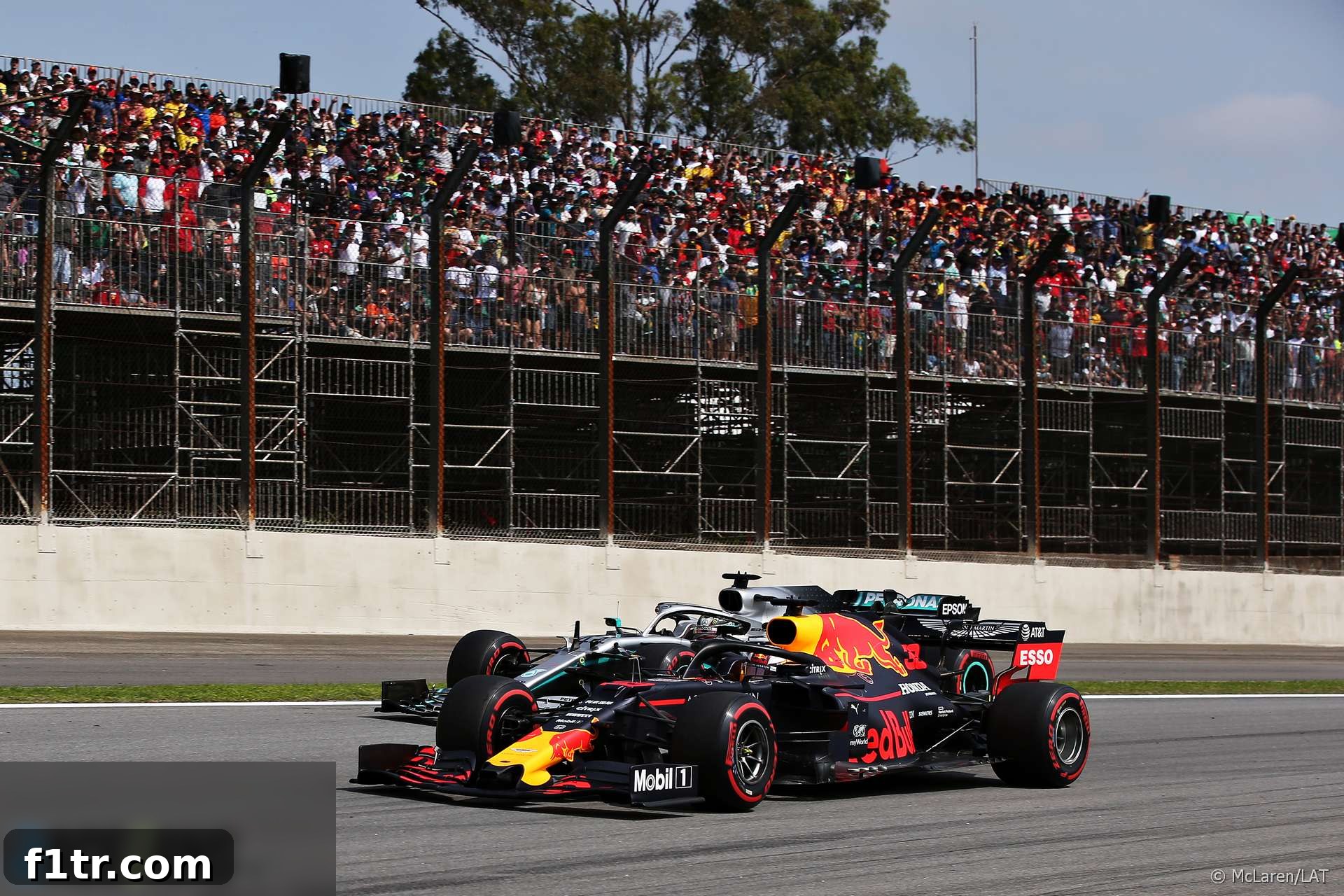
Finnish driver Valtteri Bottas has expressed significant apprehension regarding Red Bull Racing’s apparent advancement in straight-line speed, a development he believes now gives their rivals a distinct edge over the Mercedes-AMG Petronas Formula One Team. This shift in performance dynamics, particularly evident at recent Grand Prix events, signals a potential turning point in the competitive landscape of Formula 1, challenging Mercedes’ long-held dominance in this crucial performance metric. The implication of this newfound Red Bull strength is profound, as it could dictate the strategic approach and outcomes of future races, including the highly anticipated season finale.
Red Bull’s Emergent Straight-Line Speed Advantage: A Deep Dive
For years, Mercedes has been synonymous with formidable straight-line speed, leveraging their potent power unit and aerodynamically efficient chassis to assert authority on fast circuits. This characteristic has been a cornerstone of their championship success, allowing them to dictate pace and execute overtakes with relative ease. However, Bottas’s recent observations suggest a significant recalibration of this hierarchy. He specifically pointed to Red Bull’s performance at the Autódromo José Carlos Pace in Interlagos, Brazil, as a stark indicator of the progress they have made in an area that was once considered Mercedes’ undisputed strength. This shift is not merely incremental; it represents a fundamental challenge to the established order, demanding a re-evaluation of Mercedes’ own performance metrics and development priorities moving forward.
Bottas articulated his surprise following the Interlagos race, stating, “We knew they would be strong, but I think they were even stronger than we expected. Especially in a straight line.” This sentiment underscores the unexpected magnitude of Red Bull’s pace. The Finn further elaborated on the evolving nature of Red Bull’s challenger, acknowledging their strong cornering capabilities while highlighting the critical shift in straight-line performance: “They have a good car in the corners now but in a straight line they are better than us now. It used to be pretty similar to us.” This admission from a key Mercedes driver signals a genuine concern within the Silver Arrows camp, recognizing that a traditional stronghold is now under direct threat. The implications for qualifying and race strategy, particularly on tracks with long straights, are immense, potentially forcing Mercedes to compromise on downforce settings or seek gains elsewhere.
Interlagos: A Benchmark for Red Bull’s Progress
The Brazilian Grand Prix at Interlagos proved to be a challenging event for Mercedes, where the altitude of the circuit has historically presented unique hurdles for all teams. At higher altitudes, the thinner air reduces both aerodynamic downforce and engine power, which can expose any underlying weaknesses in a car’s overall package or power unit efficiency. Mercedes has openly acknowledged that circuits situated at higher elevations, such as Interlagos or Mexico City, tend to work less favorably for them compared to sea-level tracks. This specific environmental factor potentially amplified Red Bull’s straight-line prowess, suggesting that their Honda power unit and chassis combination might be particularly well-suited to managing the demands of reduced atmospheric pressure. This environmental nuance, therefore, plays a significant role in understanding the specific competitive dynamics observed in Brazil, and how it might differ from other venues.
Red Bull’s impressive showing at Interlagos wasn’t just about raw straight-line speed; it was a testament to a comprehensive package that allowed them to perform exceptionally well across various sections of the track. While their car demonstrated strong cornering stability, it was the noticeable leap in top-end speed that truly caught the attention of rivals. This suggests a finely tuned balance between aerodynamic efficiency and power unit deployment, indicating significant development work from both Red Bull and Honda. For Mercedes, the Interlagos result served as a crucial wake-up call, prompting them to analyze precisely where and how Red Bull managed to unlock such a considerable advantage, particularly in an area they once dominated. Understanding this dynamic is paramount for their continued competitiveness, as the fight for supremacy tightens heading into the final stages of the season.
Anticipating the Yas Marina Showdown: A Three-Way Battle
With the season drawing to a close, attention now shifts to the highly anticipated finale at the Yas Marina Circuit in Abu Dhabi. Valtteri Bottas is predicting a “very close” three-way fight involving Mercedes, Red Bull, and Ferrari, suggesting that the competitive convergence observed in recent races will likely culminate in a thrilling conclusion to the championship year. The Yas Marina circuit is renowned for its diverse characteristics, featuring a mix of demanding technical sections and relatively long straights. This combination typically rewards a well-rounded car that can deliver both strong aerodynamic performance in corners and robust straight-line acceleration, making car setup and driver precision absolutely critical for success on race day.
Crucially, the Yas Marina circuit is situated at sea level, a factor that Bottas believes could play into Mercedes’ hands. “At least we are on sea level which seems to work better for us,” he noted, alluding to the struggles Mercedes has faced at higher altitudes. This environmental difference might mitigate some of the straight-line speed advantage Red Bull demonstrated at Interlagos, potentially bringing the playing field closer. Ferrari, too, cannot be discounted. Despite a mid-season dip, they have shown flashes of incredible pace, especially on power-sensitive tracks. Their own powerful engine could make them a formidable contender in Abu Dhabi, adding another layer of complexity to what promises to be a gripping race for victory and final championship standings, even if the drivers’ and constructors’ titles are already decided. The battle for momentum and prestige heading into the off-season will be fierce, ensuring an electrifying conclusion to the Formula 1 calendar.
The Evolving F1 Landscape: Performance Convergence and 2020 Outlook
One of the most compelling narratives of the current Formula 1 season has been the increasing convergence of performance among the top three teams. What began as a season with Mercedes often holding a significant, sometimes insurmountable, lead, has evolved into a much tighter contest as the year progressed. This natural phenomenon in Formula 1 sees teams constantly developing and bringing upgrades throughout the season, leading to a tightening of the competitive spread. Bottas himself acknowledged this trend, observing that “the top three teams are closer in performance now than they were at the beginning of the season.” This convergence is a testament to the relentless pursuit of marginal gains by all teams, with Red Bull and Ferrari notably narrowing the gap to Mercedes as they optimized their packages and adapted to various track characteristics, leading to some of the most exciting races of the year.
However, Bottas tempered expectations regarding the carry-over of this competitiveness into the next season. While he recognized Red Bull’s “solid progress” throughout the current year, suggesting that a hypothetical graph would show continued improvement, he quickly pivoted to the inherent unpredictability of a new Formula 1 season. “But obviously it’s a completely new season with a new car,” Bottas explained. “I’m sure every team has made progress, including us, with their new car that is going to be there in testing. So it’s impossible to predict, really. Everyone starts from zero, even though there’s not many regulation changes it’s still new cars.” This perspective highlights a fundamental truth in F1: even with stable regulations, the design and development of an entirely new car chassis and updated power unit components represent a significant reset. Each team invests vast resources into optimizing their next-generation challenger, meaning that the competitive order can be shuffled dramatically.
The nature of Formula 1 regulations, even when appearing stable, still allows for considerable innovation and interpretation, leading to radically different car concepts or significant performance leaps. Teams constantly push the boundaries of aerodynamics, chassis design, and power unit integration, seeking any advantage possible within the rulebook. Therefore, the “everyone starts from zero” mentality is deeply ingrained in the sport, influencing how teams approach the winter break and pre-season preparations. Pre-season testing becomes the first real litmus test for these new designs, offering the initial glimpses of who might have successfully exploited the regulations and developed a strong package. Bottas’s cautious outlook is a realistic assessment of the F1 development cycle, reminding fans that past performance, while indicative of potential, is never a guarantee for future success in a sport defined by relentless innovation and competitive evolution. The anticipation for the next season, therefore, remains high, fueled by the prospect of a potentially reshuffled grid and renewed battles for supremacy.
2019 F1 season
- Crying in the Melbourne car park at 2019 grand prix was my career low – Ocon
- McLaren Racing reports reduced £71 million loss in 2019
- Kvyat: Hockenheim podium last year was “my biggest achievement” so far
- How the FIA’s new encrypted fuel flow meter targets Ferrari’s suspected ‘aliasing’ trick
- “He smashed my office door”: 23 must-see moments from ‘Drive to Survive’ season two
Browse all 2019 F1 season articles