F1 Teams Confront Cooling Crisis: Jeddah Heat Tests Mercedes and Williams at Saudi Arabian Grand Prix
As the Formula 1 season ignites with its second round, the high-speed Jeddah Corniche Circuit presents a formidable challenge that extends beyond raw pace. Two prominent teams, Mercedes and Williams, are arriving in Saudi Arabia acutely aware of a critical cooling problem plaguing their Mercedes-powered machines. Following a tumultuous season opener in Bahrain, where internal temperatures soared despite relatively mild ambient conditions, the anticipated sweltering heat of Jeddah threatens to push their thermal management systems to breaking point. This looming crisis could significantly impact their performance, reliability, and strategic approach for the Saudi Arabian Grand Prix.
The Unseen Battle: Why Cooling is Paramount in Formula 1
In the relentless pursuit of speed, every facet of a Formula 1 car is engineered to operate at its peak, and thermal management is no exception. The modern F1 power unit, a marvel of hybrid technology, generates immense heat, as do the intricate gearbox, high-performance brakes, and sophisticated electronic systems. Each component has an optimal operating temperature window; exceeding these limits can lead to a drastic reduction in power output, accelerated wear, and an increased risk of catastrophic failure. For drivers, battling a car struggling with overheating means not only a loss of performance but also a physically demanding experience due to elevated cockpit temperatures, impacting concentration and endurance.
The engineering challenge lies in a delicate balancing act: providing sufficient airflow for cooling without compromising aerodynamic efficiency. Larger cooling inlets and wider bodywork help dissipate heat more effectively but simultaneously increase drag, which slows the car down. Conversely, tightly packaged, aerodynamically sleek designs reduce drag but restrict vital airflow, making the car more susceptible to overheating. Teams continuously fine-tune these parameters, but when unexpected cooling issues emerge, as seen in Bahrain, it forces engineers to make difficult compromises that directly affect a car’s competitiveness throughout a demanding race weekend.
Bahrain’s Red Flags: An Ominous Prelude to Jeddah
The opening round in Bahrain, despite its ambient temperatures hovering comfortably below 20 degrees Celsius, offered a stark and worrying preview for Mercedes and Williams. Although both teams managed to finish the race without retirements – a testament to the robust build quality of contemporary F1 cars – their drivers were forced into damage limitation modes. For the factory Mercedes-AMG Petronas Formula One Team, piloting the new W15, drivers were frequently instructed to ‘lift-and-coast’. This technique involves lifting off the throttle earlier than usual before braking zones, allowing the car to coast and shed speed, thereby reducing engine load and heat generation. While effective for temperature control, it inevitably sacrifices precious lap time, hindering the car’s ultimate performance potential.
Williams Racing faced an even more precarious situation with their FW46, reporting “critical” temperatures. This alarming designation indicates that their cooling systems were pushed to the absolute brink, operating with minimal margin for error. Such an early-season struggle, even in relatively cool conditions, suggests a fundamental issue with their cooling package or its interaction with the aerodynamic design. The implications are significant: in warmer, more demanding environments, the risk of component degradation, reliability concerns, or even forced retirements becomes substantially higher, placing immense pressure on both teams to find rapid solutions.
Jeddah Corniche Circuit: A High-Speed Crucible of Heat
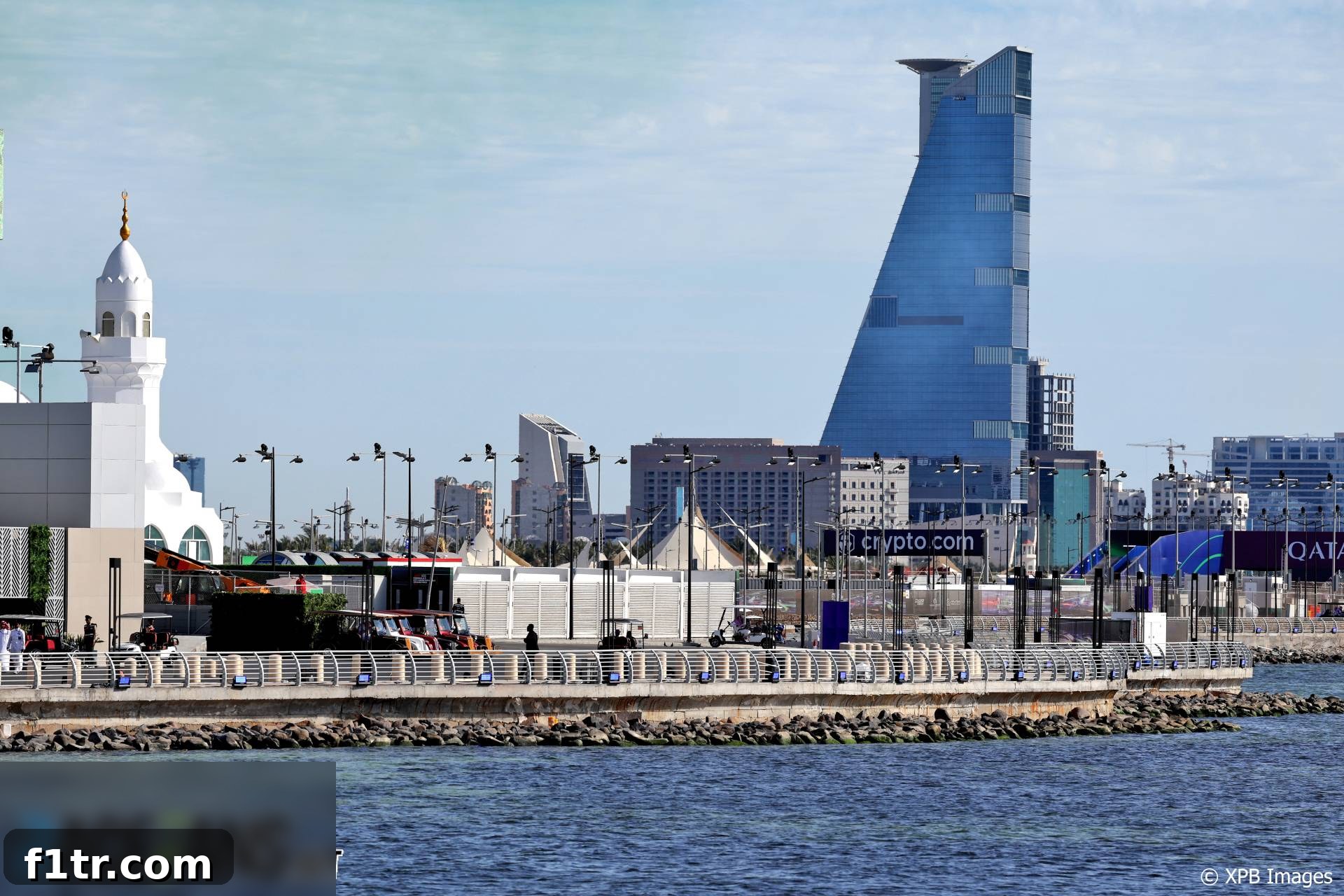
The Jeddah Corniche Circuit, carved along the Saudi Arabian coastline, is renowned for its breathtaking speeds and challenging street circuit characteristics. Its layout, featuring an abundance of high-speed corners and long straights, offers little respite for the cars’ vital components. Unlike circuits with slower sections or frequent heavy braking zones that allow for some heat dissipation, Jeddah’s relentless flow keeps engines, brakes, and tires under continuous stress, leading to a rapid buildup of thermal energy. This environment demands exceptionally efficient cooling and robust thermal management from every single F1 car.
Furthermore, the forecast for the upcoming Saudi Arabian Grand Prix confirms that it will be a true test of endurance and engineering. Predictions indicate that this weekend’s race is set to be the hottest held at the venue since its inaugural event in December 2021, when it occupied a different slot in the F1 calendar. Compounded by the typically high track temperatures associated with the desert climate, teams will not only be battling ambient heat but also the intense thermal load transferred directly to the tires and chassis from the scorching asphalt. Managing these extreme conditions effectively will be paramount for maintaining tire integrity, preserving engine performance, and ensuring driver comfort throughout the punishing race duration.
Detailed Weather Forecast: A Day-by-Day Look at Jeddah’s Conditions
The 2024 Saudi Arabian Grand Prix, alongside the Bahrain opener, has been uniquely scheduled a day earlier than usual to accommodate Ramadan. This condensed timetable means all competitive sessions – practice, qualifying, and the race – take place from Thursday to Saturday, placing additional logistical and preparation demands on all Formula 1 teams.
Thursday: Kicking Off Under the Arabian Sun and Floodlights
The weekend commences on Thursday with the initial practice sessions. First practice (FP1), held during the daytime, is expected to be bathed in sunshine with ambient temperatures reaching approximately 28 degrees Celsius. This session will be crucial for teams to gather their first real-world data on car behaviour, tire performance, and, critically, cooling efficiency under peak daytime heat. As dusk falls, the spectacular second practice session (FP2) will light up the circuit under the iconic floodlights. Ambient temperatures are forecast to drop slightly to around 26 degrees Celsius. FP2 is particularly significant as its conditions are the closest match to those anticipated for both Saturday’s qualifying and the main race, making it the prime session for long-run simulations, tire degradation analysis, and evaluating the car’s ultimate one-lap pace.
Friday: Final Tuning and the Race for Pole Position
Friday begins with the third and final practice session (FP3), which will again take place in the daytime, mirroring Thursday’s FP1 conditions with ambient temperatures expected around 28 degrees Celsius. This grants teams a final opportunity to fine-tune their setups, test different aerodynamic configurations, and make any last-minute adjustments before the high-pressure qualifying session. Later on Friday evening, qualifying will determine the grid for the Grand Prix. These sessions are expected to run under identical conditions to FP2, with ambient temperatures around 26 degrees Celsius. Consequently, the performance observed during FP2’s ‘push laps’ will be an invaluable barometer for a team’s genuine qualifying potential and their prospects of securing a strong starting position on Saturday.
Saturday: Race Day’s Scorching Challenge and Strategic Showdown
Saturday’s main event, the Saudi Arabian Grand Prix, promises to be a true test of man and machine. Ambient temperatures are predicted to hover around 27 degrees Celsius, but it is the track temperatures that will truly dictate the race narrative. The asphalt is expected to reach a scorching 35-39 degrees Celsius. Such elevated track heat will place immense strain on the Pirelli tires, accelerating degradation and potentially leading to blistering. This will compel teams to carefully consider their tire strategies, pit stop windows, and overall race management. If these forecasts hold true, this will officially be the hottest Saudi Arabian Grand Prix since the inaugural event in December 2021, amplifying the thermal management challenge for all competitors, especially those already battling pre-existing cooling issues.
The Unpredictable Factor: Wind Dynamics and Their Impact
Beyond the relentless heat, wind is another environmental factor that drivers and teams will need to carefully monitor and adapt to throughout the Jeddah weekend. While wind speeds are generally anticipated to be less severe during the cooler evening sessions of qualifying and the main race, they are expected to be stronger – ranging from 15 to 25 kilometres per hour – during the daytime practice sessions (FP1 and FP3). For a high-speed street circuit like Jeddah, strong crosswinds can significantly impact a car’s stability, reduce effective downforce, and make precise cornering considerably more challenging. This could complicate data collection and setup validation during the crucial early sessions, potentially forcing teams to make compromises that could manifest during the critical competitive stages of the weekend.
In a predictable turn for the region’s climate, the official weather forecast provides virtually no chance of rain across all three days of the Grand Prix weekend. This predictability allows teams to focus entirely on managing the dry, hot, and potentially windy conditions without the added variable of wet weather strategy, streamlining their preparations but intensifying the focus on thermal resilience.
Strategic Implications for Mercedes and Williams: A High-Stakes Wager
For Mercedes, the cooling concerns surrounding their W15 are a significant hurdle in their quest to close the gap to front-runners like Red Bull and Ferrari. Relying on ‘lift-and-coast’ as a consistent thermal management strategy is unsustainable for a team with championship aspirations, as it inherently sacrifices precious lap time. Mercedes engineers will be working tirelessly to implement solutions, which may involve opening up cooling apertures in the bodywork – a trade-off that comes at the expense of aerodynamic efficiency and straight-line speed. Alternatively, they might be forced to run less aggressive engine modes, further impacting their power output. Mercedes’ performance in Jeddah will be a pivotal moment, demonstrating their ability to adapt and mitigate these early-season technical challenges under pressure.
Williams Racing, facing “critical” temperatures on their FW46, finds itself in an even more precarious position. Their immediate priority will undoubtedly be reliability – ensuring the car can complete the full race distance without major component stress or failure. This might necessitate an even more conservative approach to driving and setup, potentially forcing them into further aerodynamic compromises to enhance cooling. For a team striving to climb the constructors’ standings and consistently challenge for points, any major setback due to overheating could prove incredibly costly. Their strategic balancing act between preserving the car and extracting performance will be one of the most intriguing subplots to watch.
The Calendar Crunch: Back-to-Back Races and Operational Strain
The unique scheduling of two consecutive Middle Eastern races, both shifted a day earlier to accommodate the observance of Ramadan, adds another layer of complexity for all F1 teams. The swift turnaround from Bahrain to Jeddah, coupled with a condensed weekend schedule, places immense strain on every aspect of team operations – from logistics and car preparation to engineering analysis and driver recovery. The reduced time available for post-race analysis and implementing significant car changes between events means that fundamental issues, such as the cooling problems experienced by Mercedes and Williams, become even more challenging to resolve effectively. This intensified operational environment amplifies the pressure on teams to perform flawlessly and efficiently.
What to Watch For: Beyond the Stopwatch
As the drama of the Saudi Arabian Grand Prix unfolds, astute observers and dedicated fans should pay close attention to indicators that extend beyond mere lap times. Listen intently to team radio communications for mentions of engine temperatures, brake temperatures, and tire degradation levels – these will be crucial clues regarding a car’s health. Visually, look for drivers managing their pace, unusual amounts of heat haze emanating from the cars’ exhausts or bodywork, or extended pit stops for cooling adjustments. These subtle yet significant signs will provide vital insights into which teams are successfully coping with Jeddah’s relentless heat and whether the cooling issues from Bahrain have been adequately addressed or continue to be a defining factor in this thrilling start to the Formula 1 season.
2024 Saudi Arabian Grand Prix Insights
- Bearman’s 2024 Jeddah debut performance makes him ‘feel like an absolute idiot’
- Vowles being patient with Sargeant but expects to see “progress”
- “So I’ve got nothing to worry about?” – The best unheard team radio from Jeddah
- “Shock” of poor start to season showed need for change at Alpine – Famin
- “My tyres are dying”: Stroll’s short-lived struggle until he hit the wall
Browse all 2024 Saudi Arabian Grand Prix articles