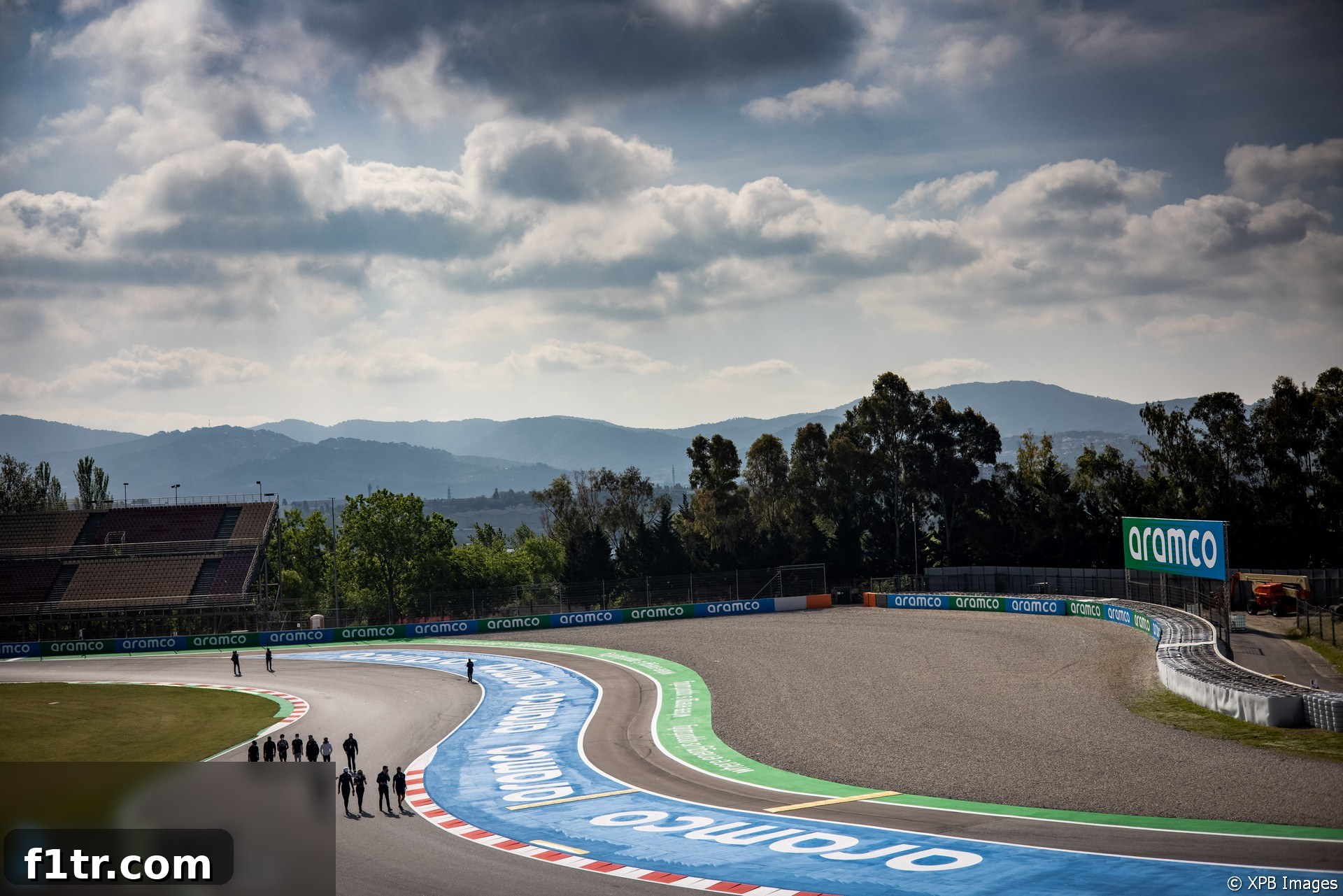
Mastering the Limits: Navigating Formula 1’s Evolving Track Rules at the Spanish Grand Prix
Formula 1 racing, a pinnacle of motorsport, constantly evolves its regulations to ensure fair competition, driver safety, and consistent enforcement. One of the most frequently debated and adjusted aspects of these rules pertains to track limits – the precise boundaries drivers must adhere to during practice, qualifying, and the race. As the teams and drivers prepare for the highly anticipated Spanish Grand Prix at the Circuit de Barcelona-Catalunya, the FIA has issued revised guidance on track limits, setting a clear framework for the intense battles ahead.
Advert | Become a Supporter & go ad-free
The Circuit de Barcelona-Catalunya has historically been a challenging venue for track limits enforcement due to its demanding corners and expansive runoff areas designed for safety. This year’s adjustments build upon lessons learned from previous seasons, reflecting a continuous effort to refine the sporting regulations. Last year, the Spanish Grand Prix saw its track limit restrictions undergo a mid-weekend revision. Initially focused solely on Turns 1 and 2, these limitations were subsequently expanded to include the complex sequence of Turns 13 to 15, encompassing the chicane that leads into the final sector. This proactive approach by the FIA aims to pre-emptively address potential issues, providing drivers with unequivocal directives before the on-track action commences.
The Evolution of Track Limits at Catalunya
The saga of track limits at the Spanish Grand Prix is a testament to the dynamic nature of Formula 1 regulations. What begins as initial guidance often evolves as race control and stewards analyze driver behavior, seek to prevent unfair advantages, and ensure the integrity of competition. Ahead of this year’s practice sessions, the initial track limits instructions issued on Thursday mirrored the guidance originally provided for the previous year’s event. However, in a swift move to ensure consistency and prevent confusion, these instructions have now been updated to precisely align with the revised directives that were ultimately enforced during last year’s race weekend. This decision underscores the FIA’s commitment to clarity and avoiding any ambiguity that could lead to penalties or disputes.
The philosophical debate surrounding track limits often pits driver freedom against strict adherence to designated boundaries. While drivers naturally seek to extract every ounce of performance by utilizing the widest possible trajectory, the regulations are in place to define the racing surface. Circuit de Barcelona-Catalunya, with its blend of high-speed sweeps and technical sections, serves as an ideal battleground for this ongoing discussion. The large tarmac runoff areas, while crucial for driver safety in the event of an error, can also inadvertently tempt drivers to exceed the track’s physical confines, necessitating clear and precise rules.
Detailed Enforcement: Key Hotspots and Consequences
Turns 1 and 2: The Critical Opening Sector
The first two corners of the Circuit de Barcelona-Catalunya form a fast, sweeping right-left complex that demands precision from the outset of a lap. This section is often a focal point for track limit infringements. Under the current guidance, any driver who touches the yellow speed bumps positioned at the apex, passes between them, or goes to the left of the prominent yellow apex ‘sausage kerb’ at Turn 2, will be deemed to have exceeded the track limits. Should such an infringement occur, drivers are mandated to follow a specific, pre-defined route to safely rejoin the circuit. This recovery route directs them towards Turn 3, where they must pass to the left of two clearly visible yellow bollards at the entry to the corner. This specific procedure ensures that any time advantage gained from running wide is neutralized, and drivers can safely integrate back into the racing line without disrupting others or compromising safety.
The enforcement in this sector is particularly stringent. Any driver who fails to properly negotiate Turn 2, meaning they exceed the defined track limits without following the designated rejoining procedure, will have their lap time deleted. This penalty applies across all sessions, from practice to qualifying and the race. The implications for qualifying are obvious – a deleted lap could mean the difference between a prime grid position and an early exit. In the race, persistent infringements carry even graver consequences. If a driver incurs two such infringements during the race, they will be shown the black-and-white flag – a formal warning from the stewards. Should the infringements continue beyond this warning, the driver may face further penalties from the stewards, which could range from a five-second time penalty to more severe sanctions like a drive-through penalty or even a grid drop for the next event, depending on the severity and frequency of the breaches.
Turns 13, 14, and 15: The Demanding Final Sector Chicane
The latter part of the lap at Catalunya, specifically the sequence from Turn 13 through Turn 15, which incorporates the often-discussed chicane, presents a different kind of challenge for drivers and a distinct area for track limits enforcement. This section is highly technical, requiring pinpoint accuracy and precise throttle application to maximize exit speed onto the main straight. Similar to the opening corners, strict adherence to the track boundaries is essential here. Any driver who fails to properly negotiate Turns 13, 14, and 15 by exceeding the designated track limits will also face the immediate consequence of having their lap time deleted. The logic behind this is consistent: to prevent drivers from gaining an unfair advantage by straightening out the chicane or carrying too much speed through the sequence by running wide.
The presence of a chicane in this sector has been a point of historical discussion regarding the circuit layout. While it adds a technical challenge and promotes closer racing on the main straight, it also creates distinct points where drivers might be tempted to push the boundaries. The current regulations ensure that any such attempt to exploit the runoff areas in this critical sector will be met with immediate sanctions, reinforcing the need for disciplined driving.
Exceptions and Steward Discretion
While the rules for track limits are generally clear and absolute, Formula 1 regulations always account for extenuating circumstances. In all cases where track limits restrictions are applied, there is a crucial exemption: the rules will not be enforced against a driver who is deemed to have been forced wide by a rival. This provision is vital for maintaining fair wheel-to-wheel racing and ensuring that drivers are not unfairly penalized for incidents beyond their control. Stewards, with the aid of extensive telemetry, onboard cameras, and various circuit cameras, meticulously review such incidents to determine whether a driver had a genuine choice to stay within the limits or was indeed pushed off the track by another competitor. This element of discretion allows for the nuances of racing incidents to be considered, ensuring that penalties are applied justly and only when a driver is genuinely at fault for exceeding the boundaries.
Impact on Strategy and Performance
The revised track limits guidance for the Spanish Grand Prix will undoubtedly play a significant role in how teams and drivers approach the weekend. In qualifying, the pressure to deliver a perfect lap while staying within the white lines is immense. A single mistake could invalidate a lap, jeopardizing a driver’s grid position and potentially impacting their entire race weekend. This adds another layer of complexity to the qualifying session, demanding absolute precision under maximum attack.
During the Grand Prix itself, maintaining consistency within the track limits becomes a test of endurance and discipline. Drivers must balance aggressive driving with the risk of penalties. Collecting a black-and-white flag, let alone a time penalty, can severely compromise a race strategy. A five-second penalty, for instance, could mean losing multiple positions during a pit stop or having to build a significant gap to the car behind. This requires engineers to incorporate track limits risk assessment into their race strategy planning, advising drivers on where they can push and where caution is paramount.
The proactive clarification of these rules before the Spanish Grand Prix is a welcome move for all involved. It aims to reduce controversies and ensure that the focus remains squarely on the thrilling on-track action rather than post-race penalties. Drivers will have no excuses for misunderstanding the regulations, allowing them to concentrate fully on extracting the maximum performance from their machinery within the clearly defined confines of the Circuit de Barcelona-Catalunya.
Advert | Become a RaceFans supporter andgo ad-free
The Broader Discussion: Track Limits in Modern F1
The perennial discussion surrounding track limits in Formula 1 extends beyond individual race weekends. It’s a debate about the very philosophy of circuit design and sporting enforcement. Many purists argue that circuits should feature natural deterrents like gravel traps or grass runoffs instead of vast asphalt expanses. The idea is that a genuine penalty for exceeding limits (e.g., losing significant time in gravel) would naturally encourage drivers to stay within the bounds without the need for electronic monitoring or steward intervention. However, modern safety standards often prioritize large runoff areas to mitigate the severity of high-speed accidents, especially given the ever-increasing speeds of F1 cars.
The FIA’s current approach, seen vividly at the Spanish Grand Prix, attempts to strike a balance. It leverages technology (like loop sensors and high-definition cameras) to ensure precise detection of infringements and applies consistent, progressive penalties. This approach seeks to maintain safety while still upholding the sporting integrity of racing within the defined track boundaries. As F1 continues to push the limits of performance, the discussion around track limits, and how best to manage them, will undoubtedly remain a significant topic for years to come.
Conclusion
The revised track limits guidance for the Spanish Grand Prix at the Circuit de Barcelona-Catalunya serves as a timely reminder of the exacting standards required in Formula 1. By clearly defining the boundaries at critical corners like Turns 1, 2, 13, 14, and 15, and outlining precise penalties for infringements, the FIA aims to ensure a fair and transparent race weekend. Drivers must combine their unparalleled skill with unwavering discipline to navigate these rules, making every lap a delicate balance between pushing the absolute limit and respecting the confines of the circuit. As the engines roar to life, the battle for supremacy will not only be against rivals but also against the unforgiving white lines that define the very essence of track limits.
2021 F1 season
- Masi ‘basically gifted the championship’ to Verstappen says 2021 FIA steward Sullivan
- Las Vegas race backers looking to extend F1 deal beyond 2025
- Why Mercedes put ‘a reminder of joy and pain’ on display in their factory lobby
- Verdict on error in GT race suggests Mercedes would have lost 2021 Abu Dhabi GP appeal
- Title ‘stolen’ from Mercedes made us ‘underdogs people cheer for’ – Wolff
Browse all 2021 F1 season articles