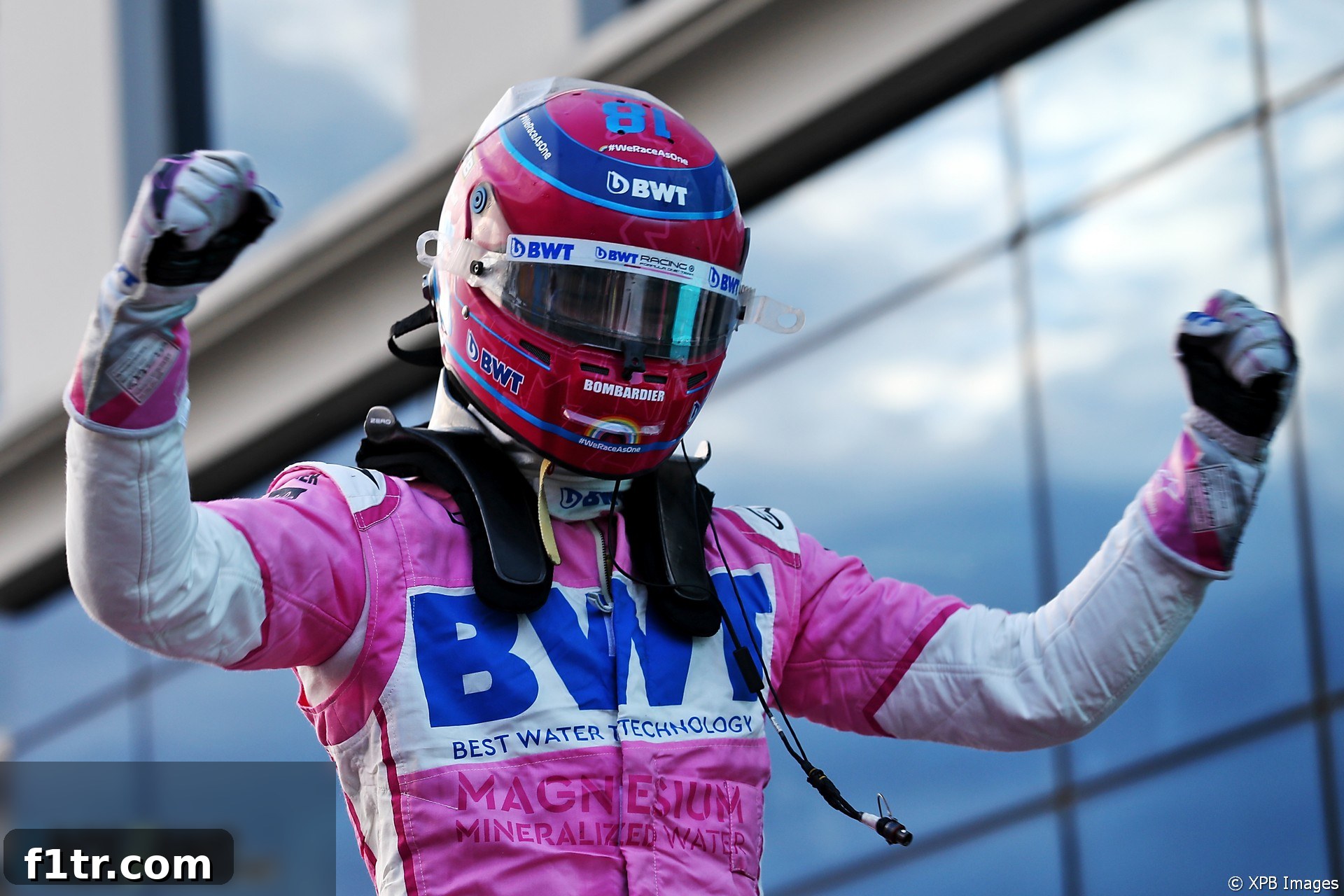
Lance Stroll Claims Shock Pole Position in Dramatic Rain-Soaked Turkish Grand Prix Qualifying
The 2020 Formula 1 Turkish Grand Prix qualifying session at Istanbul Park delivered one of the most unexpected and thrilling moments of the season, as Lance Stroll clinched a sensational maiden pole position. The session was a chaotic blend of heavy rain, multiple red flags, rapidly evolving track conditions, and audacious strategic calls, creating an unpredictable spectacle that left Formula 1 fans on the edge of their seats.
Istanbul Park, making a highly anticipated return to the F1 calendar after a nine-year absence, had already proven to be a formidable challenge throughout the preceding practice sessions due to its newly laid, low-grip asphalt. When heavy rain descended upon the circuit for qualifying, it amplified the difficulty significantly, turning the session into a high-stakes gamble for every team and driver. Stroll’s decisive switch to intermediate tyres for his final run in Q3 ultimately paid dividends, allowing him to outperform pre-session favourite Max Verstappen by a crucial margin of less than three-tenths of a second, securing a historic first pole for both himself and his Racing Point team.
Q1: The Chaos Unfolds – Red Flags and a Search for Grip
Following a final practice session that had been thoroughly drenched, there was a brief lull in the rain leading up to qualifying. However, as the clock ticked down and the green light signalled the start of Q1, the first drops began to fall once more. Given the treacherous, ice-like grip levels experienced earlier in the day on the fresh asphalt, the vast majority of drivers immediately opted for full wet weather tyres, anticipating a deluge.
A few brave, or perhaps over-optimistic, exceptions included the McLaren and Red Bull drivers, who initially ventured out on intermediate tyres. This decision quickly proved perilous for Max Verstappen, who struggled immensely to find any purchase on the slick surface. He famously ran wide at Turn 9 and then executed a full 360-degree spin at Turn 10. Recovering behind Carlos Sainz Jnr, Verstappen’s radio message conveyed his surprise and concern, noting that the McLaren seemed to possess significantly better grip in the adverse conditions – a stark contrast to his own Red Bull’s struggles, reminiscent of the chaotic start at Portugal.
Alexander Albon, in the sister Red Bull, initially tried intermediates but quickly conceded, pitting for full wets after just one exploratory lap. This switch allowed him to set a more competitive eighth-fastest time. Verstappen, however, persevered with the intermediates for longer, a decision that very nearly cost him dearly. As the rain intensified, he tumbled down the order, finding himself precariously placed in 15th, just one position above the elimination zone and a mere seven-thousandths of a second ahead of Charles Leclerc – a truly narrow escape for the championship contender.
The conditions rapidly deteriorated. The rain became relentless, leading to increasingly poor visibility and significant levels of standing water across the circuit. Drivers began reporting alarming conditions over team radio. Sebastian Vettel’s urgent message encapsulated the danger: “It’s chucking down in five and six. They should red flag it really because it’s undriveable. It’s more than aquaplaning.” Carlos Sainz Jnr echoed these warnings about the treacherous conditions, and sensing the escalating safety risk, race control made the inevitable decision to halt proceedings, deploying the red flag with just under seven minutes remaining in Q1.
At the time of the first stoppage, Esteban Ocon had impressively topped the timesheets in his Renault, showcasing strong performance in the challenging environment, followed by Valtteri Bottas and Lance Stroll. Leclerc was at the head of the drop zone, with Romain Grosjean, Pierre Gasly, and the struggling Williams pair also facing elimination. Nicholas Latifi, in particular, was having a torrid time, a massive 15 seconds off the pace after spinning at Turn 8 right in front of Bottas.
The session remained suspended for an extended period, nearly three-quarters of an hour, as officials waited for the conditions to become safer. Finally, shortly before 1pm local time, Q1 resumed. But the green flag period was short-lived. Just moments after leaving the pits, Kimi Raikkonen spun his Alfa Romeo a few corners after exiting, though he masterfully gathered it back up without incident. Then, disaster struck for Grosjean, who suffered severe understeer at Turn 1, sending his Haas into the gravel trap and beaching it. This incident triggered a second red flag, adding further drama and frustration to an already chaotic session.
Grosjean’s radio exchange revealed his dismay and self-reproach: “I don’t know why we picked up so much front locking suddenly. The rears were better but obviously the front not.” His subsequent apology was poignant, given his impending departure from Haas and potentially from F1: “I’m sorry boys, you deserved better. I just drove shit.”
Crucially, no one had been able to improve their times during the brief, damp interlude between the two red flags. The final restart left a mere three minutes on the clock for drivers to improve their positions. However, a significant shift in track conditions was immediately apparent. When Verstappen launched himself to the top of the timing screens with his first flying lap, clocking a time almost nine seconds quicker than Ocon’s previous benchmark, it became abundantly clear that the circuit was rapidly drying and gaining grip, making the full wet tyres now far from optimal.
The final dash was not without further controversy. Halfway through the crucial lap, Latifi spun off again, this time at Turn 8, bringing his car to a complete stop. Yellow flags were deployed in the sector, but several drivers were observed setting their fastest lap times while passing through the yellow flag zone. Race control swiftly announced that these incidents would be investigated after the session concluded, adding a layer of uncertainty to the provisional results.
Among those who fell victim to the chaotic final moments and the yellow flag disruption were Kevin Magnussen, who wisely backed off, only to find himself in the drop zone alongside his team mate. Latifi’s repeated spins not only ended his own session but also inadvertently cost his team mate, George Russell, any realistic chance of progressing further, as Russell too was eliminated in the first part of qualifying.
Q2: Shifting Dynamics – Verstappen Dominates, McLaren Stumbles
The second stage of qualifying brought a welcome, albeit temporary, respite from the relentlessly deteriorating conditions that had plagued Q1. The rain had eased considerably, and the track, though still thoroughly wet, was showing clear signs of beginning to dry. This presented a critical strategic challenge for all teams: at what exact point would intermediate tyres become the optimal choice, moving past the performance peak of full wets?
McLaren provided a costly answer to this question, unfortunately for their ambitions. Both Lando Norris and Carlos Sainz Jnr made the brave decision to start Q2 on intermediate tyres, betting on a quicker drying track. This gamble, however, did not pay off. The circuit had not yet reached the crucial crossover point where intermediates would offer a performance advantage. Consequently, both McLaren drivers struggled significantly, lacking the necessary grip and confidence, and ultimately failed to progress beyond Q2. It was a disappointing outcome for the Woking-based squad, highlighting the fine margins and risks involved in tyre strategy during transitional conditions.
In stark contrast, Max Verstappen was in a league of his own. Sticking to full wet tyres, he unleashed a blistering lap, parking his Red Bull at the top of the timesheets with a staggering two-second advantage over the rest of the field. His confidence, exceptional car control, and raw pace in these challenging conditions were phenomenal, firmly signalling him as the clear favourite for pole position at this stage. The Mercedes duo, while not matching Verstappen’s extraordinary pace, managed to navigate the tricky conditions effectively enough to secure their places in the all-important Q3 shootout, though it was clear they were not as comfortable or dominant as the Red Bull.
The second qualifying session also delivered another significant surprise in the intense midfield battle. Both Ferrari cars, piloted by Sebastian Vettel and Charles Leclerc, unfortunately failed to make the cut for Q3, a significant setback for the Scuderia. To the dismay of the works team, but to the delight of their customer team, both Alfa Romeo drivers, Kimi Raikkonen and Antonio Giovinazzi, demonstrated superb pace and car handling to surprisingly make it through to the final pole position shootout. This unexpected result underscored the unpredictable nature of the Istanbul Park circuit and the adverse weather, shaking up the traditional pecking order and adding another layer of intrigue to the final session.
Q3: The Ultimate Gamble – Stroll Seizes the Historic Moment
As Q3 commenced, all eyes were firmly on Max Verstappen. With Mercedes’ unbroken run of 2020 pole positions seemingly at an end, it appeared almost certain that the Dutchman would be the one to break their dominance and claim the top spot. However, what unfolded next was a captivating testament to strategic brilliance, impeccable timing, and a driver seizing his moment in ever-improving track conditions.
In the early runs of Q3, Verstappen indeed held the top spot, demonstrating his formidable pace. But crucially, the circuit was now drying rapidly, moving past the optimal window for full wet tyres. This presented a golden opportunity for teams willing to take a calculated risk. The Racing Point drivers, sensing this critical shift, made the audacious and ultimately inspired decision to switch to intermediate tyres for their crucial final runs. This was a move that would define the session.
This tyre gamble proved to be a masterstroke. Sergio Perez was the first to demonstrate the intermediates’ superior grip and blistering pace, immediately setting a provisional fastest time that sent a ripple of surprise through the paddock. Not to be outdone, Lance Stroll then joined him, placing the distinctive pink cars in a provisional one-two, signalling a potential upset. Verstappen, meanwhile, found himself struggling to extract the maximum performance from his full wet tyres, which were now clearly past their prime as the track dried further, forcing him to adapt rapidly.
On his final attempt, Perez encountered slower traffic in the form of Antonio Giovinazzi, which unfortunately hampered his ability to improve his time further, potentially costing him pole. However, Stroll, with a clear run and the benefit of a slightly warmer track, capitalized fully on the Racing Point’s strategic brilliance. As his intermediate tyres reached their optimal operating temperature and found astonishing grip on the rapidly improving surface, he lowered the benchmark significantly. He found huge chunks of time across the lap, ultimately pulling a stunning 1.5 seconds clear of his own team mate, a commanding margin that underscored the effectiveness of his tyre choice and flawless execution.
Verstappen had one final shot at pole, but despite pushing relentlessly and improving his time through the first two sectors, it simply wasn’t enough to challenge Stroll. The intermediate tyres were now too dominant, and Stroll’s previous lap was untouchable. Verstappen managed to split the two Racing Points, securing second place, but ultimately fell short of Stroll’s phenomenal pole by less than three-tenths of a second. This marked a truly stunning upset, denying Verstappen a well-deserved pole and handing it to Stroll in spectacular and unforgettable fashion.
Alexander Albon backed up Verstappen’s performance with a solid fourth place for Red Bull, demonstrating a strong recovery from a tricky Q1. He was followed by Daniel Ricciardo in the Renault, who continued his impressive run of form with a fifth-place start. Perhaps the most surprising outcome among the front-runners was the performance of Mercedes. The reigning champions seemed genuinely uncomfortable in the challenging conditions, with Lewis Hamilton only managing a surprising sixth place – a rare occasion for him to be so far down the grid in qualifying. Esteban Ocon placed his Renault seventh, ahead of the impressive Kimi Raikkonen in eighth. Valtteri Bottas, in the other Mercedes, could only manage ninth, with Antonio Giovinazzi rounding out the top ten for Alfa Romeo. Lance Stroll’s remarkable performance not only secured his first career pole but also marked the first pole position for a Canadian driver since Jacques Villeneuve in 1997, etching his name into the sport’s history books amidst a truly unforgettable qualifying session.
The 2020 Turkish Grand Prix qualifying was a thrilling reminder of Formula 1’s unpredictable nature when confronted with extreme weather and a challenging circuit. Stroll’s incredible pole position sets the stage for what promises to be an equally dramatic and captivating race day at Istanbul Park, with a mixed-up grid and potentially changing conditions still to come.
2020 Turkish Grand Prix News and Driver Information
- Browse all 2020 Turkish Grand Prix articles
- Istanbul Park Circuit Guide
- Max Verstappen Driver Profile
- Lance Stroll Driver Profile
- Lewis Hamilton Driver Profile
- Sergio Perez Driver Profile
- Daniel Ricciardo Driver Profile
- Kimi Räikkönen Driver Profile
- Sebastian Vettel Driver Profile