Formula 2 CEO Bruno Michel Advocates for ‘Common Sense’ in Track Limits Penalties to Prevent Race Bans
Formula 2 CEO Bruno Michel has voiced strong concerns regarding the current system of penalty points, particularly those accumulated due to track limits violations, which he believes are unfairly leading to race bans for promising young drivers. Michel asserts that “common sense” adjustments are imperative to prevent drivers from incurring severe penalties for what are often considered less serious infringements compared to dangerous driving or deliberate rule-breaking.
Advert | Become a Supporter & go ad-free
The Growing Issue: Track Limits and Cumulative Race Bans in F2
The Formula 2 championship, a critical stepping stone for aspiring Formula 1 drivers, has seen a concerning trend emerge regarding driver penalties. In the current season, three F2 drivers have already faced race bans, a direct consequence of reaching the critical threshold of 12 penalty points. A significant portion of these points, in many cases more than half, were issued for repeatedly exceeding track limits during competitive sessions.
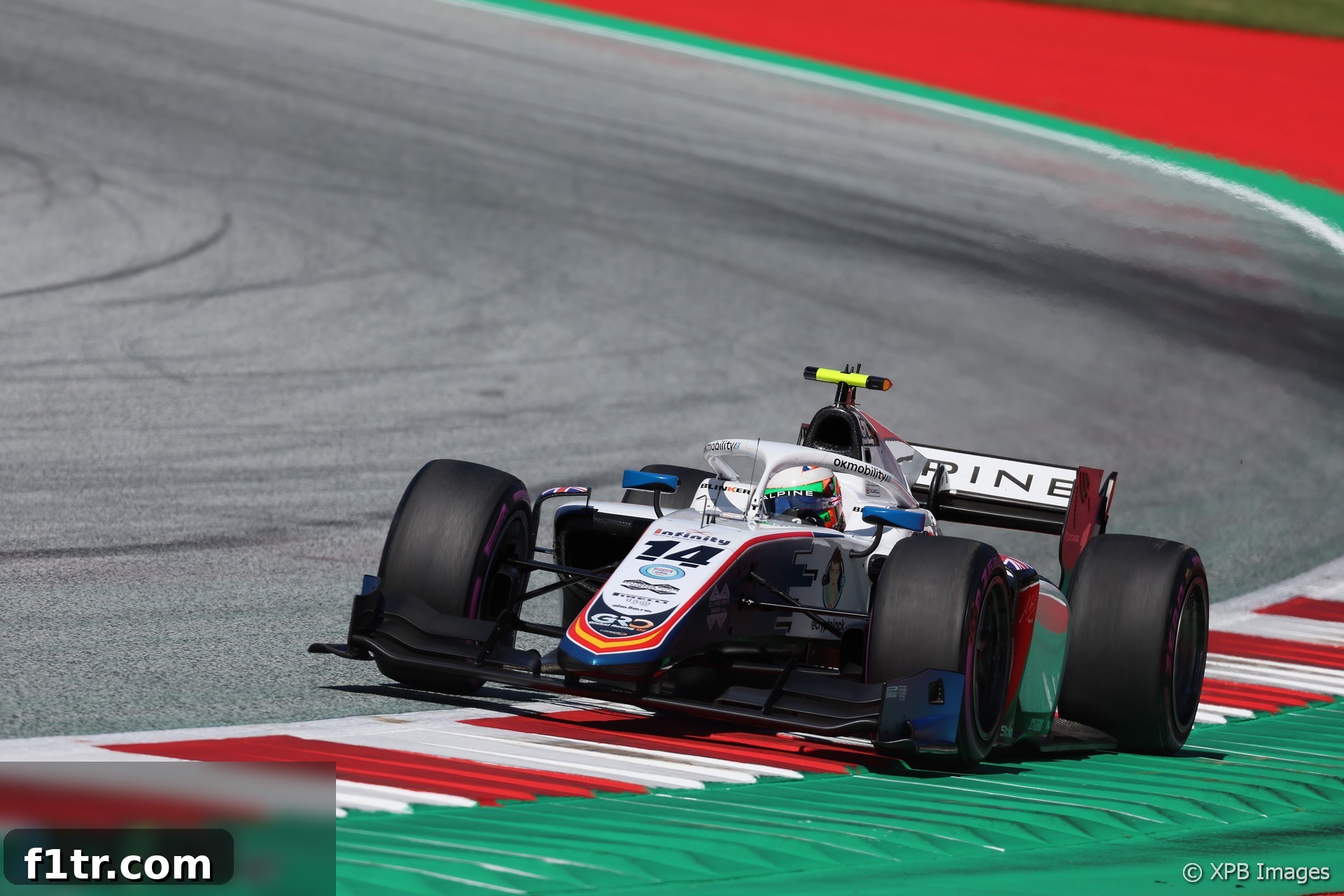
A notable example of this issue is Oliver Caldwell, whose season was significantly impacted by track limits penalties. Caldwell, a promising talent, accumulated over half of his penalty points specifically for track limits offences, including a staggering five points in a single race event in Bahrain. While other drivers’ points were earned for more severe infractions such as failing to adhere to warning flags, speeding in the pit lane, or involvement in collisions with rival competitors, the sheer volume of points derived from track limits violations has raised profound questions about the proportionality and overall fairness of the current system.
This pattern suggests a potential systemic flaw where minor, albeit repeated, transgressions of track boundaries disproportionately contribute to a driver’s overall penalty point tally, ultimately leading to mandatory race suspensions. These suspensions not only disrupt a driver’s championship campaign but can also significantly impede their development and future prospects in motorsport, a critical consideration for a feeder series like Formula 2, which aims to nurture talent.
Bruno Michel’s Stance: A Call for Proportionality and Fairness
When directly questioned by RaceFans regarding whether banning drivers primarily due to track limits violations constituted an excessive measure, Bruno Michel responded unequivocally, stating, “I completely agree.” His firm stance underscores a growing sentiment within the motorsport community that the current application of rules, while conceptually sound, may be producing unintended and overly harsh outcomes for competitors.
Michel further elaborated on his viewpoint, drawing a crucial distinction between different categories of infringements. “I think there are absolutely clear reasons for which a driver needs to be penalised, if they do something dangerous or if they’re not applying the regulations,” he affirmed. This statement highlights his belief that penalties should primarily target actions that compromise safety or represent a deliberate, substantial disregard for core sporting regulations. While acknowledging the undeniable importance of track limits, Michel specifically pointed out instances where the accumulation of points for these particular offences became illogical and counterproductive.
“Track limits of course is something that needs to be looked at, there’s no doubt about that. But we had some situations where I think [for] track limits a driver got six penalty points over the same race, or something like this, and obviously there’s something wrong with that,” Michel explained. This specific concern about a single race yielding such a high number of points for track limits illustrates the disproportionate impact these penalties can have. Such an accumulation can quickly push a driver close to or even past the critical 12-point threshold, triggering an automatic race ban without necessarily reflecting a pattern of dangerous or unsporting conduct.
Understanding the Mechanics: F2 Penalty Points System Explained
The Formula 2 penalty points system largely mirrors the one employed in Formula 1, serving as a disciplinary framework designed to ensure fair play and safety. Under this system, drivers accumulate penalty points for various infractions throughout the season. Once a driver reaches a cumulative total of 12 penalty points within any continuous 12-month period, they automatically receive a mandatory one-race ban. The underlying objective of this system is to deter dangerous driving, prevent unfair advantages, and ensure consistent compliance with racing regulations.
Track limits penalties are typically issued when a driver repeatedly exceeds the defined boundaries of the track, either gaining an unfair advantage, failing to keep all four wheels within the white lines, or violating specific circuit regulations. While initial infringements might result in warnings, a loss of lap time, or minor time penalties, persistent breaches during a race can lead to the allocation of penalty points. The core concern articulated by Michel and others is that these points, while perhaps individually minor compared to a collision, can rapidly compound. This is especially true in races where track limit enforcement is stringent or track design naturally encourages drivers to push the very boundaries of the circuit, making it easy to unwittingly collect multiple infractions.
Broader Implications for Driver Development and Sporting Integrity
Formula 2 stands as the definitive proving ground for aspiring Formula 1 drivers. It is an intensely competitive environment where every race, every point, and every moment on track can significantly impact a young driver’s career trajectory, scholarship opportunities, and ultimate progression to the pinnacle of motorsport. Imposing a race ban, especially one primarily triggered by track limits violations, can have profound and far-reaching negative consequences for these emerging talents.
A missed race means not only lost championship points but also invaluable experience, crucial track time, and a halt to any developing momentum. Such an interruption can severely disrupt a driver’s rhythm, damage their confidence, and even negatively affect their relationships with sponsors and their team’s budget planning. For drivers on the cusp of securing a coveted Formula 1 seat, a race ban, regardless of the cause, could be a serious setback, potentially jeopardizing years of effort and aspirations. Furthermore, if the penalty system is perceived as unfair or disproportionate, it can detract from the sporting integrity of the championship, shifting focus from pure racing talent and strategy to an overly meticulous adherence to often minute track boundary lines.
The F2 championship is meticulously designed to identify, nurture, and hone the best driving talent in the world. While discipline and adherence to rules are undeniably essential for safety and fairness, a system that unduly punishes drivers with career-altering bans for less severe infractions risks obscuring genuine talent and penalizing the ambition to push the limits of performance – a characteristic often celebrated and indeed required in top-tier motorsport.
Seeking a Balanced Solution: Dialogue with the FIA
Recognizing the urgency and significance of this issue, Bruno Michel has confirmed his proactive intention to engage in direct discussions with the FIA, the sport’s global governing body, to comprehensively review the existing penalty regulations. “So, yes, that’s something that we need to address with the FIA, of course, because they are the regulators, to see that this can be applied with common sense,” Michel stated, clearly underlining the collaborative and diplomatic approach necessary to forge a viable and widely accepted solution.
The primary objective of these crucial discussions will be to explore potential revisions that ensure track limits are consistently respected, while simultaneously preventing the imposition of disproportionate and unduly harsh penalties. Several constructive approaches could be considered during these deliberations. One possibility is the implementation of a separate, distinct penalty points system specifically for track limits violations, perhaps with a lower maximum threshold before a ban is issued, or a reduced number of points allocated per individual infringement. Another viable option could involve differentiating more clearly between track limits violations that demonstrably provide a significant and measurable advantage versus those that are marginal, accidental, or have minimal impact on performance. The dialogue might also encompass a critical review of track design in specific corners or sections that are particularly problematic for consistent track limits enforcement, potentially exploring modifications to deter repeated infractions naturally.
The Challenge of Enforcing Track Limits Effectively
Enforcing track limits presents an inherently complex and multifaceted challenge for race officials and event organizers. On one hand, clear and consistently applied boundaries are absolutely necessary to ensure fair competition among all participants, prevent drivers from gaining an unfair competitive advantage by running wide, and uphold the integrity of the designated racing line. On the other hand, the very essence of high-performance racing involves drivers constantly pushing the absolute limits of their cars, their own abilities, and the available track space. Modern circuit designs, often featuring vast tarmac run-off areas instead of traditional gravel traps or grass, exacerbate this issue by making it “safer” and less inherently punishing for drivers to exceed track limits, thereby subtly encouraging them to do so until a formal penalty is explicitly applied.
The FIA’s critical role is to strike a delicate and often precarious balance between allowing drivers to race hard and aggressively, while simultaneously ensuring that the established rules are consistently upheld. Any proposed revisions to the penalty system for track limits would therefore need to meticulously consider this inherent tension. The overarching objective is not to abolish track limits enforcement entirely, as it plays a vital role, but rather to refine and recalibrate the penalty structure. This refinement aims to ensure the system remains effective in deterring abuse and preventing unfair advantages, without prematurely ending a driver’s participation in a race or severely impacting their crucial career progression for a series of minor, non-dangerous errors.
The Future of F2 Regulations: Prioritizing Fairness and Sporting Integrity
The upcoming dialogue between Formula 2 management and the FIA signifies a crucial and progressive step towards fostering a more equitable and common-sense approach to motorsport regulations. The ultimate aim is to cultivate an environment where drivers are actively encouraged to showcase their exceptional talent and race fiercely, confident that the disciplinary framework in place supports fair competition rather than inadvertently hindering it with overly harsh or disproportionate penalties for less severe infractions.
As Formula 2 continues its vital mission to groom the next generation of Formula 1 stars, ensuring that its rules and regulations are applied with both proportionality and foresight is paramount. A sophisticated and nuanced system that effectively distinguishes between genuinely dangerous driving and repeated but minor infringements, especially concerning track limits, will undoubtedly contribute to a healthier, more competitive, and ultimately fairer championship. Bruno Michel’s proactive advocacy for “common sense” changes highlights a commendable commitment to continuously refining the sport’s regulatory landscape for the direct benefit of its talented competitors and, by extension, the enduring integrity and excitement of racing itself.
Advert | Become a RaceFans supporter andgo ad-free
Formula 2 News & Updates
- Formula 2 to debut in Miami and Montreal after Iran war cancellations
- Ex-McLaren junior Dunne’s move to Alpine finally confirmed
- Schumacher says his IndyCar feels like ‘an F2 car, just with better tyres’
- The Formula 2 team with an older driver line-up than almost half the F1 grid
- FIA to award more F1 superlicence points to IndyCar drivers from 2026
Browse all Formula 2 articles