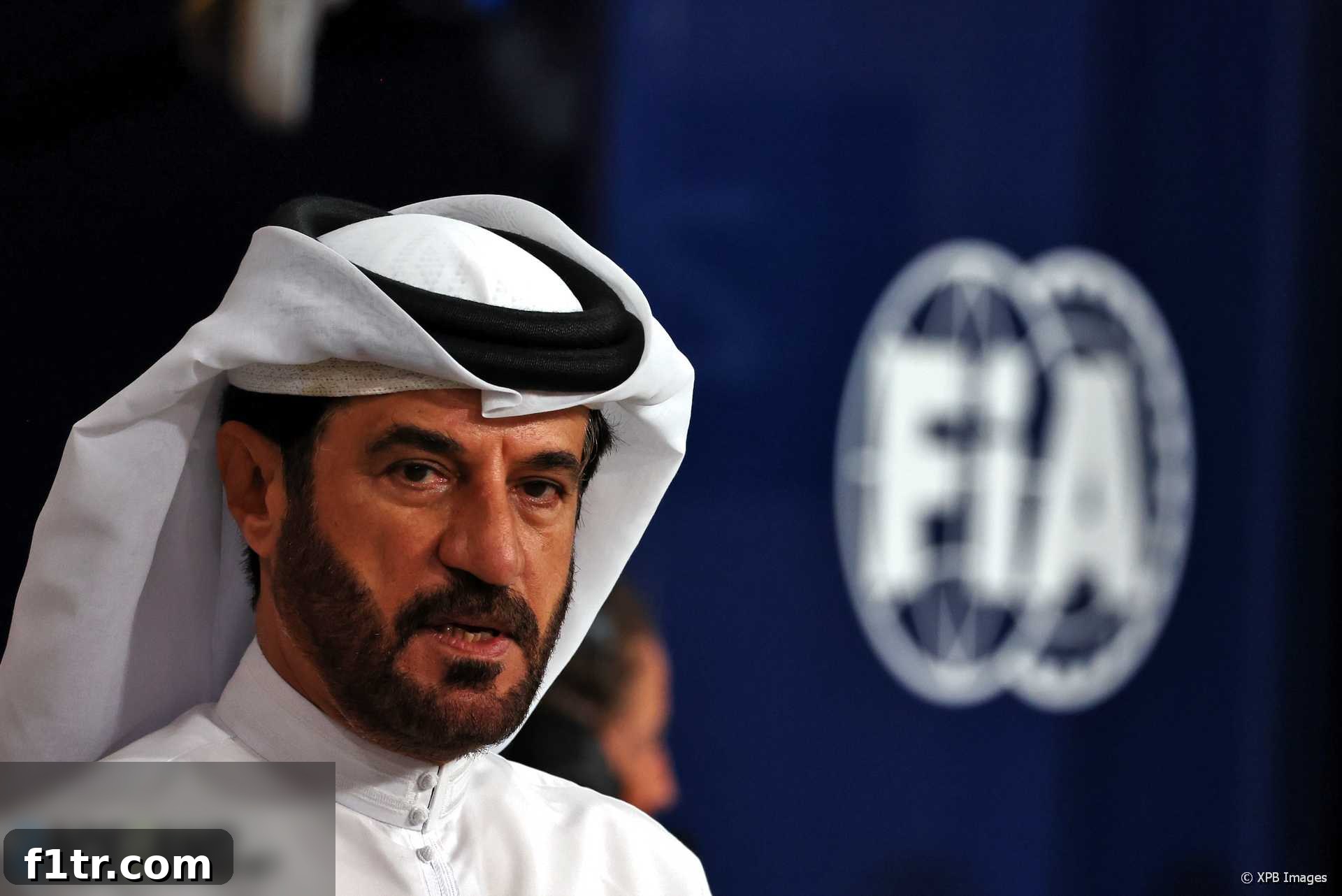
In a significant development for global motorsport governance, Mohammed Ben Sulayem has been officially confirmed as the winner of the 2025 FIA presidential election, marking the beginning of his second four-year term at the helm of the Fédération Internationale de l’Automobile. This re-election, which extends his mandate until 2029, was largely considered a formality, as the 64-year-old Emirati motorsport veteran faced no rival candidates in the electoral process. This uncontested victory has sparked discussions within the motorsport community regarding the health of the FIA’s democratic processes and the future direction of the organization under his continued leadership.
The path to Ben Sulayem’s unchallenged re-election was paved by a series of events that effectively disqualified all potential contenders. Initially, three individuals had publicly announced their intention to stand against the incumbent president. However, none of these prospective rival candidates were ultimately able to fulfill the stringent and complex terms of the FIA’s election rules, a prerequisite for any presidential nomination. This inability to meet the stipulated requirements led to a situation where Ben Sulayem’s ticket remained the only valid entry, ensuring his re-election without a competitive vote.
A crucial aspect of the FIA’s electoral regulations requires all presidential candidates to select prospective vice presidents from six distinct global regions. This mandate aims to ensure comprehensive representation across the FIA’s diverse membership base. However, a pivotal turn of events occurred when the FIA’s vetting committee approved only a single candidate for the vital South American vice-presidency slot. This single approved candidate, Fabiana Ecclestone, notably emerged as a staunch supporter of Ben Sulayem’s existing leadership team. Her endorsement of the incumbent’s ticket created an insurmountable hurdle for any aspiring rival. With Ecclestone’s allegiance firmly established with Ben Sulayem, no other presidential hopefuls were able to successfully assemble an approved and complete list of regional vice-presidential candidates, thereby preventing them from formally submitting their candidacies and standing for election. Fabiana Ecclestone, a prominent figure in her own right, is also known as the wife of former Formula 1 chief executive, Bernie Ecclestone, a connection that adds another layer of intrigue to the electoral dynamics.
The exclusivity of the electoral process did not go entirely unchallenged. One prospective candidate, Laura Villars, took the significant step of initiating legal action against the FIA in Paris. This legal challenge is poised to bring further scrutiny to the FIA’s election procedures and governance. Hearings for this pivotal legal action are scheduled to commence in February, promising to shed more light on the allegations and potentially influencing future electoral reforms within the global governing body. The very fact of a legal challenge underscores the underlying tensions and questions surrounding the transparency and fairness of the recent election cycle.
The FIA officially confirmed Ben Sulayem’s re-election and the composition of his new leadership team in a formal statement. The announcement highlighted that a “super majority of the FIA General Assembly has re-elected Mohammed Ben Sulayem as President of the FIA for a second four-year term.” Alongside President Ben Sulayem, the statement also confirmed the election of key members of his team: Malcolm Wilson OBE, Tim Shearman, and Carmelo Sanz de Barros, who will each play instrumental roles in the FIA’s executive structure for the upcoming term. This collective leadership is tasked with guiding the FIA through an evolving landscape of motorsport and global mobility challenges.
A notable change within Ben Sulayem’s new team, and a point of considerable discussion earlier in his presidency, involves the position of FIA Deputy President for Sport. Ben Sulayem had previously named Malcolm Wilson OBE to this critical role earlier this year, following the high-profile resignation of Robert Reid. Reid, who had been an integral part of Ben Sulayem’s original 2021 election-winning team – a campaign that saw him triumph over rival candidate Graham Stoker – stepped down in protest. His resignation was reportedly a direct consequence of new confidentiality agreements introduced by the governing body, which raised concerns about transparency and internal communication within the FIA’s executive ranks. This internal reshuffle and the reasons behind it provided an early indication of the challenges and internal pressures that characterized Ben Sulayem’s initial term and set the stage for subsequent governance debates.
Beyond the presidential election, the FIA General Assembly also oversaw the election of other crucial governing bodies. The official statement further clarified that “Members have also elected the new World Council for Automobile Mobility and Tourism and World Motor Sport Council, who will serve until the 2029 General Assembly elections.” These two councils are fundamental pillars of the FIA’s operational framework. The World Council for Automobile Mobility and Tourism oversees the FIA’s extensive activities related to road safety, sustainable mobility, and consumer protection for motorists worldwide. Meanwhile, the World Motor Sport Council is the supreme legislative body for all international motorsport, responsible for regulating various disciplines, approving calendars, and ensuring the integrity and safety of competitions from Formula 1 to rally championships. The election of these councils ensures continuity and renewed focus on both sporting and mobility aspects of the FIA’s broad mandate.
Following the official confirmation of his re-election, President Ben Sulayem took the opportunity to express his gratitude to his supporters and to reflect on the journey ahead. In an address, he stated, “We have overcome many obstacles but here today, together, we are stronger than ever.” This statement hints at the various challenges and internal turbulences that have marked his first term, yet it also projects a sense of renewed unity and strength within the organization. He further affirmed his deep commitment to his role, declaring, “It is truly an honour to be FIA President, and I am committed to continuing to deliver for the FIA, for motorsport, for mobility, and for our member clubs in every region around the world.” This pledge outlines his comprehensive vision for the upcoming term, emphasizing the diverse areas of responsibility that fall under the FIA’s purview, from elite motorsport to grassroots initiatives and advocating for motorists globally. His focus on “every region around the world” underscores the FIA’s international scope and its role in fostering automotive and sporting culture across continents.
Looking ahead to his second term, President Ben Sulayem faces a landscape brimming with opportunities and significant challenges. In the realm of motorsport, the FIA will continue to navigate the complexities of Formula 1’s expanding calendar, the development of new engine regulations for 2026, and ongoing efforts to enhance safety and sustainability across all categories. The organization is also expected to further initiatives promoting diversity and inclusion within motorsport, aiming to broaden its appeal and accessibility. On the mobility front, the FIA will play a crucial role in advocating for smart and sustainable urban transport solutions, road safety campaigns, and the adoption of new automotive technologies, ensuring that the FIA remains relevant and impactful beyond the racetrack. The leadership team, bolstered by the newly elected councils, will be instrumental in executing these ambitious goals, ensuring the FIA’s continued growth and influence as a global leader in both sport and mobility.
Formula 1 Insights
- Controversies, Norris, Newey and more: Five new motorsport books reviewed
- One of F1’s greatest races happened 15 years ago today. Or did it?
- “Overtaking is overtaking”: Domenicali denies F1’s yo-yo racing is “artificial”
- The crashes F1 is trying to prevent may be rare – but the danger is obvious
- F1 returning to India soon after 2027 sounds like wishful thinking
Browse all Formula 1 articles