Alexander Albon Cleared After First Lap Spin: Unpacking Toro Rosso’s Rookie Testing Strategy
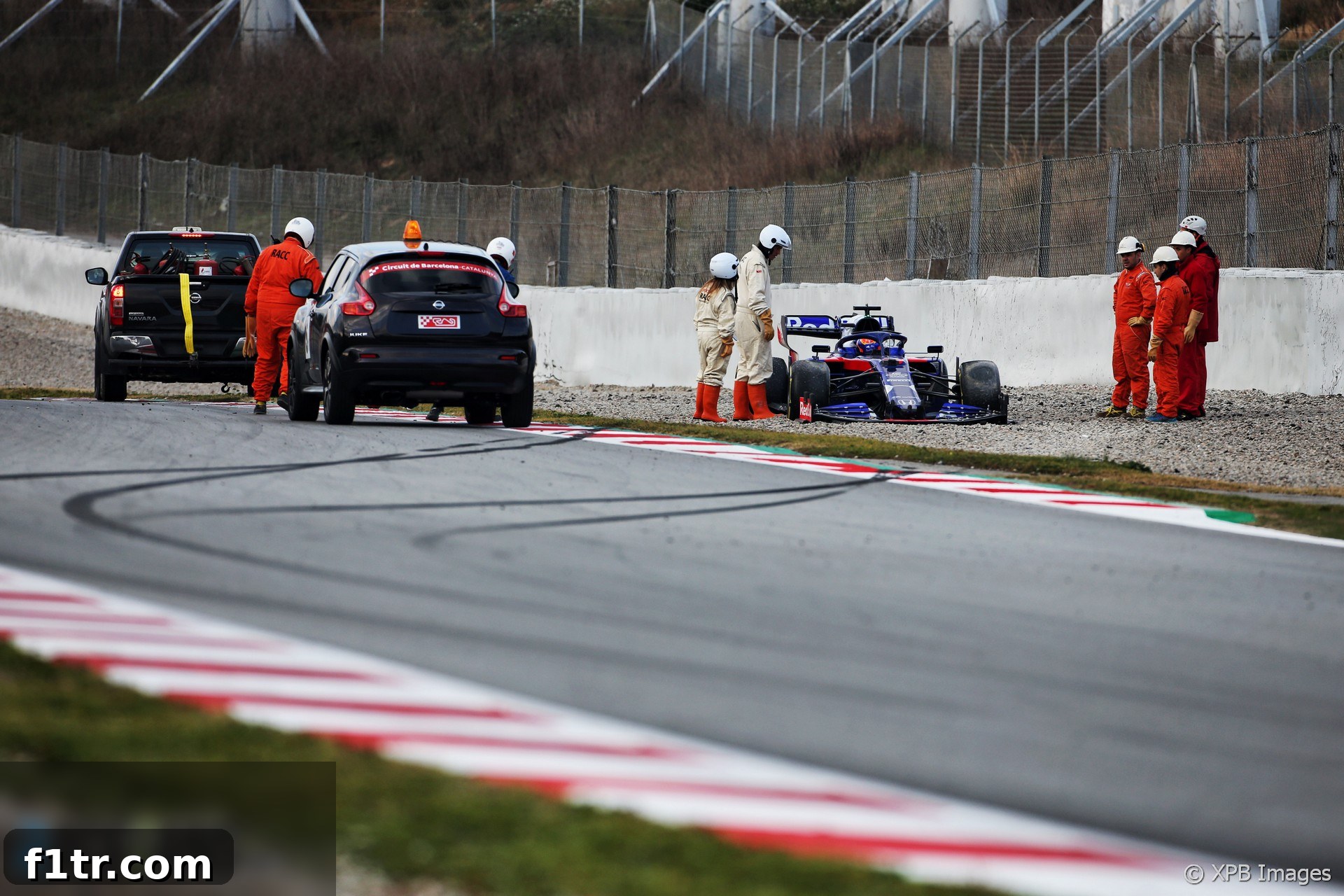
Pre-season testing in Formula 1 is a critical period for teams and drivers alike, offering the first real opportunity to evaluate new machinery and integrate new talent. For rookie drivers, these sessions are particularly intense, serving as a rapid induction into the demanding world of top-tier motorsport. It was during one such crucial test that Alexander Albon, making his second appearance in an F1 car for Toro Rosso, experienced an early setback – a spin on his first lap out of the pits. However, the incident, which occurred on the approach to Turn 5, was swiftly attributed not to driver error, but to an unexpected technical glitch, as confirmed by team principal Franz Tost.
The Unforeseen Incident: Albon’s Initial On-Track Challenge
The F1 paddock was buzzing with anticipation as the second day of pre-season testing commenced. All eyes were on the fresh faces, particularly those stepping into the cockpit of a Formula 1 machine for the first time in an official capacity. Alexander Albon, the promising Anglo-Thai rookie for Scuderia Toro Rosso, was one such driver. Having completed a preliminary run, his second outing promised further acclimatization to the complex intricacies of an F1 car.
However, the morning’s proceedings took an unexpected turn shortly after Albon left the pit lane. As he navigated the circuit on his initial reconnaissance lap, the Toro Rosso entry suffered a sudden spin on the approach to Turn 5, bringing a momentary halt to his program. Such incidents, especially on a driver’s first lap, can often raise concerns about a rookie’s readiness or adaptability. Yet, in this instance, the team’s reaction was one of understanding and immediate investigation, rather than blame.
The swiftness with which the team responded underscored the unique pressures of testing, where the line between driver performance and technical fault can often be blurred. For Albon, a driver with immense potential, this early spin could have been a confidence knock, but the transparent communication from the team ensured it was instead treated as a technical anomaly, allowing him to quickly reset and refocus on the task at hand.
Unraveling the ‘Steering Issue’: A Technical Explanation
The immediate aftermath of Albon’s spin prompted a quick analysis from the Toro Rosso engineers and team management. Franz Tost, the seasoned team principal, wasted no time in clarifying the root cause of the incident, alleviating any potential speculation regarding Albon’s handling. Tost revealed that an overnight change in the car’s settings was the primary contributor to the spin, specifically identifying a “steering issue.”
“It was a steering issue,” Tost candidly explained to the official F1 broadcaster. “We changed something from yesterday to today, but it didn’t work out as we expected. Therefore, we changed once more [to] yesterday’s version.” This statement shed crucial light on the dynamic and experimental nature of pre-season testing. Teams constantly push the boundaries of car setup, experimenting with various configurations, aerodynamic components, and electronic parameters to extract maximum performance.
Overnight modifications are commonplace, as engineers meticulously analyze data from previous sessions and implement adjustments aimed at improving lap times, balance, or reliability. However, sometimes these changes, particularly those affecting critical systems like steering, can have unintended consequences. In Albon’s case, the revised steering setup proved to be less than optimal, leading to an unpredictable response that contributed directly to the spin. The team’s prompt decision to revert to the previous day’s settings demonstrated their quick problem-solving capabilities and commitment to providing a stable platform for their drivers.
This incident served as a stark reminder that F1 cars are incredibly sensitive machines, and even minor adjustments can profoundly impact their behavior on track. For a rookie driver like Albon, navigating a car with an unexpected steering characteristic on his first run would naturally present a significant challenge. By taking responsibility for the technical misstep, Toro Rosso effectively shielded Albon from undue pressure, allowing him to concentrate on the demanding learning curve ahead.
Toro Rosso’s Calculated Testing Approach: Data vs. Experience
Toro Rosso’s strategy for the initial pre-season test week was clearly delineated, striking a deliberate balance between gathering comprehensive technical data and providing invaluable track time for their new recruit. Franz Tost articulated this dual approach, highlighting the distinct roles assigned to Daniil Kvyat, the team’s experienced driver, and Alexander Albon, the eager rookie.
“Yesterday Daniil Kvyat was out, he’s an experienced driver, that means we got a lot of data fortunately,” Tost stated. Kvyat’s participation earlier in the week was crucial for the team’s engineering efforts. An experienced driver can provide nuanced feedback, push the car closer to its limits consistently, and execute complex test programs that involve evaluating multiple setup changes, aerodynamic elements, and tire compounds. This allows the team to amass a wealth of data points, essential for validating simulations, understanding car behavior, and identifying areas for development.
In contrast, Albon’s primary objective for his test days was markedly different. “Today we are out the first time with Alex. This is always something special because to drive in a Formula 1 car the first time, you really have to prepare the driver in the best possible way,” Tost emphasized. The team’s focus was squarely on Albon’s integration and development, prioritizing his comfort and understanding of the complex F1 machinery over aggressive data collection or experimental setup changes.
Tost confirmed this prioritization, explaining, “There are not so many test topics today as yesterday with Daniil Kvyat, because with Alex we have to drive. We can’t test so many different specifications on the car. For him it’s important to drive to get experience, to learn the car, to get familiar with the car.” This pragmatic approach underscores the recognition that a rookie’s initial immersion in F1 is fundamentally about building foundational knowledge and confidence. Bombarding them with too many variables or radical setup changes can be counterproductive, hindering their ability to adapt and understand the basic characteristics of the car.
Nurturing a Rookie: The Priority of Laps and Familiarity
For Alexander Albon, his initial Formula 1 test sessions were less about chasing headline lap times or fine-tuning exotic components, and more about the fundamental process of becoming one with the car. Toro Rosso’s strategy centered on maximizing his lap count and allowing him to progressively build familiarity with every aspect of the F1 experience. This deliberate focus on ‘driving to get experience’ is a cornerstone of rookie development in top-tier motorsport.
An F1 car is unlike any other racing machine. Its immense power, sophisticated aerodynamics, advanced braking systems, and highly responsive controls demand an entirely new level of precision and intuition. For a rookie, simply understanding how the car reacts to different inputs – throttle, brake, steering – at the incredible speeds and G-forces experienced on an F1 circuit is a monumental task. Each lap provides invaluable sensory feedback, allowing the driver to map the car’s dynamic characteristics to their own reactions.
Beyond the pure driving mechanics, Albon needed to learn the intricacies of working within an F1 team environment. This involves understanding the various functions on the steering wheel, interpreting feedback from engineers, managing tire degradation over longer runs, and practicing pit stop entries and exits. The communication between driver and engineer is paramount in F1, and building that rapport and mutual understanding takes significant track time. Learning the specific nuances of the circuit, identifying optimal braking points, turn-in points, and acceleration zones, all while pushing the limits of the car, is a continuous process that only comes with extensive mileage.
Franz Tost articulated this perfectly: “Next week is then another story. We will also test different set-ups with him next week. This week is more for him to do as many laps to get experience.” This phased approach is crucial. Once Albon gains a foundational understanding and comfort level with the car’s baseline behavior, the team can then introduce more complex testing programs, experimenting with different setups and components. This methodical progression ensures that the rookie isn’t overwhelmed and can absorb information effectively, building a robust platform for his debut season.
Furthermore, the psychological aspect of being a rookie in F1 cannot be underestimated. The pressure to perform, the media scrutiny, and the sheer scale of the operation can be daunting. By providing a supportive environment focused on learning rather than immediate performance metrics, Toro Rosso aimed to instill confidence in Albon, allowing him to develop naturally and overcome minor setbacks like the early spin without lasting impact.
Beyond This Test: Albon’s Journey Ahead
The incident with Alexander Albon’s spin, quickly resolved and explained, ultimately became a minor footnote in his crucial pre-season preparations. Far from being a deterrent, it served as an early, albeit brief, technical lesson for the team and a controlled learning experience for the rookie himself. With the immediate technical issue addressed, the focus for Albon remained squarely on accumulating mileage and deepening his understanding of the Toro Rosso STR14.
The current test week, therefore, represented the initial phase of Albon’s rigorous F1 induction. The subsequent test week promised to build upon this foundation, as Franz Tost outlined. Once the basic familiarity was established, the team would then graduate to more advanced testing protocols with Albon, including experimenting with different car setups. This strategic escalation is vital for a rookie, allowing them to first understand the car’s inherent characteristics before delving into the nuanced effects of various adjustments. The goal is to develop a comprehensive understanding of how different settings impact the car’s balance, handling, and tire performance, skills that are indispensable for a successful race weekend.
Albon’s journey, beginning with these crucial test laps, was a stepping stone towards his highly anticipated debut Grand Prix. The experience gained during these sessions – from understanding the car’s limits and managing tire degradation to effectively communicating with his engineers – would be invaluable. Toro Rosso, historically a breeding ground for future F1 stars, understood the importance of nurturing their talent. Albon’s progress through testing would be closely monitored, shaping his readiness for the challenges of a full Formula 1 season and marking the beginning of what many hoped would be a successful career at the pinnacle of motorsport.
Conclusion
Alexander Albon’s early spin during his first F1 test was swiftly clarified as a technical hiccup, not a driver error, highlighting the experimental nature of pre-season preparations. Team principal Franz Tost’s explanation of a ‘steering issue’ due to an overnight settings change underscores the fine line teams walk in optimizing performance. Toro Rosso’s strategic decision to prioritize Albon’s experience and lap count over complex data collection for this test week demonstrates a clear commitment to nurturing their rookie driver. This measured approach ensures Albon can build essential familiarity with the car, laying a solid foundation for his development and future challenges in Formula 1.