Formula 1’s return to the legendary Autodromo Enzo e Dino Ferrari, more commonly known as Imola, for the Emilia-Romagna Grand Prix later this year is undoubtedly a highlight of the revised 2020 calendar. However, the excitement has been tinged with controversy, primarily stemming from the championship’s decision to compress the traditional three-day race weekend into a streamlined two-day format. This unprecedented move, featuring just a single 90-minute practice session before qualifying, has sparked a debate among drivers, with some expressing significant concerns about preparation and safety, while others maintain a more pragmatic stance.
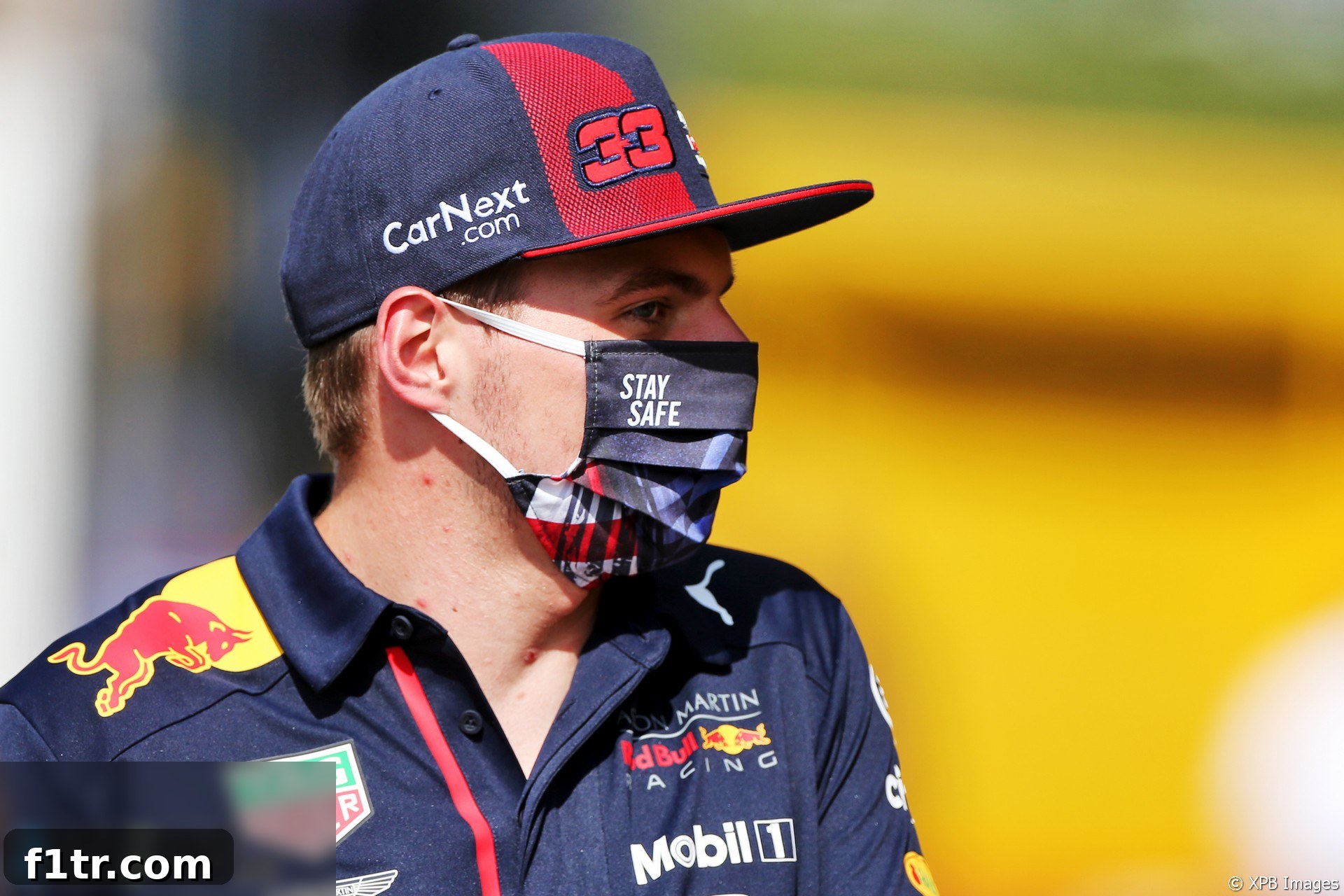
At the forefront of the criticism is Red Bull Racing’s formidable driver, Max Verstappen. Known for his outspoken nature and uncompromising pursuit of performance, Verstappen did not mince words when discussing the condensed schedule for the Imola event. His primary contention revolves around the lack of adequate preparation time, especially considering that the circuit last hosted a Grand Prix in 2006. This means that none of the current generation of Formula 1 cars have ever truly been pushed to their limits around the challenging Imola layout, rendering it, in practical terms, a ‘new’ track for the teams and drivers.
Verstappen articulated his frustration, stating, “If we would have had it on a track which we know and we have been driving with the cars we have nowadays, I think it’s not a problem at all.” This sentiment underscores a crucial point: established circuits where teams have vast troves of data and driver experience pose fewer challenges for a shortened format. Teams can rely on simulation tools and historical data to hit the ground running, making the transition smoother even with reduced track time. However, Imola presents a different scenario altogether.
The 2020 Formula 1 cars are immensely complex, boasting intricate aerodynamics, advanced hybrid power units, and demanding tire characteristics. Mastering these machines on an unfamiliar circuit, with its unique bumps, corners, and potential grip variations, requires extensive setup work and driver acclimatization. A single 90-minute session, according to Verstappen, is simply insufficient. “But when you go to a new track and only have one session… At the end it’s the same for everyone so there is no problem with that but I think it’s just a bit wrong. Give us two sessions to just sort a few things out, just make sure everything is working well, instead of just one,” he passionately argued.
The Dutch driver further elaborated on his preference for two practice sessions, even if they were shorter. “The two-day format, I don’t really care, but then give us two practice sessions. Even it’s better to do two one-hour session than one one-and-a-half. So I think it’s a bit stupid.” This highlights a practical concern for teams and drivers alike. Two separate sessions offer the invaluable opportunity to make significant setup changes and gather data, then analyze it, and return to the track to validate those changes. A single extended session, while offering more continuous running, lacks the crucial interim period for deep analysis and recalibration, which is fundamental to optimizing car performance and ensuring driver confidence, particularly on a circuit that demands precision and respect for its high-speed sections and challenging chicanes. Less time on track also inherently elevates the risk of errors or incidents, as drivers might be forced to push harder without fully understanding the limits of the car and track. Verstappen, who last raced at Imola in 2014 in a Formula 3 car, expressed his excitement for the circuit itself but remained critical of the format: “I’m very excited to go racing there, I just think it’s a bit wrong how they did it. It’s a shame. It’s a great track.”
Alexander Albon, Verstappen’s Red Bull team-mate, echoed similar concerns, questioning the rationale behind applying a shortened format to a track the series hasn’t visited in over a decade. Albon pointed out the seeming inconsistency when the championship was holding back-to-back three-day events at other familiar tracks, such as Silverstone, earlier in the season. “It would to me make a bit more sense to do a two-day event on a track like this where we’ve done a double-header,” Albon proposed. His argument suggests that if F1 is keen to experiment with condensed race weekends, it would be more logical to do so at venues where teams possess recent, relevant data and the drivers are already fully acclimatized to the circuit’s nuances. At tracks like Silverstone, where F1 raced twice in consecutive weeks, the necessity for three full days of practice is significantly diminished, making them ideal candidates for format experimentation. “We don’t really need to do three days at the same circuit. I think it would have been a good idea to test it out now and give us three days in Imola,” he concluded, highlighting the paradox of the current decision.
The drivers’ apprehension stems from the fundamental challenge of Formula 1: extracting maximum performance from incredibly sophisticated machinery in a highly competitive environment. Adequate practice time is not merely a luxury; it’s a critical component of safety, performance optimization, and ultimately, the quality of racing. For a classic, challenging circuit like Imola, which is notorious for its unforgiving nature and requires drivers to be fully in tune with their cars, insufficient preparation time could lead to a less refined racing spectacle or even increase the likelihood of accidents as drivers push limits with less understanding. The circuit, with its iconic corners like the Tamburello chicane and Acque Minerali, demands respect and a precise setup.
However, not all drivers share the same level of concern. Ferrari’s four-time world champion, Sebastian Vettel, offered a more philosophical and pragmatic perspective on the shortened race weekend format. “It is what it is,” he remarked, acknowledging the reality of the situation. Vettel highlighted the ‘level playing field’ argument, suggesting that since all teams and drivers are subjected to the same limited practice time, no one gains an unfair advantage. “I’ve have actually been there but I’ve never driven there. I guess we all get the same amount of time to get into a rhythm and head into quali. It should be exciting,” he added. This viewpoint suggests that seasoned drivers, with their vast experience and adaptability, might be better equipped to cope with the condensed schedule, perhaps even relishing the challenge of having to perform under heightened pressure with minimal preparation. For Vettel, the inherent excitement of a Grand Prix weekend might even be amplified by the unknown elements introduced by reduced track time, potentially leading to a more unpredictable and thrilling qualification and race.
The decision to implement a two-day format for the Emilia-Romagna Grand Prix at Imola likely stems from a combination of factors, primarily driven by the unprecedented challenges of the 2020 season. The COVID-19 pandemic forced F1 to condense its calendar, leading to a packed schedule with numerous back-to-back races. Shortening race weekends can offer significant logistical and financial benefits, reducing travel costs, accommodation needs, and the overall strain on team personnel. It also allows for a quicker turnaround between events, fitting more races into a truncated season. This approach may also be seen as an experiment, a test case for potential future changes to the F1 weekend format as the sport looks for ways to become more sustainable and cost-efficient.
Nevertheless, the debate at Imola brings to the fore the ongoing tension between optimizing logistics and maintaining the purity of the sport, especially concerning driver preparation and safety. While cost-saving measures and calendar efficiency are crucial for the sustainability of Formula 1, the concerns raised by drivers like Verstappen and Albon cannot be easily dismissed. Their arguments underscore the importance of allowing sufficient time for car setup, track familiarization, and risk assessment, particularly at a challenging and historically significant circuit like Imola. The outcome of the Emilia-Romagna Grand Prix, both in terms of racing spectacle and safety, will undoubtedly be closely scrutinized, offering valuable insights into the viability and desirability of compressed F1 race weekends moving forward.
2020 F1 Season Reflections and Beyond
- Grosjean to make F1 test return tomorrow for first time since Bahrain horror crash
- Pictures: Wrecked chassis from Grosjean’s Bahrain fireball crash to go on display
- Bottas vs Rosberg: Hamilton’s Mercedes team mates compared after 78 races each
- F1 revenues fell by $877 million in Covid-struck 2020 season
- Hamilton and Mercedes finally announce new deal for 2021 season
Browse all 2020 F1 season articles