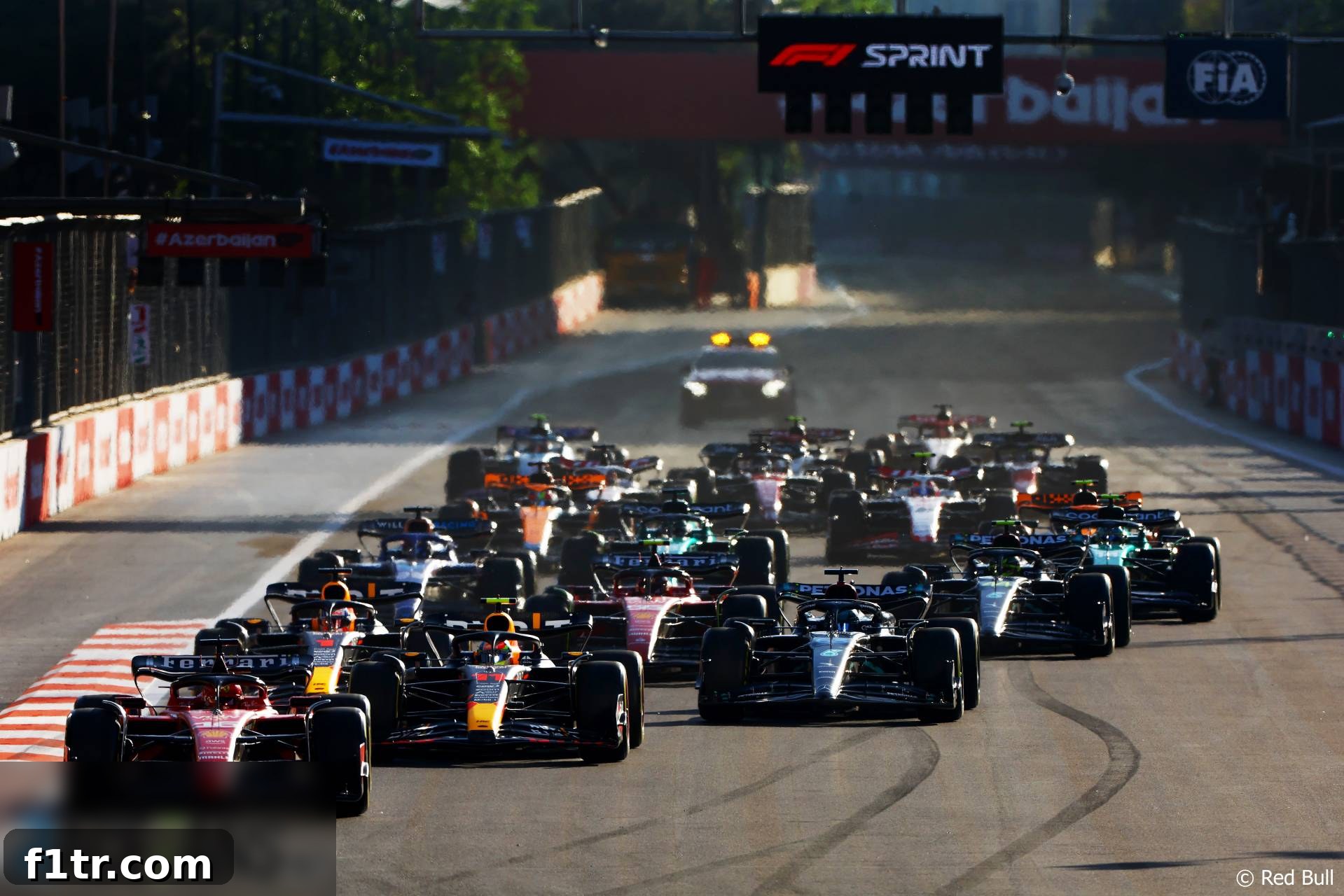
In 2017, as Liberty Media ushered in a new era for Formula 1, a controversial topic emerged that continues to fuel debate: the concept of reverse grid races. Red Bull team principal Christian Horner, a prominent voice in the paddock, swiftly articulated his disdain for the idea. “I hate that idea,” he declared, “I think the grand prix is the big event on a Sunday afternoon. Anything gimmicky around that is just WWF, to be honest with you.”
The Clash: Pure Sport vs. Scripted Spectacle
Horner’s candid remarks highlighted a fundamental philosophical divide within Formula 1. For many, including veterans and traditionalists, reverse grids represent a troubling deviation from the core principles of motorsport. The fear is that such a format would transform racing from a genuine sporting competition, where merit and performance dictate outcomes, into a manufactured spectacle designed primarily for television entertainment. The comparison to World Wrestling Entertainment (WWE), with its choreographed drama and predetermined results, underscores the perceived threat to F1’s sporting integrity.
Advert | Become a Supporter & go ad-free
“I saw a comment from Toto Wolff on this one,” echoed Sergio Perez in 2020, voicing a sentiment widely shared among his peers. “He said that Formula 1 is not WWE. And I agree.” This consensus among drivers, team principals, and a significant portion of the fanbase reflects a deep-seated apprehension that introducing artificial elements, such as deliberately altering starting grids, would undermine the very essence of competitive racing. The pursuit of victory from pole position or through strategic overtakes, earned purely by skill and engineering prowess, is seen as paramount.
Liberty Media’s Persistent Vision and Fan Resistance
Despite the strong and consistent opposition from a majority of drivers and key figures within the sport, Liberty Media, F1’s commercial rights holder, has not abandoned its pursuit of format innovations. Stefano Domenicali, who assumed the role of F1 CEO in 2021, succeeding Chase Carey, has been a vocal proponent of introducing reverse grid races, particularly within the context of sprint weekends. Liberty Media’s strategic vision for F1 involves broadening its appeal beyond traditional enthusiasts, attracting new, younger audiences who might be more accustomed to dynamic, entertainment-driven content.
The initial attempts by Liberty to introduce reverse grid sprint races faced repeated setbacks, encountering significant resistance within the F1 Commission and from several teams. After a third proposal failed in October 2020, amidst widespread concerns, a perceived shift in strategy occurred. Instead of fully reverse grids, “sprint races” were introduced for the 2021 season, albeit at a limited number of three rounds, and crucially, with starting orders determined by a conventional qualifying session rather than a reverse grid mechanism. This was largely seen as a compromise, an incremental step towards format experimentation without immediately alienating the purist faction.
The reception to this initial sprint race format was decidedly mixed, as evidenced by a comprehensive survey conducted by Liberty Media in collaboration with an independent publication. Out of more than 167,000 responses, 40% of fans believed sprint races “improved the show,” while a significant 34% disagreed. This narrow margin of approval indicated that while some found the new format engaging, a substantial segment of the fanbase remained unconvinced or even actively opposed, suggesting that any further, more drastic changes would likely face even greater scrutiny.
Advert | Become a RaceFans supporter andgo ad-free
Crucially, the same 2021 poll revealed overwhelming disapproval for reverse grid races specifically. Over two-thirds of respondents – a staggering 68% – explicitly disagreed with their introduction. Those in favor were outnumbered by a margin of four to one, making reverse grids an even less popular proposal than other controversial ideas like success ballast or awarding points for qualifying positions. Our own RaceFans polls have consistently reflected similar sentiments, with a clear majority of readers expressing a strong preference for the traditional Grand Prix format, reinforcing the depth of feeling against such radical changes among a dedicated fan base.
Conflicting Narratives: Fan Opinion and Liberty Media’s Data
Despite these clear indicators of fan sentiment from independent surveys, Stefano Domenicali has often characterized sprint races as being overwhelmingly popular. Since 2021, Liberty Media has conducted its own surveys through its proprietary “F1 Fan Voice” platform. While these internal surveys offer insights into shifting attitudes, the lack of transparency regarding methodology, sample size, specific questions asked, and available response options makes it challenging to interpret their findings at face value. Without this context, independent verification or comparison becomes difficult, leading to a potential disconnect between the sport’s commercial owners and its passionate fanbase.
According to an F1 spokesperson, Liberty Media’s latest internal surveys suggest a dramatic shift in attitudes towards reverse grids, particularly within sprint race contexts. They claim 59% support for reverse grid sprint races, with this figure reportedly rising to 76% among newer F1 fans. This perceived surge in support, if accurate and verifiable, would represent a significant change from earlier, more critical fan reception. However, the absence of publicly available raw data and methodological details necessitates a cautious interpretation of these figures. It raises questions about how these surveys are structured and whether they inadvertently guide respondents towards certain conclusions.
Liberty’s internal surveys have also informed other conclusions regarding the sprint format. They reportedly indicate insufficient fan interest in a separate sprint race championship, suggesting that fans prefer the sprint to remain supplementary to the main Grand Prix. Similarly, there isn’t a strong desire to extend the sprint format beyond a limited number of races per year, suggesting fans appreciate its novelty but fear saturation. Conversely, Liberty believes fans wish to continue seeing points awarded for sprint races and show some support for extending the scoring places beyond the current top eight. These insights guide the ongoing evolution of the sprint format, balancing innovation with fan expectations.
Advert | Become a RaceFans supporter andgo ad-free
The Evolving Sprint Format and Future Possibilities
The sprint race format has undergone annual modifications since its inception, reflecting Liberty Media’s adaptive approach and continuous efforts to refine the concept. Last November, the F1 Commission confirmed that further alterations are planned for the upcoming season. Many stakeholders advocate for relatively minor, yet impactful, changes. A highly favored adjustment includes rescheduling the Grand Prix qualifying session to Saturday during sprint race weekends, aligning it with the traditional schedule of non-sprint rounds. This would provide a clearer structure to the weekend and enhance the main event’s build-up. Other potential revisions, such as amending the much-criticized parc fermé rules, which restrict car setup changes between sprint qualifying and the Grand Prix, are also under consideration. These changes aim to address operational complexities and improve the flow of sprint weekends without fundamentally altering the racing format.
However, the question looms: has Liberty Media’s research, particularly the internally-generated data, emboldened it to make yet another push for full reverse grid races? Stefano Domenicali remains an ardent advocate for the idea. Following the initial two years of the sprint format, he stated that F1 has “an obligation to try” a format that would deliberately shuffle the starting order. This suggests an underlying belief that reverse grids, despite their contentious nature, hold untapped potential for excitement and unpredictability, which align with Liberty Media’s broader entertainment strategy for the sport.
Challenges and Potential Pitfalls of Reverse Grids
Introducing reverse grid sprint races would undoubtedly present a host of new logistical and ethical problems for Formula 1 to navigate. One primary concern revolves around the potential for qualifying manipulation. If the starting order for the sprint race were a direct reversal of the Grand Prix qualifying results, drivers might be incentivized to intentionally set slower times during qualifying to secure a more favorable, or even pole, position for the sprint race. This strategic sandbagging would completely undermine the competitive integrity of qualifying, turning it into a tactical exercise in underperformance rather than a pure speed test.
Alternatively, if championship standings were used to determine the reverse grid, new complexities would arise. A team considering a mid-season driver change, for instance, might find an additional, unintended incentive: a new driver starting from the back could potentially secure a sprint race pole position more easily. Such scenarios introduce artificial advantages that detract from genuine competition. Furthermore, either of these reverse grid solutions would almost certainly necessitate the loss of one traditional qualifying session per sprint race weekend. This reduction in competitive track time contradicts one of the key arguments made by sprint race proponents, who often highlight the format’s strength in offering more meaningful sessions for fans. The delicate balance between generating excitement and preserving the authenticity of racing would be severely tested.
The teams themselves appear to be growing weary of the constant flux and modifications to the sprint race format. “It’s very important that the next step that we make is one that is fixed for a long period of time,” asserted Christian Horner at the Circuit of the Americas last year, a sentiment echoed by several other team principals. This desire for stability underscores the operational burden and financial implications of frequent rule changes, which require teams to adapt strategies, car setups, and even personnel deployment. Such constant evolution can divert resources from core development and create unnecessary distractions.
Horner also provided a rare public admission that the sprint race format is not the unequivocal success story that Liberty Media often portrays. “In some areas it’s very popular and with some traditionalists, it’s very unpopular,” he noted, acknowledging the polarized views within the fanbase. This candid assessment aligns with external survey data and highlights the challenge of satisfying a diverse audience with a single, sweeping format change.
Advert | Become a RaceFans supporter andgo ad-free
The Future: Balancing Innovation and Tradition
Just three years ago, comprehensive data indicated that reverse grid races were even less popular than the mixed-reception sprint races. If Liberty Media ultimately decides to impose reverse grid races, it will be a calculated gamble based on the belief that it can “have its cake and eat it too.” The strategy would involve attracting a significant influx of new viewers drawn to the enhanced unpredictability and entertainment value, without simultaneously alienating too many of the loyal, long-standing fans who view reverse grid races as a gimmick too far, a betrayal of Formula 1’s sporting heritage. The delicate balance between innovation and tradition remains the central challenge for Formula 1’s custodians as they chart the sport’s future course.
Formula 1 Insights & Related Articles
- Verstappen loathes F1’s new generation of cars – but what do his rivals reckon?
- The ‘throwback weekend’ is back in fashion. But it’s a flawed concept – especially for F1
- Is Formula 1’s double race cancellation a blessing in disguise?
- Todt admits Schumacher crashed on purpose – but did it really cost him two titles?
- 25 of the most memorable radio exchanges from the ‘Max and GP show’
Browse all Formula 1 articles