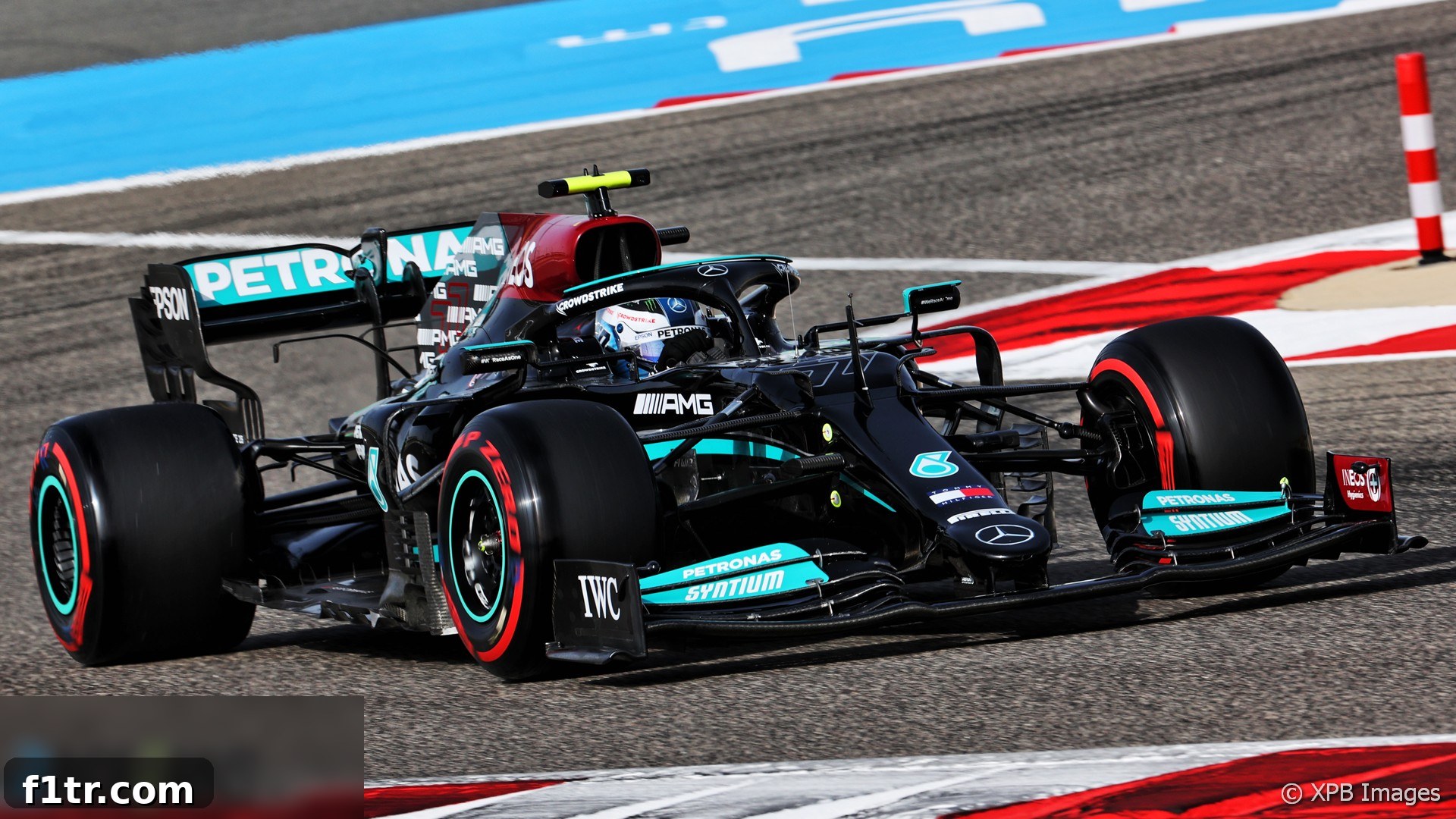
The opening stages of the 2021 F1 season delivered an unexpected jolt, with reigning champions Mercedes experiencing an uncharacteristic dip in performance. Despite their initial struggles, Alpine’s executive director, Marcin Budkowski, has confidently projected a swift and potent recovery for the Silver Arrows. This early season turbulence for Mercedes, a team synonymous with dominance in recent years, has not only sparked widespread discussion but also set a captivating precedent for what promises to be one of the most unpredictable Formula 1 championships in recent memory. The balance of power at the top, coupled with a fiercely competitive midfield, hints at a season filled with intrigue and high-stakes racing.
Advert | Become a Supporter & go ad-free
At the season’s inaugural race in Bahrain, Mercedes found themselves notably off the pace, qualifying almost four-tenths of a second slower than their principal rivals, Red Bull. This significant performance deficit immediately drew attention and concern, with fingers pointing squarely at the fundamental shifts in technical regulations implemented during the off-season. Specifically, mandated changes to the rear floor designs of all cars were widely cited as the primary culprit. These revisions, crafted to reduce overall downforce, appear to have impacted Mercedes’ low-rake aerodynamic philosophy more severely than other teams, particularly those employing a high-rake setup. The Mercedes W12, their contender for the year, exhibited clear challenges in achieving optimal balance and stability, leading to concerns about its fundamental characteristics and the team’s ability to unlock its full potential.
Despite the observable performance gap, Budkowski maintains a resolute belief in Mercedes’ capacity for a rapid turnaround. He underscored the strategic advantage offered by the unusual calendar breaks early in the season, which include an extended three-week interlude between the first and second races, followed by another two-week gap before round three. Such periods are invaluable for any F1 team, but especially for an outfit with Mercedes’ vast resources, engineering depth, and meticulous data analysis capabilities. “You have clearly Red Bull in front and Mercedes not very far [away],” Budkowski remarked. “I think they’re behind at the moment but I would be curious to see where they are in two or three races, because I think they are a big, very well-structured and very competent team and they clearly have some issues that they will sort.” His confidence stems from Mercedes’ unparalleled track record of innovation and their well-established ability to diagnose and rectify performance issues with remarkable speed, leveraging their extensive experience and technical expertise.
Conversely, Mercedes itself has expressed a more tempered perspective, with indications that closing the gap to Red Bull this year could be an exceptionally difficult task. Andrew Shovlin, Mercedes’ trackside performance engineering director, highlighted the new, stringent restrictions on in-season development as a major impediment. These limitations, which include a reduced budget cap and tighter aerodynamic testing restrictions (ATR), fundamentally alter how teams can approach car upgrades. Unlike previous seasons where significant mid-season overhauls were more feasible, 2021’s regulatory framework curtails the extent to which teams can simply out-develop their rivals. Furthermore, teams are grappling with a critical strategic dilemma: how to effectively divide their finite resources between enhancing their current 2021 challenger and dedicating substantial engineering and financial capital to the entirely new car designs required for the radical 2022 regulatory overhaul. For a team like Mercedes, whose long-term strategy often involves shaping the sport’s technical direction, compromising 2022 development for a potentially marginal gain in 2021 could be a high-risk gamble, potentially entrenching Red Bull’s early advantage.
Shifting focus from the title contenders, Budkowski also offered a comprehensive view of a profoundly dense and competitive midfield. He positioned Alpine squarely within this expansive cluster, which he believes encompasses nearly all the remaining teams, with the notable exceptions of Williams and Haas, who currently anchor the back of the grid. This scenario sets the stage for an unprecedented level of excitement and unpredictability across the vast majority of the field, promising thrilling battles for every point.
“You have McLaren who are strong, AlphaTauri were strong, Ferrari were strong, a little bit stronger than we expected them [to be]. And then there’s us, there’s Aston Martin,” he detailed, highlighting the formidable constituents of this bustling middle tier. He further acknowledged Alfa Romeo, noting that they “were not far off either,” underscoring the widespread competitiveness. This diverse assembly of teams, each pursuing unique car development philosophies and operational strategies, creates an intensely fascinating dynamic. The sheer proximity in their performance levels suggests that positions “fifth or sixth to 16th is going to be tight,” implying that even marginal improvements in car setup, exceptional driver performance on a given day, or specific track characteristics could dramatically reorder the competitive landscape from one Grand Prix to the next. Such variability guarantees a captivating spectacle for fans throughout the entire season.
For Alpine, the team’s objective is unequivocally clear: to ascend to the pinnacle of this intensely competitive midfield. “So our objective is to be at the front of that group rather than at the rear,” Budkowski stated with conviction. While candidly acknowledging their current standing “somewhere in the middle of it,” he expressed a firm belief in their ability to close the “short of a few tenths” gap that separates them from the front-running teams within this pack. The inherently fluid nature of this group means that performance could indeed be “different the next race,” injecting an exciting element of unpredictability that will keep fans on the edge of their seats throughout the entire championship. While teams will undoubtedly pursue incremental developments, the looming shadow of the radical 2022 regulations dictates that extensive, season-long upgrade programmes are a luxury few, if any, can afford.
The unique confluence of factors—Mercedes’ unexpected vulnerability, Red Bull’s impressive surge, and the ferociously contested midfield—collectively promises to etch the 2021 F1 season into the annals of motorsport history. The delicate interplay between the limitations on in-season development and the strategic imperative to divert significant focus towards the monumental challenge of 2022 car designs suggests that the initial pecking order established early in the season might prove more resilient and less prone to dramatic shifts than in previous years. Consequently, every single race, every qualifying session, and every calculated strategic decision will carry immense weight. The battles for coveted podium finishes, crucial championship points, and even bragging rights within the midfield will be relentless and hard-fought, guaranteeing a spectacle that truly embodies the thrilling, competitive spirit of Formula 1. This intensely competitive landscape ensures that the “midfield is going to be very, very competitive all season long,” offering unwavering excitement and drama at every stage of the championship.
Advert | Become a RaceFans supporter andgo ad-free
2021 F1 Season Insights
Explore more discussions and analyses related to the pivotal 2021 Formula 1 season:
- Masi ‘basically gifted the championship’ to Verstappen says 2021 FIA steward Sullivan
- Las Vegas race backers looking to extend F1 deal beyond 2025
- Why Mercedes put ‘a reminder of joy and pain’ on display in their factory lobby
- Verdict on error in GT race suggests Mercedes would have lost 2021 Abu Dhabi GP appeal
- Title ‘stolen’ from Mercedes made us ‘underdogs people cheer for’ – Wolff
Browse all 2021 F1 season articles