Lance Stroll Backs Mick Schumacher for Direct F1 Leap, Bypassing F2
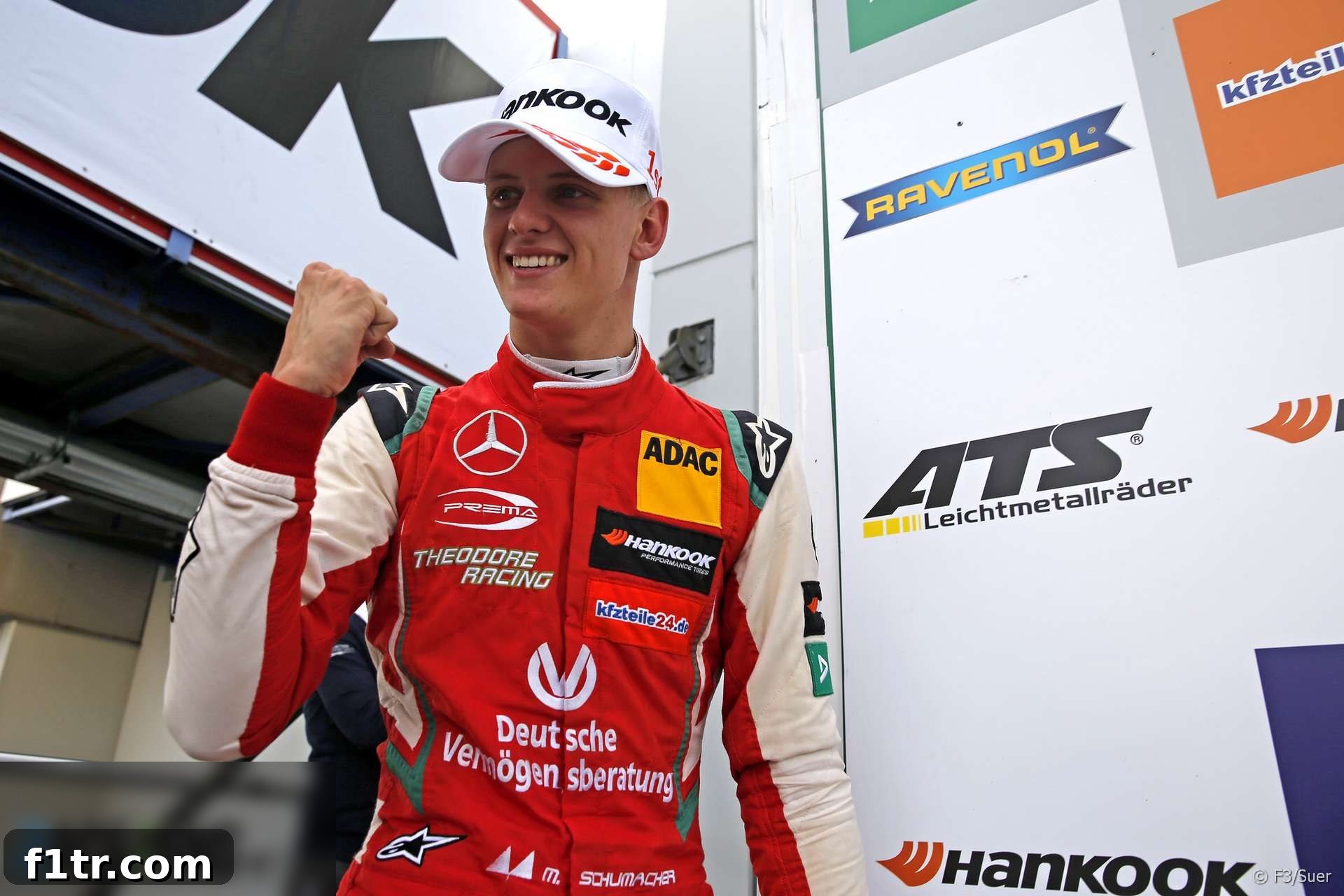
As the racing world closely watched the ascent of a new Schumacher talent, speculation surrounding Mick Schumacher’s future in motorsport reached a fever pitch. With the 19-year-old son of seven-time world champion Michael Schumacher on the cusp of clinching the European Formula 3 title with Prema, the question wasn’t if he would reach Formula 1, but when and how. Amidst the swirling discussions, Lance Stroll, a driver who famously made the audacious leap directly from Formula 3 into Formula 1, offered a unique perspective, suggesting Mick could follow a similar expedited path.
Ross Brawn, F1’s motorsport managing director and a figure deeply intertwined with the Schumacher legacy from their Ferrari championship-winning days, had previously voiced his opinion that a move into Formula 2 would represent the next “logical step” for young Schumacher. This sentiment aligned with the traditional development ladder in junior single-seater racing. However, Stroll, who himself triumphed in the F3 championship with Prema just two years prior before his immediate F1 graduation, presented an alternative viewpoint, drawing on his personal experience.
The Direct Path: Stroll’s Precedent and Perspective
When questioned by RaceFans about the potential benefits of Schumacher competing in F2 before making the ultimate jump to F1, Stroll emphasized the highly individualized nature of such career decisions. “It’s very driver-dependent,” he asserted. “I don’t think there’s a right or wrong. Some drivers get a chance to get into Formula 1 and you have to go for it. Other drivers are in different situations. It’s very dependent from driver to driver, everyone has their own unique situation.”
Stroll’s own journey to Formula 1 was notable not just for its speed but also for the extensive preparation he undertook. Before his F1 debut, he benefited immensely from a specialized private testing program. This involved considerable mileage in a 2014-specification Williams Formula 1 car, allowing him to acclimate to the sheer power, complex systems, and physical demands of an F1 machine away from the competitive glare. This unique advantage undoubtedly played a crucial role in his readiness for the pinnacle of motorsport, setting a precedent that very few drivers have been able to replicate.
Navigating the F3 to F1 “Big Jump”
Despite the invaluable private testing, Stroll admitted that the transition from Formula 3 to Formula 1 remained a monumental challenge. He explained that adapting to the new regulations and the drastically different performance envelope of a modern F1 car was a steep learning curve. “I drove the old car a lot but the step to the new regulations [meant] the new car was, compared to their 2014 car, seven seconds faster,” he remarked, highlighting the significant evolution in car performance even within a few years.
According to Stroll, the most formidable aspect of transitioning from F3 to F1 wasn’t merely the increase in power, which drivers tend to adapt to relatively quickly. Instead, the true hurdles lay in the intricate art of car setup and mastering F1’s high-degradation tyres. “The power you get used to quickly, it’s really how to optimize the car. The tyres also,” he elaborated. Formula 1 tyres are designed with highly specific thermal characteristics and degradation profiles, demanding a nuanced understanding and precise management from the driver to extract optimal performance over a race distance. This level of complexity is a world away from the simpler tyre management found in Formula 3.
The overall performance gap between the two categories is staggering. “It’s definitely a big jump from Formula Three, you’re looking at like 15 seconds – probably more – 20 seconds of lap time depending on the track. It’s definitely a big jump,” Stroll emphasized. This immense difference isn’t just about straight-line speed; it encompasses everything from aerodynamic efficiency and braking performance to cornering speeds and the overall physical and mental strain on the driver. Optimizing an F1 car involves a deep collaboration with engineers, analyzing vast amounts of data, and making minute adjustments to extract every fraction of a second, a skill far more developed at the F1 level.
Mick Schumacher’s Ascent and the F2 Debate
Stroll, maintaining a keen interest in his former team’s progress, had been closely monitoring Mick Schumacher’s development. “He’s done a really good job, especially in the second half of the season. Looks like he’s put it all together,” Stroll observed. Schumacher’s impressive run of form, culminating in a strong championship bid, demonstrated his growing maturity and ability to consistently perform at a high level. “The championship’s not over yet, I hope he can seal the deal,” Stroll added, expressing his well wishes. “He’s got a pretty good gap. I hope for himself and the team they can finish it.”
The debate surrounding a driver’s path to F1 often revolves around the role of Formula 2. While Ross Brawn championed F2 as the “logical step,” its purpose is to bridge the gap between regional Formula series and Formula 1. F2 cars are more powerful, feature similar aerodynamic principles to F1 (including DRS), and use Pirelli tyres often aligned with F1 specifications, preparing drivers for the technical and strategic demands of the premier class. A season in F2 offers invaluable race craft experience, pit stop practice, and sustained competition against a field of highly talented and ambitious young drivers – all crucial aspects before facing the ultimate challenge of Formula 1.
However, the question of whether F2 is absolutely essential remains contentious. Drivers like Stroll, armed with significant testing opportunities and a strong talent base, have shown it’s possible to bypass it. The decision often hinges on a confluence of factors: the availability of an F1 seat, the financial backing required, the specific development needs of a driver, and the team’s willingness to invest in a raw talent. Some might argue that direct exposure to F1 machinery and engineers, even through private testing, can be more beneficial than a year in F2, especially if a guaranteed F1 seat is on the table.
The Schumacher Legacy and Future Prospects
The weight of the Schumacher name undeniably adds another layer of complexity and expectation to Mick’s career trajectory. While it opens doors and garners significant attention, it also brings immense pressure to live up to an unparalleled legacy. Every move Mick makes is scrutinized, every race performance analyzed, not just on its own merit but also in comparison to his legendary father. For Mick, charting his unique path while honoring his family’s heritage is a delicate balancing act.
In contrast to Stroll’s direct jump, other promising talents have opted for the F2 route. Lando Norris, who succeeded Stroll as F3 champion the year after, spent the subsequent season racing in F2 before securing his highly anticipated drive for McLaren in F1. Norris’s journey exemplifies a more traditional, albeit still rapid, progression through the junior categories, allowing him to further hone his skills and gain experience in a powerful single-seater closer in performance to an F1 car.
Conclusion: A Path Less Travelled or a Calculated Step?
Ultimately, the choice for Mick Schumacher, whether to embrace Ross Brawn’s “logical step” into Formula 2 or emulate Lance Stroll’s ambitious direct leap to Formula 1, is a deeply personal and strategic one. It underscores that while there are established pathways in motorsport, exceptional talent and unique circumstances can carve out alternative routes. Stroll’s insights highlight the extraordinary demands of F1, particularly the complexities beyond sheer speed, focusing on car optimization and tyre mastery.
As Mick Schumacher stood at the precipice of his F3 championship victory, the racing world held its breath, eager to see which direction this promising young driver would take. His talent, coupled with the legacy he carries, ensures that his journey to Formula 1, regardless of the precise route, will be one of the most compelling stories in motorsport for years to come.