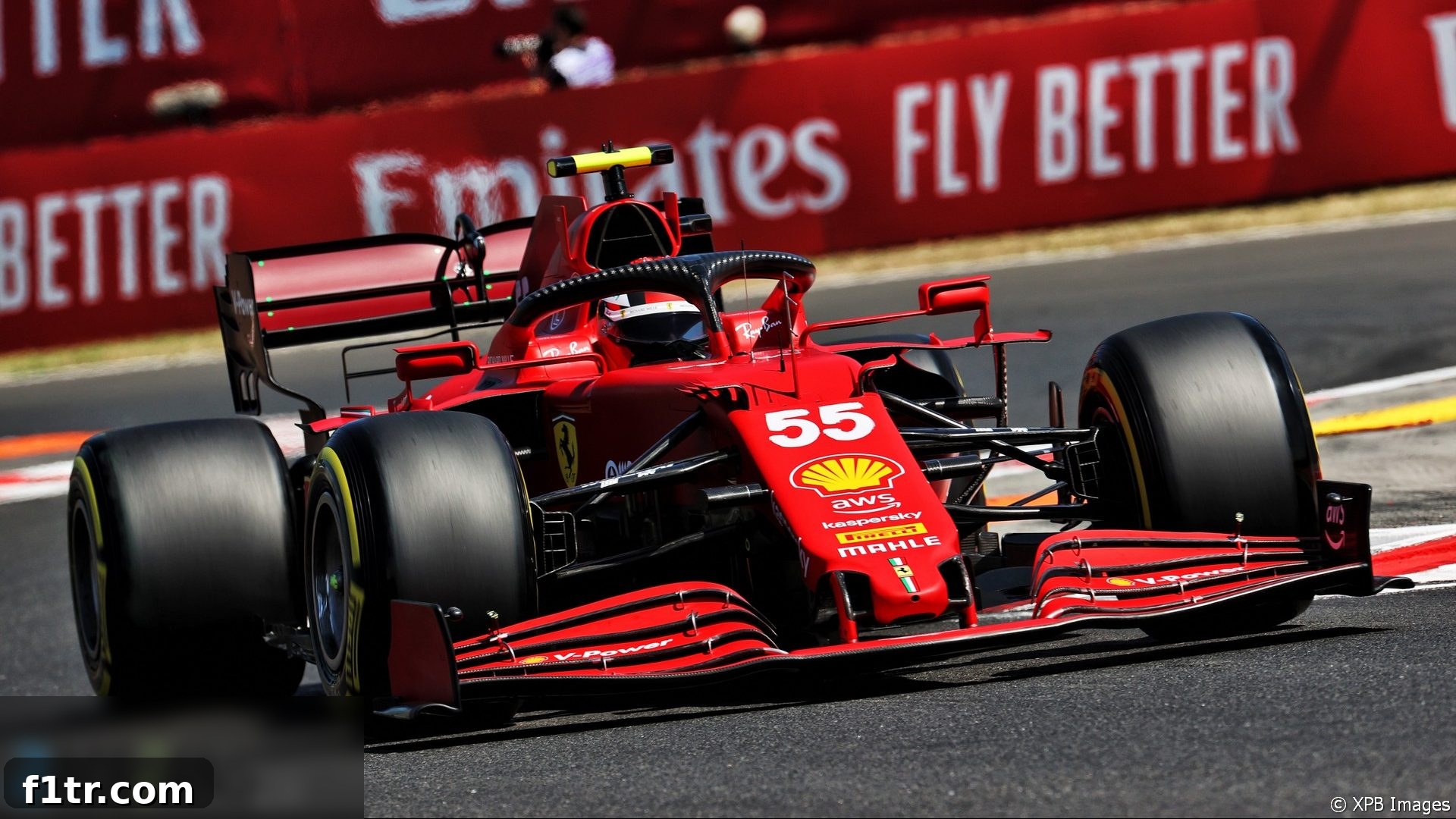
Carlos Sainz Unpacks Hungaroring’s Astonishing Transformation and Ferrari’s F1 Strategy
Formula 1 driver Carlos Sainz Jnr has offered a fascinating perspective on the dramatic evolution of the Hungaroring circuit, highlighting how its shift from a traditionally slow track to a more high-speed challenge directly impacts Ferrari’s strategic outlook. Sainz’s insights shed light on the relentless progress of modern F1 cars and the intricate dance between vehicle characteristics and circuit demands, especially concerning tyre management and the elusive art of overtaking. His observations provide a crucial lens through which to understand the complexities teams face in adapting to the ever-changing landscape of Grand Prix racing.
The Radical Transformation of the Hungaroring: From Slow to Swift
The Hungaroring, nestled near Budapest, has long been characterized by its tight, twisty layout, earning it a reputation as one of the slower, more technically demanding circuits on the Formula 1 calendar. Its narrow confines and lack of extensive straight-line sections traditionally meant that outright engine power was less critical than aerodynamic grip and precise handling at low to medium speeds. This perception, deeply ingrained in the F1 paddock and among fans, painted the Hungarian Grand Prix as a strategic chess match where driver skill and car stability often trumped raw pace.
However, according to Carlos Sainz, this long-held perception has undergone a monumental shift, largely thanks to the breathtaking advancements in Formula 1 car design and performance over recent years. Sainz vividly recounts his experiences, drawing a stark contrast between racing at the Hungaroring just a few seasons ago and the present day. “I remember racing here back in 2015 with a much narrower tyre, much lower downforce, and the track felt slow,” he explained. This sentiment underscores a common feeling among drivers from that era, where the circuit’s undulating nature and continuous sequence of corners often felt like a constant battle against inertia, demanding a delicate touch to maintain momentum. Lap times then, often struggling to dip below 1 minute 20 seconds, reflected this lower-speed character, making a sub-1:20 lap a commendable effort.
Fast forward to the current era, and the narrative has completely flipped. Modern F1 cars, with their wider tyres, significantly increased downforce, and sophisticated aerodynamic packages—developments largely spurred since the 2017 regulatory changes and refined continuously—have unlocked unprecedented levels of grip and speed. Despite continuous efforts by the sport’s governing bodies to rein in these speeds through various regulations, the cars have defied expectations, setting new benchmarks almost every season. Sainz marvels at the current pace: “The cars we were lapping last year on 1’13 and I remember coming here in 2015 and going below 1’20 was a good lap time and 1’13 around here is crazy.” This seven-second reduction in lap times over a relatively short period represents an astronomical leap in performance, fundamentally altering the very essence of driving at the Hungaroring and reshaping how teams approach its unique challenges.
The Spanish driver emphasized that this remarkable progress often goes underappreciated by those outside the cockpit. “I don’t think we talk about it enough that we are doing 1’13s around the Hungaroring,” he stated, highlighting that from behind the wheel, the circuit no longer feels slow. Instead, it has transformed into what he perceives as a “medium-to-high-speed track.” He elaborates on the visceral sensation: “In the car the feel is just fourth, fifth gear, change direction, change direction always nearly above 180, 200kph. Yes, you have your hairpins here and there, but it doesn’t feel slow speed anymore.” This perspective reveals that drivers are now tackling many of the circuit’s previously intricate corners at speeds previously unimaginable, subjecting them to immense G-forces and demanding an even higher level of precision, physical endurance, and mental fortitude. The Hungaroring, once a test of slow-speed finesse, has become a high-velocity gauntlet.
The Paradox of Overtaking at a Faster Hungaroring
Despite the significant increase in lap speeds and the newfound sensation of the Hungaroring as a medium-to-high-speed circuit, Carlos Sainz remains pragmatic and somewhat pessimistic about the prospects for overtaking. While the cars are undeniably faster, the fundamental layout of the circuit, which has long contributed to its “Monaco without the walls” reputation, continues to pose formidable challenges for drivers attempting to pass their rivals. “I don’t expect the overtaking to be any different,” Sainz candidly remarked, suggesting that the dynamics of close-quarters racing at this venue are largely immune to the overarching increase in pace.
The primary reason for the persistent difficulty in overtaking lies intrinsically in the Hungaroring’s design. It’s a circuit characterized by a continuous sequence of corners, offering very few genuine straight-line sections where a significant speed differential can be built up for a clean pass. The main straight, though augmented by DRS (Drag Reduction System), often isn’t long enough for a car following closely to complete a move before the critical braking zone for the tight Turn 1. This means that even with the advantage of DRS, drivers must commit very early and precisely, often resulting in high-risk maneuvers.
Furthermore, the numerous medium and high-speed corners that make up the majority of the lap mean that cars running in close proximity suffer severely from “dirty air.” This turbulent air, generated by the leading car’s complex aerodynamic wake, significantly reduces the downforce on the trailing car. When a car loses downforce, it compromises grip, making it harder to follow closely through corners, which is absolutely crucial for getting a strong run on the car ahead onto a straight. The delicate balance of modern F1 cars makes them highly susceptible to these aerodynamic disturbances, turning what might seem like a straightforward follow into a constant fight for control and stability.
The increased speed of modern F1 cars, while thrilling for individual lap times, does not inherently translate into easier overtaking opportunities on a track with these characteristics. In fact, it can sometimes exacerbate the problem. With higher cornering speeds, the sensitivity to dirty air can become even more pronounced, making it an even greater challenge for a driver to maintain optimal performance when within a few car lengths of another competitor. Consequently, strategy through pit stops, tyre choices, and opportunistic moves remain paramount at the Hungaroring, often taking precedence over pure on-track passes, a reality Sainz and his fellow drivers are acutely aware of.
Ferrari’s Performance Profile: Thriving on Low-Speed, Adapting to Medium
The transformation of the Hungaroring into a demonstrably faster circuit presents a specific and nuanced challenge for Ferrari, as Carlos Sainz himself candidly acknowledges. The Scuderia’s car characteristics during that particular season had shown a pronounced aptitude for tracks with slower corner profiles, a strength that allowed them to excel in environments where others might struggle to find optimal balance and grip. This nuance is crucial for understanding Ferrari’s strategic approach and their expectations for performance at circuits like the Hungaroring, especially when compared to their direct rivals.
Sainz articulated this point clearly, stating, “That’s why I mean that our car might not be that good [here].” Ferrari had demonstrated exceptional form on circuits like Monaco, where maximum downforce at low speeds, precise mechanical grip, and adept handling through tight, unforgiving corners are paramount. In such highly technical, low-speed environments, the Ferrari package was often seen as highly competitive, extracting performance where raw engine power might be less of a differentiator. The intricate, slow-speed nature of Monaco, with its continuous changes of direction and minimal straights, played perfectly into the car’s inherent strengths, allowing the team to punch above its weight and often secure strong results.
Conversely, tracks that demand high-speed aerodynamic efficiency and sustained performance through sweeping, fast corners – such as Silverstone, with its iconic Copse and Maggotts/Becketts complexes – had proven to be more challenging for Ferrari. These circuits exposed areas where their car might not have possessed the same level of high-speed aerodynamic dominance as some of their competitors. While Sainz hoped their performance at the Hungaroring would be “better than in Silverstone,” he remained realistic about the car’s natural inclinations. The Hungaroring, even with its newfound speed, still lacks the expansive, high-aero corners that define tracks like Silverstone. However, its shift towards a “medium-to-high-speed” character means it moves away from the pure low-speed dominance that suited Ferrari so well, placing it in an intermediate zone.
This situation underscores the delicate balance required in Formula 1 car design and the trade-offs involved. A car optimized for exceptional low-speed performance might inherently sacrifice some efficiency and stability at higher speeds, and vice-versa. For Ferrari, the Hungaroring’s evolution meant moving into a grey area – not quite the slow-speed haven where they truly excelled, nor the outright high-speed arena where they sometimes struggled. It required a nuanced approach to car setup, aerodynamic configuration, and race strategy, trying to find a sweet spot that could maximize their enduring strengths in grip and mechanical traction while mitigating any inherent disadvantages on a circuit that had fundamentally changed its character and demands.
The Critical Role of Tyre Management and Temperature: A Ferrari Preoccupation
Beyond the inherent characteristics of the Hungaroring circuit and its evolving nature, tyre management and ambient temperatures loom especially large in the minds of the Ferrari team, particularly for Carlos Sainz. Tyre performance is a notoriously complex and often decisive factor in Formula 1, influencing not only single-lap pace but also degradation, strategy options, and ultimately, race outcomes. Ferrari had, at various points, openly grappled with specific limitations in this critical area, making it a constant concern for their drivers and engineers. Sainz openly admitted, “We always have tyres in the back of our mind going into every weekend because we know we do struggle sometimes with this limitation.” This candid statement highlights the critical and pervasive influence tyres had on a race weekend’s outcome for the Scuderia.
Ferrari’s struggles were often exacerbated in particular conditions, making external factors like weather incredibly significant. Sainz pinpointed colder temperatures and scenarios where the car’s balance shifted excessively towards the front axle as key problematic areas. When ambient or track conditions turn cold, tyres struggle to generate and maintain their optimal operating temperature range. This leads to a myriad of issues, including reduced grip, increased graining (where small pieces of rubber tear off the tyre surface), and accelerated degradation. Furthermore, a front-biased balance, meaning the front tyres are doing an disproportionate amount of work compared to the rears, can lead to excessive understeer and premature degradation of the front rubber, severely impacting lap times, driver confidence, and race strategy. The team had experienced a particularly challenging race at Paul Ricard under similar circumstances, where changing conditions ahead of the race threw their strategy and car performance off balance, serving as a potent and recent reminder of their vulnerabilities.
Therefore, the prospect of warmer temperatures at the Hungaroring was a significant source of relief and optimism for Sainz and the Ferrari camp. “But the fact that it’s going to be warm, like it was in Silverstone and in Austria, makes us a bit more relaxed about it,” he noted. Warmer conditions typically allow tyres to reach and sustain their optimal operating window more easily and consistently. This can significantly mitigate issues of graining and blistering that often plague teams in colder environments or on tracks with abrasive surfaces. For a car like Ferrari’s, which might have specific sensitivities to tyre temperature and balance characteristics, warm weather can act as a crucial stabilizing factor, helping the tyres perform more consistently and predictably throughout a stint, thereby allowing the drivers to push harder for longer periods.
Sainz concluded with cautious optimism, acknowledging the unpredictability of motorsport by symbolically “touching wood” as he spoke: “Whenever it gets cold and whenever the balance shifts towards the front, that’s where we have seen recently our limitations increase. The weather and the track conditions [this weekend] shouldn’t, I hope – and I touch wood – shouldn’t be too much of a limitation.” This sentiment encapsulates the perpetual tightrope walk that is F1 tyre management, where external factors like weather can swing a team’s fortunes dramatically. For Ferrari, specifically, warm conditions represented a valuable opportunity to unlock more consistent performance from their package, alleviate one of their persistent concerns, and potentially gain an edge in a highly competitive field.
Navigating the Nuances of Modern F1: A Concluding Perspective
Carlos Sainz’s insightful reflections on the Hungaroring circuit offer a captivating microcosm of the dynamic and ever-evolving world of Formula 1. His detailed observations underscore how fundamental track characteristics, relentless F1 car development, and intricate factors like tyre management coalesce to profoundly shape a team’s performance expectations and strategic approach for any given Grand Prix. The remarkable improvement in lap times at the Hungaroring, transforming its very essence from a slow technical challenge to a medium-to-high-speed test, stands as a testament to the unparalleled engineering prowess and continuous innovation within the pinnacle of motorsport.
However, this evolution also highlights the constant need for teams like Ferrari to adapt their car designs, setup philosophies, and race strategies to these changing environments. It’s a never-ending cycle of optimization, where understanding the nuances of how a car interacts with a circuit under specific conditions can be the difference between victory and defeat. As the sport continues to push the boundaries of speed and technology, demanding more from both man and machine, the candid insights from drivers like Sainz become invaluable in deciphering the complex challenges and thrilling spectacles that define modern Grand Prix racing. His perspective serves as a powerful reminder that in Formula 1, success is often found not just in raw pace, but in the meticulous mastery of every variable.
2021 Hungarian Grand Prix
- Ocon congratulated by past French F1 aces after breakthrough win
- Alpine doubt first win signals a performance breakthrough
- Vettel disqualification hearing to take place on Monday
- Why no one received a Grosjean-style race ban for the Hungarian GP pile-up
- Ocon’s “beautiful” late-stint pace was other key to Alpine’s breakthrough win
Browse all 2021 Hungarian Grand Prix articles