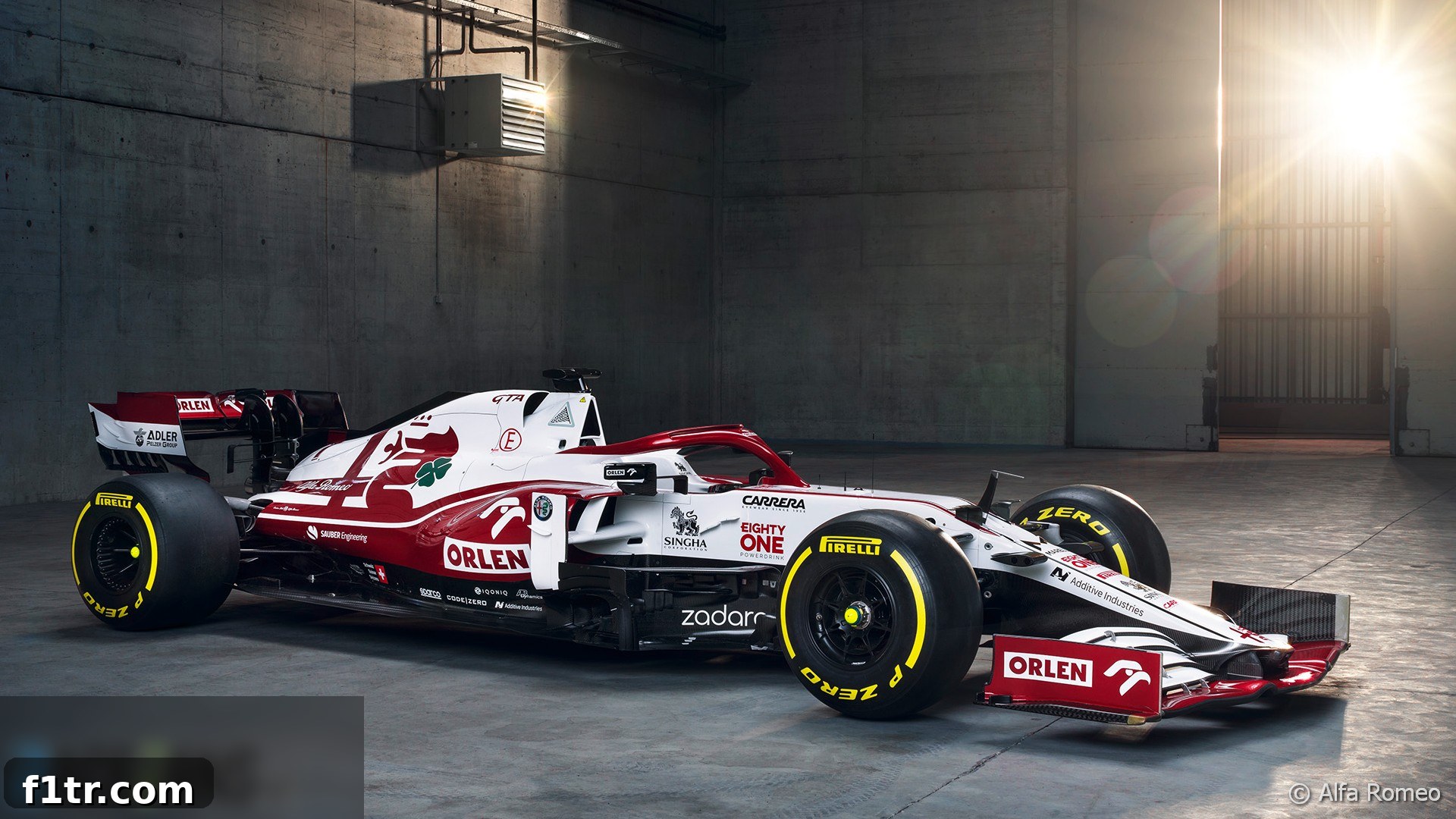
In a bold strategic move ahead of a transformative era for Formula 1, Alfa Romeo Racing has unequivocally signaled its intention to leverage the new regulations for the 2022 F1 season as its primary catalyst for advancement. The team’s technical director, Jan Monchaux, articulated this pivotal focus during the launch of their updated challenger for the current championship, underscoring a commitment to long-term gains over short-term skirmishes.
The highly anticipated overhaul of F1’s technical regulations, initially slated for this season, was prudently deferred to 2022 in response to the global pandemic. This delay has, ironically, provided teams like Alfa Romeo with an extended window to meticulously strategize and allocate resources. Monchaux emphasized the team’s unwavering determination to exploit the unique opportunities these regulations present, even as they entered the current season with a refined evolution of their preceding car. This dual approach highlights a pragmatic balance between immediate participation and future-proofing their competitive standing within the sport.
“Our overarching focus is squarely on 2022, a year that promises a complete revolution in Formula 1,” Monchaux declared. “We anticipate unveiling an entirely different car, one meticulously designed from the ground up to conform to these new rules. This seismic shift represents an unparalleled opportunity for us to make a significant leap forward, propelling us closer to the coveted front of the grid.” His words resonate with a palpable sense of ambition, reflecting the potential for a genuine shake-up in the established pecking order.
The strategic allocation of development resources is a critical facet of this forward-looking approach. “It is no secret within the paddock that we are prioritizing development efforts for the 2022 car throughout this year,” Monchaux elaborated. “The less capital and engineering bandwidth we commit to the 2021 car, the more extensively we can invest in the development of its 2022 successor. This strategy is particularly potent and essential with the introduction of the new budget cap, which fundamentally reshapes how teams manage their financial and technical expenditures.”
The Dawn of the F1 Budget Cap: A New Era of Financial Prudence
This year marks a historic juncture for Formula 1, as teams are, for the first time, compelled to operate within a stringent budget cap. This regulatory innovation aims to curb excessive spending, promote financial sustainability, and ultimately foster a more level playing field across the grid. However, Monchaux believes that the true ramifications of this financial constraint will not manifest immediately, anticipating their impact to become truly discernible from the 2022 season onwards, when cars are specifically designed and developed under these new economic parameters.
“I am confident that any significant effects of the budget cap on team competitiveness will not be overtly evident during the 2021 season,” he explained. “The budget cap was only implemented for the start of this season, at which point the 2021 cars were largely conceived and nearing completion. While in-season development will, of course, occur, the stability of the regulations carried over from last year means I don’t foresee any dramatic overhaul or significant shifts beyond some minor adjustments in the competitive hierarchy.” This perspective underscores the lag effect inherent in such sweeping regulatory changes, where initial designs predate the full impact of new constraints.
The real test and transformation, according to Monchaux, will commence in the subsequent year. “We will undeniably begin to witness a more profound impact from 2022, when every team will operate under the identical budget ceiling for the development of their new-generation cars,” he stated. “My expectation is that this will inexorably lead to a reduction in the performance gaps between teams. However, it’s crucial to acknowledge that the full, transformative effect of these new regulations, both technical and financial, will likely require a few years to become entirely apparent.”
This gradual convergence in performance is a key objective of the new era of F1. Historically, large, well-funded teams have enjoyed a considerable advantage, not merely due to their financial might and extensive personnel but also their entrenched technological superiority and sophisticated infrastructure. Monchaux anticipates that “the effect of this inherent advantage will take a few years to gradually fade,” as the budget cap progressively erodes the ability of top teams to outspend and out-innovate smaller outfits without limits.
A crucial nuance in the budget cap framework, however, remains a significant differentiator: “We must also remember that the budget cap currently does not encompass the power unit – effectively, the heart of the car,” Monchaux highlighted. “This critical component will continue to be a substantial differentiator, providing a distinct advantage for those manufacturers excelling in this domain. Nevertheless, my overall confidence remains high that within a span of two or three years, the performance gaps across the grid will be significantly reduced, leading to more competitive and unpredictable racing.”
2022 Regulations: A Technical Renaissance for Formula 1
The 2022 technical regulations represent one of the most radical shifts in Formula 1 history, designed to fundamentally alter how cars generate downforce and, crucially, how they race each other. The primary objective is to facilitate closer racing by reducing the disruptive “dirty air” effect that current cars produce, which makes following another car closely incredibly difficult. This is achieved through a return to ground effect aerodynamics, with simplified front wings, over-wheel winglets, and revised rear wings, all contributing to a more controllable wake and greater reliance on underbody aerodynamics. For teams like Alfa Romeo, this is a blank slate, offering a genuine chance to leapfrog rivals who might struggle to adapt to the new aerodynamic philosophy. It’s an opportunity to out-think, rather than simply outspend, the competition, aligning perfectly with the spirit of the budget cap.
This technical reset necessitates a complete redesign, from chassis to suspension, with a heavy emphasis on understanding and optimizing the ground effect. Engineers are faced with a complex puzzle of balancing downforce generation with drag reduction under entirely new principles. The standardized components introduced in some areas also aim to reduce costs and narrow performance discrepancies, further reinforcing the regulatory push for a more equitable playing field. For Alfa Romeo, a team with a storied history but recent struggles, this “revolution” is not just a challenge but a lifeline, a chance to reassert its presence at the sharp end of motorsport’s pinnacle.
Alfa Romeo’s Optimistic Outlook and Long-Term Vision
Alfa Romeo’s strategy reflects a calculated gamble, prioritizing future success over immediate, incremental gains. By committing significant resources to the 2022 car, they aim to arrive at the starting grid of the new era with a highly competitive package. This long-term vision is not merely about surviving in Formula 1 but thriving within its new framework. The anticipated reduction in performance gaps, coupled with the freedom of a clean sheet design, empowers teams operating with more constrained budgets to genuinely challenge the traditional front-runners. The emphasis on engineering ingenuity and efficient resource management, rather than sheer financial might, plays directly into the strengths of a focused and determined outfit like Alfa Romeo.
The period between 2022 and 2025 is expected to be a dynamic phase for Formula 1, where the full impact of these regulatory shifts will become clear. For fans, this promises more unpredictable races, closer championship battles, and potentially a broader array of teams vying for podium finishes. For Alfa Romeo, it’s a chance to build a sustainable, competitive future, moving away from being a perennial midfield contender to a genuine threat to the established elite. Monchaux’s confidence, rooted in the belief that these changes will level the playing field, sets an exciting tone for the seasons to come, marking a pivotal moment in the team’s trajectory and indeed, for the sport itself.
Advert | Become a RaceFans Supporter & go ad-free
Further Reading on F1’s Evolving Landscape
- Understanding the Impact of the F1 Budget Cap on Team Strategies
- Exploring the Technical Innovations of the 2022 F1 Cars
- How New F1 Regulations Aim to Improve On-Track Racing
- The Future of F1 Power Units and Their Role in Competitiveness
- Smaller F1 Teams and the Quest for Grid Parity
Browse all articles on F1 strategy and regulations