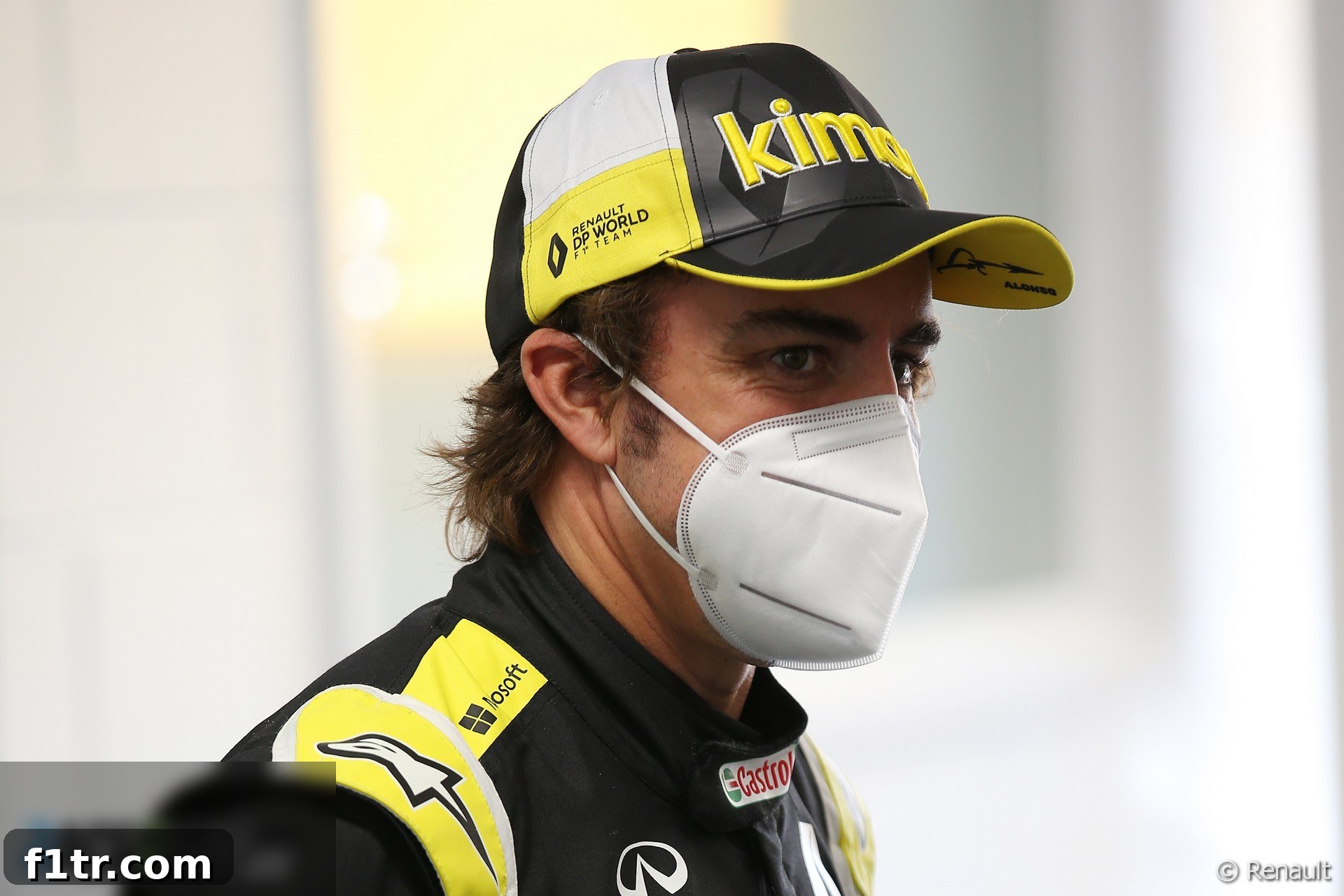
The highly anticipated return of two-time Formula 1 World Champion Fernando Alonso to the pinnacle of motorsport is taking a significant step forward. In crucial preparation for his grand comeback in the 2021 F1 season, Alonso is scheduled to undertake an intensive two-day test session for the Renault F1 team. This pivotal event will see him behind the wheel of the team’s 2018 challenger, the RS18, at the renowned Bahrain International Circuit on November 4th and 5th. This test marks a significant milestone in his journey back to competitive racing, offering invaluable track time to re-familiarize himself with the intricacies of a Formula 1 car and further integrate with the Enstone-based squad ahead of a challenging new season.
Alonso, who will step into the seat vacated by Daniel Ricciardo in the team’s much-anticipated 2021 line-up, has already had a taste of contemporary F1 machinery this year. Earlier this month, he participated in a one-day, 100-kilometer filming day, driving the team’s current RS20 car at the iconic Circuit de Catalunya. While restricted in mileage and purpose, that outing was a symbolic moment, marking his first return to an F1 cockpit since a McLaren test in Bahrain last year. The upcoming multi-day test, however, offers a far more comprehensive opportunity for the Spanish driver to push limits, provide detailed feedback, and fine-tune his physical and mental readiness for the rigorous demands of a full Grand Prix season.
The Rationale Behind the RS18 Test
The choice of the 2018-specification RS18 for Alonso’s extensive Bahrain test is dictated by Formula 1’s stringent sporting regulations. Current rules severely limit testing with contemporary cars outside of official Grand Prix weekends and designated pre-season or post-season sessions. However, teams are permitted to run older-specification cars without the same restrictions, making the RS18 an ideal platform for Alonso to regain critical track experience. While not identical to the 2021 car he will eventually race, the RS18 provides a robust and representative F1 environment. It allows Alonso to experience high g-forces, practice pit stops, run through various race simulations, and work closely with his engineering team. This extensive mileage is invaluable for shaking off any rust and recalibrating his senses to the unique speed and handling characteristics of modern F1 machinery.
Beyond the simple act of driving, the Bahrain test serves multiple crucial purposes. For Alonso, it’s an opportunity to re-establish a deep connection with the physical demands of an F1 car, including neck strength, stamina, and reaction times, all of which are pushed to their limits during a Grand Prix. Furthermore, the test will be crucial for validating simulator data and ensuring Alonso’s comfort and familiarity with Renault’s operational procedures, steering wheel controls, and hybrid power unit systems, all of which have evolved significantly since his last full season. The insights gained from direct track feedback, even from an older car, are indispensable for guiding the team’s development trajectory for the upcoming year.
Controversy Over Post-Season Test Participation
Renault’s ambition to accelerate Alonso’s integration was evident in their bid to secure him a run in the current-spec RS20 during the post-season test at Yas Marina in December. This particular test is traditionally reserved for ‘rookie’ drivers, defined as those who have not competed in more than two Grand Prix races. Renault, recognizing the undeniable advantage of running Alonso in the most up-to-date machinery, lodged a formal request with the Formula 1 Commission for a dispensation to allow the veteran driver to participate. Alonso, who remarkably made his Grand Prix debut back in 2001, clearly falls outside the traditional definition of a rookie.
However, their request was met with significant resistance during a meeting of the Formula 1 Commission earlier this week. Rival teams reacted unfavourably to the idea, largely citing concerns over fairness and the potential for competitive advantage. The argument put forth by these teams was that allowing a driver of Alonso’s calibre and experience into a session designed for developing emerging talent would fundamentally undermine the spirit of the rookie test. They contended that any mileage gained in the RS20 would provide Renault with an unfair head start on 2021 preparations, allowing Alonso to provide invaluable, direct feedback on the very car that forms the basis of next year’s challenger, albeit with regulatory changes. This collective opposition ultimately led to the rejection of Renault’s request, underscoring the fierce competitive nature of Formula 1 where every perceived advantage, however minor, is rigorously scrutinized.
The denial means Alonso’s track time in a current-generation F1 car will remain limited until official pre-season testing for 2021 begins. While the Bahrain RS18 test is undeniably beneficial, it cannot fully replicate the feel and nuances of the RS20 or the car he will race next year, which will feature adjusted aerodynamic rules. This outcome forces Renault to rely more heavily on simulator data, his limited filming day mileage, and, crucially, Alonso’s vast experience and adaptability to quickly get up to speed when the new season eventually begins. The decision highlights the ongoing tension between a team’s desire to optimize preparation and the collective desire to maintain a level playing field within the sport’s complex regulatory framework.
Nurturing Future Talent: Renault Sport Academy’s Parallel Test
Coinciding with Alonso’s imminent return to Bahrain, the Renault team has been actively engaging in a separate, yet equally important, four-day test at the very same circuit this week. This comprehensive program is dedicated to showcasing and developing the talents of three promising members of its esteemed Renault Sport Academy junior driver program. These tests, also utilizing the RS18, are crucial for providing valuable F1 experience to the next generation of potential Grand Prix stars.
The program began with Christian Lundgaard, currently ranked fourth in the competitive Formula 2 standings, who completed his allocated running yesterday. His consistent performance in F2 has marked him as a strong contender for future F1 aspirations, demonstrating raw speed and racecraft. Following him, Formula 3 champion Oscar Piastri is scheduled to take over the RS18 today. Piastri’s dominant performance in F3 this season, securing the title with impressive consistency and speed, has cemented his reputation as one of the brightest young talents in motorsport, and this F1 test is a significant step in his career progression. Finally, Guanyu Zhou, who currently sits eighth in the Formula 2 championship and is a key figure in the Academy, is due to drive the car for the final two days of the test. Zhou has been a consistent performer in F2 and is considered a strong candidate for a future F1 seat.
These sessions are not merely reward outings; they are rigorous assessments designed to gauge driver feedback, physical stamina, and adaptability to Formula 1 speeds and pressures. They provide the Academy drivers with an invaluable understanding of what it takes to operate at the elite level and offer Renault crucial data on their development trajectory. The juxtaposition of a seasoned veteran like Alonso and these aspiring young talents highlights Renault’s dual commitment to immediate performance and long-term talent cultivation, ensuring a pipeline of talent while also capitalizing on proven experience.
Fernando Alonso’s Enduring Legacy and the Road Ahead
Fernando Alonso’s decision to return to Formula 1 for the 2021 season, at the age of 39, speaks volumes about his unwavering passion for racing and his belief in the Renault project (soon to be rebranded as Alpine F1 Team). With two World Championships, 32 Grand Prix victories, and a reputation for fierce competitiveness and unparalleled race craft, Alonso is undoubtedly one of the sport’s all-time greats. His previous stints away from F1 saw him conquer the World Endurance Championship, including two Le Mans victories, and compete in the Indianapolis 500 and the Dakar Rally, demonstrating his versatility and continuous drive for excellence in motorsport’s toughest challenges.
His return is not without its challenges. The sport has evolved significantly, even in the relatively short time he’s been away. While his prodigious talent and innate speed are unquestionable, adapting to the nuances of modern F1 cars, which require a particular driving style to maximize tire performance, manage complex hybrid energy systems, and operate under strict budget caps, will be key. Furthermore, the competition in Formula 1 is arguably at its strongest in years, with a grid full of exceptional young talent and seasoned veterans. Alonso will need to quickly re-establish himself against drivers who have been consistently racing in F1 for the past few years and have adapted to the current generation of machinery and racing dynamics. However, his immense experience, technical feedback, and ability to extract every last tenth from a car are precisely why Renault has invested in his return. He is expected to not only deliver strong performances on track but also to provide invaluable leadership, strategic input, and development direction for the team as they aim to climb further up the constructors’ championship.
His presence on the grid is also a huge boost for Formula 1 itself. Alonso brings immense star power, a massive global fan base, and the promise of exciting on-track battles. His return injects another captivating storyline into the sport, ensuring increased media attention, heightened fan engagement, and potentially thrilling championship battles throughout the 2021 season and beyond. Fans eagerly anticipate seeing if the Spanish maestro can once again challenge the sport’s established order and add another glorious chapter to his illustrious career.
Alpine F1 Team: Ambitions for a New Era
The 2021 season marks a fresh chapter for the Enstone-based squad, as Renault transitions its Formula 1 operations to the Alpine F1 Team brand. This rebranding signifies a renewed commitment from the Renault Group to its motorsport endeavors, with a clear ambition to compete at the very front of the grid. The team has shown flashes of strong performance in recent seasons, securing several podium finishes in 2020 and demonstrating a significant upward trajectory in terms of pace and operational efficiency. The strategic signing of Fernando Alonso, alongside the highly regarded Esteban Ocon, forms a formidable driver line-up that is expected to lead this charge.
Alonso’s experience will be instrumental in guiding the team’s development, especially with the introduction of new technical regulations slated for 2022. His precise feedback on car balance, setup changes, and overall performance will be critical for engineers to optimize the chassis and aerodynamic package, ensuring Alpine is well-prepared for the future era of Formula 1. The partnership between a two-time world champion and a talented, hungry driver like Ocon promises to be a dynamic force, pushing each other and the team to extract maximum performance. The immediate goal for Alpine F1 Team will be to consistently challenge for podiums and improve their standing in the constructors’ championship, laying a strong foundation for future title aspirations under the new regulatory framework and firmly establishing the Alpine brand as a force in top-tier motorsport.
In conclusion, the upcoming two-day test in Bahrain for Fernando Alonso is far more than just a routine outing; it represents a critical juncture in his highly anticipated return to Formula 1. It provides essential mileage and integration time, albeit with an older car, ensuring he is fully prepared to hit the ground running with the Alpine F1 Team in 2021. Despite the setback regarding the Yas Marina rookie test, Renault’s multifaceted testing approach, combining the veteran’s expertise with the development of their rising junior stars, underscores their robust strategy for future success. All eyes will undoubtedly be on Alonso as he continues his meticulous preparations, signaling an exciting and competitive season ahead for Formula 1 fans globally.
Stay Connected with Formula 1 News
Don’t miss a beat from the exciting world of Formula 1. For the latest updates, breaking news, and in-depth analysis, make sure to follow us on social media and subscribe to our newsletters:
- Join RaceFans on Facebook
- Follow RaceFans on Twitter
- Get daily email updates from RaceFans
Explore More Formula 1 Content
For further insights into the sport, including historical perspectives and recent developments, browse our extensive archive:
- Grosjean to make F1 test return tomorrow for first time since Bahrain horror crash
- Pictures: Wrecked chassis from Grosjean’s Bahrain fireball crash to go on display
- Bottas vs Rosberg: Hamilton’s Mercedes team mates compared after 78 races each
- F1 revenues fell by $877 million in Covid-struck 2020 season
- Hamilton and Mercedes finally announce new deal for 2021 season
Browse all 2020 F1 season articles