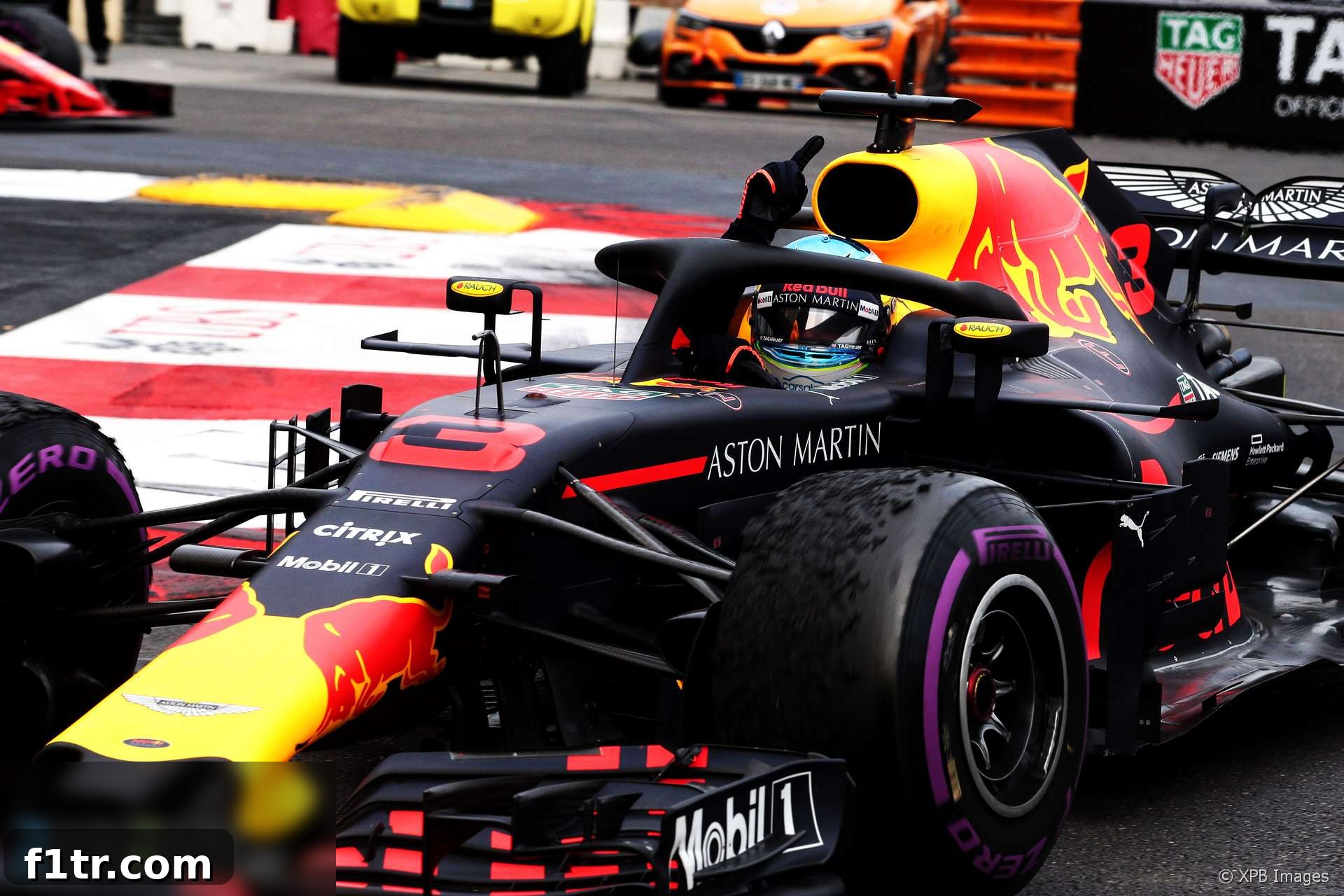
The 2018 Monaco Grand Prix is etched into Formula 1 history as a testament to driver resilience and strategic ingenuity. At its heart was Daniel Ricciardo’s epic victory, a triumph secured despite a catastrophic MGU-K failure that threatened to derail his entire race. Christian Horner, then Red Bull Racing team principal, later revealed the full extent of the drama, explaining that the malfunction brought the car perilously close to a brake fire and retirement.
From the outset, the weekend had belonged to Ricciardo. He had dominated qualifying, securing a magnificent pole position on the treacherous streets of Monte Carlo, a circuit where starting at the front is half the battle won. The Australian driver had shown exceptional pace and control, setting himself up perfectly for what promised to be a relatively straightforward drive to victory – a stark contrast to his agonizing near-miss in Monaco two years prior. However, fate had other plans, throwing an immense technical challenge his way that would test his skill and mental fortitude to their absolute limits.
The pivotal moment arrived on lap 28 of the race. Ricciardo, confidently leading the pack, reported a sudden and significant loss of power. Data relayed instantly to the Red Bull pit wall confirmed the team’s worst fears: the MGU-K (Motor Generator Unit – Kinetic) had failed completely. This critical component, responsible for recovering kinetic energy from braking and converting it into electrical power to boost acceleration, had ceased to function. Christian Horner vividly recalled the immediate discussions within the team: “On lap 28 he reported a sudden loss of power. The engine guys could see from the data that the MGU-K had stopped completely.”
The implications of such a failure were severe and immediate. Without the MGU-K, the car lost a substantial amount of its electrical power and, crucially, its primary means of rear braking energy recovery. The team faced a dire dilemma. Horner elaborated on the internal debate: “At that point there was talk of retiring the car because the potential damage with the K can go into the combustion engine, and then it is a whole load of other problems.” The risk was not just losing a few seconds per lap; it was the potential for cascading damage that could destroy the power unit or, even worse, cause a dangerous incident on track. Despite these grave warnings, Horner’s resolve was unwavering. “My position was we are leading the Monaco GP and we will run it until his engine stops,” he declared, a decision that underscored the team’s fighting spirit and belief in their driver.
The Battle for Survival: Ricciardo’s Masterclass in Adaptation
The MGU-K failure didn’t just impact power; it fundamentally altered the car’s braking dynamics. Without the energy recovery system, the rear brakes were subjected to unprecedented stress. Ricciardo’s ability to react and adapt under immense pressure became the defining narrative of his race. Horner explained the immediate consequences: “When you lose the MGU-K that changes all the energy movement through the braking system of the car. So his rear brakes immediately were not far off going on fire.” The sudden shift in balance meant Ricciardo’s rear wheels were locking up and the brake temperatures soared to dangerous levels, threatening to ignite. This was a critical emergency that demanded instant, precise action.
In a display of sheer professionalism, Ricciardo had to execute rapid and drastic adjustments from the cockpit. He was instructed to wind the brake bias significantly forward, shifting the braking effort away from the compromised rear axle. Simultaneously, the team communicated a complex strategy: he needed to incorporate “lifting and coasting” into his driving – easing off the throttle earlier and gliding into braking zones to allow the brakes to cool. This delicate dance of managing brake temperatures, adjusting bias, and altering his driving style was performed under the relentless pressure of Sebastian Vettel, who was looming just a second behind. “With all the balance and setting changes that were going on, he also had Sebastian Vettel one second behind him while leading the Monaco race. So he got that under control pretty quickly,” Horner praised, highlighting Ricciardo’s extraordinary composure.
The MGU-K malfunction was a significant performance inhibitor, costing Ricciardo “a couple of seconds a lap,” according to Horner. This loss of pace would have been catastrophic on almost any other circuit on the Formula 1 calendar. “Had it been any other circuit they would have sailed straight past us,” Horner admitted, emphasizing the unique nature of Monte Carlo. Unlike circuits with long straights and multiple overtaking opportunities, Monaco’s tight, winding streets and unforgiving barriers prioritize track position above all else. Its narrow configuration makes overtaking notoriously difficult, even with a substantial pace advantage. This geographical advantage played a crucial role in Ricciardo’s ability to defend his lead despite his compromised machine.
Horner drew a poignant parallel to a previous race: “We saw it [when] Daniel won his first grand prix in Montreal when the same issue happened to Nico Rosberg.” In Canada, a circuit with long straights where power is paramount, Rosberg’s similar technical issue allowed Ricciardo to pass him for the win. In Monaco, however, the dynamic was reversed. Ricciardo’s ability to place his car strategically, utilizing the track’s inherent difficulty for overtaking, was his greatest asset. He was tasked with a multi-faceted mission: “So it was important for him to keep his cool, keep track position, don’t kill the tires, don’t kill the brakes, don’t kill the engine and bring it home.” This was not just a race of speed, but a profound exercise in strategic conservation and defensive driving.
The Significance of a Heroic Victory
Daniel Ricciardo’s triumph at the 2018 Monaco Grand Prix was more than just another race win; it was a defining moment in his career and a classic example of F1 drama. It showcased his raw talent, his exceptional ability to adapt to adverse circumstances, and his unwavering mental strength. The memory of his heartbreaking Monaco pole in 2016, where a botched pit stop cost him a certain victory, had haunted him. This win, against all odds, offered a redemption story of epic proportions. Horner perfectly encapsulated Ricciardo’s determination: “He has been so focused since he arrived here this weekend there was no way he was going to let this victory slip through his fingers.”
The victory was a testament to the collective effort of Red Bull Racing. Their quick diagnosis of the problem, their precise instructions to Ricciardo, and their decision to keep the car on track demonstrated confidence in their driver and their engineering capabilities. It underscored the finely tuned synergy required to succeed at the pinnacle of motorsport, where split-second decisions and unflappable execution can be the difference between glory and despair. This particular race will forever be remembered as one of Formula 1’s most heroic drives, cementing Daniel Ricciardo’s reputation as a true champion who can overcome the most formidable challenges.
Additional reporting contributed to this account.
Become a RaceFans supporter and go ad-free
2018 F1 Season Highlights and Related Insights
- Analysis: Ricciardo’s Monaco Masterpiece – Overcoming Adversity
- Understanding F1 Power Units: The MGU-K and Its Crucial Role
- Red Bull’s Strategic Prowess: Winning Monaco with a Compromised Car
- Daniel Ricciardo: A Career-Defining Monaco Victory
- The Unique Challenge of Monaco: Why Overtaking Remains Difficult
Browse all 2018 F1 season articles