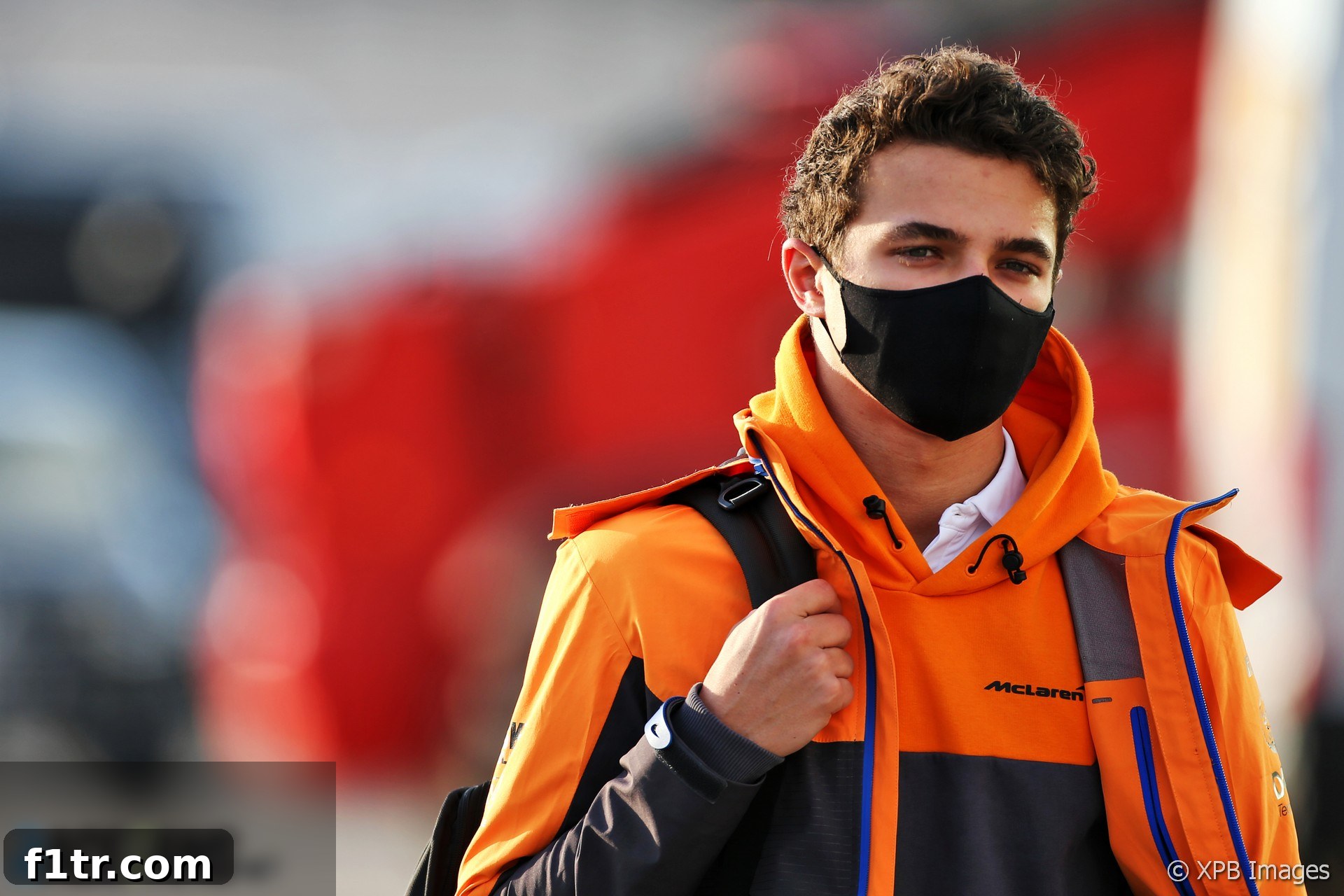
Lando Norris, the rising star of McLaren, has issued a comprehensive apology for remarks made in recent interviews that sparked significant debate within the Formula 1 community. The young British driver’s comments, which critically addressed rival drivers including seven-time world champion Lewis Hamilton and Aston Martin driver Lance Stroll, garnered widespread attention and prompted a swift response from Norris himself.
Although Norris’s apology did not explicitly detail which specific comments he was retracting, it was widely understood to refer to a series of statements made to the media following the Portuguese Grand Prix. These remarks had circulated extensively, leading to a noticeable shift in public perception and drawing calls for greater respect among competitors.
Lando Norris Expresses Regret Over “Stupid and Careless” Driver Comments
In a direct and candid message shared across his social media platforms, Norris addressed the controversy head-on. “I owe an apology,” Norris stated, clearly indicating a recognition of his misstep. “I’ve been stupid and careless with some things I’ve said lately in media and interviews, and haven’t shown the respect I should have to certain people.” This statement immediately signaled a move to de-escalate the tension and reaffirm his commitment to professional conduct.
Norris further elaborated on his motivations for the apology, emphasizing that his comments did not reflect his true character. “I’m not that kind of person, so know I should apologise to them but also everyone reading [or] listening. Sorry.” This personal touch aimed to convey sincerity, reassuring fans and fellow drivers alike that the lapse in judgment was an anomaly rather than an inherent aspect of his personality. The swiftness and directness of the apology were largely well-received, highlighting the increasing importance of responsible communication in the public eye, particularly for athletes under intense scrutiny.
The Incidents That Sparked Controversy
The core of the controversy stemmed from two primary sets of comments made by Norris. The first involved his strong criticism of Lance Stroll following a collision between their cars during the Portuguese Grand Prix. The incident, which occurred early in the race, saw Stroll make contact with Norris’s McLaren, resulting in damage and compromising Norris’s race performance. Race stewards later deemed Stroll responsible for the collision, penalizing him for the incident.
Critique of Lance Stroll’s Driving
Norris’s frustration was palpable immediately after the crash, evident in his expletive-laden radio communication during the race. While he later apologized for the intensity of his in-the-moment reaction, his post-race comments to the media were more calculated and equally contentious. Norris expressed dismay at Stroll’s perceived inability to learn from previous incidents, specifically referencing a collision between Stroll and Max Verstappen during practice just two days prior. Norris’s pointed remark that Stroll “doesn’t seem to learn with anything he does” was seen by many as a direct and unvarnished attack on a fellow competitor’s driving ability and judgment.
Such direct criticism, while perhaps born from genuine frustration, often risks crossing the line from competitive rivalry to outright disrespect. In the high-stakes environment of Formula 1, where split-second decisions and aggressive maneuvering are commonplace, drivers are expected to maintain a degree of decorum, especially when speaking about their peers. Norris’s comments on Stroll resonated deeply because they touched upon a driver’s perceived learning curve and decision-making, fundamental aspects of a professional racer’s craft.
Dismissive Remarks Regarding Lewis Hamilton’s Historic Win
The second, and arguably more significant, point of contention arose from Norris’s comments concerning Lewis Hamilton’s record-breaking 92nd Grand Prix victory last weekend. Hamilton’s achievement, which surpassed Michael Schumacher’s long-standing record for the most F1 race wins, was a monumental moment in motorsport history, widely celebrated across the globe. However, Norris appeared to downplay the significance of this milestone for Hamilton.
The McLaren driver stated that Hamilton’s record-breaking win “doesn’t mean anything to me” and suggested that the Mercedes driver had an inherent advantage due to his machinery. Norris remarked that Hamilton possesses “a car which should win every race” and that he “only has to beat two drivers” in his pursuit of victories. While it’s a common debate in F1 whether success is more attributable to the car or the driver, making such statements immediately after a historic achievement was widely interpreted as disrespectful and an attempt to diminish Hamilton’s extraordinary talent and dedication.
These comments struck a nerve because they ventured into the delicate territory of sportsmanship and the acknowledgment of unparalleled achievement. In a sport built on fierce competition, there is an unwritten code of respect for rivals, particularly those who achieve historic feats. Norris’s remarks, regardless of their underlying intent, were perceived as lacking this crucial respect, especially given Hamilton’s status as a sporting icon.
The Broader Context: Pressure, Perception, and Sportsmanship in F1
Norris’s apology serves as a powerful reminder of the immense pressure and scrutiny faced by Formula 1 drivers. These athletes are not just competitors; they are global figures whose every word and action are dissected by media, fans, and fellow professionals. For young drivers like Norris, who ascended to F1 at a relatively early age, navigating this public landscape is an integral part of their professional development.
Navigating the Intense World of Formula 1
The adrenaline of racing, the competitive drive, and the immediate aftermath of emotionally charged incidents can lead to unfiltered comments. Learning to manage these emotions and articulate thoughts constructively, even under duress, is a crucial skill that develops with experience. Norris’s incident highlights the fine line between passionate commentary and remarks that can be construed as disrespectful or ill-considered. The F1 paddock is a close-knit community, and while rivalries are inherent, a foundational level of mutual respect is generally maintained.
The Importance of Respect in Competition
Sportsmanship is a cornerstone of any professional sport, and Formula 1 is no exception. While drivers are expected to be ruthless on track, off-track interactions typically adhere to a higher standard of conduct. Respecting opponents, acknowledging their achievements, and handling disagreements professionally contribute to the overall integrity and image of the sport. Norris’s apology underscores the understanding that even a fleeting moment of “carelessness” can have significant repercussions on one’s public image and relationships within the sport.
The Amplifying Effect of Social Media
The nature of modern communication, particularly social media, also played a role in this scenario. Comments made in interviews can now instantly reach a global audience, be replayed, re-shared, and re-interpreted countless times. This rapid dissemination means that drivers must be acutely aware of the potential impact of their words. Social media also provides a direct channel for drivers to issue apologies and clarify their positions, as Norris effectively demonstrated.
Looking Ahead: Learning and Growth for Lando Norris
Lando Norris is widely regarded as one of Formula 1’s brightest young talents, known for his charismatic personality, engaging humor, and impressive driving skills. This incident, while a regrettable misstep, will undoubtedly serve as a significant learning experience in his burgeoning career. It offers a crucial lesson in the responsibilities that come with being a high-profile athlete in a global sport.
For Norris, this period of reflection and public apology is an opportunity for growth. It shows a willingness to acknowledge mistakes and take ownership of his words, qualities that are highly valued both within and outside the racing community. As he continues to mature as a driver and a public figure, these experiences will contribute to his development, helping him to refine his communication and maintain the balance between competitive fire and professional courtesy.
The F1 season is a demanding marathon, and drivers are constantly under pressure to perform, interact with media, and manage their public image. Norris’s trajectory remains firmly set towards becoming a future champion, and this incident, though a momentary stumble, is likely to be viewed in hindsight as a formative chapter in his journey towards becoming a more complete and seasoned professional.
As the sport moves forward, all eyes will be on Norris to see how he continues to evolve, both on and off the track, reinforcing the idea that true champions excel not only in skill but also in character and sportsmanship.
Further Reading and F1 Discussions
Follow us on social media for the latest updates:
- Join us on Facebook
- Follow us on Twitter
- Get daily email updates from us
Explore more discussions related to Formula 1:
- Understanding Driver Rivalries and Team Dynamics in F1
- The Evolution of Sportsmanship in Modern Motorsport
- Impact of Social Media on F1 Driver’s Public Image
- Analysis of Controversial Incidents in Recent F1 Seasons
- The Pressure Cooker: Mental Health and F1 Drivers
Browse all Formula 1 season analyses and articles