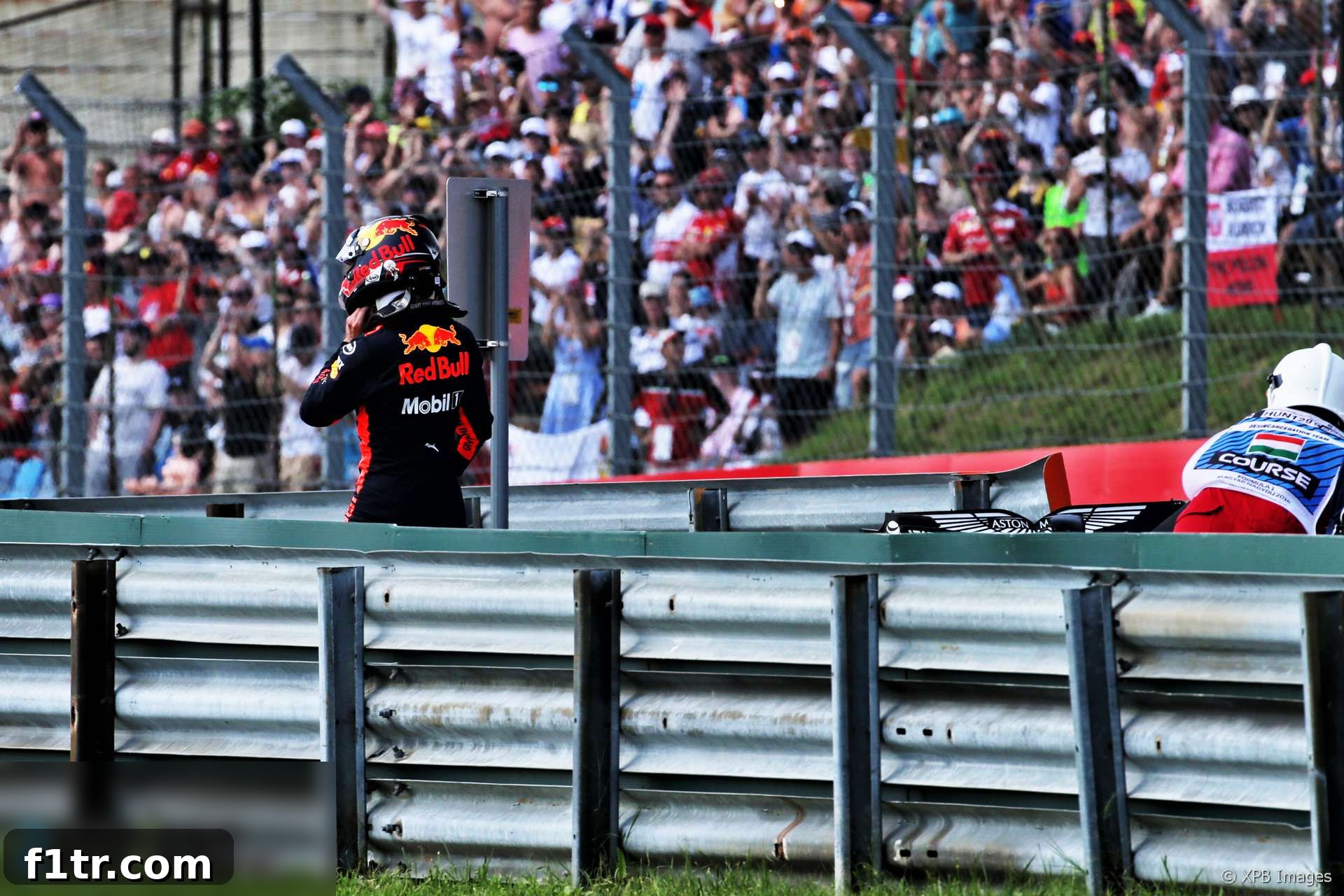
Max Verstappen’s Hungarian GP Fury: “I Don’t Feel Like I’m in a Holiday Mood” After Engine Failure
Red Bull Racing’s Max Verstappen expressed profound frustration following his early retirement from the Hungarian Grand Prix, a setback that left him seething and declared his summer holiday mood irrevocably damaged. A critical MGU-K failure on only the seventh lap forced the highly competitive Dutchman out of a race where he was poised to secure valuable points, escalating Red Bull’s ongoing reliability woes with their engine supplier.
The incident at the Hungaroring proved to be the latest in a series of debilitating technical malfunctions plaguing Red Bull’s season, igniting a fiery response from Verstappen. His post-race comments painted a clear picture of a driver pushed to his limits by persistent mechanical issues, starkly contrasting the usual end-of-season celebratory atmosphere leading into Formula 1’s summer break. For Verstappen, the immediate future holds no respite from his anger, only a lingering disappointment that overshadows any prospect of relaxation.
A Disastrous Hungarian Grand Prix Outing Undermines Red Bull’s Hopes
The Hungarian Grand Prix, often a test of strategy and tire management on its twisty, technical layout, quickly turned into a nightmare for Max Verstappen. Starting from the fifth position, the young prodigy was holding his own in the early stages, looking set to convert a strong qualifying performance into solid points for the team. However, just as the race began to unfold, an ominous warning from his pit wall signaled an impending disaster. On lap seven, the instruction came through: “Pull over, MGU-K failure.” This devastating message brought an abrupt end to his race, extinguishing hopes and fueling a profound sense of injustice.
The MGU-K, or Motor Generator Unit – Kinetic, is a vital component of Formula 1’s hybrid power units. Responsible for recovering kinetic energy generated during braking and converting it into electrical energy to be deployed for extra power, its failure effectively cripples the car’s performance and often necessitates immediate retirement. For Red Bull, this particular failure was not just a technical glitch; it was a metaphorical punch to the gut, coming at a crucial point in the season and exacerbating an already tense relationship with their engine provider. The reliability of such intricate components is paramount for any team aspiring to championship glory, and its absence proved costly.
Verstappen’s early exit meant the loss of what could have been a strong top-five finish, denying him a significant haul of points that are increasingly vital in the fiercely contested constructor’s and driver’s championships. Each retirement, especially one caused by a fundamental component failure, not only impacts the individual driver’s standing but also delivers a substantial blow to the team’s overall strategic objectives and morale. The unforgiving nature of F1 means that even a single DNF (Did Not Finish) can have long-lasting repercussions, influencing car development, team strategies, and the confidence of key personnel.
Holiday Mood Ruined: Verstappen’s Raw Frustration Explodes
In the aftermath of the race, Max Verstappen made no attempt to hide his anger or feign a sense of calm. His candid remarks about his ruined holiday mood resonated deeply with fans who understand the intense competitive drive of top-tier athletes. “I hate it when people say ‘bad luck, now enjoy your holiday’,” Verstappen stated emphatically. “I can’t really enjoy the first week because of the end of the last race. I don’t feel like I’m in a holiday mood.” This quote perfectly encapsulates the professional ethos of a Formula 1 driver, where success and failure dictate not just their professional lives but also their personal well-being and ability to truly switch off from the relentless demands of the sport.
The Dutch driver’s frustration was not merely a fleeting emotion; it was a deep-seated reaction to recurrent issues that have hampered his, and his teammate Daniel Ricciardo’s, season. This raw honesty offered a rare glimpse into the mental toll taken by such high-stakes mechanical failures. For someone as fiercely competitive as Verstappen, the forced removal from contention felt like a betrayal, making it impossible to simply switch off and embrace leisure. The competitive fire within him demands resolution and reliability, not forced relaxation amidst profound disappointment and questions about future performance.
His anger was so palpable that it even transcended the usual decorum of live broadcasts. An expletive-ridden radio message, largely bleeped out for public consumption, reflected the sheer disgust Verstappen felt at seeing his race cut short due to engine trouble. “I was very angry on the radio, I think there was a lot of beeping out there,” Verstappen explained with a wry smile, hinting at the intensity of his outburst. “Which is a shame – it would’ve been better if they had allowed it. But that’s how it is.” This incident further underscored the profound level of frustration building within the Red Bull camp, especially concerning their engine performance and reliability, making it clear that patience was wearing thin.
The Perennial Renault Power Unit Predicament Intensifies
Max Verstappen’s post-race comments echoed the sentiments previously voiced by Red Bull team principal Christian Horner, highlighting a deepening crisis in the team’s relationship with engine supplier Renault. For years, Red Bull has openly criticized the performance and reliability of the French manufacturer’s power units, often finding themselves at a disadvantage against Mercedes and Ferrari. Verstappen’s blunt assessment underscored this ongoing saga: “I think for both sides – Daniel and me. It’s honestly not at all how it should be.” This collective frustration from both drivers emphasizes the systemic nature of the problems, indicating that the issues are not isolated but rather deeply ingrained.
The financial investment in Formula 1 is immense, and teams expect a proportionate return in terms of performance and dependability. Verstappen directly addressed this core issue: “You pay millions as a team for what you hope is a decent engine, but it keeps breaking down. Besides that, we are also the slowest out there. It’s honestly at the moment difficult to accept.” This statement is a powerful indictment, highlighting not only the unreliability but also the performance deficit that Red Bull feels it suffers from. The combination of consistent breakdowns and a perceived lack of raw pace makes it incredibly challenging for a team with championship aspirations to compete at the highest level, demanding significant financial resources for suboptimal results.
Christian Horner has, on multiple occasions, publicly voiced his exasperation, often calling for improvements or suggesting alternative engine partnerships. The Hungarian GP failure merely added another layer of urgency to these long-standing concerns. Daniel Ricciardo, Verstappen’s teammate, has also faced his share of frustrating retirements and technical issues, further solidifying the narrative that these problems are inherent to the power unit rather than isolated incidents affecting just one driver. The shared struggle between the two highly capable drivers makes the situation all the more dire for Red Bull, as it impacts their overall standing in both championships.
Valuable Points Lost and Championship Implications
The retirement from the Hungarian Grand Prix was not just an emotional blow; it represented a significant loss of valuable championship points. Verstappen was running comfortably in fifth place, a position that would have added ten crucial points to his tally. In the cutthroat world of Formula 1, where every point can be the difference between a championship title and a runner-up finish, such a loss is keenly felt. “We could’ve been easily fifth if nothing happened in front,” Verstappen lamented. “So it’s again valuable points thrown away.” This direct impact on his championship standing is a bitter pill to swallow, particularly for a driver known for his relentless pursuit of victory.
These lost points have a ripple effect throughout the entire championship picture. For Red Bull, consistently challenging for podiums and wins is essential to maintain their standing in the constructors’ championship. Each DNF, especially when caused by a preventable mechanical failure, chips away at their overall score, making it harder to compete with the likes of Mercedes and Ferrari, who often demonstrate superior reliability. The long-term impact on team morale and motivation is also considerable, as consistent setbacks can erode confidence despite the inherent talent within the team, hindering their ability to perform at peak.
Furthermore, fan disappointment is a natural consequence of such events. Spectators, whether at the track or watching from home, invest their time and passion into following their favorite drivers and teams. When a race ends prematurely due to mechanical issues, it’s not just the team that feels let down; the collective enthusiasm of the fanbase takes a hit. Verstappen acknowledged this widespread feeling: “I’m disappointed, the team are disappointed, the fans are disappointed – you only do five or six laps.” This shared disappointment underscores the broader impact of reliability issues in a sport driven by performance, excitement, and the expectation of a fair fight.
Looking Ahead to Spa and Beyond: Penalties and Future Strategy
The immediate consequence of the MGU-K failure extends beyond the Hungarian Grand Prix. Formula 1 regulations impose strict limits on the number of power unit components a driver can use throughout a season. Exceeding these limits inevitably leads to grid penalties in subsequent races. Max Verstappen’s retirement in Hungary brought this grim prospect sharply into focus. “Let’s see what we have to do in Spa, whether we have to take penalties or not. I don’t know – but at the moment, I also don’t really care.” His apathy here is a clear sign of deep frustration; the threat of further penalties seems almost negligible compared to the current level of disappointment he is experiencing.
The Belgian Grand Prix at Spa-Francorchamps, known for its long straights and fast corners, places a premium on engine power and reliability. Facing potential grid penalties there would be particularly detrimental for Red Bull, as it would severely compromise their ability to compete for top positions on a circuit that already highlights power unit differences. The looming threat of starting further down the grid adds another layer of anxiety for the team as they head into the latter half of the season, where every point becomes increasingly critical.
Beyond the immediate concerns of penalties, the recurrent engine issues also force Red Bull to critically evaluate its long-term engine strategy. The team has been exploring various options, including potentially building their own power units or switching suppliers. The constant struggle with Renault’s reliability and performance acts as a continuous catalyst for these strategic discussions. The pressure is mounting on all parties to find a sustainable solution that allows Red Bull to harness its exceptional chassis design and driver talent to consistently challenge for championships, moving beyond the cycle of frustration and unfulfilled potential.
Why Engine Reliability is Paramount in Modern F1
In modern Formula 1, where aerodynamic innovation and driver skill are meticulously refined, engine reliability stands as a cornerstone of competitive success. The hybrid power units are intricate marvels of engineering, combining internal combustion engines with sophisticated electrical systems like the MGU-K and MGU-H. While these components are designed to deliver extraordinary power and efficiency, their complexity also introduces numerous points of potential failure, making reliability a constant battle for engine manufacturers and teams.
Teams invest hundreds of millions annually, not just in car development but specifically in engine R&D and manufacturing. A robust, dependable power unit is non-negotiable for championship contention. It allows drivers to push to the absolute limit without fear of premature retirement, enables strategists to execute optimal race plans, and ensures maximum points accumulation. When reliability falters, as it has for Red Bull, the entire ecosystem of performance is disrupted, leading to frustrated drivers, disillusioned fans, and a compromised position in the fiercely competitive standings, regardless of other strengths.
The incidents faced by Max Verstappen, and indeed by many other drivers across the grid, underscore that raw speed, while crucial, is only one half of the equation. The ability to consistently finish races and extract maximum performance from every component for the entire season is what truly defines a championship contender. Without that fundamental reliability, even the most talented drivers and ingenious car designs are rendered ineffective, leading to a perpetual state of catch-up and unfulfilled potential, which can be immensely disheartening for all involved.
In conclusion, Max Verstappen’s visceral reaction to his Hungarian Grand Prix retirement was more than just a momentary outburst; it was a potent expression of deep-seated frustration stemming from persistent engine reliability issues. His declaration of a ruined holiday mood and his blunt assessment of the financial and performance shortcomings of his power unit highlight the immense pressure and expectations within Formula 1. As the season progresses, Red Bull faces the daunting challenge of navigating potential grid penalties and re-evaluating its engine future, all while trying to maintain morale and competitiveness. For Verstappen, the immediate goal is clear: reliability must improve, and soon, if Red Bull is to truly contend for the sport’s highest honors and turn his personal frustration into collective triumph.
Related Articles: Further Insights into the 2018 F1 Season and Engine Dynamics
- F1 feared “death knell” for Drive to Survive after Ferrari and Mercedes snub
- McLaren staff told us we were “totally crazy” to take Honda engines in 2018 – Tost
- ‘It doesn’t matter if we start last’: How Red Bull’s junior team aided Honda’s leap forward
- Honda’s jet division helped F1 engineers solve power unit problem
- McLaren Racing losses rise after Honda split
Browse all 2018 F1 season articles