Why Formula 1 Rejected Active Suspension’s Return for the 2021 Season
Formula 1, a sport synonymous with cutting-edge technology and relentless innovation, found itself at a crossroads when a proposal emerged to reintroduce computer-controlled active suspension systems for the 2021 season. This advanced technology, last seen and subsequently banned in 1993, offered the potential for unprecedented car optimization. However, after careful deliberation, the proposal was ultimately rejected, primarily due to concerns that it would have a detrimental effect on the quality of racing, a paramount objective for the sport’s new regulatory era.
Advert | Become a Supporter & go ad-free
The Legacy of Active Suspension: A Glimpse into F1’s Technological Past
Active suspension represents one of the most sophisticated technological advancements in Formula 1 history. Introduced in the late 1980s, it allowed teams to dynamically adjust a car’s ride height and other crucial suspension variables from corner to corner, or even mid-corner, in real-time. This dynamic capability meant that a car could always present its optimal aerodynamic profile to the airflow, regardless of track conditions, braking, acceleration, or cornering forces. The system typically involved a complex interplay of sensors, onboard computers, and hydraulic actuators, continuously working to maintain the car’s ideal platform.
Early Innovations and Competitive Advantage
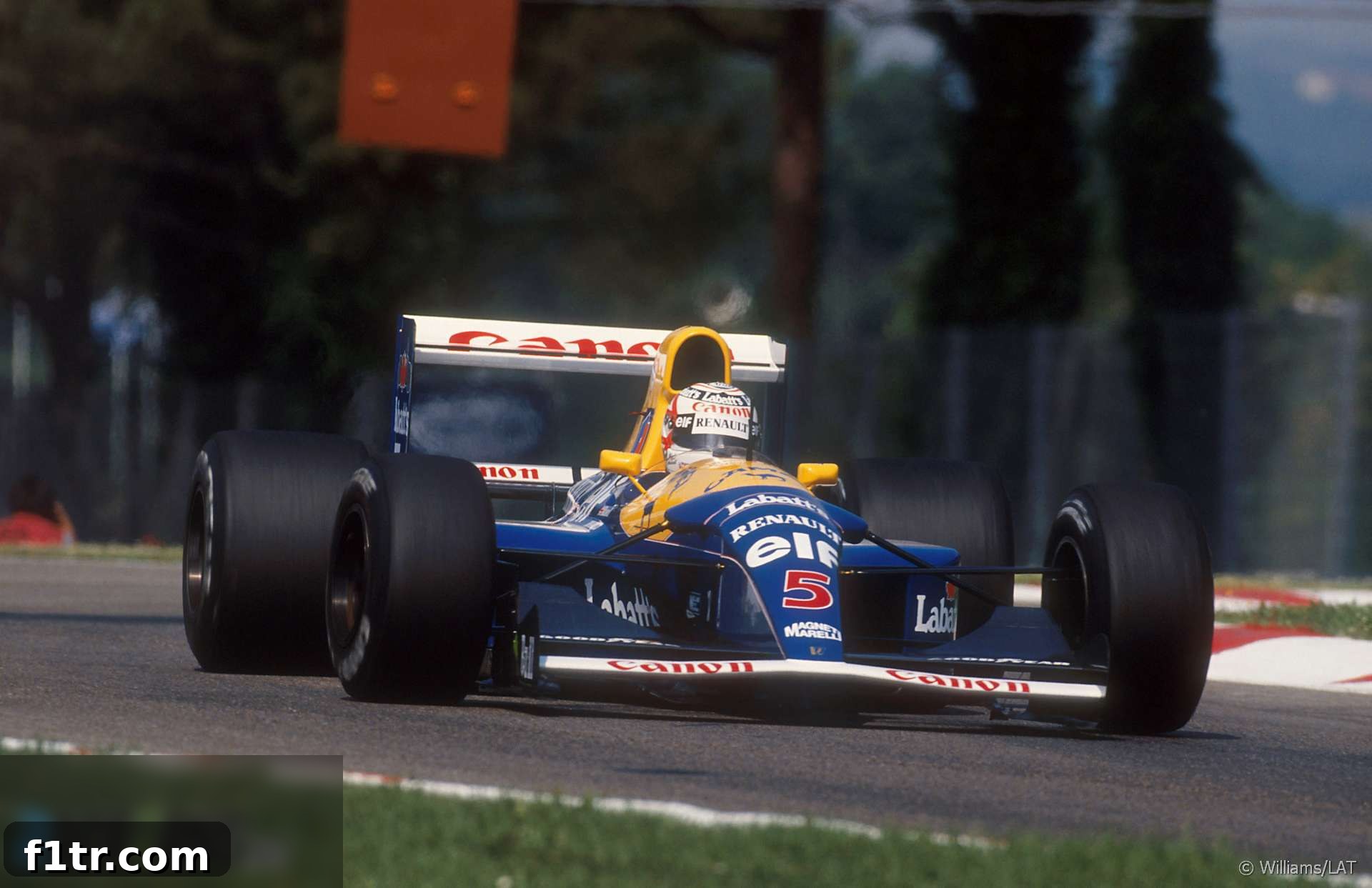
Pioneered by teams like Lotus and later perfected by Williams, active suspension offered a significant competitive edge. It allowed engineers to virtually eliminate pitch, roll, and heave, ensuring that the car’s aerodynamic surfaces (like the front wing, diffuser, and underbody) remained at their most efficient angle of attack. This translated directly into more consistent downforce, improved grip, and ultimately, faster lap times. Williams, in particular, dominated the early 1990s with their active suspension-equipped cars, leading to one of the most technologically advanced periods in F1. Drivers reported a smoother, more stable ride, which in turn allowed them to push harder and with greater confidence.
The Ban: Balancing Technology and Sporting Integrity
Despite its technological brilliance, active suspension was eventually banned at the end of the 1993 season. The reasons for its prohibition were multifaceted. Firstly, it contributed to an ever-escalating cost spiral, as teams poured vast resources into developing and maintaining these intricate systems. Secondly, there was a growing sentiment that such “driver aids” diminished the role of pure driver skill, transforming the sport into a battle of engineers rather than racers. Critics argued that the cars were becoming too easy to drive at the limit, reducing the challenge and spectacle for both drivers and fans. Furthermore, the immense complexity of active systems made them less accessible for smaller teams, exacerbating the performance gap across the grid. The FIA’s decision aimed to rein in costs, simplify the cars, and re-emphasize the human element of racing.
The 2021 Proposal: A Modern Consideration
Fast forward to the run-up to the 2021 Formula 1 season, a period marked by a sweeping overhaul of technical regulations aimed at fundamentally improving the quality of racing. It was within this context that the idea of reintroducing active suspension was once again tabled and seriously evaluated. The argument for its return wasn’t purely about technological advancement; it also contained an intriguing economic rationale.
The Cost-Saving Argument
As explained by Nikolas Tombazis, the FIA’s Head of Single-Seater Matters, one of the primary drivers behind considering active suspension was its potential to be a more cost-effective solution compared to the current generation of highly complex passive hydraulic suspension systems. Today’s F1 cars employ sophisticated hydraulic systems designed to mimic some of the benefits of active suspension without technically falling under the “active” definition. These passive systems, often involving intricate heave dampers, inerters, and other hydraulic elements, are incredibly complex, bespoke, and expensive to develop and maintain. Tombazis suggested that a standardized, electronically controlled active system, while advanced, could potentially be cheaper in the long run than the bespoke and continuously evolving passive hydraulic solutions currently employed by teams.
Tighter Restrictions on Passive Systems
Indeed, the 2021 regulations were already set to impose tighter restrictions on these complex passive hydraulic systems, acknowledging their significant role in car performance and cost. This regulatory tightening naturally led to a discussion about whether a more direct and potentially simpler approach—reintroducing active systems—might be viable, especially if it could paradoxically lead to better cost control and a more level playing field in terms of suspension technology.
The Decisive Factor: Preserving Racing Quality
Despite the intriguing arguments for its reintroduction, particularly concerning potential cost benefits, the proposal for active suspension was ultimately rejected. The decisive factor revolved around the FIA’s overarching objective for the 2021 regulations: to create cars that could follow each other more closely and thus deliver more exciting, wheel-to-wheel racing. Active suspension was deemed fundamentally incompatible with this goal.
The Problem of “Peakier” Aerodynamics
Nikolas Tombazis elaborated on the core issue: active suspension, by its very nature, allows teams to operate their cars in a highly optimized and specific aerodynamic window. When a car’s ride height, pitch, and roll can be precisely controlled at all times, engineers can design aerodynamic surfaces that are incredibly efficient but also inherently “peakier.” This means the car generates maximum downforce within a very narrow operational envelope. While this delivers blistering individual lap times, it creates a significant problem for a following car.
Exacerbated Downforce Losses for Following Cars
The intricate design of a “peakier” car means its aerodynamic performance is extremely sensitive to disturbances in airflow. When such a car runs in clean air, it performs optimally. However, when it enters the “dirty air” generated by a leading car, even small changes in airflow create much larger losses in downforce for the following vehicle. If the leading car were equipped with active suspension, its ability to maintain an absolutely optimal aerodynamic configuration would amplify the aerodynamic wake it produced. This amplified wake would then cause much more significant and sudden downforce losses for the car behind, making it even harder for drivers to follow closely, let alone attempt an overtake.
Advert | Become a RaceFans supporter andgo ad-free
Contradicting the 2021 Regulatory Goals
The FIA concluded that allowing teams to develop cars capable of such precise, optimized, and “clinical” aerodynamic performance via active suspension would directly undermine the very purpose of the 2021 regulations. The entire philosophy behind the new rules was to reduce the sensitivity of following cars to dirty air, thereby promoting closer racing. Introducing active suspension would have paradoxically pushed the sport in the opposite direction, making cars even more sensitive to small changes in airflow and thus worsening the situation for cars trying to follow and overtake. “We felt that having the front car optimized in a very clean and very clinical condition would mean that the result would be more sensitive and hence worse for the following car. That’s why we rejected active suspension,” Tombazis stated, encapsulating the definitive reason for the decision.
The Balance: Technology, Cost, and the Spectacle of Racing
The rejection of active suspension for 2021 highlights the constant tension in Formula 1 between technological advancement, cost management, and the overriding need to deliver an exciting spectacle for fans. While active suspension represents a marvel of engineering, its potential negative impact on the on-track product was deemed too great a risk.
Looking Ahead: The Future of F1 Suspension Technology
For the foreseeable future, Formula 1 appears committed to a path where technological complexity in certain areas, particularly those impacting car-to-car interaction, is carefully managed. The focus remains on regulations that foster closer racing, even if it means foregoing technologies that could push individual car performance to new heights. The debate over driver aids versus pure skill, and technology versus spectacle, will undoubtedly continue to shape the sport’s evolution. However, for now, the FIA has made it clear: racing quality takes precedence, and technologies that hinder closer competition, no matter how innovative or potentially cost-effective, will likely remain on the banned list.
2021 F1 Season Insights
- Masi ‘basically gifted the championship’ to Verstappen says 2021 FIA steward Sullivan
- Las Vegas race backers looking to extend F1 deal beyond 2025
- Why Mercedes put ‘a reminder of joy and pain’ on display in their factory lobby
- Verdict on error in GT race suggests Mercedes would have lost 2021 Abu Dhabi GP appeal
- Title ‘stolen’ from Mercedes made us ‘underdogs people cheer for’ – Wolff
Browse all 2021 F1 season articles