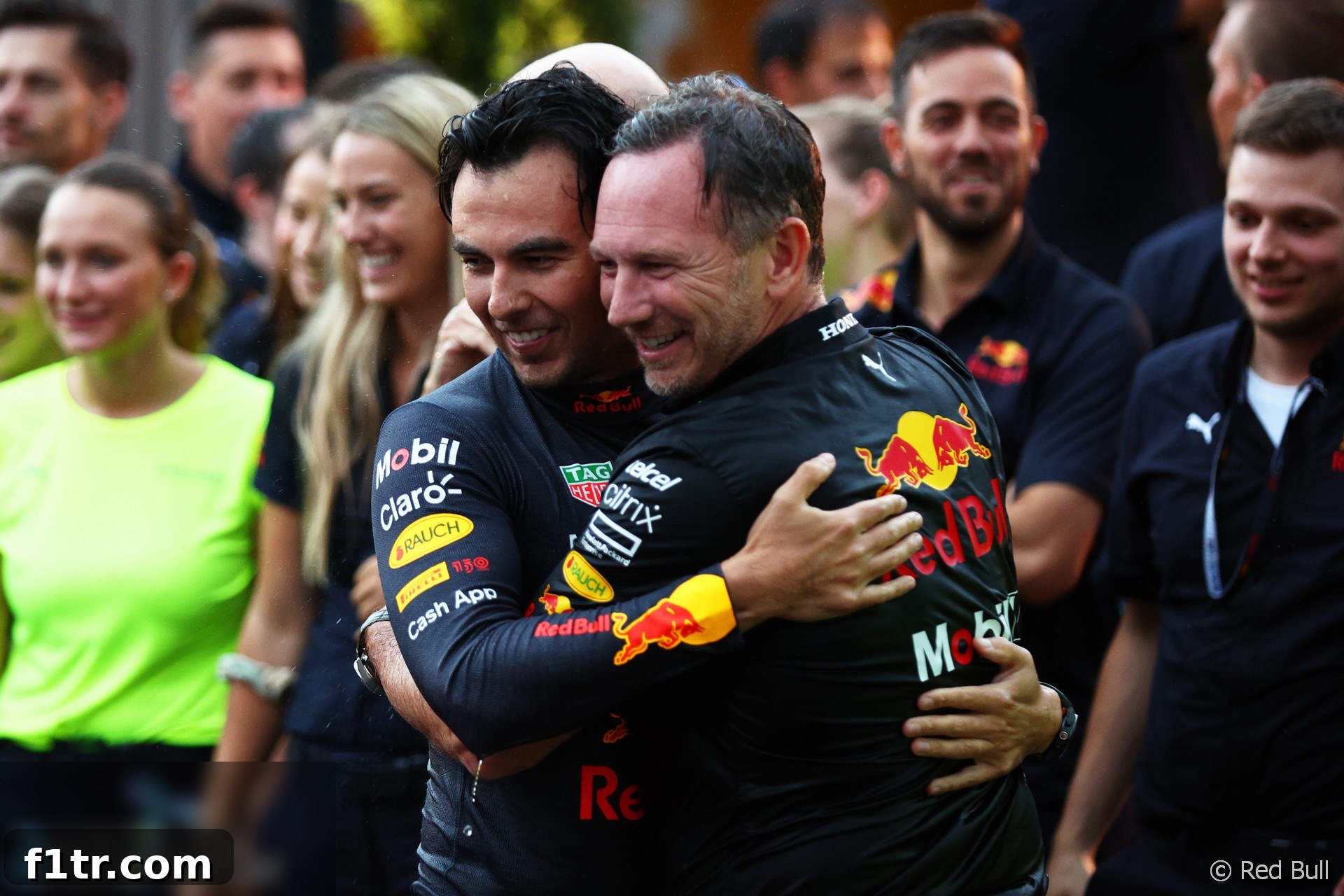
In the high-stakes world of Formula 1, where every decision, every lap, and every point can define a career, Sergio Perez arrived at the Monaco Grand Prix with a unique burden. Just weeks prior, at the Spanish Grand Prix, he had dutifully adhered to team orders on three separate occasions, ceding position to his teammate Max Verstappen. This raised uncomfortable questions among media pundits and on social media: was Perez merely a ‘number two’ driver, destined to play a supporting role? For Perez, whose family is his bedrock, the challenge of Monaco transcended championship points – it was about proving his true worth.
As he prepared to leave the principality to return to his wife, family, and new-born son, Perez knew this weekend was his chance to silence the doubters. And he delivered a performance that echoed far beyond the narrow streets of Monte Carlo, establishing him unequivocally as a top-tier driver capable of conquering the sport’s most demanding race.
Mastery in Qualifying: A Precursor to Triumph
Perez’s strong form was evident from the outset. Throughout the three practice sessions, he consistently out-paced his reigning world champion teammate, Max Verstappen. This momentum carried into qualifying, where Perez secured a crucial third spot on the grid, albeit through a dramatic and unconventional sequence of events. In the dying moments of Q3, pushing to the absolute limit, Perez spun at Portier, inadvertently bringing an early end to the session and preserving his position. The front row, however, belonged entirely to Ferrari, with local hero Charles Leclerc leading the charge, much to the delight of the Monegasque crowd.
Verstappen, recognizing the formidable challenge posed by Ferrari’s pace, admitted on Saturday evening that Red Bull might need “a little rain dance” to stand a chance against the Scuderia. His wishes, it seemed, were granted with almost divine precision.
Chaos and Delays: A Wet Start to a Legendary Race
Just ten minutes before the scheduled start, a torrential downpour engulfed the circuit, transforming the already challenging track into a treacherous, rain-soaked arena. While teams had anticipated rain for the weekend and were geared to react, FIA Race Director Eduardo Freitas, in only his second weekend in the demanding role, displayed understandable caution. Sending 20 Formula 1 cars hurtling into Sainte Devote in such conditions, without any prior wet tire running, was deemed too risky. The atmosphere on the grid was thick with anticipation and uncertainty.
A 16-minute delay led to two formation laps behind the Safety Car, but the conditions remained too severe for a proper start. “It needs to be stopped like this,” Lando Norris radioed from his McLaren. “It’s too wet.” His assessment was quickly validated. The race was almost immediately red-flagged, sending Norris and his fellow competitors back to the pits. The delays stretched on for 40 minutes, not only due to the perilous track conditions but also exacerbated by a power cut affecting the starting gantry. Finally, after an hour of suspense, Leclerc began his childhood dream of starting his home race from pole position, albeit under the Safety Car, the track still glistening with rain.
The Intermediate Gamble: A Strategic Turning Point
As the Safety Car led the field, the question of whether intermediate tires were viable was quickly answered with two immediate incidents. Both Lance Stroll and Nicholas Latifi slid into the barriers, a stark reminder of the minimal grip. Yet, both managed to sheepishly recover to the pits for repairs. Despite the apparent dangers, Pierre Gasly, starting in 17th, had a bold idea. “I’m wondering about boxing,” he told his race engineer. “Having a gamble.”
As Leclerc led the field away under green flag conditions, Gasly committed to his audacious strategy. “Yeah, let’s try to gamble. Box, box.” AlphaTauri, caught slightly off guard, scrambled to prepare his intermediate tires, resulting in a 13-second pit stop. However, the decision soon began to pay dividends. While the leaders (Leclerc, Sainz, Perez, Verstappen) navigated the track on full wet weather tires, Gasly unleashed blistering lap times from the back of the field. He rapidly climbed through the ranks, overtaking Mick Schumacher, closing a 10-second gap to Zhou Guanyu, and then passing Daniel Ricciardo as Sebastian Vettel and Yuki Tsunoda followed suit onto intermediates.
Perez, running in third, was keenly aware of the evolving conditions. “It’s definitely inters now,” he radioed Red Bull. However, Carlos Sainz, running second, had a different conviction, insisting to Ferrari that the track was improving so rapidly that a direct switch to slick tires would be more beneficial. This divergence in opinion would set the stage for crucial strategic battles.
Red Bull’s Precision, Ferrari’s Misstep
At the end of lap 16, Perez became the first of the front-runners to make the switch to intermediates. With the top four already enjoying a significant 10-second buffer over Norris and George Russell, Red Bull seized the perfect opportunity, slotting Perez back onto the track with clear air ahead. His immediate out-lap was a staggering six seconds faster than what Leclerc and Verstappen were managing on wets, creating an undeniable strategic dilemma for Ferrari and the championship leader.
“Inters would be much quicker, for sure,” Leclerc mused, acknowledging Perez’s superior pace. Ferrari, finally agreeing with their driver, brought Leclerc in at the end of lap 18 for intermediates. Verstappen followed suit, dropping both world championship contenders behind their respective teammates, as Sainz, sticking to his conviction, now led the race having stayed out on wet tires.
Leclerc, now on intermediates, set about chasing Perez, but his progress was hampered by Alexander Albon, who had boldly switched to slick tires early. Despite blue flags, Albon’s new hard tires surprisingly matched Leclerc’s pace, and he refused to yield. Leclerc was fuming, but his anger was about to reach a crescendo.
With the track rapidly drying, the transition to dry-weather compounds was imminent. Ferrari then made a series of blunders that would cost Leclerc dearly. They called Sainz in for slicks, and then, just three laps after his intermediate stop, called Leclerc in for slicks as well. The devastating realization dawned on the pit wall: Leclerc would lose vital time behind his teammate in a double-stack scenario. The radio call came to “box now for hard” as Leclerc rounded Rascasse, but as he approached pit entry, his race engineer, Xavier Padros, frantically screamed, “Stay out! Stay out!” It was too late. Leclerc was already committed, turning into the pit lane. “Fuck! Fuck! Why? What are we doing!” he screamed, his hopes for a home victory crumbling.
Ferrari managed to get Leclerc back out on a fresh set of slicks, but the damage was irreversible. He had lost the lead and crucial track position to his teammate, having made two pit stops to Sainz’s single, albeit delayed, stop.
The Pursuit and the Crash: Monaco’s Unyielding Nature
Now on theoretically faster slick tires than the Red Bulls, Sainz knew he had a small window to make a move before Red Bull made their own switch. However, his exit from the pit lane was compromised. Nicholas Latifi’s Williams, already on warmed-up slick tires, appeared alongside him, passing him up the hill to Casino Square. By the time Sainz cleared the backmarker in the tunnel, precious tenths, perhaps even seconds, had been irretrievably lost.
Red Bull, with characteristic efficiency, pitted both their cars at the end of the lap. Perez emerged retaining the lead of the race, while Verstappen strategically slipped in between the two Ferraris. Sainz, benefiting from warmer tires, immediately piled pressure on a tentative Perez, tucking into the Red Bull’s slipstream on the pit straight at the start of lap 24. But a sudden, unsettling loss of traction on the still-damp surface saw his car jerk violently, demanding an instant, instinctive reaction to prevent his race from ending in the barriers. Sainz narrowly avoided disaster, but the opportunity to pass was gone.
Having fended off Sainz’s initial attack, Perez began to establish a lead, managing the gap through lapped traffic. However, the race was far from over. On lap 27, the frantic pace was abruptly halted by a dramatic and violent incident. Mick Schumacher, pushing hard, lost control of his car exiting the first part of the Swimming Pool complex. He slammed into the TecPro barrier with devastating force, ripping the entire rear of his Haas off the chassis and scattering debris across the track. This brought out another immediate Safety Car, quickly followed by a red flag for extensive barrier repairs.
Strategic Reshuffle and the Final Sprint
With all cars now on hard slicks, the red flag offered teams a crucial opportunity for tire changes without penalty. By this stage, it was becoming increasingly apparent that the race would be time-limited rather than lap-limited. Red Bull seized the chance to switch both their cars to fresh medium compound tires, opting for performance over longevity, knowing they wouldn’t need to make them last for an entire race distance. Ferrari, in contrast, made the perplexing decision to keep their used hard compound tires on both their cars. This strategic split would prove to be another defining moment.
Perez, acutely aware of the delicate balance between outright speed and tire preservation, resumed the race with a rolling start on lap 33. With clear track ahead, he masterfully managed his new mediums, steadily pulling a gap to Sainz that grew to around 3.5 seconds over the next 15 laps. His composure and precise driving were exemplary, demonstrating a deep understanding of tire management and race control.
Behind the leaders, a bizarre situation unfolded. Seventh-placed Fernando Alonso was running inexplicably off the pace, clocking laps up to six seconds slower than Perez. Despite his painfully slow speed, the Alpine driver, utilizing the notorious difficulty of overtaking in Monaco, kept Lewis Hamilton frustratingly behind him. Alonso later revealed his strategy was to conserve his medium tires for the full duration of the time-limited race. His deliberate pace inadvertently created an opportunity for Lando Norris, who was able to pit for a fresh set of mediums and rejoin the track without losing his position to Alonso, showcasing the unique strategic quirks of Monaco.
Perez Under Fire: The Final Minutes of Pressure
Out front, Perez was displaying the unique blend of power and control inherent to leading the Monaco Grand Prix in its closing stages. He dictated the pace, methodically ticking off the laps until the checkered flag. However, with just under 20 minutes of racing time remaining, his front medium tires began to lose their performance. Visible graining appeared, and what had been a comfortable 3.5-second lead steadily began to shrink.
By the time only 12 minutes remained, Sainz’s second-placed Ferrari was firmly within DRS range of the leader, applying immense pressure. Sainz, in turn, was pulling Verstappen with him, while a disheartened Leclerc clung to the trio in fourth. Even if overtaking was a near-impossible task, Sainz was determined to make Perez’s final minutes as uncomfortable as possible.
“I felt I had the race under control pretty, pretty easy,” Perez later explained, detailing the subtle shift in his car’s behavior. “I felt like I was not really pushing. And then all of a sudden, I started to have a lot of understeer into [turn] three and four, lap-after-lap, and I could see that Carlos just was next to me. So Carlos was putting a lot of pressure.”
Despite Sainz’s relentless efforts, this was still Monaco, the ultimate test of nerve and precision. Even a fleeting opportunity to pass would be incredibly difficult to manufacture, and expecting Perez to make the critical mistake needed to open the door was wishful thinking. “A couple of times, I was really, really close to launching a move into [Nouvelle], but it was still a bit wet on the inside,” Sainz recounted. “Checo was braking quite late, so I think if I would have braked any later I would have taken him out with me.”
A Historic Victory and Lasting Implications
Just as many legendary Monaco winners before him, Perez absorbed every ounce of pressure Sainz could exert. Lap after lap, he maintained his concentration, his cool, and his unwavering focus on the clock. In real-time, Ferrari watched as their hopes of their first victory against Red Bull since the Australian Grand Prix slipped away with each passing second.
Eventually, the race clock hit zero. After his 64th and final tour of the iconic circuit, Sergio Perez exited Anthony Noghes for the last time, crossing the finish line to join one of the most exclusive winners’ clubs in motorsport. His joy was palpable. “When you come into Formula 1 and when you come to Monaco – when you drive it for the first time – you always dream about one day winning the race or racing here,” Perez said, his voice brimming with emotion. “So it’s just incredible. And it’s such a big day for myself.”
Carlos Sainz, who had agonizingly missed out on a potential first Grand Prix victory, was left to rue what could have been. “Monaco is not about who is the fastest, it’s about who gets all the timing of the pit stops right and all the strategy calls right,” he reflected. “I think today we did the right choices – it was the timing of that lapped car really that cost us a lot today.”
For Max Verstappen, it was the first time in a race weekend since he partnered with Daniel Ricciardo that he had been comprehensively out-performed by a teammate. Yet, the world champion departed Monaco content, having extended his championship lead over Charles Leclerc. Leclerc, meanwhile, endured a heart-wrenching home race, denied a potential victory and even a podium finish by a combination of Ferrari’s slow decision-making and poor communication. “I’m disappointed to have lost this win and it’s a tough one to take, especially at home,” he admitted. “It will be important to understand exactly what happened to make sure that this doesn’t happen again. Mistakes happen, unfortunately today we made too many.”
George Russell secured a strong fifth place after passing Norris during the switch to dry tires, while Norris capped off another solid weekend by claiming the fastest lap. Behind them, Fernando Alonso successfully held off Lewis Hamilton to finish seventh.
But the day, without a doubt, belonged to Sergio Perez. To Mexico, represented proudly on his helmet, dedicated to the country’s first Grand Prix winner, Pedro Rodriguez. And to Red Bull, who executed a strategic masterclass. Once post-race protests from Ferrari against both Red Bull drivers regarding their pit exits were swiftly dismissed by the stewards, the celebrations could truly begin.
Perez had endured a brutal crash in qualifying during his first Monaco Grand Prix attempt in 2011, preventing him from even starting the race. Eleven years later, he had not only conquered the unforgiving track but had also emphatically erased the disappointment of Spain. This victory was a powerful declaration to his team and his family: he was every bit the formidable driver he had always known himself to be. “This win was for my mum and all my family,” he shared. “She was very sick last week so I had very good motivation going into this race to get her a victory. You don’t win Monaco many times in your life so the first one is very special.” His Monaco triumph solidified his status, not as a ‘number two’, but as a true contender in Formula 1.
2022 Monaco Grand Prix
- Whatever triggered it, Verstappen’s defiance of his own team makes little sense
- Transcript: How Red Bull seized a win that ‘Ferrari looked like they had in the bag’
- Verstappen now has as many poles as Leclerc – but six times as many wins
- Schumacher’s chassis-splitting crash shows effects of rising car weight – Alonso
- Norris still can’t drive McLaren the way he wants to, despite strong results
Browse all 2022 Monaco Grand Prix articles
F1 race reviews
- Antonelli lucks in for second win and becomes youngest F1 championship leader
- Emotional Antonelli grabs first Formula 1 victory in Chinese Grand Prix
- Russell sees off Ferrari threat to lead Mercedes one-two in Melbourne
- Norris clinches F1 title by two points as Verstappen wins finale at Yas Marina
- McLaren strategy blunder in Losail hands Verstappen crucial win and shot at title
Read all F1 race reviews