McLaren Confirms Breach of F1 Budget Cap Amidst Worsening Economic Climate
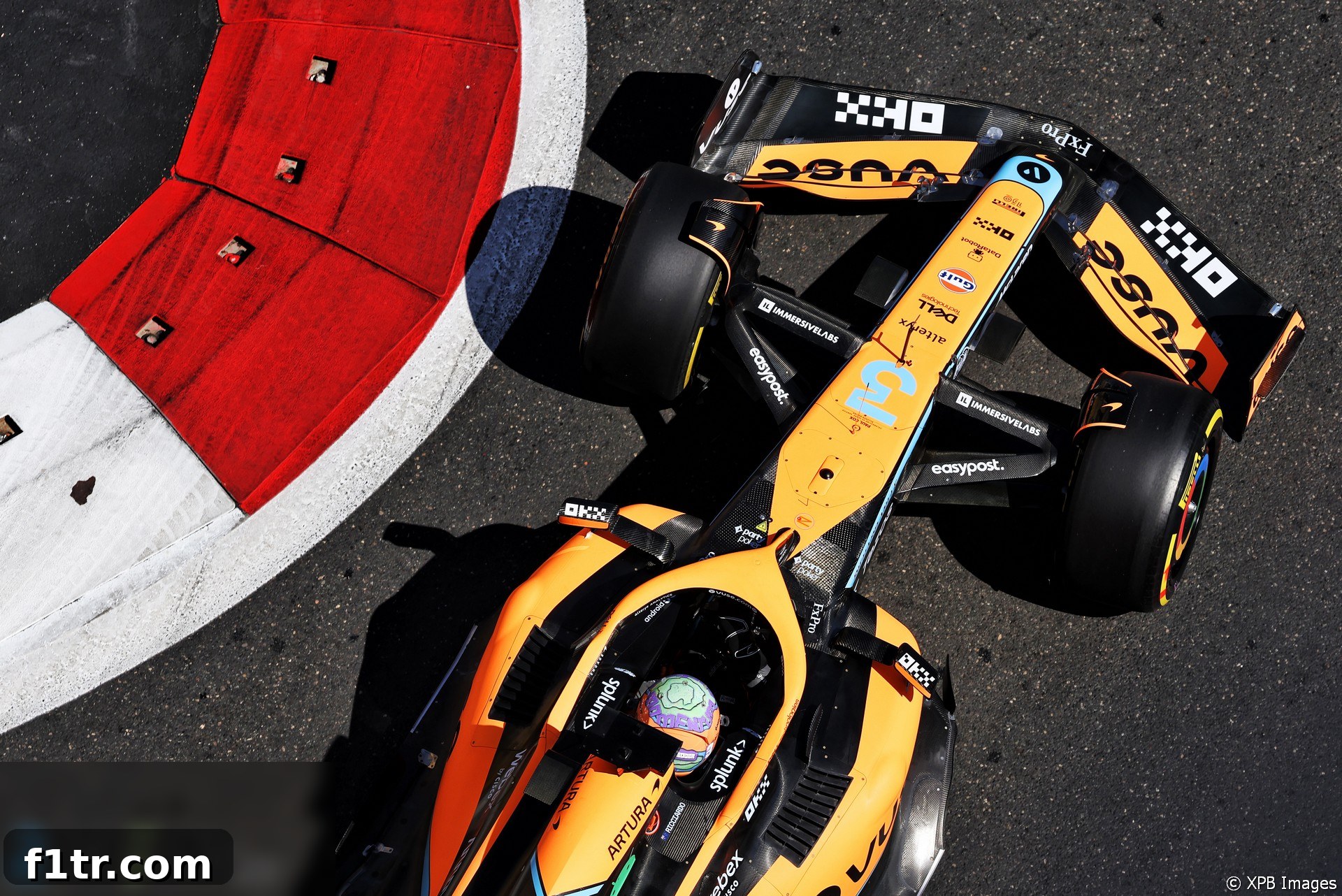
In a significant development for Formula 1’s financial landscape, McLaren has officially confirmed its intention to exceed the sport’s stringent budget cap for the 2022 season. This announcement, made by team principal Andreas Seidl, highlights the mounting economic pressures faced by F1 teams, largely driven by unforeseen global factors such as soaring freight and energy costs. McLaren’s declaration is not an isolated incident; it echoes similar concerns voiced by other prominent teams, casting a spotlight on the challenges of maintaining financial stability within the sport’s relatively new regulatory framework.
The Genesis and Importance of the F1 Budget Cap
The Formula 1 budget cap was first introduced in 2021 as a cornerstone of the sport’s long-term sustainability strategy. Its primary objective was to curb the relentless spending wars that had historically dominated F1, creating an insurmountable divide between financially powerful top-tier teams and their less affluent rivals. By limiting expenditure, the cap aimed to foster a more level playing field, encourage greater on-track competition, and ensure the financial viability of all participating teams, thereby securing the sport’s future.
For the 2022 season, the budget cap was set at $140 million (approximately £113.17 million). This figure excludes certain critical expenditures, such as driver salaries, the remuneration of the three highest-paid personnel, marketing activities, and certain heritage projects. While initially met with a mixture of optimism and skepticism, the cap was largely seen as a necessary evolution for Formula 1, promising a new era of competitive racing where ingenuity and efficiency would triumph over sheer financial muscle. Teams meticulously planned their operations and car development cycles to meticulously adhere to these new financial boundaries, a task that has proven increasingly difficult amidst unforeseen global economic shifts.
Unprecedented Economic Headwinds Challenge F1 Finances
The global economic climate in 2022 has presented an unprecedented challenge to the financial planning of Formula 1 teams. The year has been characterized by a sharp and sustained rise in inflation across major economies, coupled with significant disruptions to global supply chains and a widespread energy crisis. These macro-economic factors, largely beyond the control of individual teams, have directly impacted the operational costs of running a Formula 1 outfit, pushing budgets to their absolute limit and, in many cases, beyond the prescribed cap.
One of the most significant contributors to the cost escalation has been the astronomical increase in freight expenses. Transporting vast quantities of equipment – including race cars, spare parts, tools, and hospitality infrastructure – across multiple continents for a global calendar is inherently expensive. Rising fuel prices, increased shipping container costs, and complex logistical challenges have inflated these charges dramatically. Furthermore, the global energy crisis has translated into soaring utility bills for team factories, wind tunnels, and operational facilities, adding another layer of financial strain. The cost of raw materials essential for car construction, such as advanced composites and exotic metals, has also seen a considerable uptick, impacting manufacturing and development budgets.
McLaren’s Candid Revelation: A Representative Voice
McLaren Team Principal Andreas Seidl articulated the team’s predicament with stark clarity during a media briefing in Baku. He emphasized that McLaren, like many other teams, had meticulously planned its 2022 operations to comfortably operate within the established budget cap. “For us as a team that planned to run at the cap at the beginning of the year, with all these unexpected costs that came up we are at a position where we can’t make the cap anymore,” Seidl stated. This highlights the unforeseen nature of the economic forces at play, which have fundamentally disrupted carefully constructed financial models.
Seidl further explained the inflexibility of certain expenditures, particularly fixed costs associated with personnel and core infrastructure. “You have certain fixed costs in order to start the season, you have fixed costs with your resources which you have in place, the personnel and so on, which you can’t adjust any more,” he elaborated. This means teams cannot simply cut staff or scale back essential operations mid-season without severely compromising their competitive integrity or even their ability to participate effectively. The bulk of the unexpected financial burden, according to Seidl, stems “mainly on the freight side and utility bills,” directly corroborating the broader economic trends. His assertion that McLaren is “in the same position as some other teams” underscores the widespread nature of this financial challenge across the paddock.
The Diverse Landscape of Team Opinions and the Search for Consensus
McLaren’s announcement follows similar warnings from other top teams, most notably Ferrari. Team principal Mattia Binotto had previously declared in Monaco that there was “no way” his team could adhere to the $140 million limit given the prevailing economic conditions. This chorus of concerns from multiple outfits has ignited intense discussions behind the scenes among teams, the FIA (Fédération Internationale de l’Automobile), and Formula 1 management regarding potential solutions.
The dialogue, however, is complicated by the diverse interests and “opportunistic views” of the various teams. While some, particularly those facing immediate budget shortfalls, are advocating for an adjustment to the cap – perhaps an inflation indexation or specific exemptions for unavoidable costs – others remain staunchly opposed. Teams that either managed their budgets more conservatively or perhaps anticipated some of these economic headwinds are reluctant to support changes that could potentially erode their competitive advantage. The delicate balance lies in finding a compromise that addresses the genuine financial distress without undermining the fundamental principles and long-term objectives of the budget cap regulation itself.
FIA and Formula 1: Navigating the Impasse for Sporting Integrity
The onus is now firmly on the FIA and Formula 1 to navigate this complex impasse and forge a resolution that serves the best interests of the sport. Discussions are actively underway to explore avenues for alleviating the financial pressures on teams. One minor relief measure already implemented was the decision not to replace the cancelled Russian Grand Prix on the 2022 calendar, thereby reducing the number of rounds teams had to attend and, consequently, slightly lowering their associated freight costs. However, this measure is largely insufficient to offset the monumental increases seen elsewhere.
Andreas Seidl expressed cautious optimism regarding these ongoing dialogues. “I’m still hopeful with all the conversations that are happening at the moment, together with the other teams with the FIA and Formula 1, that we still find a solution which is in the best interests of the sport moving forward,” he remarked. He stressed the importance of strong leadership from the FIA to guide these discussions towards an equitable outcome, especially given the inherent competitive nature and varied agendas within the paddock. The ultimate goal is to arrive at a “defined solution for everyone,” one that ensures the principles of the cost cap are not “watered down” or compromised, thereby preserving the integrity and credibility of this vital regulation.
Implications for Competition and Future Regulations
The potential widespread breach of the budget cap carries significant implications for both the immediate 2022 season and the long-term evolution of Formula 1’s financial regulations. If multiple teams are found to have exceeded the cap, the FIA will face the challenging task of applying penalties. These could range from financial fines to sporting sanctions, such as points deductions, which could significantly influence championship outcomes. The credibility of the budget cap, a regulation designed to foster fairness, hinges on its consistent and equitable enforcement. Any perception of leniency or inconsistent application could undermine its fundamental purpose.
Beyond penalties, the ongoing financial squeeze is already impacting car development. As Seidl noted, “the development of the car is heavily influenced by the cost cap at the moment because of all these unexpected costs that came up recently.” Teams might be forced to make difficult choices, prioritizing essential upgrades over ambitious development projects, potentially impacting competitive performance. Looking ahead, this situation underscores the need for greater flexibility or an adaptive mechanism within the budget cap rules to account for unforeseen global economic fluctuations. Formula 1 needs a robust framework that can withstand external shocks while still achieving its core objectives of sustainability and competitive balance.
Despite the current challenges, McLaren remains unequivocally committed to the spirit and necessity of the cost cap. “I’m absolutely happy we have the cost cap in the place,” Seidl affirmed. He sees it as a “necessity for the sport in general… in order to be able to take part in F1 in a financially sustainable way, but also in a position where we can also be then actually competitive on the sporting side.” This sentiment is widely shared across the paddock, highlighting that the issue is not with the principle of the cap itself, but with its current rigidity in the face of unprecedented global economic turmoil. The challenge, as Seidl rightly points out, is ultimately “the same challenge for everyone,” demanding a collective and pragmatic approach to resolution.
Conclusion: A Critical Juncture for F1’s Financial Future
McLaren’s confirmation that it will exceed the 2022 Formula 1 budget cap signals a critical juncture for the sport’s financial regulations. The combination of global inflation, escalating freight costs, and the energy crisis has created an untenable situation for many teams, threatening to derail the very foundation of competitive balance that the budget cap was designed to establish. The ongoing discussions between teams, the FIA, and Formula 1 are paramount. A swift, fair, and transparent solution is essential, one that acknowledges the genuine economic pressures without compromising the core principles of financial sustainability and sporting integrity. The future credibility and effectiveness of the F1 budget cap will depend heavily on how this complex challenge is navigated, ensuring Formula 1 remains both thrillingly competitive and financially robust for years to come.
Related Articles: 2022 Azerbaijan Grand Prix
- FIA should black-flag cars if their porpoising endangers drivers’ safety – Horner
- Transcript: Why Norris reluctantly complied with McLaren’s Baku team orders
- Montreal is “going to hurt” in stiff 2022 cars say drivers hoping for bouncing fix
- Leclerc was heading to a ‘comfortable win’ before retirement – Ferrari
- F1 should penalise those who ‘obviously’ slow on purpose in qualifying – Norris
Browse all 2022 Azerbaijan Grand Prix articles