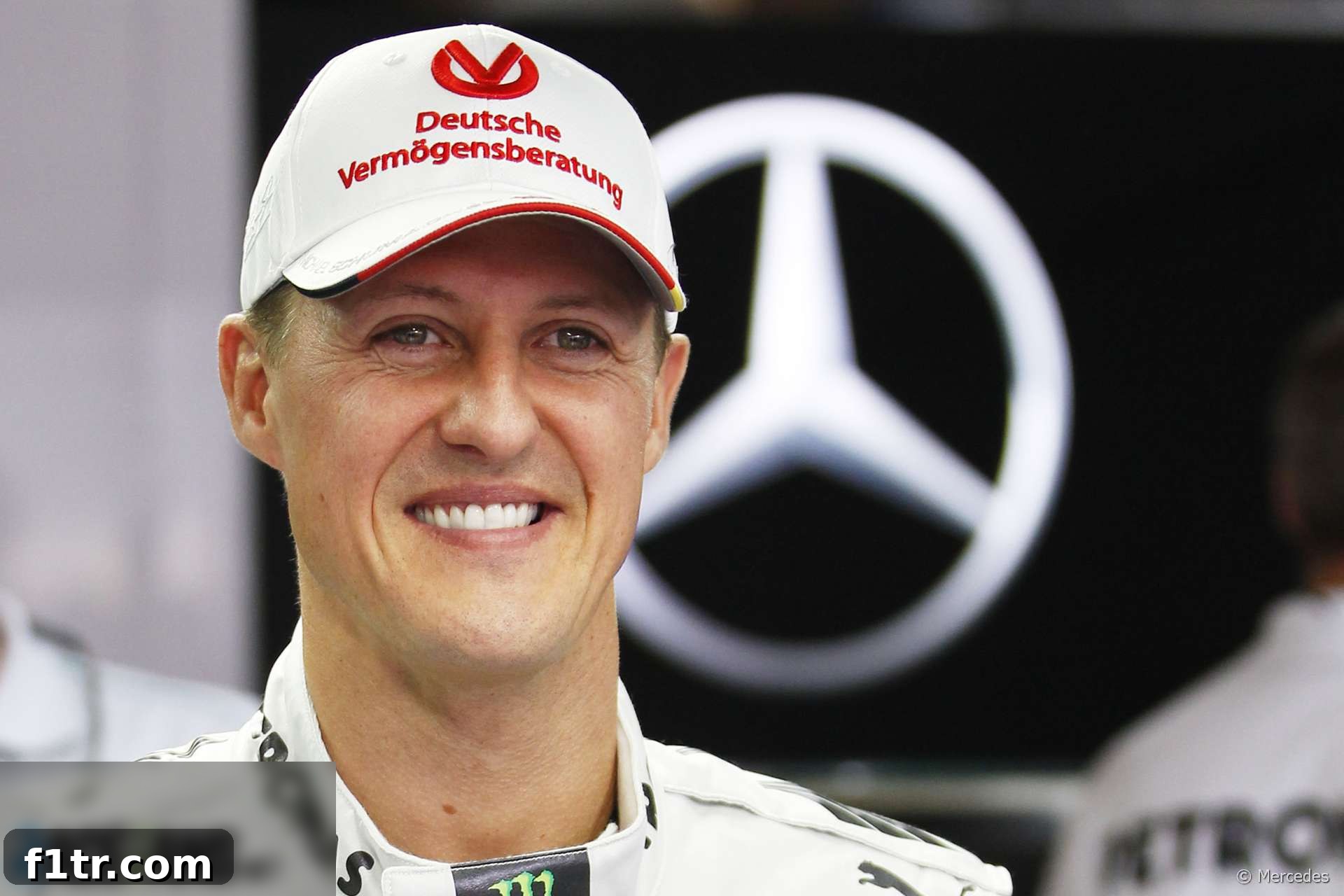
Michael Schumacher’s Enduring Legacy and the Call for Transparency Regarding His Condition
The name Michael Schumacher resonates with unparalleled reverence in the world of Formula 1. A seven-time world champion, his illustrious career defined an era, captivating millions and cementing his status as an undisputed motorsport icon. However, since a tragic skiing accident in December 2013, the global conversation around Schumacher has shifted from his on-track heroics to a poignant concern for his health. While his family has maintained a strict veil of privacy surrounding his condition, a former team principal, Nick Fry, has recently voiced a compelling argument for greater transparency, suggesting it could benefit not only his vast legion of fans but also potentially contribute to broader medical understanding.
Little has been officially disclosed about the 50-year-old racing legend’s recovery and treatment following the severe head injuries he sustained during the incident in the French Alps. This lack of concrete information has fueled widespread speculation and an understandable yearning among his admirers for updates on the man who once dominated the racetracks. Nick Fry, who served as CEO at Mercedes during Schumacher’s three-year tenure with the team from 2010 to 2012, has now openly questioned the family’s decision to limit access to information in a forthcoming book authored by him, titled “Survive. Drive. Win.”
The Dilemma of Privacy vs. Public Affection
“Corinna [Schumacher’s wife] and the family have kept a very tight control on information about his condition which, I think, is a pity,” Fry stated, expressing his candid view. His sentiment stems from a deep understanding of the profound connection Michael Schumacher forged with fans across the globe. Fry elaborated on this point, highlighting the universal appeal of Schumacher’s achievements and character.
“There are millions of people out there who have a genuine affection for Michael, and that’s not just his fans in Germany or fans of Mercedes-Benz. Because of what he achieved, people would like to know about his condition; they are inquisitive and they genuinely feel for him,” Fry emphasized. Indeed, Schumacher’s career transcended mere sporting success. His relentless pursuit of perfection, his strategic brilliance, and his steely determination inspired countless individuals worldwide, earning him a place in the hearts of racing enthusiasts and beyond. For many, he was more than just an athlete; he was a symbol of unwavering ambition and excellence, making the current silence surrounding his health particularly difficult for them to reconcile.
Advert | Become a Supporter & go ad-free
Potential for Medical Advancements and Shared Knowledge
Beyond the emotional aspect for fans, Fry also articulated a practical and potentially groundbreaking reason for greater openness. He believes that the highly specialized medical care and therapies Michael Schumacher has received could yield invaluable insights for the broader medical community, ultimately benefiting others facing similar neurological challenges. The financial resources available to the Schumacher family have allowed for the establishment of an unparalleled care environment.
“From what I understand, Michael’s family has been able to give him the best treatment that money can buy in a specially constructed facility at the family home in Switzerland, where he is looked after by a dedicated team around the clock,” Fry commented. This level of personalized, intensive care, sustained over many years, is extraordinary. It offers a unique opportunity for medical professionals to observe, develop, and refine innovative therapeutic approaches for severe head injuries.
Fry sees this as a crucial opportunity to contribute to medical science. “I am sure that techniques and therapies have been developed and tried there over the last few years that may well help others. This could be treatment or approaches that worked as well as ideas that don’t,” he suggested. The insights gained from such a bespoke and long-term care regime – both successes and limitations – could be invaluable. Sharing this knowledge, even in an anonymized or aggregated form, could accelerate research, refine best practices, and offer hope to countless other families grappling with the devastating aftermath of traumatic brain injuries.
The call for sharing extends beyond clinical data. Fry also highlighted the human element of coping with such a profound life change. “It would be helpful for his family to share how they have dealt with this challenge because there are lots of people in a similar situation who would probably find it beneficial to have that first-hand experience,” he added. Navigating the emotional, logistical, and financial complexities of long-term care for a loved one with severe brain injury is an immense undertaking. The Schumacher family’s journey, even without specific medical details, could offer powerful lessons in resilience, resource management, and emotional fortitude to others on similar paths.
Recent Developments and the Path Forward
Adding another layer to the ongoing public interest, French newspaper Le Parisien recently reported a significant development: Michael Schumacher was reportedly taken to a hospital in Paris for specialized treatment. While details remained scarce, this report underscored that the journey of recovery and ongoing care is a continuous process, even years after the initial accident. Such movements inevitably rekindle hope and curiosity among his followers, further amplifying the sentiment behind Fry’s appeal for more information.
The delicate balance between a public figure’s right to privacy and the public’s emotional connection and potential societal benefit from shared information is a complex ethical terrain. While the Schumacher family’s unwavering dedication to Michael’s well-being is commendable and their desire for privacy understandable, Fry’s perspective offers a thoughtful counterpoint. It invites a broader discussion about the responsibilities that come with immense public stature and the potential for a personal tragedy to become a catalyst for collective learning and progress.
Nick Fry’s upcoming book, “Survive. Drive. Win.,” co-authored with Ed Gorman, is scheduled for publication by Atlantic Books on October 3rd. It promises to offer further insights into his time in Formula 1 and his reflections on key figures and events within the sport, likely elaborating on his experiences with Michael Schumacher and his current views.
Ultimately, the story of Michael Schumacher, the unparalleled racing champion, has taken an unexpected turn into a deeply personal and private battle. Yet, the affection and concern he inspired during his career continue to ripple across the globe. Fry’s call for transparency is not born of sensationalism, but from a genuine belief that, even in silence, Schumacher’s enduring legacy could continue to inspire and contribute, not just on the racetrack of memory, but in the challenging arenas of human resilience and medical advancement.
Advert | Become a RaceFans supporter andgo ad-free
2019 F1 season: Relevant Discussions and Events
While the focus remains on Michael Schumacher’s condition, the world of Formula 1 continues to evolve. Here are some articles from the 2019 F1 season that capture the sport’s ongoing drama and developments, reflecting the vibrant and ever-changing landscape that Schumacher once dominated:
- Crying in the Melbourne car park at 2019 grand prix was my career low – Ocon
- McLaren Racing reports reduced £71 million loss in 2019
- Kvyat: Hockenheim podium last year was “my biggest achievement” so far
- How the FIA’s new encrypted fuel flow meter targets Ferrari’s suspected ‘aliasing’ trick
- “He smashed my office door”: 23 must-see moments from ‘Drive to Survive’ season two
Browse all 2019 F1 season articles