The High Stakes of F1 Driver Contracts: Decoding Lewis Hamilton’s Mercedes Negotiations
The exhilarating world of Formula 1, celebrated for its pinnacle of automotive engineering and blistering speeds, often shrouds a less visible, yet equally intense, arena of competition: the intricate world of driver contract negotiations. Having spent a quarter-century deeply embedded within the F1 paddock, I’ve had the unique opportunity to be involved—directly and indirectly—in the crafting of these pivotal agreements. My experience includes steering negotiations for three driver contracts, one of which, even for a lower racing category, ballooned to an astounding 109 pages. What consistently struck me was the remarkable uniformity across these documents. Despite being compiled by different teams and for various racing series, their fundamental structures, legal jargon, and underlying principles shared an uncanny resemblance, almost as if every legal department was downloading from a singular, universally accepted template. Lawyers, it often seemed, were primarily engaged in sophisticated cut-and-paste operations, meticulously filling in the critical blanks that define each unique deal.
This pervasive similarity isn’t an anomaly restricted to driver employment contracts. I’ve also had access to two distinct intellectual property trademark registrations for drivers, each handled by different law firms operating in diverse jurisdictions, with one even based outside of Europe. Yet, their textual core was fundamentally identical, with variations limited only to specific visual assets, names, and a handful of highly customized clauses. This pattern vividly illustrates a core truth about legal practice within the demanding ecosystem of Formula 1.
The Anatomy of F1 Contracts: Precedent, Standardization, and the Agent’s Role
The rationale behind such widespread contractual congruence is elegantly simple: legal professionals rarely embark on the labor-intensive task of inventing agreements from scratch. Instead, their foundational approach is built upon established precedents. These proven templates, refined over decades of high-stakes negotiations, legal reviews, and occasional disputes, serve as the robust framework upon which new agreements are constructed. When drivers, frequently guided by their shrewd managers or dedicated legal teams, enter into contract negotiations—be it for a fresh start with a new constructor or a renewal with their existing squad—they invariably leverage the terms, structures, and successful precedents of previous agreements. This mirroring principle extends equally to the teams. While each F1 outfit possesses its own specific requirements for certain clauses, performance obligations, and strategic options tailored to their corporate ethos and sporting aspirations, these unique elements are typically integrated into a pre-existing contractual architecture that has proven effective across numerous prior driver engagements.
Over the years, as top-tier drivers and senior management personnel have transitioned between various Formula 1 teams, the landscape of F1 agreements has progressively merged and harmonized across the entire grid. This ongoing migration of talent and expertise has naturally facilitated the standardization of many contractual components. Consequently, what might once have been considered proprietary team-specific clauses have gradually evolved into widely accepted industry standards, requiring only bespoke adjustments for individual circumstances. While highly confidential commercial and trademark appendices remain crucial and legally binding components of any deal, even these supplementary documents have, through consistent application and adaptation, achieved a significant degree of standardization within individual teams over time. The core, foundational elements of an F1 contract are largely pre-established; the intensive work truly begins with the meticulous process of ‘joining the dots’ and precisely populating the numerical and performance-based details that render each agreement unique.
The Critical Blanks: Where High-Stakes Negotiations Intensify
These crucial “blanks” within the standardized contract framework are, almost without exception, numeric. They fundamentally revolve around the duration of the contractual commitment – the number of seasons a driver dedicates to a specific team – and, most critically, the comprehensive financial remuneration package. This encompasses a substantial base salary, an array of performance-related bonuses (rewarding race wins, pole positions, championship titles, and specific points tallies), and frequently, a significant component derived from image rights and personal endorsements. Beyond these headline figures, the finer details also play a pivotal role: the exact number of coveted paddock passes allocated for family and associates, the scope and financial responsibility for travel and accommodation costs, and highly specific PR obligations, including a stipulated number of media appearances, sponsor engagements, and mandated social media activity. Once these core numerical and quantitative points achieve mutual agreement, the subsequent administrative process of formalizing a 100-page (or even lengthier) contract can be remarkably efficient, often concluding within a mere day or two. Conversely, if these vital figures remain a point of contention, the entire negotiation process inevitably slows to a grinding halt. It is a direct correlation: the greater the disparity in numerical expectations between the negotiating parties, the more protracted and arduous the ‘drag’ becomes, extending what should be a swift formality into a prolonged standoff.
Lewis Hamilton’s Contract Saga: An Unprecedented Delay at Mercedes
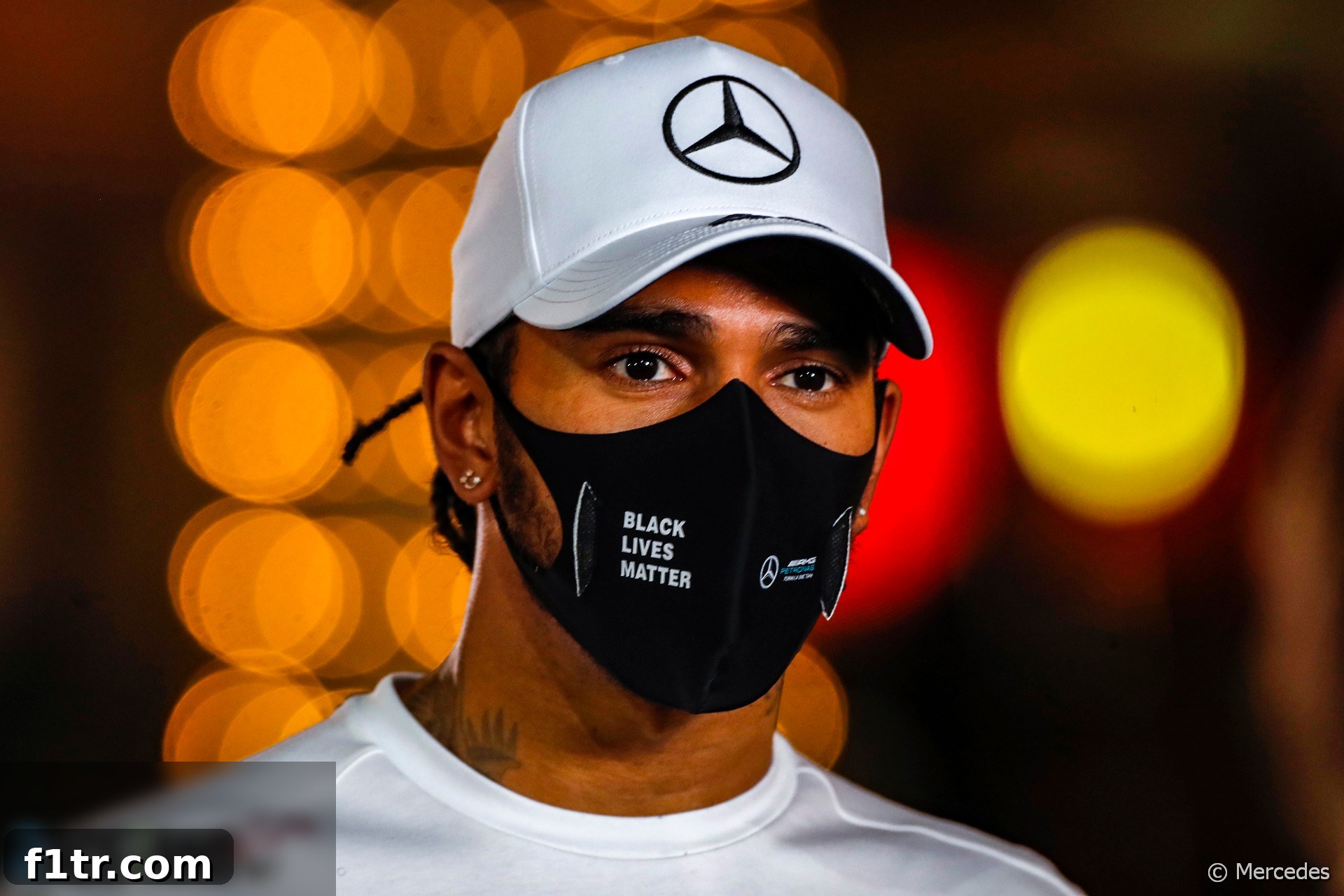
Against this established backdrop of highly standardized agreements and predominantly numerical sticking points, the protracted delay—stretching for three months or even longer—in Lewis Hamilton’s negotiation for his pivotal 2021 and beyond contract with the formidable Mercedes-AMG Petronas Formula One Team stands out as particularly enigmatic. This is far from a novice driver’s inaugural deal; Hamilton possesses an extensive history with the team, having successfully inked three prior agreements that clearly defined the relationship: 2013-15, 2016-18, and 2019-20. The fundamental terms, boilerplate clauses, and overarching structural framework of their partnership are not just defined but are deeply ingrained from nearly a decade of unparalleled collaboration. It is an undeniable truth that as Hamilton’s extraordinary career achievements have rapidly accumulated – culminating in a record-equalling seven world championships, a plethora of race wins, and numerous broken records – his market value has surged to unprecedented heights, naturally leading to significantly loftier financial expectations. Yet, the vast majority of the contractual framework, the very “cut-and-paste” clauses that form the bulk of the document, were already firmly in place long before these most recent negotiations ever commenced. This begs the question: what truly lies at the heart of such an extended impasse?
Throughout this elongated standoff, a succession of explanations has been put forth by the Mercedes team to account for the delay. Initially, public statements suggested a perceived lack of urgency, followed by assertions that securing both the Constructors’ and Drivers’ championships for the season was the overriding priority, diverting attention from contractual talks. The notoriously congested Formula 1 calendar was also cited as a practical barrier, making it challenging to secure adequate face-to-face negotiation time between key parties. This particular excuse, however, appears to lose significant credibility when juxtaposed with the fact that numerous other top teams successfully renewed or initiated new contracts with their drivers during the very same demanding period. Later, Hamilton’s personal battle with Covid-19 was presented as a legitimate reason for delayed discussions. Most recently, the self-imposed deadline for a new deal was shifted to coincide with pre-season testing, a timeframe that has itself been further postponed by an additional fortnight. These continuously shifting rationales, taken collectively, cast a significant shadow of doubt over the stated reasons for the protracted negotiation, strongly suggesting deeper, more fundamental, and likely numerical, disagreements at play.
The Corporate Conundrum: Valuing an Icon Amidst Financial Headwinds
If a genuine mutual desire for an agreement truly exists, and the numerical parameters were aligning as one might typically expect for an ongoing successful partnership, why would Mercedes hesitate to simply proceed and sign the contract? Why, instead, would they perpetually extend the negotiation window, pushing it beyond the established testing period and potentially even into the very start of the new racing season? Is the team genuinely counting on further delays to the F1 calendar simply to buy additional time? This prolonged reluctance is particularly puzzling and appears almost contradictory given Mercedes’ recent demonstrated corporate agility. The automotive conglomerate managed to swiftly and successfully finalize a monumental deal to sell a third of its immensely valuable F1 team to Ineos, a strategic move that injected substantial investment and firmly solidified the team’s future ownership structure. Concurrently, they efficiently renewed Team Principal Toto Wolff’s crucial leadership contract, ensuring stability at the helm. These complex, high-level corporate agreements were executed with apparent efficiency and strategic focus, yet Mercedes seemingly struggled to allocate the necessary time or urgency to finalize a deal with their star driver—the most successful individual in the sport’s illustrious history. This disparity in action raises significant questions about their true priorities.
Within the sophisticated financial architecture of modern corporate Formula 1 teams, a driver’s remuneration is typically bifurcated into two distinct, yet interconnected, primary components: sporting value and commercial value. The former, encompassing the driver’s unparalleled on-track performance, consistent race results, and undeniable championship-winning potential, is predominantly covered by the team’s core sporting budget. The latter, representing the driver’s immense appeal to global sponsors, effectiveness in high-profile marketing campaigns, and extensive worldwide brand visibility, is often funded through dedicated marketing budgets and strategic commercial partnerships. Lewis Hamilton is undeniably more than just a sporting icon of unparalleled success; he commands an extraordinary global commercial appeal. His brand recognition transcends motorsport, wielding powerful influence and resonance particularly within diverse global communities, including black communities worldwide, making him a unique and invaluable asset. Mercedes’ direct competitors in the fiercely competitive executive car segment, such as Audi and BMW, simply do not possess a comparable brand ambassador who transcends the boundaries of sport to such a profound degree. Hamilton is acutely aware of this unparalleled commercial leverage, and it forms a profoundly significant, non-negotiable part of his overall negotiating power, extending well beyond mere race victories.
The Deepening Divide: Corporate Pressures and Russell’s Unexpected Impact
As far back as October, a highly credible source with intimate knowledge of the ongoing situation confidentially informed RaceFans that the two negotiating parties were separated by a staggering 300% in their respective financial demands. This source further indicated that Mercedes-Benz chairman Ola Källenius was resolutely unwilling to exceed an approximate figure of $20 million (£14.7 million) for Hamilton’s driver services. This unyielding stance is rooted deeply in Mercedes-Benz’s frequently articulated strategic objective for its Formula 1 team: to operate definitively as a profitable enterprise, rather than serving as a perpetual cost-center for the broader automotive group. At that juncture, Hamilton was reportedly pressing for a figure in the region of $60 million, in addition to various performance-based perks, enhanced commercial rights, and potentially even a longer-term commitment. While a spokesperson for Mercedes subsequently issued a denial of these specific figures, the reported “gap” is undeniably substantial enough to severely jeopardize the team’s tightly controlled profitability targets, perfectly aligning with Källenius’s well-known fiscal mandates and corporate strategy.
Adding yet another intricate layer of complexity and leverage shift to the negotiation landscape is the truly remarkable performance of George Russell during his unexpected stand-in drive for Mercedes at the Sakhir Grand Prix. His stellar showing, where he narrowly missed a probable race victory despite being drafted in at the eleventh hour with minimal preparation, fundamentally altered the perception of Hamilton’s *sporting* value. Russell’s seemingly effortless ability to perform at the highest level within the dominant Mercedes machinery, particularly given his relative inexperience in that car, provided a tangible and rather uncomfortable benchmark. This suggested that other highly capable drivers might also be able to extract top-tier performance from the championship-winning car, challenging the notion of Hamilton’s absolute sporting indispensability. This unforeseen development has almost certainly become a significant and uncomfortable sticking point in the ongoing negotiations, potentially eroding Hamilton’s perceived unique value purely from a driving performance perspective and strengthening Mercedes’ hand in demanding a more financially palatable deal.
Furthermore, the broader corporate context of Mercedes-Benz, the parent automotive giant, significantly amplifies these internal financial pressures. The company has publicly announced ambitious plans to reduce its global headcount by approximately 10,000 employees. This substantial strategic restructuring is a direct and proactive response to a forecasted 20% reduction in sales, a downturn driven by challenging global market conditions and the pervasive economic repercussions of the Covid-19 pandemic. Concurrently, the automotive behemoth is grappling with unprecedented research and development expenditures as it aggressively pivots towards an entirely electrified future for its vast vehicle lineup. These immense and multi-faceted financial challenges at the highest corporate level inevitably create yet another profound “gap” in the negotiation, making it increasingly difficult for Mercedes-AMG F1 to justify a significantly elevated driver salary, regardless of the driver’s iconic status. The overarching financial health and strategic directives of the parent corporation inevitably impose stringent limits and influence the F1 team’s spending capacity, especially on high-profile talent.
The High-Stakes Waiting Game: Risks and Broader Implications for F1
The undeniable fact that no official deal was announced for months into the off-season—barring the highly unlikely scenario of an agreement being inexplicably kept entirely under wraps, a move that would only generate unnecessary internal pressures—serves as a clear and unequivocal indicator of substantial numerical disparities between the driver and the team/parent company. The customary festive season slowdown, often cited as a period for winding down, offers no credible justification for such an extended and public delay. As previously established, once all primary parties are genuinely aligned on the critical financial and performance-related numbers, even the most complex, multi-page deal can be meticulously finalized with surprising swiftness, often within the span of a single working day. A full month had already elapsed since the season finale, providing ample opportunity for resolution if the collective will and financial alignment were truly present. The continued silence points to a fundamental deadlock.
The most plausible and widely accepted explanation for this protracted standoff is that neither Lewis Hamilton nor the formidable Mercedes team (or its powerful parent company) is willing to concede their entrenched position until the absolute last possible moment. This high-stakes “waiting game” strategy carries considerable bilateral risks for both parties involved. On one hand, Mercedes faces the very real and uncomfortable possibility that Hamilton, potentially exhausted from a lifetime of relentless competition since the tender age of seven, might genuinely contemplate taking a sabbatical year. Such an audacious move would leave Mercedes without its talismanic driver, undeniably impacting their championship aspirations, potentially harming team morale, and significantly diminishing their global brand appeal and marketability. On the flip side, Hamilton himself runs the considerable risk that the Mercedes main board, potentially growing weary of the protracted staring contest and keen to assert corporate fiscal discipline, might ultimately instruct Team Principal Toto Wolff to sign George Russell for a mere fraction of the proposed fee. Russell, having demonstrated his immense talent and adaptability in the Mercedes car during his memorable Sakhir outing, would represent a significantly more cost-effective—and undeniably highly capable—alternative. This leverage allows Mercedes to play a hard game.
Beyond the immediate financial and sporting ramifications, this prolonged waiting game signals a deeper, underlying issue: a potential lack of overall commitment or a fundamental misalignment of strategic priorities on both sides. Such a precarious scenario poses potentially far more serious, long-term consequences, not only for Lewis Hamilton’s indelible legacy and Mercedes’ unparalleled competitive dominance but also for the broader image, stability, and commercial health of Formula 1 itself. It starkly highlights the delicate and often tension-filled balance between a driver’s personal ambition, a team’s strategic objectives, and the overarching commercial realities that define the very pinnacle of global motorsport. The resolution of this saga will undoubtedly set new precedents for future high-profile negotiations within the sport.
Join the RaceFans Supporters Drive!
If you’ve consistently enjoyed RaceFans’ comprehensive motor sport coverage throughout 2020, we kindly ask you to take a moment to find out more about our Supporter Drive.
Our ongoing mission is to welcome 3,000 new Supporters to help fund RaceFans, enabling us to continue producing high-quality, thoroughly original, and fiercely independent motorsport coverage. Here’s a detailed explanation of what we’re asking for, why it matters, and how you can seamlessly sign up:
- Join the RaceFans Supporters Drive!
More on the 2021 F1 Season: Related Articles
- Masi ‘basically gifted the championship’ to Verstappen says 2021 FIA steward Sullivan
- Las Vegas race backers looking to extend F1 deal beyond 2025
- Why Mercedes put ‘a reminder of joy and pain’ on display in their factory lobby
- Verdict on error in GT race suggests Mercedes would have lost 2021 Abu Dhabi GP appeal
- Title ‘stolen’ from Mercedes made us ‘underdogs people cheer for’ – Wolff
Browse all 2021 F1 season articles