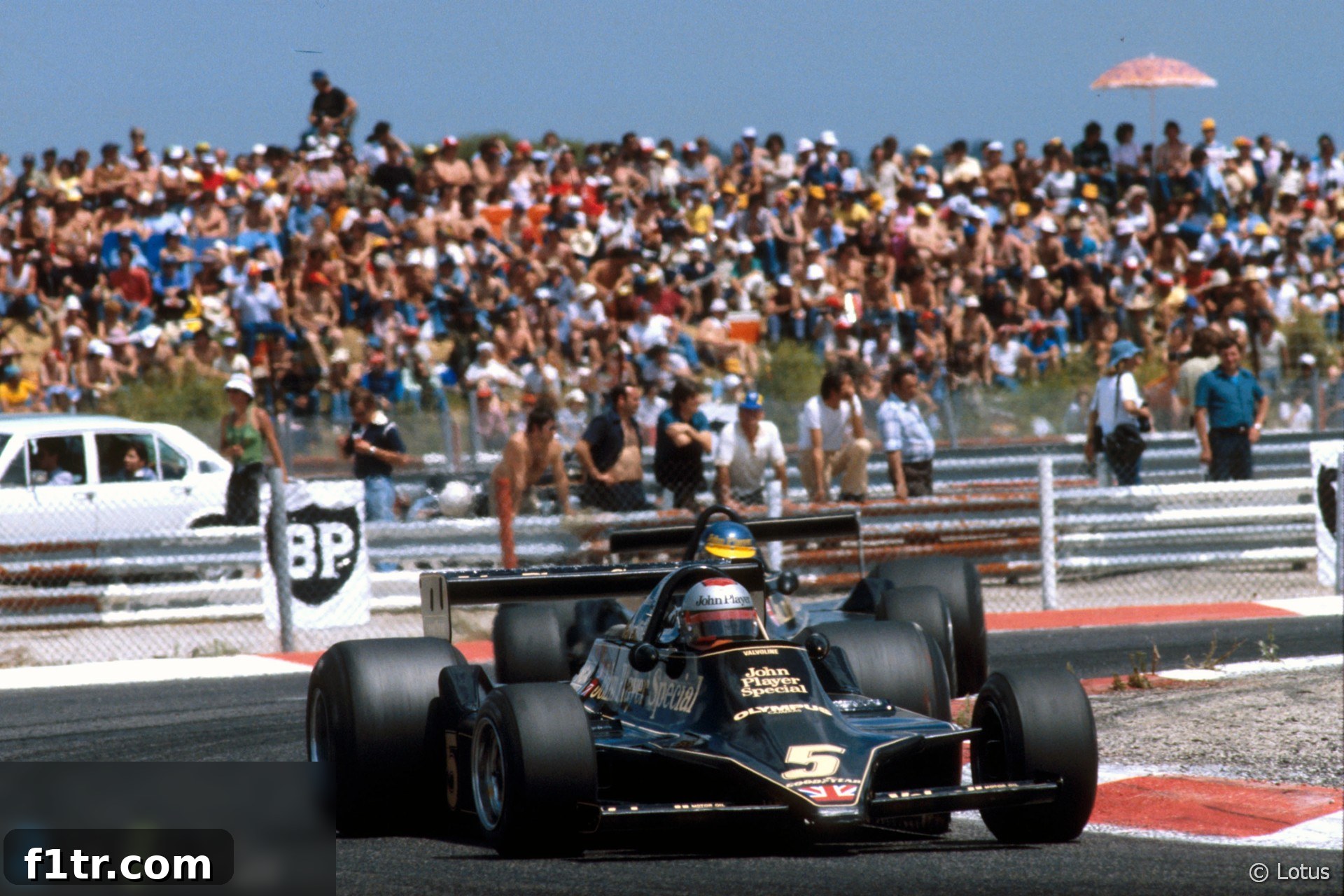
A truly singular piece of Formula 1 history is set to go under the hammer. The only existing Formula 1 car used by an American driver to clinch the world championship title will be put up for auction at the conclusion of the current racing season. This momentous event presents an unprecedented opportunity for collectors and enthusiasts to own a tangible piece of motorsport legend.
Mario Andretti’s iconic Lotus 79, specifically chassis number four, will be presented for auction by the renowned house Bonhams. The sale is scheduled to coincide with this year’s prestigious Abu Dhabi Grand Prix, adding to the allure and global attention surrounding the event. Experts at Bonhams have placed an estimated value on this extraordinary vehicle, projecting it to sell for a sum between $6.5 million and $9.5 million (£5.25 million – £7.68 million), a testament to its unparalleled historical significance and rarity.
The Revolutionary Lotus 79: Masterpiece of Ground Effect Aerodynamics
The Lotus 79 chassis was nothing short of a revelation in Formula 1, achieving tremendous success during its dominant era. Out of its six remarkable victories, all but one were secured by the legendary Mario Andretti, showcasing his exceptional skill and the car’s superior design. The solitary other win came courtesy of his talented teammate for much of the 1978 season, Ronnie Peterson. Tragically, Peterson’s promising career was cut short after a devastating crash at the start of the Italian Grand Prix at Monza, an event that cast a long shadow over the season’s triumphs. Poignantly, it was at this very same race that Andretti secured his much-deserved championship, with two rounds still remaining in what had been an unforgettable and emotionally charged season.
This championship victory held profound significance, marking the last title win for a Lotus driver in Formula 1 history. Furthermore, it cemented the team’s legacy by securing their seventh and final constructors’ championship title, solidifying Team Lotus’s place as one of the sport’s most innovative and successful outfits. The Lotus 79 didn’t just win races; it redefined how Formula 1 cars were designed and operated, ushering in a new era of aerodynamic understanding.
At the heart of the Lotus 79’s success was its groundbreaking adoption of ground effect aerodynamics. Team Lotus, under the visionary leadership of founder Colin Chapman, made monumental advances in this field, allowing the 79 to practically suction itself to the track. This revolutionary design gave the car an undeniable performance advantage, making it the undisputed class of the field in 1978. Such was its superiority that Andretti and Peterson frequently found themselves running in perfect tandem at the very front of the pack, often leaving their rivals struggling to keep pace.
The Genius Behind the Design and Power
While Lotus founder and the inspirational figurehead Colin Chapman was the driving force behind the conceptual framework of his team’s innovative creations, the Lotus 79 itself was meticulously designed by the talented engineering duo of Geoff Aldridge and Martin Ogilvie. Their meticulous work translated Chapman’s vision into a tangible, race-winning machine. Powering this aerodynamic marvel was a reliable and potent 3.0-litre Ford-Cosworth DFV V8 engine. This iconic engine, which Team Lotus had famously introduced to Formula 1 over a decade prior, became the backbone of numerous championship-winning cars and a testament to its enduring performance and durability.
The innovative principles of ground effect, expertly applied in the Lotus 79, utilized inverted wing-shaped sections on the underside of the car, specifically designed to create an area of low pressure between the car’s floor and the track surface. This aerodynamic phenomenon generated significant downforce, effectively “sucking” the car to the ground and allowing for incredibly high cornering speeds. The skirt system, often made of composite materials, played a crucial role in sealing this low-pressure area, maximizing the ground effect. This technological leap gave the Lotus 79 an almost unfair advantage, making it notoriously difficult for rival teams to match its pace and stability, especially through fast corners.
The Post-Championship Challenges and Lotus’s Legacy
Despite the overwhelming success of the Lotus 79, Team Lotus struggled to replicate or even build upon this triumph in subsequent seasons. The radical Lotus 80 chassis, introduced the very next year, was an ambitious attempt to push ground effect further but proved to be an unfortunate flop. Its design was overly complex and often unpredictable, making it difficult for drivers to handle effectively. This significant setback led the team to make the unusual decision of reintroducing the older, but proven, Lotus 79 before the 1979 season was even over. However, by this point, their rivals had caught up and developed their own ground effect solutions, effectively nullifying the 79’s once-unbeatable advantage. The brief but brilliant reign of the Lotus 79 thus marked a peak that the team would regrettably never reach again in Formula 1.
A Rare Gem: The Uniqueness of Andretti’s Championship Car
The staggering price estimated for Mario Andretti’s championship-winning Lotus 79 is a direct reflection of the incredibly rare and unique position it occupies in the annals of Formula 1 history. There has been only one other American driver to claim the coveted F1 world championship title: Phil Hill, who achieved his triumph with Ferrari in 1961. However, the fate of Hill’s championship-winning Ferrari 156 ‘Sharknose’ is believed to be quite different. Enzo Ferrari, known for his unconventional practices, often ordered the destruction of his former racing cars once they were no longer in active service or deemed obsolete. Consequently, Hill’s legendary 156 is widely believed to be among those historic machines that were scrapped, making Andretti’s Lotus 79 chassis number four a virtually irreplaceable artifact of American motorsport glory.
The fact that this particular Lotus 79 chassis not only competed but also directly contributed to a world championship win makes it an exceptionally desirable item. Its pristine condition, coupled with its direct association with one of motorsport’s most revered figures, significantly elevates its value beyond mere mechanics. It represents a confluence of engineering brilliance, driver skill, and historical significance that is seldom seen in the auction world.
The Auction Event: A Global Spectacle
The highly anticipated auction of Mario Andretti’s Lotus 79 will take place at the iconic Yas Marina Circuit, the stunning venue for the Abu Dhabi Grand Prix. The sale will be conducted as a live broadcast during the grand prix weekend, ensuring maximum global visibility and an electric atmosphere. This setting is particularly fitting, as it brings the historic car back to the very environment where its legacy was forged – the thrilling world of Formula 1 racing. Collectors, historians, and fans worldwide will be watching intently to see who will become the next custodian of this invaluable piece of sporting heritage.
The Enduring Legacy of Mario Andretti and the Lotus 79
Mario Andretti’s 1978 Formula 1 World Championship remains a high watermark in American motorsport. His versatility, having conquered IndyCar, NASCAR, and now Formula 1, cemented his status as one of the greatest drivers of all time. The Lotus 79 was the perfect instrument for his talent, a car that pushed the boundaries of technology and transformed the sport. Its ground-effect design proved to be so effective that it ushered in an era of rapid aerodynamic development, forever changing the face of Formula 1 car design until ground effect was temporarily banned in the early 1980s due to safety concerns. Owning this car is not just about possessing a vehicle; it’s about holding a monument to innovation, triumph, and the indelible mark left by a truly global racing superstar.
The auction in Abu Dhabi is more than just a sale; it’s a celebration of a golden era in Formula 1, a tribute to the genius of Colin Chapman and the sheer driving prowess of Mario Andretti. As the hammer falls, a new chapter will begin for this legendary machine, but its place in motorsport history is already firmly etched.