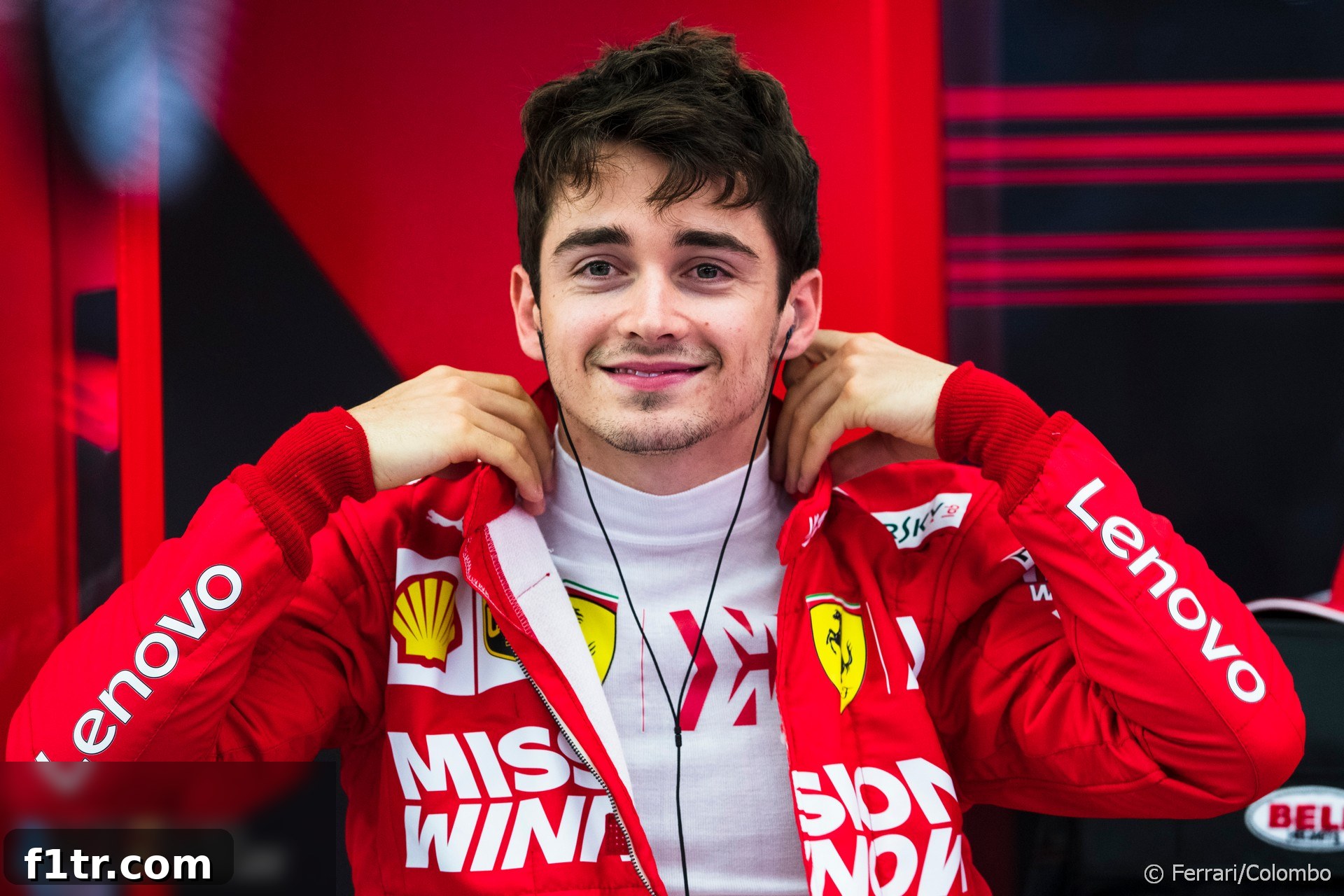
As the Formula 1 circus prepares for a truly monumental occasion – the 1,000th World Championship race – all eyes are on the Chinese Grand Prix. Held at the Shanghai International Circuit, this landmark event promises not only a celebration of the sport’s rich history but also intense competition with compelling storylines unfolding across the grid. Can the young sensation Charles Leclerc finally claim his maiden victory, especially after his heartbreaking near-miss in Bahrain? Or will the experienced hands of Ferrari’s strategy team once again impose controversial team orders, potentially altering the course of the race?
This weekend’s 2019 Chinese Grand Prix is shaping up to be an unmissable spectacle, loaded with talking points that could define the early stages of the season and influence the trajectory of several careers. From the fierce battle at the front to the burgeoning talent in the midfield, and the ever-present tactical dilemmas, Shanghai is set to deliver drama befitting of F1’s thousandth chapter.
Can Leclerc Claim His First Victory and Avenge Bahrain?
The Bahrain Grand Prix provided a stark reminder of the highs and lows of Formula 1, particularly for Ferrari’s rising star, Charles Leclerc. In only his second start for the Scuderia, the Monegasque driver displayed extraordinary pace, dominating qualifying to secure pole position and then controlling the majority of the race with a masterful performance. Victory seemed all but assured, bought and paid for by sheer talent and relentless speed. However, fate, in the cruel form of a short circuit in his power unit, conspired to rob him of what would have been a dream result, forcing him to settle for third place.
Despite the mechanical failure, Leclerc’s performance left an indelible mark on the paddock. Rival team boss Toto Wolff of Mercedes, a keen observer of talent, hailed it as a “very impressive” showing from the “humble” yet “very fast” young driver. Wolff’s admiration went beyond mere speed, praising Leclerc’s composure under pressure. “The combination between the speed, personality and being able to temper your emotions in both directions is a great ingredient,” said Wolff. “I know that many other drivers who have the lion in them, like he certainly has, would have reacted in a much more controversial way about the third place. None of that we see with Charles.” This maturity, coupled with blistering pace, positions Leclerc as a genuine title contender and a future icon of the sport.
His teammate, Sebastian Vettel, undoubtedly struggled to find the same level of comfort and performance with the Ferrari SF90 in Bahrain. Had Leclerc not had a comparatively slow start from pole, he might have scorched away from the field, untroubled by any rivals, including his seasoned teammate. Instead, Ferrari found themselves in a familiar and uncomfortable situation: managing a competitive dynamic where Vettel had Leclerc looming large in his mirrors, showcasing superior pace. For the second race in a row, Ferrari responded by issuing team orders, instructing Leclerc to hold his position, much to the frustration of fans and, no doubt, the driver himself.
Given the undeniable turn of speed Leclerc demonstrated in Bahrain, and the sensible, respectful manner in which both Ferrari drivers conducted themselves while disputing the lead, the question now looms large: will Ferrari risk alienating their burgeoning star and the fanbase by issuing team orders for a third consecutive time in China? The strategic implications are immense, with potential long-term consequences for team morale, driver dynamics, and the championship fight itself. The Scuderia must weigh the immediate race result against the psychological impact on their drivers and the perception of fair competition.
The Rise of a New Generation: F1’s Fresh Talent Shines
The pressure isn’t solely on Sebastian Vettel from the young talent in his own garage. Further down the grid, Formula 1’s new crop of drivers has made an emphatic statement in the opening races of the 2019 season, injecting fresh energy and excitement into the sport. These rookies and sophomores are not just making up the numbers; they are genuinely challenging established names and delivering impressive performances.
McLaren’s Lando Norris has been a standout performer, demonstrating exceptional raw speed and composure for a newcomer. He has successfully reached Q3 in both opening races, a remarkable feat, and capped it off by leading the midfield home in a brilliant performance in Bahrain. His immediate impact suggests McLaren’s long-awaited resurgence might finally be underway. His teammate, Carlos Sainz Jnr, also appears to be a formidable match on speed, although his Bahrain race was unfortunately compromised by an early tangle with Max Verstappen. The pairing of Norris and Sainz offers McLaren a dynamic and competitive line-up, hinting at a brighter future for the Woking-based squad.
At Williams, the situation presents a different narrative. Robert Kubica, making an emotional return to F1, has found himself consistently trailing rookie George Russell. However, judging their relative performances is currently a largely futile exercise, given the dire state of the Williams cars. They are producing wildly different and unpredictable handling characteristics, making it impossible to truly assess driver skill alone. The focus for Williams remains on improving their fundamental package rather than individual driver comparisons.
Meanwhile, the battle at Toro Rosso is equally compelling. It won’t have escaped Daniil Kvyat’s notice that his rookie teammate, Alexander Albon, is currently leading him in the points standings. Kvyat has faced some misfortune, notably being sent out on old tyres in Q2 in Bahrain, but has also been the architect of his own troubles at times, suggesting a need for greater consistency. As for Albon, his journey has been nothing short of meteoric. Having never driven an F1 car until just days before pre-season testing began, he quickly adapted and bagged a well-deserved ninth place in Bahrain, a circuit where he had prior experience. Shanghai will present another steep learning curve for the Thai driver, but his early performances indicate a quick study with immense potential.
The infusion of this young talent across multiple teams is a breath of fresh air for Formula 1, signaling a vibrant future where new heroes are emerging to challenge the established order and provide thrilling, unpredictable racing.
Who Will Emerge as the Midfield Leader?
The battle for “best of the rest” in the congested Formula 1 midfield is proving to be one of the most intriguing and fiercely contested aspects of the 2019 season. On pure, single-lap qualifying pace, Haas has demonstrably shown the way so far, often challenging the established front-runners. They even gave Red Bull a scare in Bahrain, with Kevin Magnussen getting within an astonishing five-thousandths of a second of Max Verstappen in qualifying. This demonstrates the raw potential of their package, especially over a single lap.
However, Haas’s race pace has been a different story, with Magnussen often going backwards during the Grand Prix. Furthermore, assorted misfortunes and technical issues mean his teammate, Romain Grosjean, is currently the only driver yet to be classified in a race this year, highlighting the team’s struggles with consistency and reliability. Unlocking their race performance will be key for Haas to convert their qualifying prowess into valuable championship points.
Renault, a works team with significant ambitions, has also endured a frustrating start to the season. Despite heavy investment and a strong driver line-up, they have managed only one points finish from four race starts across their two cars, underlining reliability issues and a lack of consistent pace. Their performance has fallen short of expectations, and they will be eager to demonstrate their potential in China.
Picking a clear class leader from this highly competitive and unpredictable midfield pack is extremely tricky at present. McLaren is undoubtedly on an upward curve, their young drivers delivering impressive results and showing genuine signs of progress. Alfa Romeo has also been consistently in the mix, demonstrating good form, though they seem not to have quite sustained the momentum they built towards the end of last season. Toro Rosso, too, is threatening to come good, with both drivers showing flashes of speed and promising potential.
Any of these teams could conceivably lead the hunt for the crucial Q3 places and ultimately claim the coveted “best of the rest” honours in China. The strategic decisions, car development, and driver performances over the course of the weekend in Shanghai will be critical in determining who takes the early advantage in this enthralling midfield battle, setting the tone for the rest of the season.
Has DRS Become Too Powerful in Formula 1?
The 2019 Formula 1 season introduced new aerodynamic regulations, specifically redesigned front wings, with the explicit goal of enabling cars to follow each other more closely and thus promote more natural overtaking. While there was certainly no shortage of passing in Bahrain, a vibrant and action-packed race, a growing debate has emerged within the paddock and among fans: is the increased ease of overtaking more a consequence of the new front wings, or is it predominantly due to the amplified power of the Drag Reduction System (DRS)?
It seems increasingly clear that the reason drivers can race each other more easily this year is less about the subtle benefits of the new front wings allowing closer following, and more about the increased potency of the larger DRS zones. This effect was particularly pronounced in Bahrain, where an additional DRS zone was implemented, creating multiple clear-cut overtaking opportunities on the circuit’s long straights. Drivers could activate DRS, gaining a significant speed advantage, and often complete passes with relative ease, sometimes appearing almost effortless.
This raises a fundamental question about the direction of the sport’s technical regulations: was there substantial value in forcing teams to redesign their front wings, a complex and expensive undertaking, when a similar or even greater effect on overtaking could be achieved simply by adjusting the parameters of DRS? Critics argue that such “push-button passing” diminishes the skill required for genuine overtaking manoeuvres, making passes feel somewhat artificial. It transforms a challenging display of car control and strategic timing into a more straightforward activation of a mechanical aid.
Shanghai has historically been one of the easier tracks for overtaking, thanks to its long straights and specific corner profiles that lend themselves to DRS effectiveness. This weekend’s Chinese Grand Prix will be a crucial test to determine whether the pendulum has swung too far in favour of artificial overtakes. The racing action in Shanghai will provide valuable insights into the balance between aerodynamic design, DRS effectiveness, and the overall spectacle of Formula 1, influencing future debates about the sport’s technical direction.
The 1,000th World Championship Race: A Moment for Reflection and Future Vision
As RaceFans readers will be well aware, while the Chinese Grand Prix is not the 1,000th actual F1 race – a common misconception – it proudly marks the thousandth round of the Formula 1 World Championship. This distinction, while semantic, does not diminish the immense significance of this milestone. It is a moment truly worth noting, offering the sport a unique opportunity for both profound reflection on its storied past and ambitious celebration of its vibrant present, while casting an eye towards an ever-evolving future.
Formula 1 has come a long way since its inaugural World Championship race at Silverstone in 1950. Over nearly seven decades, it has transformed from a relatively niche post-war motorsport into a global phenomenon, a pinnacle of engineering, athletic prowess, and high-octane entertainment. From the iconic rivalries of Fangio and Moss, to the strategic genius of Lauda, the flamboyant brilliance of Senna, and the sustained dominance of Schumacher and Hamilton, the sport has continually captivated audiences, pushing the boundaries of speed, safety, and technology. This 1000-race journey has been punctuated by countless unforgettable moments, heroic victories, heartbreaking defeats, and continuous innovation that has often trickled down to road car technology.
As the sport pauses to acknowledge this remarkable achievement, the critical question becomes: what do the next thousand races have in store for the ‘pinnacle of motorsport’? The future of Formula 1 is fraught with challenges and opportunities. While the sport currently depends on petrol-electric hybrid propulsion, offering a blend of performance and efficiency, it should not escape anyone’s notice that China, the very venue for this milestone race, is aggressively ploughing vast funds and resources into fully electric motoring. This global shift towards electrification, driven by environmental concerns and technological advancements, poses a significant existential question for F1.
Is fully electric racing the real, inevitable future of motorsport? Or will Formula 1, in its current form, inevitably become an anachronism, perhaps akin to horse racing – a traditional spectacle cherished for its history and unique appeal, but somewhat detached from the mainstream evolution of automotive technology? In a world where humans are increasingly delegating the act of driving to advanced machines and autonomous systems, how will F1 maintain its relevance as the ultimate test of human skill and engineering prowess? These are profound questions that the sport’s leaders, teams, and fans must grapple with as they look beyond the 1,000th race towards a sustainable and exciting future.
The YouTube video below provides further context on why the 2019 Chinese Grand Prix marks the 1,000th World Championship race rather than the 1,000th F1 race:
Engage with the 2019 Chinese Grand Prix
If you’re heading to China for this weekend’s momentous race, we’d love to hear from you and share in your experience. Connect with fellow fans and share your insights and stories:
- Join the discussion about attending the Chinese Grand Prix at Shanghai International Circuit
Who do you believe will be the dominant force, the team to beat, at the Chinese Grand Prix this year? Cast your vote and have your say in the comments section below, contributing to the vibrant discussion amongst F1 enthusiasts.
And don’t forget to enter your predictions for this weekend’s thrilling race! You have the opportunity to edit your predictions right up until the start of qualifying, so make sure your picks are locked in for a chance to win:
- Participate in the RaceFans Predictions Championship
Quotes: Dieter Rencken
More from the 2019 Chinese Grand Prix
- Top ten pictures from the 2019 Chinese Grand Prix
- 2019 Chinese Grand Prix Star Performers
- Hamilton cruises to sixth China win as Ferrari tactics backfire
- Third consecutive one-two gives Mercedes chance to break record
- Paddock Diary: Chinese Grand Prix day four
Browse all 2019 Chinese Grand Prix articles