McLaren Boss Andrea Stella Alleges Verstappen’s Past Lenience Fuelled Norris Clash at Austrian Grand Prix
In a candid and highly critical assessment following the dramatic Austrian Grand Prix, McLaren Team Principal Andrea Stella has directly attributed the race-ending collision between Lando Norris and Max Verstappen to what he perceives as a history of insufficient penalties for Verstappen’s aggressive driving tactics, particularly during his intense 2021 championship battle with Lewis Hamilton. Stella’s remarks ignite a significant debate within Formula 1, questioning the consistency of stewarding and its long-term impact on driver behavior and racing integrity.
The Controversial Collision at the Red Bull Ring
The incident that sparked Stella’s strong commentary occurred on lap 64 of the Austrian Grand Prix. McLaren’s Lando Norris and Red Bull’s Max Verstappen, battling fiercely for position, made contact not once, but twice, at Turn 3. The consequences were severe for Norris, whose McLaren sustained significant damage, forcing him to retire from the race. Verstappen, despite also suffering a puncture and damage, was able to pit and continue, eventually salvaging a fifth-place finish. This stark contrast in outcomes immediately raised questions about the fairness and proportionality of the incident’s impact.
Following a review, the race stewards deemed Verstappen “predominantly” to blame for the contact, subsequently handing him a 10-second time penalty. While this penalty acknowledged Verstappen’s culpability, it did little to appease the McLaren camp, especially given Norris’s forced retirement. The decision, and the broader context surrounding it, quickly became a focal point of post-race discussion and controversy.
Unsurprisingly, Red Bull Racing offered a different perspective. Team Principal Christian Horner publicly deflected blame from his star driver, suggesting that Norris “didn’t behave correctly” during the skirmish. This immediate counter-accusation only served to escalate the tension and highlight the divergent interpretations of racing etiquette and responsibility at the sport’s highest level. Stella, however, was resolute in his defense of Norris, asserting that the global racing community, save for a select few, understood precisely who was at fault.
Stella’s Incisive Critique: Linking Present to Past
Andrea Stella’s most impactful comments transcended the immediate incident, delving into what he views as a systemic issue rooted in past stewarding decisions. “I see that the entire population of the world would know who is responsible, except for a group of people,” Stella articulated to Sky Sports, a thinly veiled reference to the Red Bull team and potentially the stewards. He continued, delivering a potent warning: “But the problem behind it is that if you don’t address these things honestly, they will come back. They have come back today because they were not addressed properly in the past, when there was some fights with Lewis that needed to be punished in a harsher way. Like this, you learn how to race in a certain way, which we can consider fair and square.”
This statement unequivocally connects the Norris-Verstappen clash to the high-stakes, often controversial, incidents involving Max Verstappen and Lewis Hamilton during their fierce 2021 championship battle. Stella’s implication is clear: a perceived pattern of leniency or inconsistent application of penalties towards Verstappen in the past has emboldened a driving style that, in his view, crosses acceptable boundaries, ultimately leading to incidents like the one with Norris.
Recalling the Verstappen-Hamilton Saga of 2021
To understand the weight of Stella’s argument, it’s crucial to revisit the pivotal moments of the 2021 Formula 1 season. That year, Verstappen and Hamilton were locked in one of the most memorable and contentious title fights in recent history, characterized by several on-track clashes that often ignited fierce debate. Stella, when pressed for specific examples, simply stated, “There’s many episodes,” but the context clearly points to these critical encounters:
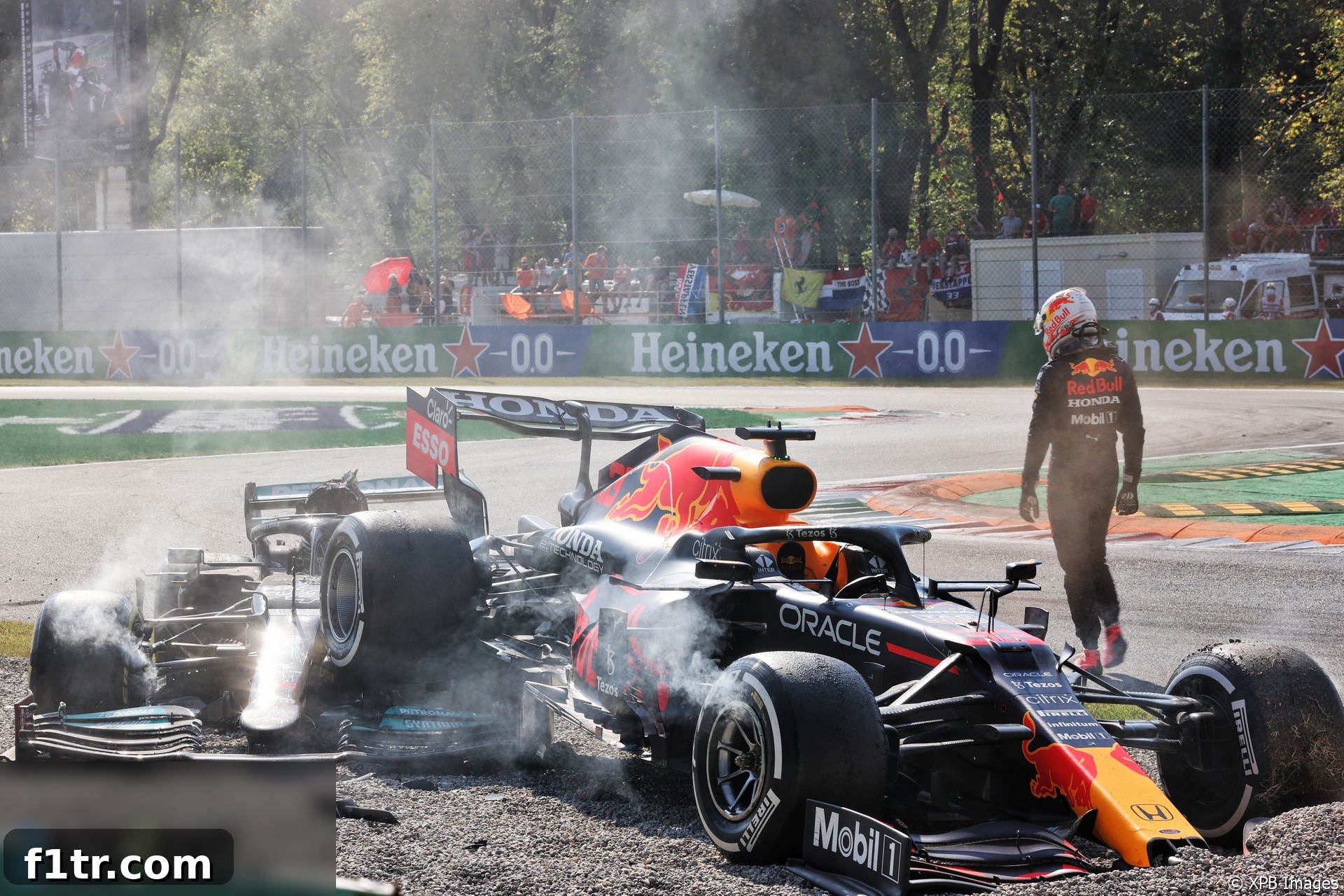
- Monza: A dramatic collision saw Verstappen’s Red Bull land on top of Hamilton’s Mercedes, putting both out of the race. Verstappen received a three-place grid penalty for the subsequent Grand Prix.
- Jeddah: The inaugural Saudi Arabian Grand Prix was a chaotic affair, marked by multiple incidents between the title rivals. Verstappen was penalized for running wide and gaining an advantage, and later received a time penalty for braking erratically, causing Hamilton to hit the back of his car.
- Interlagos: A highly controversial moment saw Verstappen aggressively defend against Hamilton, forcing both wide off track. Despite intense scrutiny, no penalty was issued to Verstappen, a decision that drew considerable criticism.
- Silverstone: Early in the race, the two collided at Copse corner, resulting in Verstappen’s high-speed crash into the barriers. Hamilton was deemed “predominantly” to blame and received a 10-second time penalty, a decision that itself was hotly debated.
These incidents highlight the fine line between aggressive racing and dangerous conduct, and the immense pressure on stewards to make consistent, fair, and impactful decisions. Stella’s point is that the outcomes of some of these past events, particularly where Verstappen avoided harsher sanctions, may have set a precedent that encouraged a certain approach to wheel-to-wheel combat, now manifesting in clashes like the one with Norris.
The Ethics of Racing: Reputation and Regulation Enforcement
Stella’s commentary wasn’t just about past penalties; it also touched upon the broader implications for the sport’s integrity and the reputations of its leading figures. “The fact is that we have so much respect for Red Bull, so much respect for Max – they don’t need to do this,” Stella stated, emphasizing that such tactics are beneath the stature of a championship-winning team and driver. “They don’t need to do this. This is a way to almost compromise your reputation. Why would you do that?” This rhetorical question underscores a belief that sustained aggressive driving, especially when it leads to contentious incidents, can tarnish even the most stellar of reputations in the long run.
Beyond reputation, the McLaren boss focused on the fundamental adherence to racing regulations. Lando Norris himself had indicated that Verstappen had engaged in “moving under braking” on more than one occasion before their ultimate collision, a maneuver generally frowned upon and often penalized due to its dangerous nature. Stella reiterated this concern, stating, “I think the stewards found that Max was fully [sic] to blame in this episode. So it’s not about racing in a driver’s way, it’s about racing within the regulations.”
For Stella, the core issue lies in the effective enforcement of these regulations. He passionately argued for penalties that are proportionate to the outcome of an incident. When a competitor, like Norris, is forced out of a race due to another driver’s actions, a mere time penalty, especially if the offending driver can continue and score points, may not be seen as a sufficient deterrent. “And the regulations must be enforced in a way that is effective, because when a car is out of the race, as a consequence of this accident, the punishment needs to be proportionate to the outcome. And we had, before that episode, twice [Verstappen] moving under braking.” This highlights a critical aspect of sporting justice: the penalty should reflect not just the infraction, but also its consequences for the victim.
A Robbed Spectacle: The Unfulfilled Battle
Beyond the regulations and penalties, Andrea Stella lamented the impact of the collision on the race itself, suggesting that fans were deprived of what could have been a thrilling conclusion. The McLaren boss envisioned a prolonged battle for position, potentially stretching all the way to the chequered flag. “Even if Lando had passed Max, it could be that Max with the DRS effect here, which is very large, could have been in position to attack Lando again,” he speculated. “So actually I think we were prevented from looking at a pretty exciting final part of the race, because I’m not sure Lando would have gone away. I think the fight could have gone to the chequered flag. It’s a shame that we will never know.”
This sentiment resonates with many F1 enthusiasts who crave pure, unadulterated wheel-to-wheel racing. When incidents truncate such potential spectacles, it diminishes the experience for viewers and casts a shadow over the event. Stella’s comments serve as a reminder that the responsibility of drivers and stewards extends beyond individual competition to the broader entertainment value and integrity of the sport.
Looking Ahead: The Call for Consistency in F1 Stewarding
Andrea Stella’s powerful statements at the Austrian Grand Prix have reignited a perennial debate in Formula 1: the consistency and efficacy of stewarding decisions. By drawing a direct line from past incidents involving Max Verstappen and Lewis Hamilton to the recent collision with Lando Norris, Stella has laid bare a concern held by many within the paddock and among fans – that a lack of stringent and consistent enforcement risks cultivating an environment where aggressive, potentially dangerous, driving tactics are implicitly sanctioned.
The call for proportionate penalties is not merely about fairness in a single race, but about shaping driver behavior across an entire season and indeed, across careers. If a driver can gain an advantage or avoid a significant setback despite being primarily at fault for an incident that severely disadvantages a rival, the incentive to drive cleanly and within accepted boundaries is diminished. McLaren’s frustration is palpable, stemming from the fact that their driver, Norris, was eliminated from contention while Verstappen continued to score points, even with a penalty.
As Formula 1 continues to grow in popularity, driven by intense rivalries and high-speed drama, the role of the stewards becomes ever more crucial. Their decisions not only determine race outcomes but also set precedents that define the very fabric of racing standards. Andrea Stella’s impassioned plea serves as a potent reminder that for the sport to maintain its integrity, excite its fans, and ensure the safety of its competitors, the rulebook must be applied with unwavering consistency and penalties must truly reflect the impact of the infringements. The debate sparked by the Austrian Grand Prix will undoubtedly echo through future races, influencing how drivers race and how officials officiate, shaping the future landscape of Formula 1.
Miss nothing from RaceFans
Get a daily email with all our latest stories – and nothing else. No marketing, no ads. Sign up here:
2024 Austrian Grand Prix Related Articles
- Austrian GP clash will have taught Norris how to race Verstappen – Ricciardo
- Verstappen was “lucky” tyre damage didn’t force him to retire like Norris
- Pirelli introducing new C6 tyre to improve racing on street tracks next year
- Norris admits ‘overreacting’ but queries why Verstappen avoided track limits penalty
- Norris and Verstappen’s Austrian GP collision “blown out of proportion” – rivals
Browse all 2024 Austrian Grand Prix articles