Lando Norris delivered a performance of sheer dominance at the Singapore Grand Prix, leading every single lap of the race from pole position to secure a commanding victory. This landmark achievement marked the first time in his burgeoning career that he had controlled a Grand Prix from start to finish, a testament to his growing prowess and McLaren’s impressive progress.
Norris had already set the tone for his victorious weekend by clinching pole position on Saturday, impressively ending Ferrari’s recent stronghold of three consecutive poles at the challenging Marina Bay Street Circuit. This pole was Norris’s sixth in Formula 1, and his subsequent victory was his third Grand Prix win, placing him alongside the esteemed 1961 world champion Phil Hill in both career pole positions and victories. Crucially, this race also saw Norris finally convert a pole position into a victory, a feat he had narrowly missed in all seven of his previous attempts, silencing any lingering doubts about his ability to manage a race from the front.
The Elusive Grand Slam and Ricciardo’s Intriguing Final Flourish
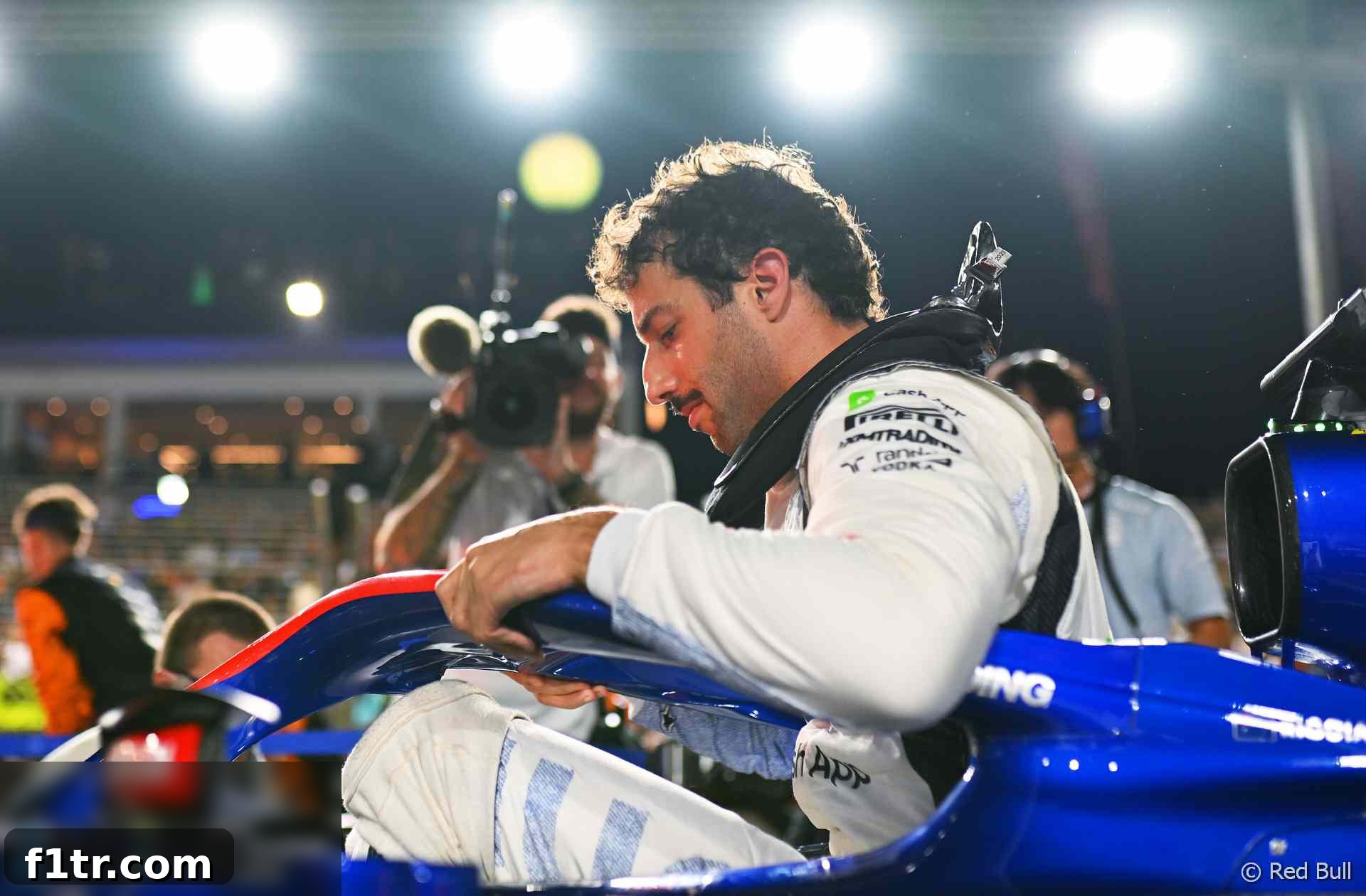
While Norris celebrated a magnificent victory, the closing stages of the race presented a subtle yet significant twist. The McLaren driver held the fastest lap of the race for much of its duration, a crucial component for achieving a rare “grand slam” in Formula 1. However, on the penultimate lap, Daniel Ricciardo unexpectedly snatched the fastest lap away, driving for RB, Red Bull’s sister team. Ricciardo finished well outside the top 10, meaning he did not score the bonus championship point associated with setting the fastest lap, which is only awarded to drivers finishing in the top ten. This raised questions and considerable speculation within the paddock regarding his team’s motivation for instructing him to push for the fastest lap time, especially given the potential implications for Norris.
For Norris, Ricciardo’s late charge carried two significant consequences. Firstly, it cost him a potentially vital championship point, which in the tightly contested world of Formula 1, can be the difference maker by the season’s end. More profoundly, it denied him the opportunity to join an exclusive club of drivers who have achieved a ‘grand slam’ during their careers. A grand slam in Formula 1 is defined by leading every lap of a race from pole position, setting the fastest lap, and ultimately winning the race. This rare combination of feats is considered one of the sport’s ultimate demonstrations of dominance and skill. Fewer drivers have achieved a grand slam than have won world championships, making it an incredibly prestigious and coveted milestone. Norris would have been only the 27th driver in the illustrious history of F1 to achieve such a remarkable feat.
Ricciardo’s fastest lap was also notable for being the first for Red Bull’s second team under their latest identity, RB. The team had previously scored two fastest laps during their 83 races as AlphaTauri, but only a solitary one across their extensive 268 races when operating as Toro Rosso. This particular fastest lap added to Ricciardo’s impressive career tally, bringing him to 17, a number that now matches that of the respected former Ferrari and Williams driver, Rubens Barrichello.
The circumstances surrounding Ricciardo’s fastest lap were further fueled by widespread speculation that the Singapore Grand Prix might be his final appearance in the cockpit of the RB. If these rumors prove true, Ricciardo would become the fifth driver in Formula 1 history to conclude his Grand Prix career with a fastest lap, an unusual and poetic way to bow out of the sport.
This intriguing scenario prompts the question: did Ricciardo know that this would be his final race, yet choose not to disclose it? Historically, most drivers who have ended their careers by setting a fastest lap did not actually know it was their last race at the time. In fact, among this elite and peculiar group, the only driver who was fully aware he was signing off his Formula 1 career with a fastest lap was Ricciardo’s fellow Australian, Mark Webber, who achieved this memorable farewell at the 2013 Brazilian Grand Prix.
The other drivers who share this statistical anomaly all harbored expectations of competing in more races. For instance, Richie Ginther set the fastest lap in the 1966 Mexican Grand Prix. He returned to race in Monaco the following year but unfortunately failed to qualify, subsequently retiring from the sport. His fastest lap in Mexico City, therefore, became an unintended swansong.
More poignant and unfortunate are the remaining two examples in this rare category. Onofre Marimon set the fastest lap at the British Grand Prix held at Silverstone 70 years ago. Tragically, he was killed during practice just two weeks later at the treacherous Nürburgring circuit. Similarly, one of the all-time greats, Jim Clark, also met his untimely end in a crash in Germany, a mere three months after setting the fastest lap while winning the F1 season-opener in South Africa. These stories serve as a stark reminder of the inherent dangers of motorsport, particularly in its earlier eras, and the unpredictable nature of a driver’s career.
Singapore’s Unique Challenges and Record-Breaking Pace
Norris’s triumphant performance also highlighted a peculiar streak for reigning world champion Max Verstappen. Despite having conquered nearly every other venue on the Formula 1 calendar, Verstappen still hasn’t secured either a pole position or a victory at the Singapore Grand Prix. Furthermore, this trend extends to his team, as Red Bull Racing hasn’t claimed a pole position in Singapore for over a decade, indicating that the Marina Bay Street Circuit presents a unique set of challenges even for the sport’s most dominant forces.
The 15th running of the Singapore Grand Prix witnessed another significant historical milestone: it was the first edition of the event to run entirely without the deployment of either a Safety Car or a Virtual Safety Car. This unprecedented clean race, coupled with the strategic removal of four corners from the track layout last year to enhance flow and speed, contributed to a record-breaking event. As a direct consequence, this was the fastest Singapore Grand Prix of all time, with Norris clinching victory at an astonishing average speed of 182.090 kilometers per hour. This average speed was quicker than four other races held earlier this year – the Monaco, Japanese, Canadian, and Chinese Grands Prix – all of which were notably disrupted by multiple Safety Car periods or even red flags, further underscoring the relentless pace maintained throughout the Singapore event.
Adding to the list of unique statistics from Singapore, this Grand Prix marked the third consecutive year that the same driver led every single lap of the race. This remarkable streak began with Carlos Sainz Jnr achieving the feat last year in 2023, followed by Sergio Perez in 2022, and now Lando Norris in 2024. This consistent dominance from pole position highlights the unique demands and characteristics of the Marina Bay Circuit, where track position is paramount and overtaking opportunities are notoriously scarce.
McLaren’s Resurgence and Other Notable Mentions
Norris’s victory also represents a significant chapter in McLaren’s ongoing resurgence. This was the team’s second triumph at the Singapore Grand Prix, with their only other win at the circuit coming courtesy of Lewis Hamilton an impressive 15 years ago. The Woking-based outfit has now remarkably won four of the last six races, showcasing an exceptional rate of success not seen since they achieved a similar run between the 2008 Monaco and Hungarian Grands Prix. This impressive form indicates a strong upward trajectory for McLaren, positioning them as serious contenders for future championships.
Finally, the Singapore Grand Prix weekend also marked a personal milestone for Alexander Albon, who made his 100th appearance in a Grand Prix weekend. While he has started 99 races, his journey to this century mark included a setback two years ago when he participated in practice at Monza before stepping down due to illness. Unfortunately, there was little to celebrate for Albon on this particular weekend, as he was the only driver not classified at the finish, a challenging end to a significant career milestone.
Over to You
Did you spot any other interesting statistics, facts, or intriguing storylines from the Singapore Grand Prix? Share your insights and observations in the comments section below and join the discussion with fellow Formula 1 enthusiasts.
Miss Nothing from RaceFans
Get a daily email with all our latest stories – and nothing else. No marketing, no ads. Sign up here:
2024 Azerbaijan Grand Prix Related Articles
- Verstappen: “Important” for FIA to clarify legality of McLaren’s ‘mini DRS’ wing
- Hamilton explains suspension set-up change behind “miserable” Baku weekend
- Piastri needs “crazy” results to become title contender despite Baku win
- FIA taking new look at flexing bodywork amid intrigue over McLaren’s rear wing
- Norris knew Verstappen broke VSC rules in Baku because he did the same in Melbourne
Browse all 2024 Azerbaijan Grand Prix articles