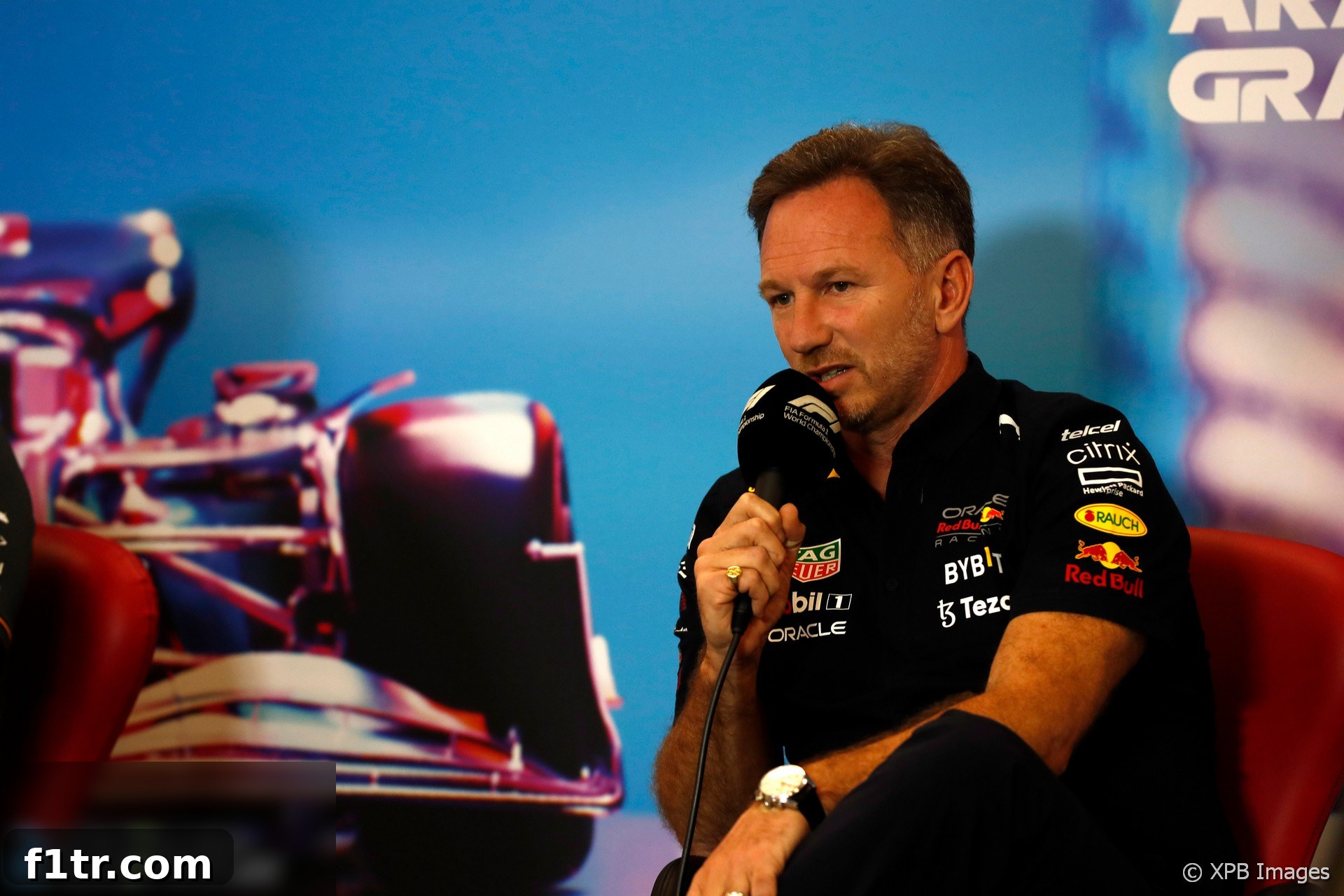
The world of Formula 1 has been gripped by a fierce verbal confrontation following the FIA’s announcement that Red Bull Racing had exceeded the sport’s budget cap during the 2021 season. At the heart of this escalating controversy are Red Bull team principal Christian Horner, who has declared himself “appalled” by rivals’ comments, and McLaren Racing CEO Zak Brown, who has robustly defended his letter to the FIA advocating for strict penalties.
Advert | Become a Supporter & go ad-free
Red Bull Cost Cap Controversy: Horner “Appalled” by Cheating Accusations, Brown Defends Letter
The Federation Internationale de l’Automobile (FIA) confirmed last week that Red Bull Racing had been found in breach of Formula 1’s financial regulations for the preceding year. This revelation has plunged the sport into a period of intense discussion and speculation, as the two parties – Red Bull and the FIA – are currently engaged in delicate negotiations. These discussions will determine whether Red Bull will formally accept the charge and a penalty proposed by the FIA, or if the matter will proceed to a more formal adjudication panel, prolonging the uncertainty.
Horner’s Outrage: Accusations of Cheating and Fraud are “Shocking”
In the wake of the FIA’s announcement, rival teams have been vocal in their demands for Red Bull to face a severe penalty. Their argument is clear: any sanction must be robust enough to ensure Red Bull derives no competitive advantage from their overspending and, crucially, to deter other teams from contemplating similar breaches in the future. Among the most prominent voices was McLaren Racing CEO Zak Brown, who penned a letter to the FIA last week, urging the governing body to adopt an uncompromising stance against any team found guilty of exceeding the budget limit.
Christian Horner, speaking at a recent FIA press conference, revealed that while he had not been directly copied on Brown’s letter, he had seen its contents and was profoundly unimpressed by what he perceived as Brown’s lobbying efforts against his team. Horner did not mince words in expressing his displeasure.
“Zak’s letter wasn’t copied to us, so obviously we’ve had sight of that, [but] it’s tremendously disappointing for a fellow competitor to be accusing you of cheating,” Horner stated emphatically. “To accuse you of fraudulent activity is shocking. It’s absolutely shocking that another competitor without the facts, without any knowledge of the details, can be making that kind of accusation.” His strong words underscored the depth of his anger and frustration over the implications drawn by rivals.
The Personal Toll: Bullying and Reputational Damage
The first whispers and informal reports of Red Bull’s potential cost cap transgression began circulating even before the Singapore Grand Prix, creating an atmosphere of suspicion and innuendo around the team’s adherence to the regulations. Horner highlighted the insidious impact of this prolonged public scrutiny, revealing a distressing consequence that extends beyond professional rivalries:
Advert | Become a RaceFans supporter andgo ad-free
“We’ve been on trial because of public accusations since Singapore, the rhetoric of ‘cheat’, the rhetoric that we’ve had this enormous benefit. The numbers have been put out in the media are miles out of reality,” Horner lamented. He stressed the profound damage inflicted upon the Red Bull brand, its partners, its drivers, and its dedicated workforce. In an era where mental health awareness is paramount, Horner pointed to significant issues arising within his team, extending even to the children of his employees.
“We’re getting kids that are being bullied in playgrounds, our employees’ children – that is not right – through fictitious allegations from other teams,” he revealed, painting a stark picture of the human cost of the accusations. “You cannot go around just making that kind of allegation without any facts or substance. So we absolutely are appalled at the behaviour of some of our competitors.” This emotional plea from Horner underscored his belief that the competitive spirit had crossed a line into unfair and damaging personal attacks.
Zak Brown’s Defense: Upholding the Spirit of the Regulations
Appearing alongside Horner in the same press conference, Zak Brown offered his perspective, asserting that his controversial letter to the FIA did not specifically name any team. Brown maintained that his communication was a general statement about the importance of upholding the financial regulations, which he views as fundamental to the sport’s integrity and competitive balance.
“My letter set out that I think if someone, a team, spends more than the cap, they’re going to get an advantage,” Brown explained. “The cap as a rule is no different than the technical rules in the sport.” He drew a direct parallel between financial compliance and technical compliance, arguing that a breach in one area should be treated with the same seriousness as a breach in the other.
Advert | Become a RaceFans supporter andgo ad-free
“We’re not taking a view whether they did or didn’t [over-spend]. My letter [said] if someone has, then here are the things that we think should be addressed,” Brown clarified. “No different than if a ride height is incorrect or a flexi wing or whatever the case may be.” His argument centered on the principle that any infringement of the rules, whether technical or financial, confers an unfair advantage and must be met with appropriate consequences. “I didn’t mention any teams. It was a general response now that we are into the cost cap era, if someone breaches that, here’s what we think some of the ramifications are.”
The “Minor” Breach: Magnitude and Impact
The FIA’s statement categorised Red Bull’s excess spending as ‘Minor’. Under the sport’s complex financial regulations, a ‘Minor’ breach is defined as an overspend of up to 5% of the £145 million budget limit. This threshold, while seemingly small percentage-wise, translates to a potentially significant sum, anything up to $7.25 million. Despite the ongoing discourse, Brown openly admitted his lack of specific detail regarding Red Bull’s situation, stating, “I have no idea what the number is, I know none of the detail.”
However, Brown was unequivocal about the potential competitive ramifications of such an overspend, regardless of the precise figure. “If we had the money to spend, that would put us in a better light and performance,” he asserted. “More people, more upgrades, whatever the case may be. So we feel it’s a performance benefit if someone has spent more than the allocated cost cap, that is up to the FIA to determine whether they have or haven’t.” His point highlights the crucial link between financial resources and on-track performance in a sport as technologically advanced and competitive as Formula 1.
Trust in Transparency: The FIA’s Role in Resolution
Brown also stressed McLaren’s confidence in the FIA’s ability to navigate this complex situation with fairness and transparency. “We have a lot of trust in the FIA to handle the situation correctly. All we were doing was volunteering our opinion for them to take into consideration,” he stated, reinforcing his belief in the governing body’s integrity.
He acknowledged the procedural delays that have occurred but noted the FIA’s communication regarding these. “[Compliance] certificates were going to be issued, then it was delayed, but they communicated it was going to be delayed. They communicated it was received,” Brown recalled. “I’ve got a lot of confidence that it will be transparent in the end. So I think we need to let the process play out and only then can you really take a view on what you think of the process. But I think so far it’s gone according to how they laid out what the process will be.” This perspective suggests a willingness to allow due process to unfold before passing final judgment on the FIA’s handling of the matter.
Christian Horner, however, remained unconvinced by Brown’s explanations. Later in the same conference, he countered Brown’s defence, claiming Brown possessed “a very convenient memory of the letter that he wrote accusing us of cheating and being fraudulent.”
“It’s just not right. It’s just not right and this has to stop,” Horner added, reiterating his team’s suffering under “three weeks of effective abuse.” The stark difference in interpretation of Brown’s letter underscores the deep chasm of distrust and animosity that has opened up between these rival team principals, reflecting the high stakes involved in Formula 1’s championship battles, both on and off the track.
Advert | Become a RaceFans supporter andgo ad-free
The Broader Implications of F1’s Cost Cap Era
The introduction of the cost cap was a watershed moment for Formula 1, aimed at fostering greater financial sustainability, reducing the spending arms race, and ultimately creating a more competitive and unpredictable championship. This current controversy surrounding Red Bull’s breach is therefore not merely about a single team; it’s a critical test case for the entire framework of F1’s financial regulations. The FIA’s eventual decision will set a crucial precedent for how future breaches are handled and will significantly impact the credibility and effectiveness of the cost cap moving forward. The resolution, whatever form it takes, will undoubtedly shape the future landscape of Formula 1, influencing not only financial strategies but also the ethical standards and competitive spirit within the pinnacle of motorsport.
Related Articles: 2022 United States Grand Prix and F1 Cost Cap Discussions
- Steiner annoyed by lack of apology from race director over COTA protest error
- How many victory chances did Hamilton have in his first winless F1 season?
- Income from new title sponsor will bring Haas up to cost cap level – Steiner
- Mexico’s first home win or Verstappen’s record 14th? Six Mexican GP talking points
- Mercedes doubt tyre strategy cost Hamilton chance to beat Verstappen to win
Browse all 2022 United States Grand Prix articles