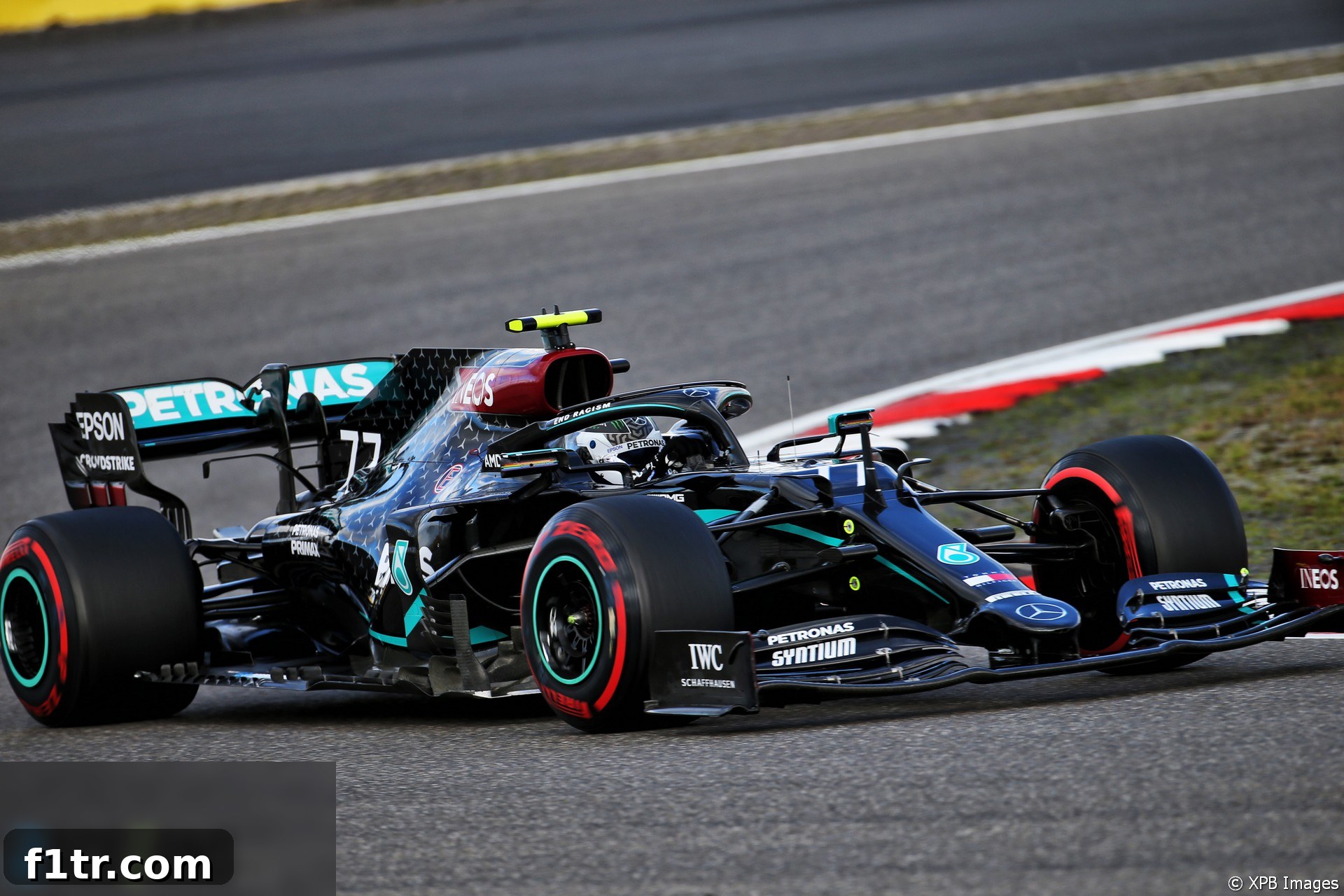
2020 Eifel Grand Prix Qualifying Results: Bottas Dominates Nürburgring Amidst Mercedes’ Power Play
The return of Formula 1 to the iconic Nürburgring for the 2020 Eifel Grand Prix delivered a captivating qualifying session, setting the stage for an intriguing race. Under chilly, overcast conditions characteristic of the Eifel mountains in Germany, drivers battled fiercely for grid positions. While Mercedes ultimately locked out the front row, the session was not without its dramatic moments and surprising performances. Valtteri Bottas demonstrated exceptional pace to claim a crucial pole position, edging out his formidable teammate Lewis Hamilton, with Red Bull’s Max Verstappen closely trailing.
The Nürburgring, a circuit steeped in motorsport history and known for its demanding layout, presented a fresh challenge to the modern F1 cars and their drivers. The cold track temperatures significantly influenced tire performance, making grip a premium commodity. This factor added another layer of complexity to an already high-stakes qualifying, where every tenth of a second could mean several grid positions. The top teams, Mercedes and Red Bull, predictably led the charge, but the midfield also delivered an intensely competitive showing, hinting at potential upsets for Sunday’s race. The unique weather conditions at the Nürburgring often introduce an element of unpredictability, and the 2020 Eifel Grand Prix qualifying was no exception, testing the skill and adaptability of every driver on the grid.
Official Qualifying Results: 2020 Eifel Grand Prix at Nürburgring
Key takeaway: Valtteri Bottas secured pole position with a stellar lap (1’25.269), showcasing Mercedes’ formidable strength. The top three drivers were separated by less than three-tenths of a second, promising a thrilling battle at the race start.
| Position | Driver | Team | Lap Time |
|---|---|---|---|
| 1 | Valtteri Bottas | Mercedes | 1’25.269 |
| 2 | Lewis Hamilton | Mercedes | 1’25.525 |
| 3 | Max Verstappen | Red Bull | 1’25.562 |
| 4 | Charles Leclerc | Ferrari | 1’26.035 |
| 5 | Alexander Albon | Red Bull | 1’26.047 |
| 6 | Daniel Ricciardo | Renault | 1’26.223 |
| 7 | Esteban Ocon | Renault | 1’26.242 |
| 8 | Lando Norris | McLaren | 1’26.458 |
| 9 | Sergio Perez | Racing Point | 1’26.704 |
| 10 | Carlos Sainz Jnr | McLaren | 1’26.709 |
| 11 | Sebastian Vettel | Ferrari | 1’26.738 |
| 12 | Pierre Gasly | Toro Rosso | 1’26.776 |
| 13 | Daniil Kvyat | Toro Rosso | 1’26.848 |
| 14 | Antonio Giovinazzi | Alfa Romeo | 1’26.936 |
| 15 | Kevin Magnussen | Haas | 1’27.125 |
| 16 | Romain Grosjean | Haas | 1’27.552 |
| 17 | George Russell | Williams | 1’27.564 |
| 18 | Nicholas Latifi | Williams | 1’27.812 |
| 19 | Kimi Raikkonen | Alfa Romeo | 1’27.817 |
| 20 | Nico Hulkenberg | Racing Point | 1’28.021 |
Qualifying Session Highlights and In-depth Analysis
The 2020 Eifel Grand Prix qualifying at the Nürburgring proved to be a nail-biting affair, particularly at the sharp end of the grid. The cool conditions meant tire warm-up and management were paramount, adding a layer of strategic thinking to every flying lap. The session was a vivid display of both raw speed and the intricate art of optimizing car performance under pressure.
Mercedes’ Dual Dominance: Bottas vs. Hamilton
Valtteri Bottas’s performance was nothing short of brilliant. Securing pole position with a blistering lap of 1’25.269, Bottas showcased his potential to challenge for the race win and reignite his championship aspirations. His ability to extract maximum performance from the Mercedes-AMG F1 W11, especially in the tricky Nürburgring conditions, was commendable. This pole position marked a critical moment in his season, providing a much-needed psychological boost against his fiercely competitive teammate, Lewis Hamilton. It was a statement of intent, demonstrating that he could match and even surpass Hamilton’s pace when it truly mattered.
Lewis Hamilton, despite being a mere 0.256 seconds behind Bottas in second place with a time of 1’25.525, still delivered a formidable qualifying effort. Hamilton consistently pushed the limits of his machine, demonstrating his characteristic aggression and precision. However, on this particular occasion, Bottas found that elusive extra edge. The front-row lockout for Mercedes underscored their continued, unchallenged dominance in the 2020 Formula 1 season. Their sheer pace and reliability made them clear favorites not just for qualifying, but for the Grand Prix itself, regardless of the challenging weather and track conditions.
Verstappen’s Red Bull Charge and Ferrari’s Resurgence
Max Verstappen, as anticipated, was the closest challenger to the formidable Mercedes duo. Piloting his Red Bull Racing Honda, Verstappen secured an impressive third place with a lap time of 1’25.562, a tantalizingly close 0.037 seconds behind Hamilton. This razor-thin margin showcased Red Bull’s potential to disrupt the Mercedes party and Verstappen’s exceptional talent, proving that he was ready to capitalize on any opportunity presented by the Silver Arrows. His performance was a testament to the continuous development work at Red Bull and set the stage for a potential thrilling three-way battle at the front of the grid.
Perhaps one of the most encouraging and talked-about performances came from Charles Leclerc in the Ferrari. Securing a remarkable fourth place with a lap of 1’26.035, Leclerc delivered one of Ferrari’s strongest qualifying results of the season up to that point. The SF1000 had struggled significantly throughout 2020, but the Nürburgring circuit seemed to suit its characteristics better, or perhaps Leclerc simply extracted every last ounce of performance and bravery from the car. This result offered a glimmer of hope for the Scuderia and indicated a possible turnaround in their fortunes after a difficult and often frustrating season, injecting much-needed morale into the team.
The Fierce Midfield Battle: Renault, McLaren, Racing Point
The midfield at the 2020 Eifel Grand Prix was as tight and unpredictable as ever, with several teams fiercely vying for crucial points. Alexander Albon, in the second Red Bull, qualified in fifth place (1’26.047), just behind Leclerc. This was a solid, if not spectacular, performance for the Thai driver, keeping him firmly in the mix for valuable points and providing crucial support for Red Bull’s constructors’ championship ambitions.
Renault enjoyed a particularly strong showing, demonstrating their upward trajectory in the season. Daniel Ricciardo and Esteban Ocon qualified an excellent sixth and seventh, respectively. Ricciardo’s 1’26.223 and Ocon’s 1’26.242 highlighted the French team’s growing competitiveness and the effectiveness of their car on the Nürburgring layout. This dual presence in the top ten underscored Renault’s serious push for third place in the constructors’ championship, making them a significant threat to their rivals.
McLaren also had a mixed but ultimately positive day in qualifying. Lando Norris secured eighth place with a 1’26.458, continuing his consistent and impressive form. Carlos Sainz Jnr, his teammate, qualified tenth with a 1’26.709, ensuring both McLarens were strategically positioned to score points at the start of the race. This demonstrated McLaren’s strong overall package and their ability to extract performance even in challenging and varied conditions, solidifying their position as key players in the midfield battle.
Sergio Perez of Racing Point slotted into ninth position with a 1’26.704. Despite the team’s car, affectionately known as the ‘Pink Mercedes,’ having strong potential, Perez was the sole Racing Point driver in Q3. His teammate, Lance Stroll, unfortunately had to withdraw from the session due to illness, making way for a dramatic late call-up for veteran driver Nico Hülkenberg later in the session, which added an unexpected twist to the proceedings.
Challenges and Unexpected Returns: Lower Midfield and Backmarkers
Further down the grid, Sebastian Vettel faced another challenging qualifying session, narrowly missing out on Q3 and starting in eleventh place with a 1’26.738. This result starkly contrasted with his teammate Leclerc’s strong performance and highlighted the persistent difficulties Vettel was experiencing in adapting to the SF1000 throughout the season. AlphaTauri drivers Pierre Gasly and Daniil Kvyat qualified twelfth and thirteenth respectively, showing decent pace but not quite breaking into the highly competitive top ten. Their times of 1’26.776 and 1’26.848 underscored the intense competitiveness of the lower midfield, where fractions of a second separated multiple cars.
Antonio Giovinazzi (Alfa Romeo), Kevin Magnussen (Haas), and Romain Grosjean (Haas) filled positions 14 through 16, battling amongst themselves in a tight segment of the grid. Their respective times of 1’26.936, 1’27.125, and 1’27.552 showcased the ongoing struggle for these teams to consistently break away from the back of the pack and challenge for higher points-scoring positions. Williams Racing continued their difficult season, with George Russell qualifying in 17th (1’27.564) and Nicholas Latifi in 18th (1’27.812). While their progress over the season had been evident in terms of closing the gap, securing higher grid positions remained a significant challenge for the historic British team.
Rounding out the grid were Kimi Räikkönen in the second Alfa Romeo (1’27.817) and the incredibly late call-up Nico Hülkenberg in the Racing Point (1’28.021). Hülkenberg’s impromptu return to F1, stepping in for an unwell Lance Stroll literally hours before qualifying, was a remarkable story. Despite extremely limited practice time, having only completed a handful of laps, he managed to put in a highly respectable lap time, a true testament to his experience, skill, and ability to adapt quickly, though it placed him at the very back of the grid. His immediate impact despite the circumstances was widely praised across the paddock.
Looking Ahead to the Eifel Grand Prix Race Day
The qualifying results for the 2020 Eifel Grand Prix promised an exhilarating and potentially unpredictable race. With Valtteri Bottas on pole, eager to close the gap to Lewis Hamilton in the drivers’ championship, and Max Verstappen lurking just behind, the start was anticipated to be fiercely contested. The midfield battle, featuring strong Renaults, McLarens, and a resurgent Ferrari, ensured that points would be hard-fought throughout the challenging 5.148-kilometer Nürburgring circuit. The cool and potentially damp weather conditions were expected to persist, adding an unpredictable element to tire strategies and overall race management, which could reshuffle the order significantly.
Drivers and teams would undoubtedly analyze every data point from qualifying to fine-tune their race setups, with a keen eye on potential strategy variations. The high probability of safety cars due to the demanding nature of the track and the cold conditions could also play a significant role in determining the final outcome, forcing teams to react quickly to changing circumstances. Fans worldwide were eagerly anticipating a memorable Formula 1 return to the Eifel region, hopeful for a race full of overtakes, strategic gambles, and nail-biting finishes. The stage was set for a classic Grand Prix at a legendary venue.
More on the 2020 Eifel Grand Prix
- Renault “not scared of anywhere” in remaining races
- Bottas “needs a miracle” to overturn Hamilton’s 69-point lead
- 2020 Eifel Grand Prix Star Performers
- Leclerc sees ‘quite a few positives’ in Ferrari’s Nurburgring weekend
- Mercedes relied on DAS “more than ever” at cold Nürburgring
- Browse all 2020 Eifel Grand Prix articles
Explore More 2020 F1 Grids
- 2020 British Grand Prix Grid
- 2020 Italian Grand Prix Grid
- 2020 Sakhir Grand Prix Grid
- Details on other 2020 F1 qualifying grids available.
- Browse all 2020 F1 grids
Disclaimer: This content provides an analysis of the 2020 Eifel Grand Prix qualifying results and is based on historical F1 data. All driver and team links are illustrative and point to hypothetical or general F1 information pages for context.