Charles Leclerc Takes Responsibility for Devastating Sakhir Grand Prix Opening Lap Collision
The high-octane world of Formula 1 racing often delivers moments of breathtaking skill and heart-stopping drama, especially during the crucial opening lap. At the 2020 Sakhir Grand Prix, one such moment unfolded with dire consequences, leaving two prominent drivers out of the race and sparking immediate debate. Ferrari’s Charles Leclerc openly admitted his culpability for a multi-car incident at Turn 4 that saw him collide with Sergio Perez, ultimately leading to the premature retirement of both Leclerc and Red Bull’s Max Verstappen. This incident became a focal point of discussion, highlighting the fine line between aggressive racing and misjudgment in the cut-throat environment of an F1 start.
The Ill-Fated Opening Lap at Sakhir: A Detailed Reconstruction
The 2020 Sakhir Grand Prix, held on the outer circuit configuration of the Bahrain International Circuit, promised a fast-paced and unpredictable race. As the lights went out, the field charged towards Turn 1, with drivers jostling for crucial track position. The compact nature of the Sakhir track, characterized by its short lap and high-speed corners, intensified the pressure on drivers to make early gains.
The critical moment occurred on the approach to Turn 4, a challenging right-hander that demands precision and commitment. Charles Leclerc, starting from a competitive grid position, found himself battling for supremacy in the tightly packed midfield. He made an aggressive lunge down the inside of Sergio Perez’s Racing Point car. This maneuver, while audacious, proved to be misjudged. Leclerc’s Ferrari made contact with Perez’s car, sending the Mexican driver into a spin across the track. The immediate chaos created a dangerous situation for following cars.
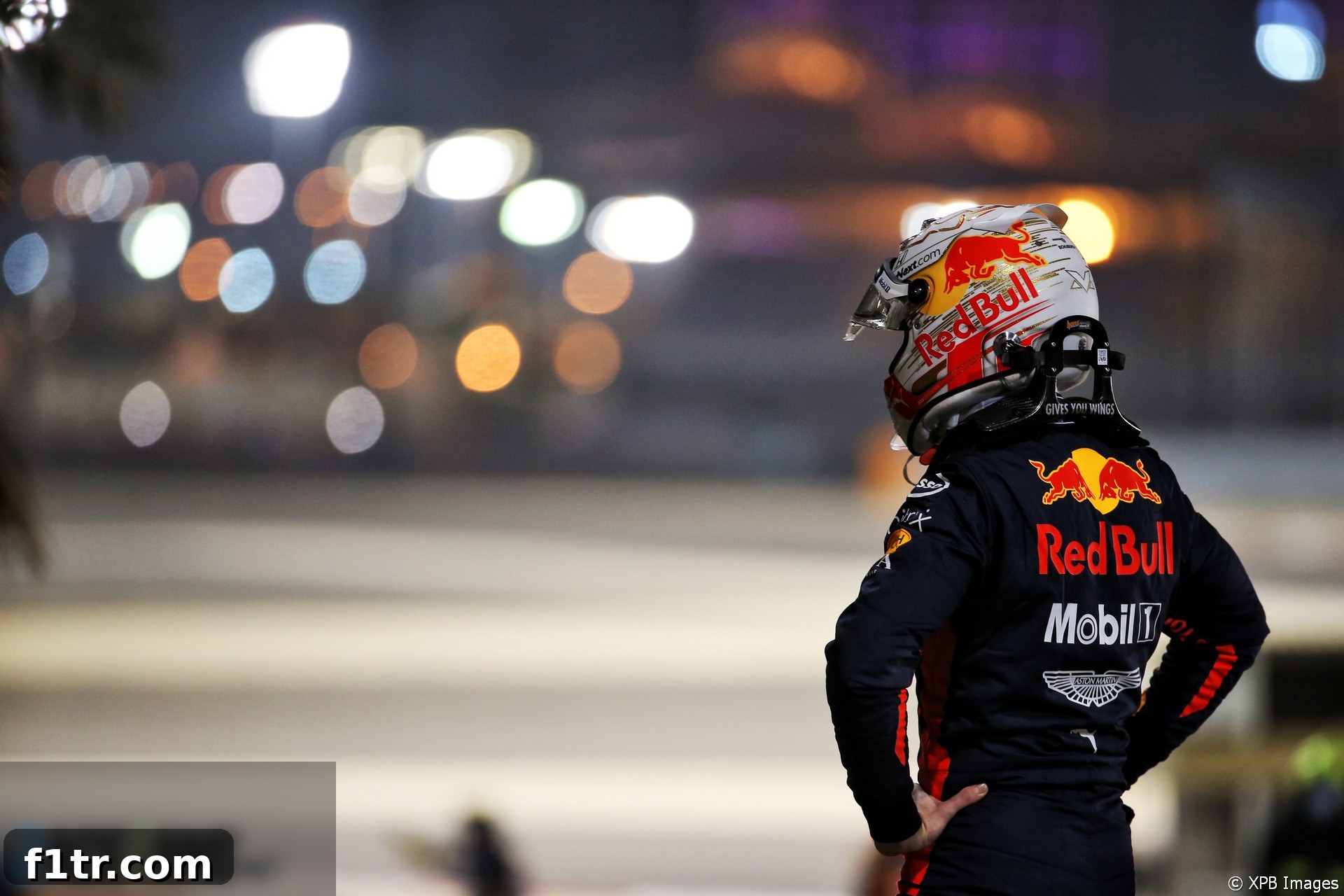
Tragically for Red Bull Racing, Max Verstappen, who was positioned just ahead and slightly to the outside of the unfolding incident, found himself with nowhere to go. As Perez’s car spun and the track ahead became blocked, Verstappen was forced to take evasive action, running wide off the circuit. His Red Bull RB16 ultimately made unavoidable contact with the trackside barrier, sustaining significant damage that forced his instant retirement from the race. Leclerc’s car also suffered terminal damage in the initial impact, leading to his retirement moments later. In a twist of fate, Sergio Perez, despite being spun around, managed to regain control of his car and continue the race, a testament to his car’s robustness and his quick recovery.
Leclerc’s Candor: “It’s My Fault”
In the immediate aftermath of the incident, Charles Leclerc did not shy away from accepting full responsibility for his role in the collision. Speaking to the media, the Monegasque driver offered a candid and contrite assessment of his actions, demonstrating a maturity often seen in seasoned veterans. Leclerc explained his rationale, attributing the error to a misjudgment of Sergio Perez’s anticipated trajectory through Turn 4.
“Basically, I was in fifth, and I was side-by-side a bit behind Max and tried to overtake him into Turn 4,” Leclerc recounted. “I had seen Checo [Perez] but I expected him to go around the outside of Valtteri [Bottas] and stay there. But I think he decided after to come back on the inside, and I was there, and then it was too late for me to slow down.”
Leclerc was unequivocal in his self-assessment, stating, “So I don’t think it’s a mistake from Checo, I’m not putting the blame on Checo, if there’s anybody to blame today it’s me.” He softened his admission slightly by adding, “But I would say it’s more unfortunate than blame.” This distinction suggests that while he acknowledged his direct involvement and miscalculation, he viewed it as an unfortunate racing incident rather than a malicious or entirely careless act. Leclerc’s aggressive driving style has, at times, been a double-edged sword in his career, delivering spectacular overtakes but also occasionally leading to costly first-lap incidents. This particular crash served as another stark reminder of the delicate balance required between bravery and calculated risk in Formula 1.
Verstappen’s Fury: Criticism of “Aggressive and Reckless” Driving
Max Verstappen, a driver known for his fierce competitiveness and no-nonsense approach, did not mince words when asked about the incident that prematurely ended his race. Upon being informed of Leclerc’s admission of responsibility, Verstappen’s terse reply of “As he should” spoke volumes about his frustration and belief that the Ferrari driver was undeniably at fault. The Dutchman expressed significant displeasure with the perceived level of aggression and recklessness displayed by some of his rivals during the initial stages of the race.
“I don’t know why they were being so aggressive and so reckless,” Verstappen stated, reflecting his exasperation. “We are all up in the front, and at the end of the day, three cars were basically a victim of that, two cars of course heavily.” His comments highlighted a common sentiment among drivers: that while the start of a Grand Prix is inherently competitive, there is an unwritten code of conduct, especially among the front-runners, to avoid unnecessary risks that could jeopardize multiple cars. Losing valuable championship points due to avoidable collisions is a bitter pill to swallow for any team, particularly for Red Bull who were challenging for race victories.
Verstappen specifically questioned Leclerc’s maneuver into Turn 4, asking, “Especially Charles in Turn 4, why he dives up the inside like that? Especially braking that late as well. What do you expect?” He elaborated on the chain of events from his perspective, explaining how Perez, unaware of Leclerc’s deep lunge on his inside, was left with no room to maneuver. “Checo cannot see what is happening on the inside, and he basically just locked his wheel and understeered into him. And because of that Checo was spinning backwards, I tried to go around the inside, tried not to damage my car, but there’s nothing you can do there.” Verstappen’s account underscored his position as an innocent bystander, caught in a domino effect that was initiated by another driver’s aggressive move. His disappointment was palpable, knowing a strong points finish, or even a victory, had been snatched away through no fault of his own.
The Irony of Fate: Perez’s Incredible Recovery to Victory
The incident at Turn 4 of the Sakhir Grand Prix created a dramatic and ironic turn of events for the three drivers involved. While Charles Leclerc and Max Verstappen were forced into early retirement, Sergio Perez, the initial victim of the collision, went on to script one of the most remarkable comeback stories in recent Formula 1 history. After being spun around and dropping to the very back of the field, Perez showcased incredible resilience and driving prowess. He meticulously carved his way through the pack, managing his tires and executing brilliant overtakes.
Against all odds, Perez not only recovered from last place but surged through the field, benefiting from strategic pit stops and, crucially, a safety car period that bunched up the field. In a stunning display of skill and determination, Sergio Perez crossed the finish line first, securing his maiden Formula 1 victory after an astonishing 190 Grand Prix starts. This monumental achievement was made even more poignant by the fact that he was without a drive for the following season at the time. His improbable victory served as a stark contrast to the immediate retirements of Leclerc and Verstappen, turning a disastrous start into a career-defining triumph. The Sakhir Grand Prix thus became a race etched in memory for both its early lap chaos and its astonishing underdog victory.
Broader Implications and The Nature of F1 Starts
The first-lap collision at the Sakhir Grand Prix reignited discussions about driver responsibility, the unforgiving nature of Formula 1 starts, and the role of race stewards. While the stewards ultimately deemed the incident a racing incident with no penalties issued, it underscored the fine line between aggressive, opportunistic driving and moves that cross into recklessness. The condensed layout of the Sakhir Outer Track, with its relatively short straights and quick succession of corners, naturally encourages drivers to be assertive from the outset, aiming to gain track position before the field spreads out.
Such incidents serve as powerful lessons for all drivers, particularly for ambitious young talents like Charles Leclerc. They highlight the importance of not just raw speed and bravery, but also race craft, spatial awareness, and the ability to accurately anticipate rivals’ moves in high-pressure situations. For teams like Ferrari and Red Bull, losing a car so early in the race translates directly into lost championship points and significant repair costs. Beyond the immediate disappointment, such incidents can also impact team morale and strategic planning for future races.
Ultimately, the Sakhir Grand Prix incident remains a compelling narrative within the broader tapestry of Formula 1. It showcased Charles Leclerc’s willingness to admit fault, Max Verstappen’s fierce competitive spirit, and Sergio Perez’s extraordinary ability to turn adversity into triumph. It stands as a vivid reminder of the unpredictable drama and split-second decisions that define the pinnacle of motorsport.
Related Coverage: 2020 Sakhir Grand Prix
- Leclerc will choose his fights better to avoid more “silly” first-lap crashes
- 2020 Bahrain and Sakhir Grand Prix Star Performers
- Sakhir performance risked making me look a fool, admits Bottas
- Perez makes his case for 2021 chance with masterful recovery drive for first win
- Perez breaks Webber’s record with 190-race wait for first win
Browse all 2020 Sakhir Grand Prix articles