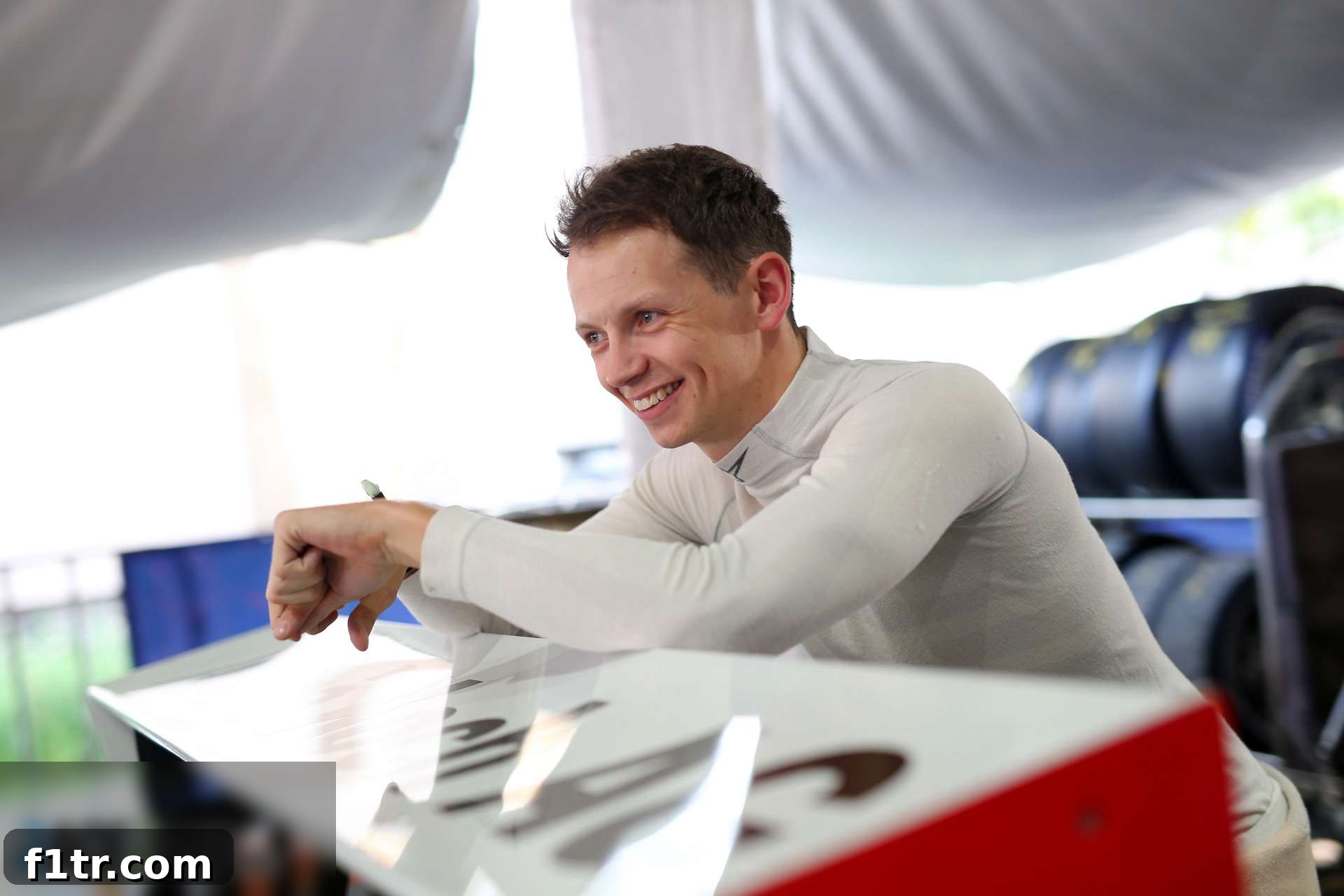
Nick Yelloly Set to Drive for Racing Point in Crucial Post-Spanish Grand Prix F1 Test
Racing Point’s highly experienced simulator driver, Nick Yelloly, is poised to make a significant return to the real-world cockpit, as he is confirmed to drive for the team during the two-day post-Spanish Grand Prix test at the iconic Circuit de Catalunya. This highly anticipated opportunity marks a crucial moment for both Yelloly and the Silverstone-based Formula 1 outfit, providing invaluable data and feedback for ongoing car development and future seasons.
The announcement underscores the increasingly vital role of simulator drivers in modern Formula 1, bridging the gap between virtual development and on-track performance. For Yelloly, who has been an integral part of the team’s engineering efforts since joining in 2014 when it was known as Force India, this test is a direct reward for his relentless dedication and the thousands of kilometres he has already meticulously covered in the team’s state-of-the-art simulator this year, actively contributing to the development of the RP19 chassis.
Yelloly’s Pivotal Role and Compliance with F1 Regulations
The 28-year-old Briton is scheduled to run on both days of the intensive two-day test session. This allocation of track time is not just a strategic move for Racing Point but also fulfils a mandatory obligation under the stringent Formula 1 sporting regulations. These rules stipulate that teams must dedicate at least two full days of testing to a driver who has not competed in more than two Formula 1 Grand Prix races. This regulation is designed to give promising young talents, or those with significant simulator experience but limited F1 race starts, the chance to gain crucial real-world experience, ensuring a pathway for future talent into the pinnacle of motorsport.
Yelloly is no stranger to driving one of the team’s F1 cars, having previously piloted their machinery in a test session back in 2015. His prior experience, combined with his extensive simulator work, makes him an ideal candidate to provide highly relevant and actionable feedback. The continuity of his involvement over several years ensures that he possesses a deep understanding of the team’s philosophy, car characteristics, and development targets, making his input during the upcoming test particularly valuable.
Bridging the Gap: Simulator to Circuit Correlation
Expressing his eagerness for the upcoming test, Yelloly highlighted the symbiotic relationship between his virtual and real-world duties. “Testing the car next week will further aid my abilities to develop both simulator and car moving forwards, just as it did in 2015,” Yelloly stated. This sentiment perfectly encapsulates the modern approach to F1 car development, where the simulator is no longer just a training tool but a primary platform for aerodynamic, mechanical, and strategic advancements. The precision of modern simulators allows teams to run countless virtual scenarios, test new components, and refine setups before ever hitting the track.
He further elaborated on the immense benefit of converting virtual experience into tangible sensation: “As I do so much work in the simulator at Racing Point, it’s always a huge benefit to drive and feel the car in real life, so Tuesday cannot come soon enough.” The feedback loop between the simulator and the actual car is critical for correlation. Drivers like Yelloly help validate the simulator’s accuracy, identifying discrepancies and ensuring that the virtual environment precisely mirrors the behaviour of the physical car. This process is essential for making informed development decisions and ensuring that upgrades developed in the sim translate effectively to improved performance on the track.
Nick Yelloly’s Racing Journey: From Junior Categories to F1 Influence
Nick Yelloly’s career trajectory leading up to his pivotal role in Formula 1 testing is impressive and diverse. The 28-year-old first made a name for himself in the highly competitive Formula Renault 3.5 series, where he showcased significant promise, finishing an admirable fifth in the championship standings in 2012. This strong performance demonstrated his inherent speed and race craft against a field of future F1 hopefuls.
Following his tenure in single-seaters, Yelloly transitioned to sportscar racing, achieving considerable success in the prestigious Porsche Supercup. This championship, which supports many Formula 1 Grand Prix weekends, saw him deliver stellar performances, culminating in a remarkable second-place finish in the overall standings last year, securing three race victories along the way. His adaptability, from high-downforce open-wheelers to powerful GT cars, speaks volumes about his versatile driving skills. While his focus has shifted towards simulation work, his extensive racing background provides a crucial foundation for his insights, allowing him to communicate complex car behaviours and setup changes with exceptional clarity to the engineering team.
Pirelli Tyre Development: A Look Towards the 2020 F1 Season
Beyond Yelloly’s test, Racing Point will also be running a second car during the same test session, dedicated entirely to Pirelli tyre testing for the upcoming 2020 F1 season. This aspect of the test is equally, if not more, critical for the sport as a whole. Pirelli, as the sole tyre supplier for Formula 1, relies heavily on these dedicated test sessions to gather invaluable data on new compounds, constructions, and profiles under real-world F1 conditions. The information collected is instrumental in developing robust, high-performance tyres that meet the demands of the sport and the expectations of the teams and drivers.
Piloting the second car for this crucial tyre development work will be Racing Point’s experienced race drivers, Sergio Perez and Lance Stroll. Their participation ensures that the feedback on the experimental Pirelli tyres comes from individuals who regularly compete at the highest level, providing a benchmark against current tyre performance and offering insights into how the new specifications behave under various loads, temperatures, and race simulations. These tests often involve running blind evaluations of different prototypes, allowing Pirelli to fine-tune their designs before locking in the specifications for the following season. The data gathered from these sessions directly influences the characteristics of the tyres that teams will use throughout the 2020 championship, impacting strategy, car setup, and overall raceability.
Circuit de Catalunya: The Ultimate Testing Ground
The choice of the Circuit de Catalunya for these mid-season tests is no coincidence. The Spanish circuit, a staple on the Formula 1 calendar, is renowned for its diverse range of corners, high-speed sections, and challenging technical areas. Its demanding layout, which includes both fast sweeps and slow hairpins, provides an ideal platform for evaluating every aspect of an F1 car’s performance, from aerodynamics and chassis balance to tyre degradation and engine mapping. The circuit’s familiar nature means teams have extensive historical data, enabling them to make direct comparisons and accurately assess the impact of new developments.
Furthermore, the often-warm conditions in Barcelona during May present an excellent opportunity to test component durability and cooling systems, while also providing representative data for tyre performance in higher temperatures. The combination of its demanding layout and predictable weather patterns makes the Circuit de Catalunya a preferred venue for post-Grand Prix tests, allowing teams to thoroughly scrutinize their cars and prepare for future races and seasons.
The Evolving Landscape of F1 Driver Development
Nick Yelloly’s involvement in this test highlights the changing landscape of driver development and team operations in Formula 1. With stringent in-season testing limitations, simulator work has become paramount, and the quality of a team’s simulator driver can significantly influence its competitive edge. These drivers not only log virtual mileage but also actively participate in car development, offering perspectives that complement those of the primary race drivers. They test potential setup changes, evaluate new parts, and even help to plan race strategies, all from the confines of a high-tech simulator.
The opportunity for Yelloly to translate his simulator experience into real-world track time is invaluable. It not only reinforces his understanding of the physical car but also allows him to fine-tune his virtual feedback, making his contributions to Racing Point even more precise and impactful. This synergy ensures that Racing Point continues to push the boundaries of performance, leveraging every available resource to compete at the highest level of motorsport. His journey exemplifies the multifaceted nature of modern Formula 1 careers, where the path to influencing Grand Prix outcomes extends far beyond simply sitting in a race seat on a Sunday afternoon.
Stay Connected with the Latest F1 Updates
- Join RaceFans on Facebook
- Follow RaceFans on Twitter
- Get daily email updates from RaceFans
Further Reading on the 2019 F1 Season
- Crying in the Melbourne car park at 2019 grand prix was my career low – Ocon
- McLaren Racing reports reduced £71 million loss in 2019
- Kvyat: Hockenheim podium last year was “my biggest achievement” so far
- How the FIA’s new encrypted fuel flow meter targets Ferrari’s suspected ‘aliasing’ trick
- “He smashed my office door”: 23 must-see moments from ‘Drive to Survive’ season two
Browse all 2019 F1 season articles