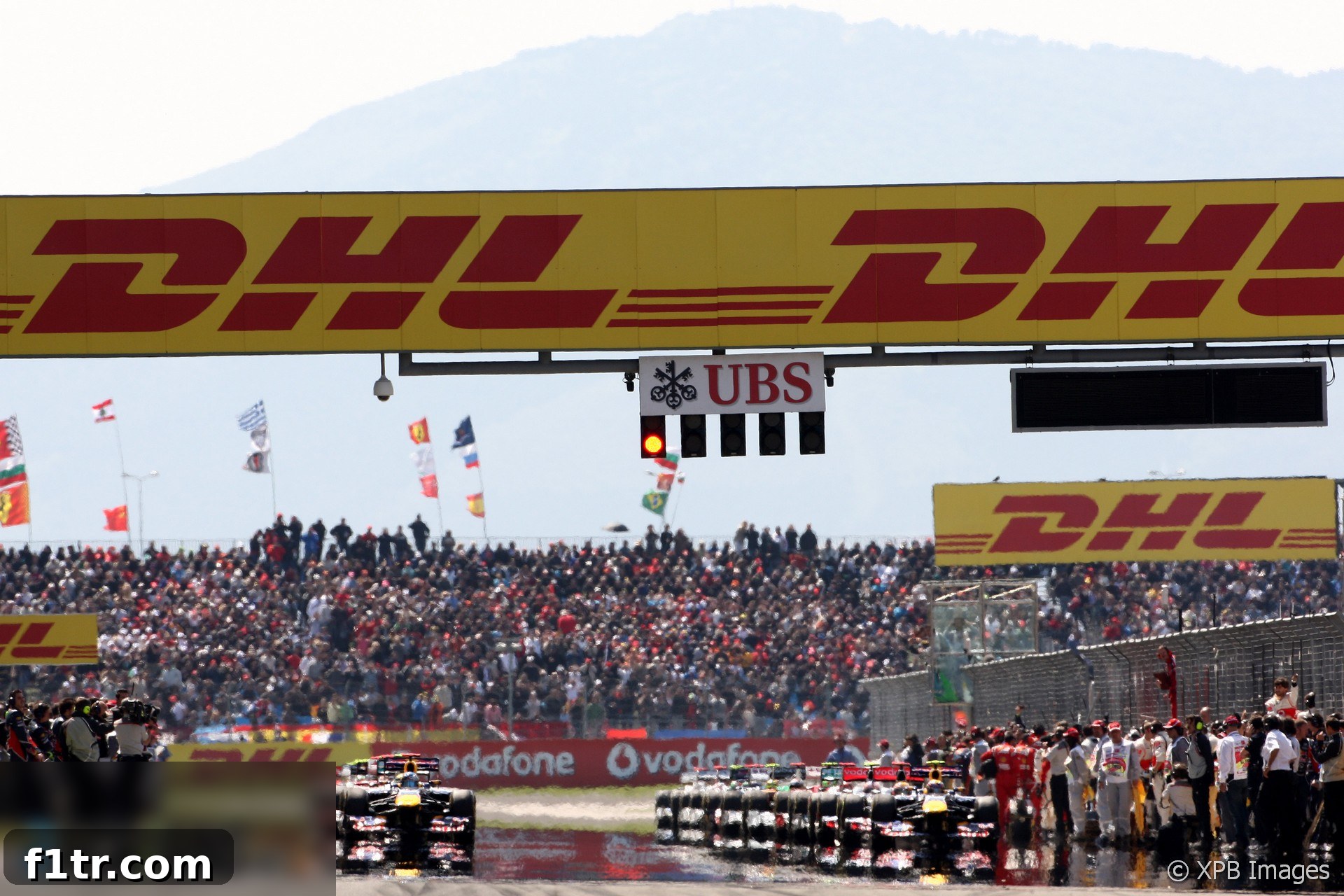
In a significant turn of events that underscores the enduring impact of the global pandemic on major sporting spectacles, the highly anticipated return of the Turkish Grand Prix to the Formula 1 calendar has been marred by a critical decision: the race will proceed without spectators. This announcement, issued by the Turkish government, has effectively nullified the hopes of tens of thousands of fans who had already secured tickets, signaling a sober reality for the sport as it navigates an unprecedented season.
Advert | Become a Supporter & go ad-free
Organizers of the event had previously confirmed that over 40,000 tickets had been sold, highlighting the immense public enthusiasm for Formula 1’s return to the iconic Istanbul Park circuit. However, a stark statement released by the government on Monday confirmed that the decision to bar fans from attending was a direct measure within the country’s broader efforts to contain the escalating Covid-19 pandemic. This swift reversal has left many ticket holders disappointed and raised questions about the viability of future large-scale events in the region amidst ongoing health concerns.
The government’s decision comes against a backdrop of increasing scrutiny over the accuracy of Covid-19 data within Turkey. Doubts have been widely cast over the reliability of official statistics, following revelations that asymptomatic cases of the virus had been systematically excluded from the country’s public counts. This practice significantly underreports the true spread of the virus, making comprehensive public health assessments more challenging and potentially justifying more stringent measures, such as the ban on spectators for major events.
Formula 1 is set to host the 14th round of its drastically reorganized 2020 championship season at the formidable Istanbul Park circuit on November 15th. This race marks a momentous return for the circuit, which last hosted a Formula 1 Grand Prix back in 2011. Its inclusion in this year’s revised calendar was a direct consequence of the pandemic, which forced the cancellation or postponement of several traditional races, prompting F1 to seek alternative venues to complete a robust championship schedule.
An official spokesperson for Formula 1 addressed the situation, reaffirming the sport’s unwavering commitment to safety: “Our entire season has been meticulously guided by a safety-first approach, and this principle will continue to be our utmost priority. While we were eagerly anticipating the opportunity to welcome fans back at the Turkish Grand Prix, the evolving health situation within the country has regretfully made this impossible. We fully understand and respect the decision made by the Turkish authorities, as public health remains paramount.”
This development arrives concurrently with the championship reporting its highest incidence of Covid-19 cases among paddock members in the preceding week. A total of 10 positive cases were identified from an extensive batch of 1,822 tests conducted across the F1 ecosystem. This uptick in positive results naturally sparks concerns, especially as the sport endeavors to maintain a delicate balance between public health and the continuation of its global championship.
Intriguingly, this rise in paddock cases coincided with the largest fan attendance at any Formula 1 race so far this year, which occurred at the Russian Grand Prix. Despite this apparent correlation, Formula 1 officials have asserted that the increase in positive Covid-19 cases within the paddock was not directly linked to the return of fans. This claim suggests that F1’s internal ‘biosphere’ protocols, which strictly control access and mandate regular testing for team personnel, drivers, and essential staff, are believed to be effective in isolating the paddock from external risks posed by spectator presence. However, the timing inevitably fuels debate and highlights the complex challenges in managing a global sport during a pandemic.
The decision in Turkey stands in contrast to the spectator policies implemented at other recent and upcoming races. The Eifel Grand Prix at the iconic Nürburgring circuit, for instance, has successfully welcomed approximately 20,000 fans. Furthermore, the subsequent round at the Autodromo do Algarve in Portugal is slated to admit more than double that number, with organizers planning for over 40,000 attendees. These varying approaches underscore the diverse governmental regulations, local epidemiological situations, and venue capacities that dictate whether fans can safely attend sporting events across different countries.
The return of Formula 1 to Istanbul Park for the first time in nearly a decade was met with considerable excitement. The circuit, renowned for its challenging layout, particularly the multi-apex Turn 8, has always been a favorite among drivers and fans alike. Its re-inclusion offered a fresh challenge in a season heavily impacted by travel restrictions and logistical complexities. For many fans, the Turkish Grand Prix represented a unique opportunity to witness top-tier motorsport in a region that has not hosted F1 for a significant period. The cancellation of spectator access, therefore, represents a profound disappointment for those who had looked forward to this historic return.
The broader implications of such decisions extend beyond the immediate disappointment of ticket holders. Local economies, particularly those reliant on tourism and event-related spending, face significant revenue losses. Hotels, restaurants, transport services, and other businesses that had geared up for an influx of Formula 1 enthusiasts will now have to contend with drastically reduced demand. This ripple effect further illustrates the far-reaching economic consequences of pandemic-related restrictions on large-scale international events.
As the 2020 Formula 1 season draws to a close, navigating these public health challenges remains paramount. The sport’s ability to complete a compelling championship amidst such unprecedented circumstances has been a testament to careful planning and stringent protocols. However, the spectator ban at the Turkish Grand Prix serves as a stark reminder that even with the most robust measures, external public health considerations will always take precedence, shaping the fan experience and the economic landscape of international sport.
Don’t miss anything new from RaceFans
Stay connected with the latest updates and exclusive content from RaceFans by following us on social media:
- Join RaceFans on Facebook
- Follow RaceFans on Twitter
- Get daily email updates from RaceFans
Advert | Become a RaceFans supporter andgo ad-free
2020 F1 season – Related Articles
Explore more in-depth coverage and analyses from the extraordinary 2020 Formula 1 season:
- Grosjean to make F1 test return tomorrow for first time since Bahrain horror crash
- Pictures: Wrecked chassis from Grosjean’s Bahrain fireball crash to go on display
- Bottas vs Rosberg: Hamilton’s Mercedes team mates compared after 78 races each
- F1 revenues fell by $877 million in Covid-struck 2020 season
- Hamilton and Mercedes finally announce new deal for 2021 season
Browse all 2020 F1 season articles