Daniel Ricciardo Joins Renault: A Bold Move Reshaping the F1 Grid
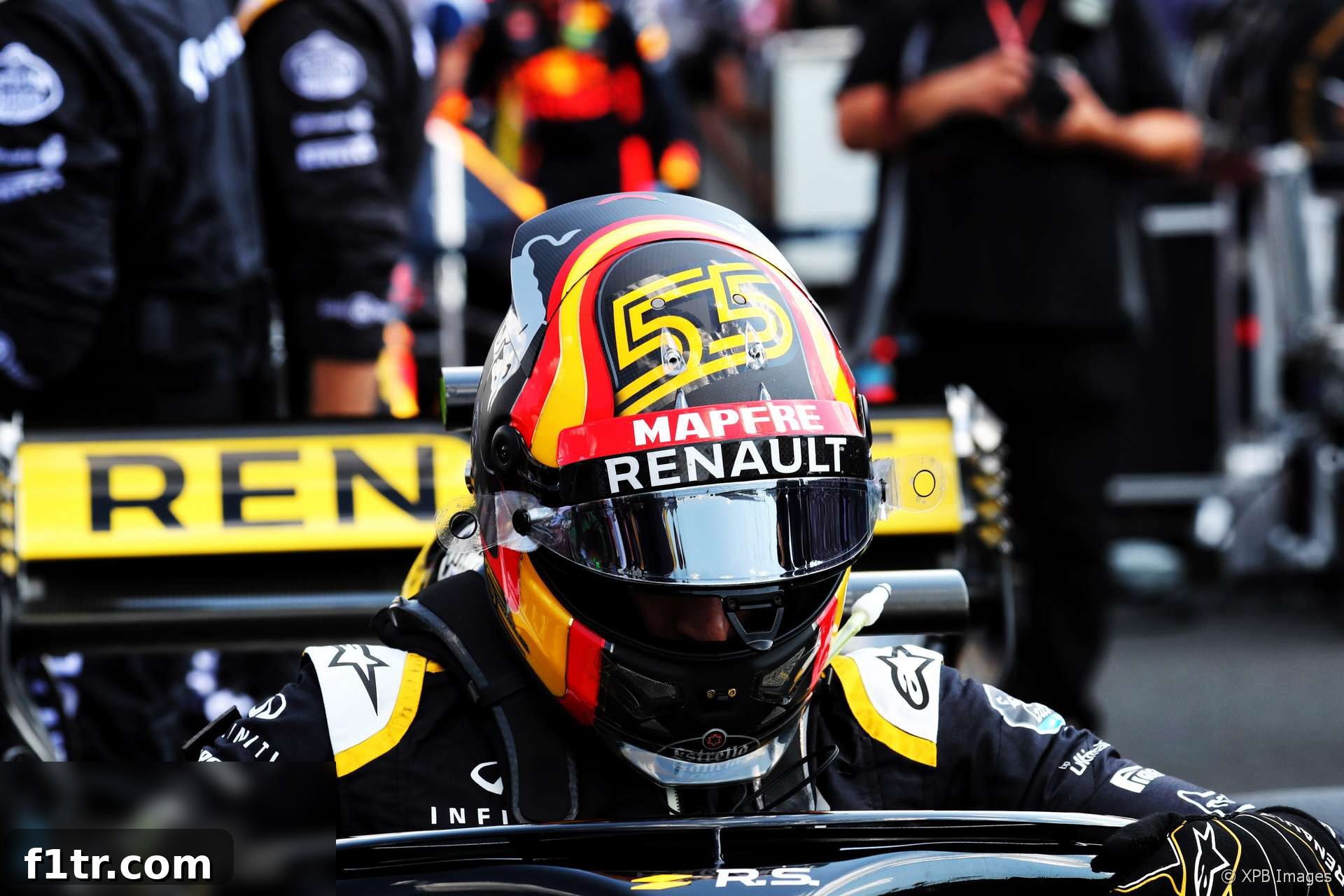
In a bombshell announcement that sent shockwaves through the Formula 1 paddock, Renault confirmed that Daniel Ricciardo would join their factory team for the 2019 and 2020 seasons. The charismatic Australian driver, known for his infectious smile and audacious overtaking maneuvers, made the unexpected decision to depart from Red Bull Racing, a team with whom he had secured multiple Grand Prix victories and established himself as one of the sport’s elite. This pivotal move saw Ricciardo replace Carlos Sainz Jnr, who subsequently found a new home at McLaren, igniting a chain reaction in the highly anticipated “silly season” driver market.
The confirmation arrived after a period of intense speculation, with whispers growing louder in the days leading up to the official reveal. Ricciardo’s decision to leave a front-running outfit like Red Bull, which had consistently provided him with race-winning machinery, for a midfield team like Renault, represented a significant gamble. However, it also underscored a deep-seated desire within Ricciardo for a fresh challenge and the opportunity to become the central figure of a team’s long-term project – a role he perhaps felt was increasingly elusive at Red Bull alongside the formidable and rapidly ascending talent of Max Verstappen.
Renault’s Ambitious Vision and a “Unique Opportunity”
For Renault, securing a driver of Ricciardo’s caliber was nothing short of a monumental coup and a resounding statement of intent. The French manufacturer had returned to Formula 1 as a full constructor in 2016, embarking on an ambitious, long-term project to reclaim its former glory and challenge the sport’s established top teams. Attracting a driver who has consistently proven capable of winning races and contending at the highest level was a critical step in accelerating that journey towards the pinnacle of motorsport.
Jerome Stoll, President of Renault Sport Racing, articulated the profound significance of this signing, describing it as “a unique opportunity for the Groupe Renault towards this objective that could not be missed.” He emphasized the nascent yet highly motivated nature of the team, stating, “We welcome Daniel’s arrival to our team, still in the making, but more motivated than ever.” Stoll’s words highlighted the blend of aspiration and realism within Renault; they acknowledged the considerable journey ahead but viewed Ricciardo as a transformative catalyst for accelerated progress and a beacon of their renewed commitment.
Echoing this sentiment, Renault Team Principal Cyril Abiteboul expressed immense pride tempered with a clear sense of responsibility. “Daniel’s signing underscores our determination to accelerate our progress towards the forefront of the sport,” said Abiteboul. He further acknowledged the diligent work and unwavering commitment of the entire team over the preceding two and a half seasons, viewing Ricciardo’s decision as “also a recognition of the work accomplished.” Abiteboul was explicit about the reciprocal nature of the partnership: “Daniel’s undoubted talent and charisma are a huge bonus and statement for the team. We will have to repay his faith in us by delivering the best car possible. We welcome him to our growing team in 2019 with a great deal of pride, but also humility.” This comprehensive statement perfectly encapsulated the high expectations surrounding Ricciardo’s arrival and the considerable pressure on Renault to deliver a competitive and reliable package worthy of his talents.
Ricciardo’s Rationale: Seeking New Challenges and Autonomy
The move to Renault was not a decision taken lightly by Daniel Ricciardo. Having spent five successful seasons with Red Bull, securing seven Grand Prix victories, numerous podium finishes, and engaging in thrilling battles, he was accustomed to competing at the sharp end of the grid. However, several compelling factors likely played a pivotal role in his departure. The looming uncertainty surrounding Red Bull’s engine supplier beyond 2018, with the team transitioning from Renault power units to Honda engines, was a significant strategic consideration. While Red Bull expressed confidence in Honda, the Japanese manufacturer’s recent struggles and reliability issues with McLaren presented a notable risk. Ricciardo, a driver approaching the absolute prime of his career, might have been wary of another potentially lengthy developmental phase.
Furthermore, the internal dynamic within Red Bull Racing had arguably shifted. Max Verstappen’s meteoric rise, his youth, and the team’s long-term investment in the young Dutchman likely meant Ricciardo would always be, to some extent, sharing the spotlight and the team’s primary focus. At Renault, Ricciardo was offered a multi-year deal and the opportunity to become the undisputed lead driver, a central figure in the team’s ambitious resurgence. This chance to shape a project from its foundational stages, to truly influence the direction and development of a car and the overall team culture, held significant appeal for a driver of his experience, technical acumen, and leadership capabilities. It was a calculated risk, a testament to his profound belief in his own abilities and Renault’s long-term potential, rather than a mere reflection of Red Bull’s perceived shortcomings.
Ricciardo’s public statements often alluded to his profound desire for a fresh environment and a new, invigorating challenge. The relentless grind of Formula 1, coupled with the intense and constant pressure to perform at an elite level, can lead even the most seasoned and successful drivers to seek a fundamental change of scenery. Renault offered him not just a new team, but a completely new narrative – the exhilarating chance to be the architect of future success, rather than simply a key player in an already established, winning machine. This psychological reset, combined with what was undoubtedly a financially attractive offer, made the prospect of joining the revitalized French outfit an irresistible proposition for the Australian.
Impact on the Driver Market and the Wider F1 Grid
Daniel Ricciardo’s unexpected move had immediate and far-reaching ramifications across the intricate Formula 1 grid. With a coveted seat at Red Bull now vacant, the team swiftly promoted their junior driver, Pierre Gasly, from Toro Rosso, demonstrating their commitment to nurturing in-house talent. This, in turn, created another opening at Toro Rosso, which was eventually filled by Alexander Albon, marking his exciting debut in Formula 1. Meanwhile, Carlos Sainz Jnr, the driver Ricciardo replaced at Renault, found an excellent opportunity at McLaren, forming a dynamic pairing with rookie Lando Norris. This intricate game of musical chairs highlighted the fluid and often unpredictable nature of the F1 driver market, showcasing the profound domino effect that one high-profile move can trigger across multiple teams.
At Renault, Ricciardo was set to partner with Nico Hulkenberg, forming what was arguably one of the most experienced, respected, and formidable driver pairings on the 2019 grid. Hulkenberg, a highly respected and consistently strong performer, would provide an invaluable benchmark for Ricciardo, and their collaboration promised to push the team forward significantly in terms of both chassis development and raw pace. The synergy between two top-tier, ambitious drivers, both hungry for success and capable of meticulous feedback, was seen as a major asset for Renault in their unrelenting quest to establish themselves as a consistent top-three contender in the Constructors’ Championship.
The Road Ahead: Challenges and Expectations for the 2019 Season
The 2019 season presented a significant and multifaceted challenge for both Daniel Ricciardo and the Renault F1 team. For Ricciardo, adapting to a completely new car, a different power unit philosophy, and an entirely new working environment required not only immense talent but also considerable time and dedication. He would need to quickly integrate himself into the team’s engineering ecosystem, provide precise and valuable feedback to the designers and strategists, and inspire the entire factory to extract every conceivable ounce of performance from the R.S.19 chassis and its intricately designed power unit. The overwhelming expectation from fans, media, and pundits alike was that Ricciardo, with his proven race-winning pedigree and natural leadership qualities, would significantly elevate Renault’s performance and consistently deliver strong, points-scoring results.
For Renault, the pressure intensified dramatically after securing such a marquee driver. The onus was now firmly on them to provide a car truly capable of challenging the established front-runners of Mercedes, Ferrari, and Red Bull. This necessitated an aggressive and accelerated development program for their chassis, vastly improved reliability and performance from their proprietary power unit, and flawless execution during critical race weekends. The ultimate goal was not merely to reduce the gap to the leading trio, but to consistently dominate the midfield, occasionally challenge for coveted podium finishes, and perhaps even eye an opportunistic victory – a feat that would signify a genuine and profound step forward in their ambitious, long-term project.
The partnership between Daniel Ricciardo and Renault was, therefore, far more than just a routine driver transfer; it was a potent symbol of ambition, a meticulously calculated risk, and a resounding declaration of intent from both parties. It represented Ricciardo’s unwavering belief in his innate ability to be a championship contender and Renault’s steadfast commitment to meticulously building a winning team from the ground up. As the 2019 season unfolded, all eyes would be keenly fixed on the distinctive yellow and black machinery, eagerly watching to see if this audacious gamble would ultimately pay off and propel both driver and team towards their shared ultimate goals in the intensely competitive and unforgiving world of Formula 1.
For more detailed insights into the 2019 F1 Season, including comprehensive driver line-ups and in-depth team profiles, stay tuned to our extensive coverage. Explore our archives for fascinating articles on F1 driver transfers, the evolution of F1 teams, and the ever-changing landscape of Formula 1.