In the thrilling world of Formula 1, where every millisecond and every maneuver can dictate the outcome of a race, the application of penalties is a subject of perpetual debate. One such instance that ignited fervent discussion among fans, drivers, and officials alike occurred during the 2018 French Grand Prix. The focus of this controversy was a collision involving two of the sport’s biggest names, Sebastian Vettel and Valtteri Bottas, and the subsequent penalty handed down to Vettel. FIA Race Director Charlie Whiting, a figure whose authority and decisions were central to F1’s sporting regulations for decades, offered a detailed defense of the stewards’ ruling, emphasizing its alignment with past precedents and the established principles of race governance.
Advert | Become a Supporter & go ad-free
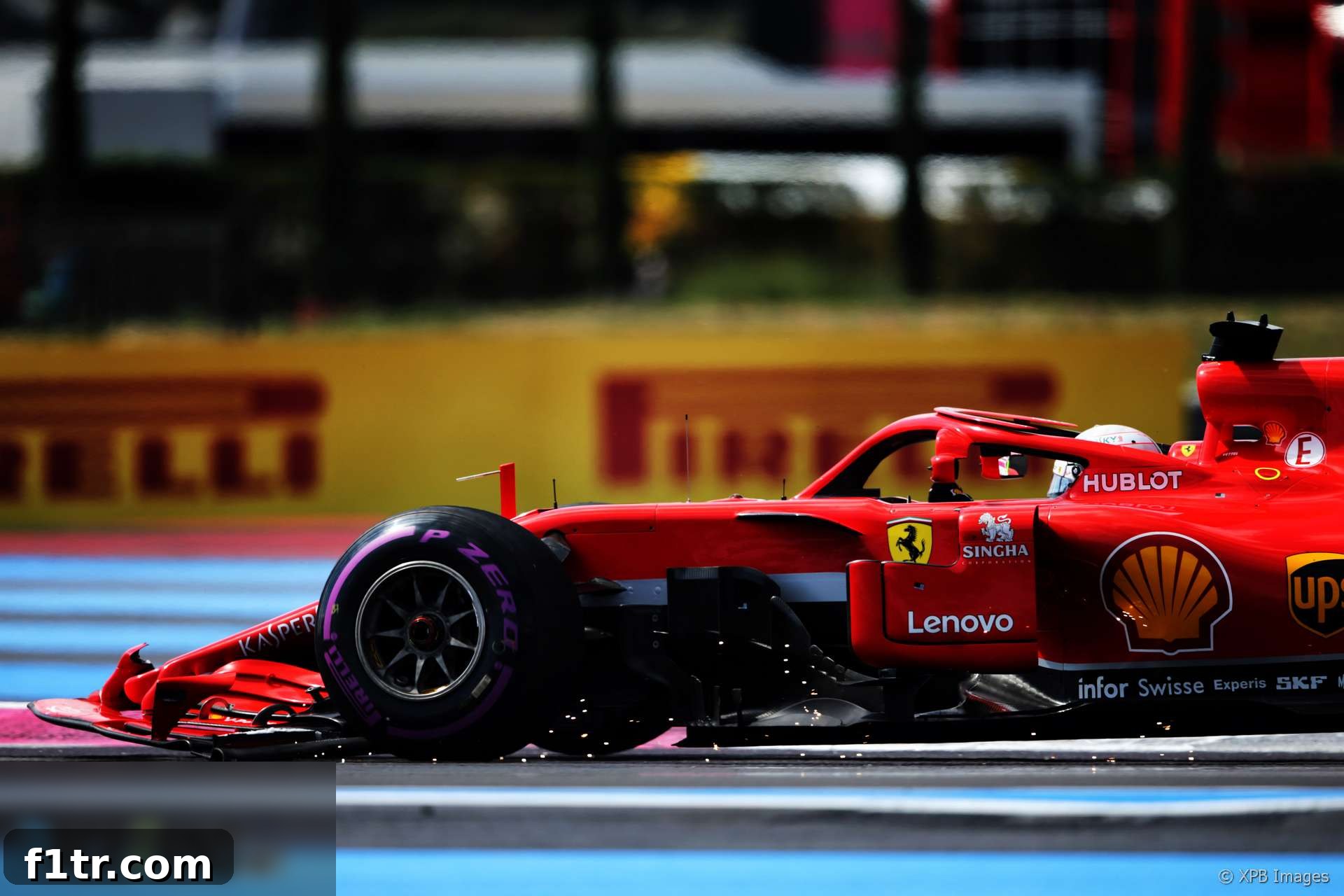
The incident unfolded dramatically at the very start of the race. As the lights went out at Circuit Paul Ricard, Vettel, starting third, made an aggressive move into the first corner, locking up his Ferrari’s wheels and colliding with the Mercedes of Valtteri Bottas. The contact sent Bottas spinning, forcing him to pit early for a new front wing and dropping him to the back of the field. Vettel, despite sustaining some damage, was able to continue, albeit with a temporary setback. The immediate and clear impact on Bottas’s race was undeniable, setting the stage for a critical decision from the race stewards.
Following a swift review, the stewards determined that Vettel was primarily at fault for the collision and subsequently issued a five-second time penalty. This decision, however, did not sit well with everyone, particularly Lewis Hamilton, who would go on to win the race. Hamilton vocally criticized the perceived leniency of the penalty, highlighting what he saw as a fundamental flaw in the system. His main contention was that despite the penalty, Vettel was still able to recover and finish ahead of the driver whose race he had effectively compromised. “Ultimately when someone destroys your race through an error and it’s only kind-of a tap on the hand really. [He’s] just allowed to come back and still finish ahead of the person that they took out, it doesn’t weigh up,” Hamilton stated, expressing a common sentiment among drivers and fans who believe penalties should more accurately reflect the consequences of an on-track transgression.
The FIA’s Stance: Consistency Over Consequence
Charlie Whiting, speaking shortly after the event, provided clarity on the stewards’ thought process, explaining the rationale behind the five-second penalty. His explanation underscored a critical aspect of Formula 1 stewarding: the principle of consistency. Whiting articulated that the stewards are instructed to focus primarily on the nature of the infringement itself rather than dwelling on its subsequent outcomes or consequences. This approach, while often debated, is fundamental to ensuring fairness and predictability across a season.
“[The stewards] had four options open to them,” Whiting explained. “A five-second penalty, 10-second, drive-through or stop-go. They chose the five-second penalty which is consistent with other incidents of that sort.” This statement directly addresses Hamilton’s critique by asserting that the penalty choice was not arbitrary but rooted in established precedents. Stewards aim to apply a uniform standard, meaning similar types of driving errors, irrespective of how severely they impact another competitor’s race, should ideally receive similar penalties. The challenge, of course, lies in the myriad variables present in any racing incident, making a truly identical comparison often elusive.
Understanding the Steward’s Mandate
The role of the FIA stewards in Formula 1 is unenviable. Operating under immense pressure and tight deadlines, they are tasked with making rapid, impartial judgments that can significantly affect race outcomes and championship battles. Their decisions are guided by the FIA International Sporting Code and specific F1 Sporting Regulations, which outline various types of infractions and the range of penalties that can be imposed. By prioritizing consistency, the FIA aims to create a stable and predictable regulatory environment. This means that a driver making a specific type of error in one race should face a similar penalty to a driver making the same error in another race, regardless of whether that error led to a minor inconvenience or a complete retirement for the other party.
The argument for ignoring consequences is multi-faceted. Firstly, judging the ‘consequences’ of an incident can be highly subjective and complex. How do you quantify the damage to a driver’s race, their championship hopes, or even their team’s financial standing due to a collision? Such calculations introduce a layer of subjectivity that could lead to inconsistent rulings. Secondly, focusing solely on the infraction itself removes the incentive for drivers to exaggerate the impact of a collision to gain a more severe penalty for a competitor. If the consequence dictates the penalty, a minor tap that sends a car slightly off track might be deemed less severe than the same tap that causes a retirement due to unforeseen damage, even if the initial driving error was identical.
Hamilton’s Pursuit of Proportional Justice
Lewis Hamilton’s criticism, however, resonates with a desire for a more ‘just’ outcome in terms of impact. His perspective, shared by many, suggests that if an error significantly damages another competitor’s race, the penalty should be proportionally severe to negate any advantage gained by the offending driver or at least to offer a stronger deterrent. In this specific case, Vettel’s ability to recover and finish ahead of Bottas despite causing the initial incident highlighted this perceived imbalance. Hamilton’s argument implies that a five-second penalty, served during a pit stop, simply wasn’t enough to correct the competitive disadvantage inflicted upon Bottas.
The tension between strict rule application (consistency) and the quest for equitable outcomes (proportional justice) is a persistent theme in sports governance, and F1 is no exception. While Whiting defended the decision based on precedent, Hamilton’s viewpoint speaks to the spirit of fair play, where an aggressor should not benefit, even inadvertently, from their error. This philosophical divide often fuels heated discussions among pundits and fans, underscoring the inherent difficulty in crafting a penalty system that satisfies all stakeholders in a sport as dynamic and high-stakes as Formula 1.
Advert | Become a RaceFans supporter andgo ad-free
The Impact on the Race and Championship
Sebastian Vettel served his five-second time penalty during his second pit stop without major incident. Crucially, due to his strong pace after the collision and the differing strategies, he still managed to finish the race a significant 18 seconds ahead of Valtteri Bottas, who endured a much more challenging recovery drive. This outcome was precisely what fueled Hamilton’s critique and the broader debate about the effectiveness of such penalties. For many, the penalty felt largely inconsequential, failing to sufficiently punish the driver at fault or to restore competitive balance to Bottas’s race.
Beyond the time penalty, Vettel was also assessed two penalty points on his FIA Super Licence. This brought his running total to five penalty points for the current 12-month period. While not immediately impacting his ability to race, accumulating 12 penalty points within a year results in an automatic one-race ban. These penalty points serve as a long-term deterrent, adding another layer to the disciplinary system and reminding drivers of the cumulative impact of their on-track transgressions. However, in the immediate aftermath of the French Grand Prix, the focus remained squarely on the time penalty and its perceived inadequacy.
The Broader Context of F1 Penalties and Stewarding Challenges
The incident at the French Grand Prix served as a microcosm of the perennial challenges faced by Formula 1 in regulating on-track conduct. The sport’s penalty system, encompassing a range of options from time penalties (5, 10 seconds), drive-throughs, stop-go penalties, grid drops, and even disqualifications, is designed to cover a wide spectrum of infractions. Yet, finding the ‘perfect’ penalty for every unique incident remains an elusive goal.
Stewards must contend with high-speed racing, often complex multi-car scenarios, limited viewing angles, and the subjective interpretation of intent and culpability. The introduction of technologies like onboard cameras, GPS data, and telemetry has aided their work significantly, providing more comprehensive evidence. Nevertheless, human judgment remains at the core of their decisions. The debate sparked by the Vettel-Bottas collision highlights the ongoing struggle to balance strict adherence to regulations with the desire for outcomes that feel inherently ‘fair’ to drivers and fans alike. It’s a tightrope walk for the FIA, as it seeks to maintain order and safety without stifling the aggressive, competitive spirit that makes Formula 1 so captivating.
Conclusion: A Lingering Question of Fairness
The 2018 French Grand Prix incident involving Sebastian Vettel and Valtteri Bottas, and the ensuing five-second penalty, encapsulated a fundamental philosophical divide within Formula 1. While FIA Race Director Charlie Whiting staunchly defended the stewards’ decision as consistent with established precedents, emphasizing the focus on the infraction itself rather than its consequences, Lewis Hamilton’s eloquent criticism voiced a popular demand for penalties that more accurately reflect the impact of an error. This enduring tension between maintaining regulatory consistency and delivering what feels like proportional justice continues to shape the discourse around F1 stewarding, reminding us that even in a sport defined by precision and speed, the human element of fairness remains a complex and hotly debated subject.
2018 F1 season
- F1 feared “death knell” for Drive to Survive after Ferrari and Mercedes snub
- McLaren staff told us we were “totally crazy” to take Honda engines in 2018 – Tost
- ‘It doesn’t matter if we start last’: How Red Bull’s junior team aided Honda’s leap forward
- Honda’s jet division helped F1 engineers solve power unit problem
- McLaren Racing losses rise after Honda split
Browse all 2018 F1 season articles