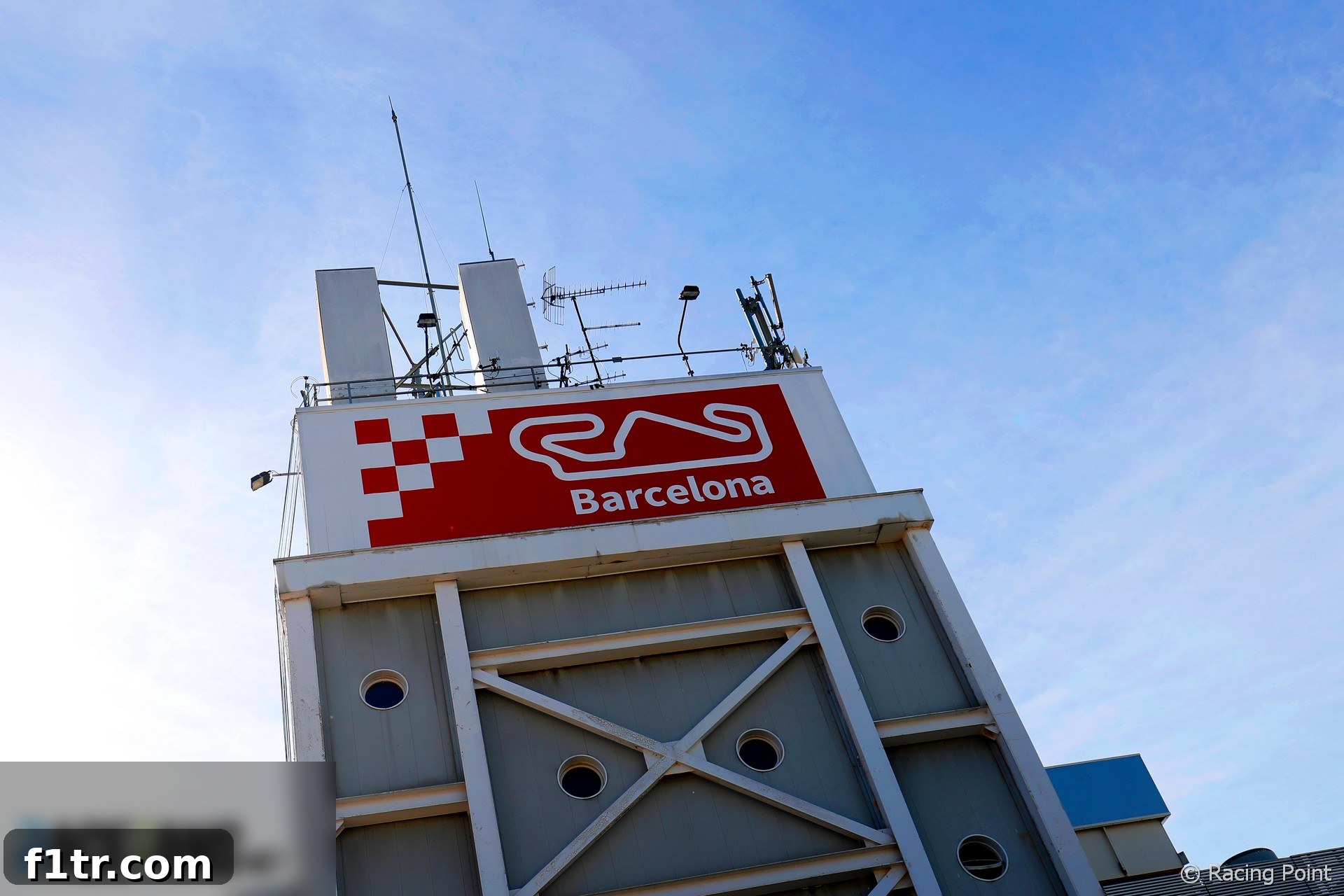
The Circuit de Catalunya, a venerable name in the world of motorsport, appears poised to retain its critical role as Formula 1’s preferred pre-season testing venue, even amidst mounting uncertainty surrounding its future on the Grand Prix calendar. As Formula 1 navigates an evolving global landscape, with new circuits vying for spots and traditional European races facing increased pressure, Barcelona’s unique blend of characteristics ensures its indispensable status for teams and tyre suppliers alike. This article delves into why the Spanish circuit remains the gold standard for F1 development, exploring its technical advantages, logistical benefits, and the collective endorsement from key figures within the sport, despite the looming question mark over the Spanish Grand Prix itself.
The 2020 F1 calendar, a subject of intense speculation, currently lacks a confirmed contract for the Spanish Grand Prix. While the president of the Catalunya circuit optimistically suggested a 90% chance of the race proceeding, Pirelli motorsport director Mario Isola offers a more tempered outlook. Following a recent two-day test at the circuit, Isola expressed his concern, stating, “We are going to lose Barcelona. It’s a pity, obviously, but that’s the decision so there is very little we can do on that. We’ll lose some good reference data from this track.” This sentiment underscores the profound impact such a loss would have, particularly regarding the extensive historical data accumulated over decades of racing and testing.
Isola further elaborated on the circuit’s unique attributes that make it invaluable for Formula 1 teams. “This is a circuit that in terms of layout is quite complete because we have high speed corners, low speed corners, traction, braking, a bit of everything,” he explained. This comprehensive nature is precisely why teams consistently advocate for Barcelona as their primary testing ground. The circuit’s design challenges every facet of a modern F1 car: the sweeping, high-speed Turn 3 and Turn 9 demand exceptional aerodynamic efficiency, while the tighter, more technical final sector tests mechanical grip, braking stability, and driver precision. This diverse array of corners allows engineers to thoroughly evaluate car setups, validate aerodynamic concepts, and push new components to their limits across varied conditions, providing a holistic understanding of performance that few other tracks can offer.
Beyond its diverse layout, the Circuit de Catalunya’s long-standing presence on the F1 calendar has resulted in an unparalleled wealth of historical data. “Also in the pre-season test we said many times that obviously February, March sometimes the weather is an issue but they want to come here because they have a lot of data on the circuit so they can make a lot of comparisons. And also the circuit is very representative, it’s a good layout,” Isola added. This historical benchmark is crucial. Teams can compare current car performance against previous years, assess the true impact of regulatory changes, and accurately gauge the efficacy of new parts without the ambiguity of varying track conditions or unknown variables. This consistent, reliable data serves as a bedrock for engineering development, allowing teams to draw precise conclusions and refine their machines with confidence, making every testing lap highly productive.
The logistical and economic advantages of Barcelona further solidify its position. Red Bull team principal Christian Horner, when asked about the potential loss of the Spanish Grand Prix, voiced similar sentiments. While acknowledging it would be “a great shame if we don’t come back racing in Barcelona,” he was emphatic about the need for continued testing at the venue. “But we certainly should continue to test here. I think being European-based, far enough south to have sensible weather, from a cost point of view it’s cost-efficient for the European-based teams to come and test here.”
Horner’s comments highlight several practical benefits. For the majority of F1 teams based in Europe – predominantly in the UK and Italy – Barcelona’s geographical proximity significantly reduces travel time and freight costs. Transporting entire F1 operations, including cars, spare parts, and hundreds of personnel, across continents or even to more distant European locations can incur substantial expenses and logistical complexities. Barcelona offers a straightforward, truckable journey for many, streamlining the setup and teardown processes. Furthermore, its southerly location in Spain often provides more stable and milder weather conditions during the crucial pre-season period of February and March, compared to circuits further north in Europe, which might be prone to colder temperatures, rain, or even snow, hindering valuable track time.
The discussion around alternative testing venues invariably circles back to Barcelona’s superiority. Isola pointed out the drawbacks of other circuits that have been considered. “If we’re talking only about tyres ideally we would like to go on a circuit where we can find conditions that are similar to what we have in the race because it is clearly a better comparison. If we go for example to Paul Ricard or Jerez – there’s some discussion about Jerez – Jerez is a good circuit, now also with a new Tarmac it is less aggressive than in the past. But we don’t have any reference data from racing. So we can collect useful data but it’s not the same [as] if you go on a circuit where you also have a grand prix.”
This distinction is critical for Pirelli, Formula 1’s sole tyre supplier. Developing and validating new compounds and constructions requires consistent, comparable data. While circuits like Paul Ricard in France offer modern facilities and vast run-off areas, and Jerez boasts a recent resurfacing, neither holds the extensive history of F1 racing that Barcelona does. The absence of “reference data from racing” means that any data collected on these alternative tracks, while useful for general performance evaluation, lacks the specific context of competitive Grand Prix conditions. Barcelona’s combination of a representative layout and decades of race data allows Pirelli and the teams to precisely understand tyre degradation, performance windows, and how compounds interact with the track surface under true racing loads – a luxury not afforded by testing-only venues.
In essence, pre-season testing is not just about logging laps; it’s about rigorous validation. It’s the period where teams shake down new cars, confirm aerodynamic models from simulations, fine-tune suspension setups, test new power unit components, and most importantly, help drivers acclimatise to their new machinery and the nuances of the season’s tyres. The Circuit de Catalunya’s demanding yet balanced layout provides the perfect crucible for these tasks. Its combination of varying corner speeds, long straights, and technical sections ensures that a car that performs well in Barcelona is likely to be competitive across a broad spectrum of circuits throughout the F1 calendar. This inherent representativeness makes the data gathered here exceptionally valuable and directly transferable to race weekends.
The enduring consensus among teams and suppliers underlines that while the future of the Spanish Grand Prix may hang in the balance, the Circuit de Catalunya’s role as a cornerstone of Formula 1’s technical development remains secure. Its unique blend of a complete circuit layout, unparalleled historical data, strategic European location, and cost-efficiency makes it irreplaceable. As Formula 1 continues to evolve and expand its global footprint, the importance of maintaining a reliable, high-quality, and representative testing venue like Barcelona becomes even more pronounced. It is the proving ground where champions are forged, and technological advancements are validated, ensuring the competitive integrity and innovation that define the pinnacle of motorsport. Horner’s concluding thought succinctly captures this sentiment: “It’s a good track. It has a combination of high speed, medium speed and low speed corners. So it’d be a shame if it doesn’t get utilised for at least testing duties.” Indeed, for the health and progress of Formula 1, Barcelona’s testing legacy is set to continue for many years to come.
Video: How the Circuit de Catalunya has changed since its first F1 race
2019 F1 season
- Crying in the Melbourne car park at 2019 grand prix was my career low – Ocon
- McLaren Racing reports reduced £71 million loss in 2019
- Kvyat: Hockenheim podium last year was “my biggest achievement” so far
- How the FIA’s new encrypted fuel flow meter targets Ferrari’s suspected ‘aliasing’ trick
- “He smashed my office door”: 23 must-see moments from ‘Drive to Survive’ season two
Browse all 2019 F1 season articles