F1 Track Limits: Unpacking Penalties at the 2020 Russian Grand Prix
In the high-stakes world of Formula 1, every millimeter on track can mean the difference between victory and defeat, or indeed, a penalty. Strict adherence to track limits is a cornerstone of fair competition, ensuring no driver gains an unfair advantage by exceeding the designated racing surface. The 2020 Russian Grand Prix at the Sochi Autodrom brought this rule into sharp focus, with two drivers receiving penalties for track limit infringements at the notorious Turn 2, while a third driver involved in a similar incident was ultimately cleared, highlighting the nuanced approach of race stewards.
The Incidents and Their Consequences: Albon and Ricciardo Penalized
The race saw both Alexander Albon, driving for Red Bull Racing, and Daniel Ricciardo, then with Renault, each handed a five-second time penalty. Their offense was identical: they cut Turn 2, a challenging left-hander, and failed to follow the designated route mandated by the Race Director for rejoining the circuit. This specific instruction, outlined in the event notes, is crucial for maintaining both competitive fairness and driver safety when a car deviates from the track.
For F1 drivers, understanding and meticulously following these instructions is paramount. The designated re-entry route is not merely a suggestion; it’s a mandatory procedure designed to neutralize any advantage gained by going off track, preventing drivers from simply cutting the corner to improve lap times or overtake. Albon and Ricciardo’s deviations were deemed to have breached this specific directive, leading to immediate post-race repercussions.
Beyond the time penalties, both drivers also incurred a single penalty point on their Super Licences. Penalty points are accumulated over a 12-month rolling period, and reaching a total of 12 points results in an automatic one-race ban. At the time of this incident, Daniel Ricciardo’s tally rose to three penalty points, while Alexander Albon reached five. While neither was immediately close to a ban, these points serve as a deterrent, reminding drivers of the cumulative consequences of repeated infringements.
A Driver’s Perspective: Ricciardo’s Candid Admission and Strategic Response
Following the race, Daniel Ricciardo openly accepted responsibility for his penalty, demonstrating the maturity and transparency expected from seasoned professionals in the sport. “I just locked up and went wide,” Ricciardo explained, acknowledging the error without hesitation. “I was like, I’m probably going to get a penalty here.” This immediate self-awareness underscores the drivers’ intimate knowledge of the rules and the fine line they constantly tread during wheel-to-wheel combat.
Interestingly, Ricciardo revealed that the impending penalty spurred him on in his battle with Charles Leclerc. “It lit a little bit of a fire under my bum,” he admitted, explaining his determination to build a sufficient gap to Leclerc to negate the five-second penalty. This insight offers a fascinating glimpse into the strategic mindset of F1 drivers. Once a penalty is anticipated or confirmed, the objective shifts: drivers must push even harder to create a buffer that ensures their final classified position isn’t adversely affected. Ricciardo’s ability to compartmentalize and focus on maximizing his race performance despite the setback highlighted his mental fortitude.
“I’d already accepted it in my head and I was like alright well, the only way to eliminate the penalty is to go faster and build a gap to Leclerc behind me,” he elaborated. This pragmatic approach allowed him to channel his frustration into performance. “I was proud to not let it get to me,” he concluded, reflecting on a race where, despite the penalty, he felt they managed to make a “really good race of it” by adapting to the circumstances.
The Nuance of Justice: Grosjean’s Exoneration and Mitigating Circumstances
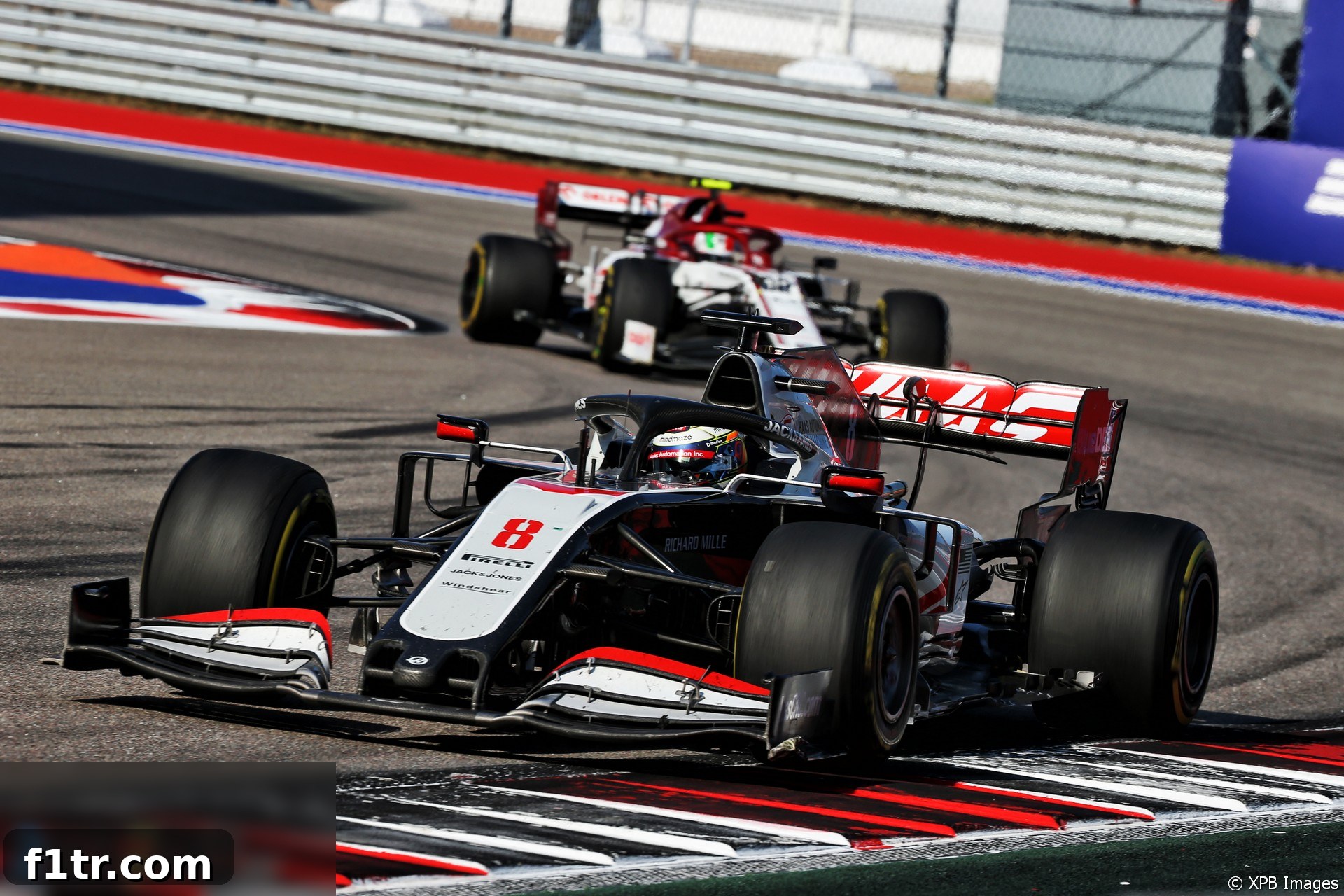
In stark contrast to Albon and Ricciardo, Romain Grosjean, then driving for Haas, found himself in a similar situation at Turn 2 but escaped punishment. This decision by the stewards highlighted the critical role of “mitigating circumstances” in F1 officiating. Unlike a simple wide excursion, Grosjean’s off-track moment was directly precipitated by a racing incident.
The stewards’ detailed note explained the reasoning: “Car eight [Grosjean] left the track at turn two [and] failed to follow the race director’s instruction as defined in the event notes 22.1. But in this case the situation resulted from a racing incident due to the proximity of car five [Vettel] and the driver did all he could to follow the race directors instruction.” Grosjean was engaged in a fierce battle with Sebastian Vettel when he went wide. The close proximity to Vettel, combined with minor contact with one of the barriers upon rejoining, painted a picture of a driver forced into a difficult position rather than deliberately gaining an advantage.
This distinction is crucial. While all three drivers initially failed to follow the exact re-entry procedure, the context of Grosjean’s incident suggested he was reacting to an external factor (Vettel’s proximity) and a subsequent impact, rather than making a conscious decision to cut the corner. The stewards acknowledged his efforts to comply with the instructions under duress, thus clearing him of any wrongdoing. This decision underscores the stewards’ commitment to a fair and context-sensitive application of the rules, recognizing that not all infringements are equal in intent or circumstance.
Broader Implications: The F1 Track Limits Debate and Stewarding Consistency
The incidents at the 2020 Russian Grand Prix are emblematic of a broader, ongoing debate within Formula 1 regarding track limits and the consistency of stewarding decisions. Track limits are designed to define the boundaries of the racing surface, typically marked by white lines, beyond which a driver is deemed to have gained an unfair advantage. However, the interpretation and enforcement of these rules have frequently sparked discussion among drivers, teams, and fans alike.
One of the persistent challenges lies in ensuring consistency across different circuits, different corners, and even different incidents within the same race. While modern technology, such as sensor loops embedded in the track, has improved the precision of detecting track limit violations, human judgment still plays a significant role, particularly when considering factors like “mitigating circumstances.” The Grosjean case perfectly illustrates this complexity; without a full understanding of the preceding racing incident, his action might have appeared identical to Albon’s or Ricciardo’s.
Drivers have often voiced their frustration over what they perceive as arbitrary or overly strict penalties for minor infringements. The accumulation of penalty points, even for relatively innocuous errors, can weigh heavily on a driver’s mind, potentially impacting their approach to racing. There’s a delicate balance to strike between maintaining the integrity of the sport by preventing unfair advantages and allowing drivers to push the limits of their cars in exciting wheel-to-wheel combat without fear of disproportionate punishment.
The F1 rulebook is extensive, and stewards are tasked with applying it fairly in real-time, often under immense pressure. Their role is not merely to identify rule breaches but to interpret the intent and impact of a driver’s actions. The Russian Grand Prix incidents serve as a potent reminder that F1 racing is a dynamic sport where black-and-white rules often meet shades of gray on the track. Clear communication from the Race Director, precise track design, and consistent application of penalties are all vital for maintaining driver confidence and the sport’s credibility.
Conclusion: The Enduring Challenge of Fairness in Formula 1
The events at the 2020 Russian Grand Prix regarding track limit penalties provided a compelling snapshot of the ongoing challenges in Formula 1. Alexander Albon and Daniel Ricciardo faced the consequences of their excursions, demonstrating the rigorous enforcement of rules designed to prevent unfair advantages. Their penalties, accompanied by penalty points, served as a clear message regarding driver responsibility.
Conversely, Romain Grosjean’s exoneration highlighted the critical importance of context and mitigating circumstances in stewarding decisions. It underscored that not all track limit violations are created equal, and the nuances of a racing incident can significantly alter the outcome of a penalty review. This distinction is vital for maintaining the sport’s reputation for fairness and intelligent application of its regulations.
Ultimately, these incidents reinforce the continuous effort required by drivers, teams, and the FIA to navigate the intricate balance between pushing performance boundaries and adhering to the established rules of engagement. The debate around track limits and stewarding consistency will undoubtedly continue, as Formula 1 constantly strives for optimal competitive integrity and thrilling, fair racing.
Browse all 2020 Russian Grand Prix articles