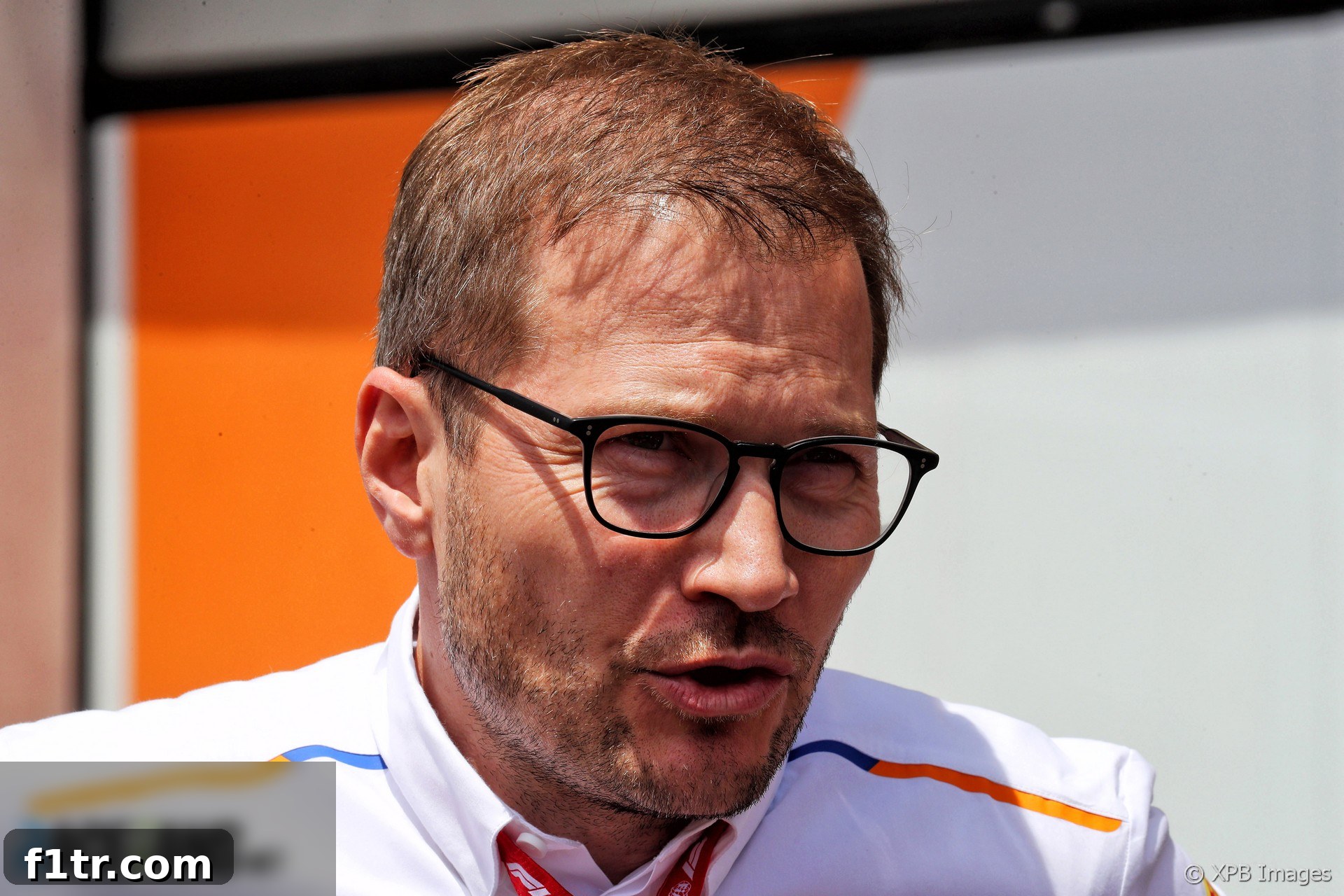
McLaren team principal Andreas Seidl made it unequivocally clear that calls to revert to the 2018 tyre specification were a direct consequence of Mercedes’ overwhelming dominance in the 2019 Formula 1 season, rather than a fundamental flaw with the current Pirelli rubber. This candid assessment came amidst a highly charged debate within the sport, highlighting the competitive anxieties gripping the paddock as Mercedes continued its unprecedented winning streak.
Advert | Become a Supporter & go ad-free
The proposal by several teams to compel Pirelli to reintroduce the 2018-specification tyres ultimately failed to gain the necessary traction, falling short of the seven-team majority required for such a significant regulatory amendment. A vote held among the ten Formula 1 constructors saw five teams, including McLaren, firmly opposing the return of last year’s tyres. This deep division within the sport underscored the varying philosophies and strategic priorities at play during a critical juncture of the championship.
Speaking at an official FIA press conference, Seidl meticulously articulated McLaren’s rationale for standing against the proposed change. He began by emphasizing the importance of fairness towards Pirelli, asserting, “First of all, I think in fairness also to Pirelli to mention we don’t have a tyre issue in general here.” Seidl elaborated that the tyres supplied for the current season were, in fact, fully compliant with all performance and safety parameters that Formula 1, in conjunction with the FIA, had jointly established and agreed upon in the preceding year. This statement aimed to shift the focus from the tyres themselves to the performance disparity among the teams.
Seidl firmly believes that the impetus behind the clamor for a tyre change originated primarily from teams like Red Bull and Ferrari. These front-running constructors, despite their substantial resources and technical prowess, found themselves consistently outperformed by Mercedes at every Grand Prix of the season thus far. The McLaren principal inferred that the hope was for a change in tyre characteristics to somehow disrupt Mercedes’ formidable advantage and level the playing field, thereby reigniting a more competitive championship battle.
“The reason why we have this discussion at the moment is that we have three top teams with the same resources, and one team is doing a significantly better job than the other two,” Seidl candidly stated. This observation underscored the core issue: the perceived excellence of Mercedes’ engineering and operational execution, rather than any inherent deficiency in the Pirelli product. From McLaren’s perspective, the problem was not a technical shortcoming of the tyres, but a competitive one rooted in the varying levels of team performance. “So that’s the situation we are facing,” he concluded, acknowledging the reality of the competitive landscape.
However, Seidl also acknowledged the limitations of McLaren’s influence in resolving such a fundamental competitive imbalance at the very top of the sport. “But it’s nothing really we can influence as McLaren. I think it’s down to the three top teams with FIA and Formula 1 to see if there’s anything that can be done short-term to fix that issue.” This statement implied that while McLaren recognized the competitive dilemma, they saw it as a problem for the sport’s governing bodies and the consistently dominant teams to address, rather than a situation that should necessitate a mid-season rule change impacting all competitors.
Echoing McLaren’s cautious stance, Racing Point technical director Andrew Green provided further insight into his team’s decision to oppose the tyre reversion. Green revealed that Racing Point placed significant weight on the expert counsel provided by Pirelli motorsport director Mario Isola, who, as the leading authority from the sole tyre supplier, offered a comprehensive assessment of the implications. “We listened to the argument and we especially listened to [Isola], they’re the experts in the area,” Green explained, emphasizing the importance of deferring to specialized knowledge in such a critical technical domain.
Advert | Become a RaceFans supporter andgo ad-free
Green further highlighted the uncertainty surrounding the potential benefits of such a change, stating, “And from what we could tell it wasn’t clear-cut at all that reverting to last year’s compound was going to be a positive change. It sounded like a significant risk to us.” This assessment underscored the considerable challenges and unknown variables that a sudden mid-season tyre specification change could introduce. Teams had meticulously designed their 2019 chassis and aerodynamic packages around the specific characteristics of the new Pirelli tyres. Introducing a different specification could have unforeseen consequences, potentially undermining safety, performance, and the very competitive balance it sought to address. The prospect of re-optimizing cars for a different tyre compound presented a daunting technical challenge and a financial burden that smaller teams were keen to avoid.
From Racing Point’s perspective, the timing of such a drastic measure was also a critical factor. “So from our perspective, I think it’s too late for this season,” Green concluded. He argued that the sensible approach would be to focus on optimizing the current tyre package for the remainder of the season and to direct efforts towards enhancing the tyre characteristics and overall spectacle for the upcoming 2020 season. This longer-term strategy, Green suggested, would be more beneficial and less disruptive than a reactive, mid-season alteration. He also noted that such a decision would avoid distracting from crucial post-event and post-Silverstone tyre testing, which provides invaluable data for future development.
In stark contrast to McLaren and Racing Point, Red Bull chief engineer Paul Monaghan argued passionately in favor of the tyre change, contending that it should have been pursued in the interest of enhancing the overall spectacle of Formula 1. Monaghan acknowledged the delicate position Pirelli found themselves in, stating, “It’s difficult, it puts Pirelli in a slightly difficult position. They’re doing a decent job, they’re going to win every race, the tyres are surviving on the cars, and there’s no doubt they’ve got to maintain their safety record.” This statement implicitly recognized Pirelli’s successful fulfillment of its contractual obligations regarding safety and performance, even while advocating for a change.
However, Monaghan did not shy away from expressing a dissenting view regarding the perceived risks. “At the risk of being slightly controversial as regards Andy’s comments, we would quite happily accept the 2018 tyres to come back. I don’t think the risk is as great as some perceive.” This bold claim suggested Red Bull’s confidence in their ability to adapt their car quickly to the previous year’s tyre specification, perhaps believing their chassis and aerodynamic philosophy were more versatile or that they could extract greater performance from the older tyres compared to Mercedes.
Monaghan’s core argument revolved around the concept of “the show,” emphasizing the sport’s responsibility to its audience. “But it is about creating a show and we almost have to step back and take a less team-centric position and say: ‘Well, if it would be better for the show, could the teams cope with it?’” This perspective highlighted the tension between individual team interests and the broader health and entertainment value of the sport. Red Bull firmly believed that the 2018 tyres would foster closer racing, more strategic variation, and ultimately a more engaging product for fans, which, in their view, outweighed the operational challenges. “And our view is yes, we could,” Monaghan asserted, indicating Red Bull’s readiness to embrace the change. Despite their conviction, the collective vote went against them, leading Monaghan to conclude, “Except there’s been a majority vote not to do so, we have a slightly different view to the majority.”
Advert | Become a RaceFans supporter andgo ad-free
The failure of the vote to revert to the 2018 tyres served as a powerful testament to the intricate political and technical landscape of Formula 1. It underscored the difficulty of achieving consensus on significant regulatory changes, especially when competitive advantages are at stake. The 5-5 split revealed a paddock deeply divided, with some teams prioritizing stability and existing regulations, while others championed changes that could potentially shake up the established order and enhance the on-track spectacle. For the remainder of the 2019 season, this decision meant that Mercedes’ rivals would have to find solutions within the current technical framework, continuing their battle against a dominant force that had clearly mastered the Pirelli 2019 specification tyres.
This incident also prompted broader reflections on Formula 1’s governance and its ability to respond to competitive imbalances. While teams like Red Bull advocate for interventions to improve the show, others, like McLaren, emphasize upholding technical regulations and recognizing superior performance. The ongoing challenge for F1 will be to find a balance between fostering innovation, ensuring safety, and cultivating a consistently thrilling and unpredictable championship for fans globally. The 2019 tyre debate thus became a microcosm of the larger struggles within the sport to define its future direction amidst evolving competitive dynamics.
2019 F1 Season Insights
The 2019 Formula 1 season was marked by numerous gripping storylines beyond the tyre debate, reflecting the dynamic nature of Grand Prix racing and the relentless pursuit of performance and competitive advantage. The championship continued to deliver memorable moments, highlighting individual achievements, team developments, and the ever-present drama both on and off the track. Below are some articles providing further insights into the season’s key events and reflections from those involved:
- Crying in the Melbourne car park at 2019 grand prix was my career low – Ocon
- McLaren Racing reports reduced £71 million loss in 2019
- Kvyat: Hockenheim podium last year was “my biggest achievement” so far
- How the FIA’s new encrypted fuel flow meter targets Ferrari’s suspected ‘aliasing’ trick
- “He smashed my office door”: 23 must-see moments from ‘Drive to Survive’ season two
Browse all 2019 F1 season articles