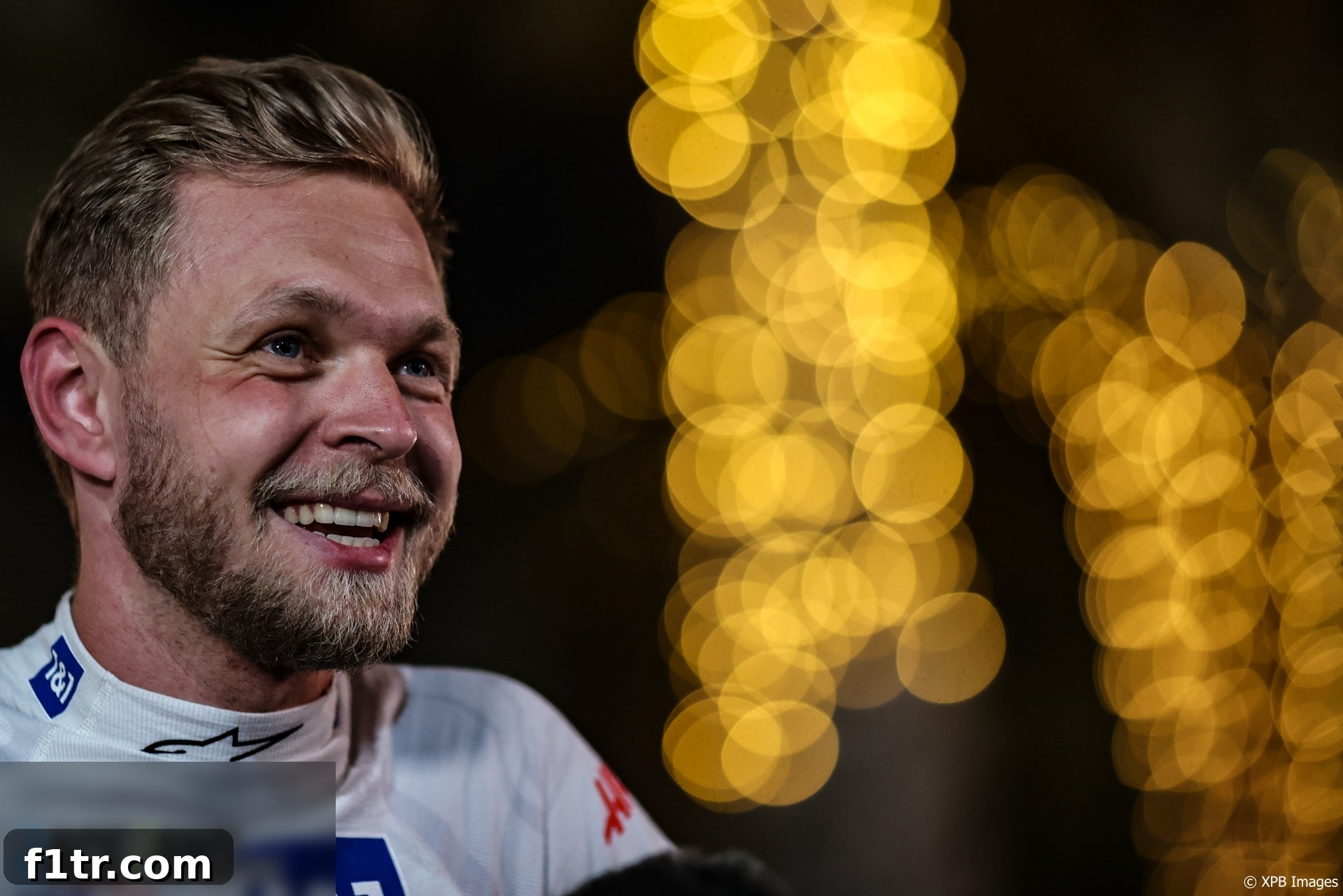
Kevin Magnussen’s Sensational F1 Comeback: A Bahrain Qualifying ‘Roller Coaster’ for Haas
In a turn of events that sent ripples through the Formula 1 paddock, Kevin Magnussen found himself back in a race seat for the Haas F1 Team, delivering an astonishing seventh-place grid position at the 2022 Bahrain Grand Prix. The Danish driver, whose return to the pinnacle of motorsport was finalized just weeks prior, candidly described his first qualifying session in over a year as a “roller coaster” – a fitting encapsulation of his unexpected journey and the dramatic events that unfolded.
The Unforeseen Return: Magnussen’s Path Back to F1
Magnussen’s return to Formula 1 was nothing short of extraordinary, catalyzed by unforeseen global circumstances. Following the Haas team’s decision to terminate their contract with Russian driver Nikita Mazepin, a vacant seat opened up just days before the official start of the 2022 season. In a swift and decisive move, Haas, led by team principal Guenther Steiner, reached out to their former driver. Magnussen, who had spent the preceding season competing in sports cars and even made a one-off appearance in IndyCar, accepted the call, setting the stage for one of F1’s most compelling comeback stories in recent memory.
His preparation for the highly anticipated 2022 season was understandably brief. With the new generation of F1 cars featuring radical aerodynamic regulations, adapting quickly was paramount. Magnussen had only a handful of sessions in the VF-22 during the final pre-season test held in Bahrain, giving him limited time to familiarize himself with the car, its characteristics, and the new Pirelli tyres before the competitive action commenced.
Qualifying Day Drama: Navigating Challenges to P7
The qualifying session itself proved to be a microcosm of Magnussen’s entire return: thrilling, challenging, and ultimately triumphant. Despite facing a significant hydraulic problem that developed midway through the crucial qualifying hour, Magnussen showcased remarkable resilience and skill. While his teammate, Mick Schumacher, unfortunately failed to advance beyond Q2, Magnussen defied expectations, skillfully navigating the mechanical issues to secure a coveted spot in Q3.
“It’s been a real roller coaster the last couple of weeks and everything that we went through in that two weeks to manage everything that had to be managed and actually get here and then drive the car, get a good feeling and get some hope,” Magnussen reflected, still processing the whirlwind of events. His initial skepticism about the VF-22’s potential quickly transformed into genuine belief as the weekend progressed. “We had a suspicion that it might be quite good, then qualifying was another whole roller coaster in itself with the problems we had not being able to run more than once in Q2 and 3 and not even knowing if we could get out again in Q3 and all that. So getting P7 for tomorrow’s race, after all that, is really, really cool.”
The hydraulic problem severely compromised his final push for grid position. During his critical out-lap in the decisive Q3 segment, Magnussen was forced to keep his car entirely in fourth gear. This restriction significantly limited his ability to properly prepare his tyres for the blistering final qualifying lap, impacting their optimal temperature and grip. Furthermore, the severity of the issue was evident as he was compelled to pull the VF-22 off the circuit shortly after crossing the finish line, immediately following the chequered flag.
“I wasn’t able to go quick on the out-lap and get my tyres ready, so I was compromised in a few places,” he explained, underscoring the hurdles he overcame. “But I mean, P7 we’re still super happy.” Despite the clear disadvantage, Magnussen’s raw pace shone through. “We did a 1’31.4 in Q2 in the first run – we didn’t get two runs in Q2. So I mean, we should think that there could be a little more in it.” This statement highlighted the untapped potential, suggesting that without the technical issues, an even higher grid position might have been within reach.
Haas’s Focus: Reliability Over Pure Pace
Looking ahead to the race, Magnussen openly admitted that the Haas team’s primary concern revolved more around the reliability of their car than its outright pace. The hydraulic scare during qualifying served as a stark reminder of the technical vulnerabilities that could surface in a long grand prix.
“Reliability is certainly the biggest concern going into the race,” he stated emphatically. “It’s not so much the pace or balance of tyre wear or our strategy. It’s more just getting to the end. If we get to the end, I’m sure we will be able to be in a strong position.” This pragmatic approach underscored the team’s understanding of their position: a competitive car was valuable, but only if it could reach the chequered flag reliably. For a team like Haas, battling towards the back of the grid in previous seasons, simply finishing races consistently and demonstrating strong pace would be a significant step forward.
A Team Transformed: Believing in the VF-22’s Potential
Magnussen’s return coincided with the introduction of new F1 regulations for 2022, designed to shake up the competitive order and promote closer racing. While many teams struggled to adapt, Haas appeared to have found a sweet spot with their VF-22. Magnussen himself initially struggled to fully comprehend the car’s true speed, given the team’s challenging performance in previous years.
“I was in the car and I saw after the first run in Q2 that I was in front of the two Mercedes. I was like, ‘okay’ and I was P4, and it’s just crazy – now I believe that the car is good,” he recounted, expressing his astonishment at seeing his name ahead of the sport’s giants on the timing screens. This moment marked a turning point in his own perception, transitioning from cautious optimism to genuine conviction about the VF-22’s capabilities.
The anecdote perfectly encapsulated the surprise within the team, and indeed the wider F1 community, regarding Haas’s newfound competitiveness. When asked how he would have reacted if Team Principal Guenther Steiner had told him, when offering the drive, just how strong the new car was, Magnussen’s response was classic, revealing his initial disbelief: “I would have called bullshit.” This humorous exchange not only highlighted the unexpected nature of their performance but also showcased the characteristic directness and camaraderie within the Haas garage.
The Road Ahead: A New Chapter for Magnussen and Haas
Kevin Magnussen’s P7 qualifying performance at the 2022 Bahrain Grand Prix marked not just a personal triumph but a significant statement of intent for the Haas F1 Team. After two seasons plagued by struggles and often finishing at the bottom of the constructor standings, this result signaled a potential resurgence. The combination of Magnussen’s raw talent and the promising package of the VF-22 offered a beacon of hope for a team eager to reclaim its competitive edge.
This “roller coaster” start to the season, filled with drama, speed, and a touch of disbelief, promised an exciting new chapter for Magnussen’s F1 career and a potential turning point for the Haas F1 Team in the highly anticipated 2022 Formula 1 World Championship.
More on the 2022 Bahrain Grand Prix
- How “class act” Hulkenberg’s reserve outings showed his readiness for an F1 return
- Alfa Romeo working on fix for Bottas and Zhou’s “very poor” starts
- China is first country to score points on its debut since the championship began
- “I don’t hold back”: Verstappen’s full radio transcript from his luckless Bahrain GP
- Mercedes’ straight-line speed deficit due to drag levels, not power unit – Wolff
Browse all 2022 Bahrain Grand Prix articles